
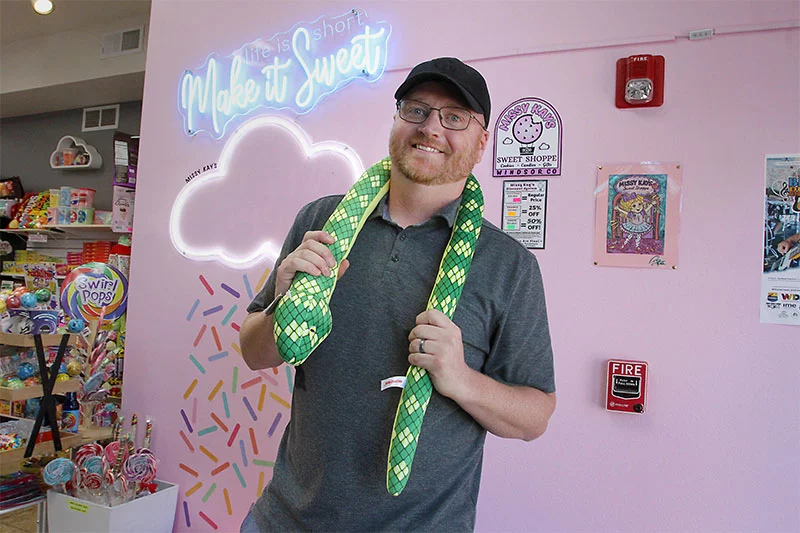
If the rattlesnake bite that landed Cody Neidert in the hospital is any indication, his long-held wariness of the slithery critters is fully justified.
The 39-year-old Windsor father of two was enjoying a Mother’s Day hike with his wife Allison and their two young children when they were joined by an uninvited guest – a rattlesnake that bit Cody on his left leg between his shin and knee.
Cody’s leg swelled up immediately as he was starting to feel the effects of the snake venom — an all-over tingly sensation in his body and mouth, along with light-headedness — when local paramedics and the UCHealth LifeLine helicopter arrived and flew him to the ER at UCHealth Medical Center of the Rockies in Loveland for treatment.
Doctors gave Cody antivenom in the helicopter and more doses during his three-day hospital stay.
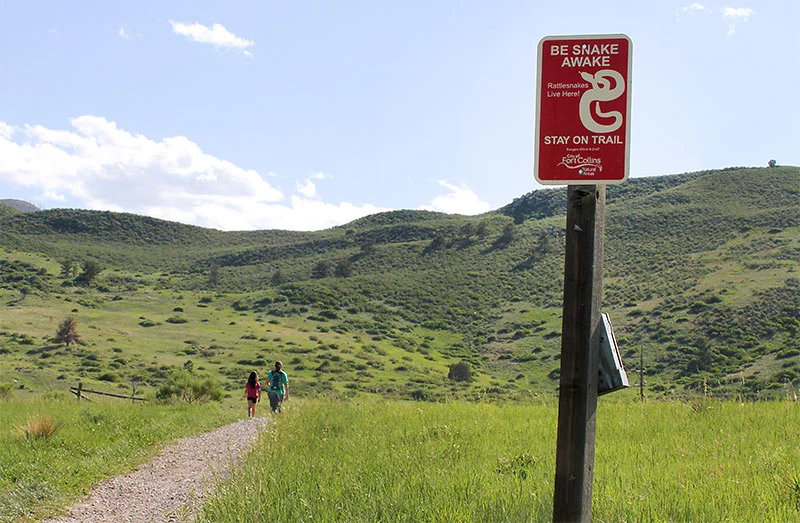
“Before you head up the trail, signs say: ‘You are in snake country.’ I made a joke to my kids that I changed my mind and was going to head back to the car because they all know how much I hate snakes. We talked about snake safety because it looked like a ‘snaky trail.’’’
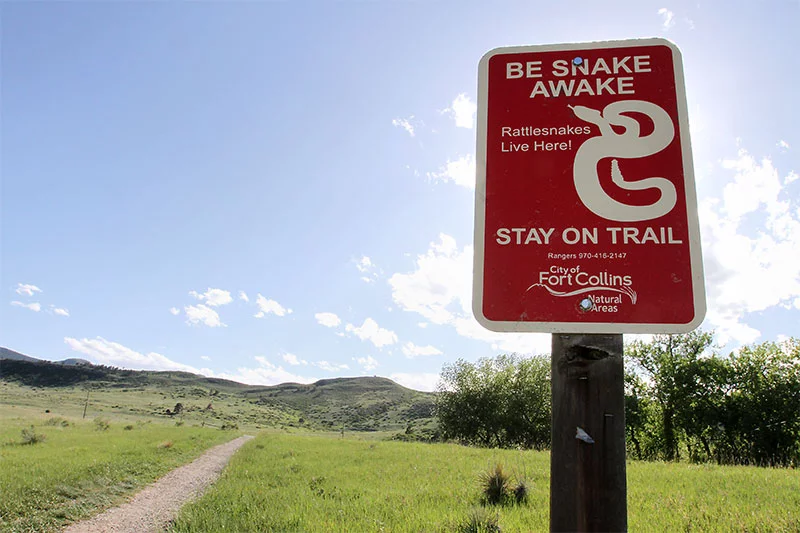
Cody’s wife agreed, saying the couple frequently spends time outdoors enjoying the beauty of Colorado with 7-year-old daughter Maggie and 9-year-old son Colson, but with one main caveat: “Cody hates snakes. It’s the one thing we all know about him.”
What happened after a rattlesnake bite on a popular Colorado trail
The family’s trek began on the afternoon of May 10 on the Foothills Trail to Reservoir Ridge, near Horsetooth Reservoir west of Fort Collins.
The hike was not too long and not too short, and it would be a perfect accompaniment to what they had planned for afterward: a visit to a nearby winery to celebrate Allison.
“It was a perfect Mother’s Day, until…,” Cody said.
On their way up the trail, Cody looked around and made sure the area was clear of snakes as the family hiked, especially when Maggie sat down to tie her shoe. The Neiderts reached their vantage point, took a few photos and started working their way down the trail.
A few minutes into their descent, they had to scale a large rock. Allison and Colson went first, and then, as Cody and Maggie crossed it, he felt a sharp pain in his left leg.
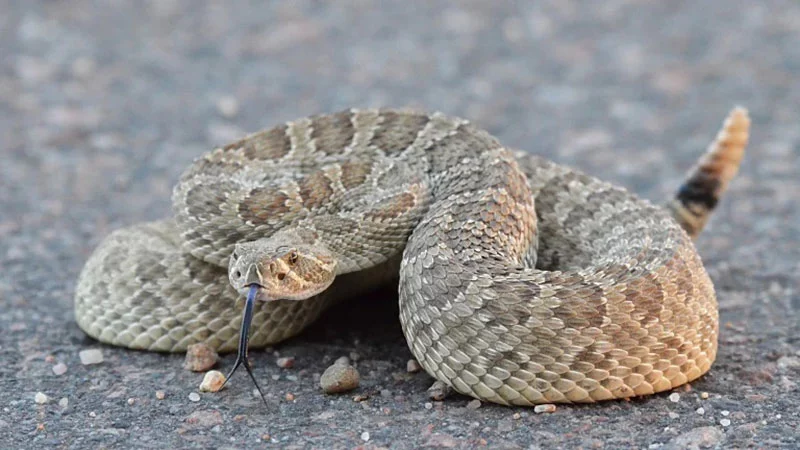
“It wasn’t a devastating pain, more like when you get a thorn stuck in your skin,” he said. “I immediately knew. I looked and saw the snake coiled at the base of the rock and saw the rattle, about the size of a thumb.”
No one in the family had heard the telltale rattle of the snake, nor had they seen the snake until after it bit Cody. The snake then disappeared under the rock and slithered away, camouflaged to blend in with the dirt and brush.
Cody thinks his brush with the snake was just lousy luck.
“Our theory is we had gone over that same rock two minutes before, and the snake might have been going up the trail or down. We just happened to cross paths with him at that time. There was absolutely no warning. We didn’t see him or hear him.”
Believe it or not, the family encountered a second rattlesnake during the hike.
After Cody suffered his bit, Allison went into full protective mode and began hustling down the trail with the kids. She wanted to get them to the car – a safe spot and where they wouldn’t see their dad in pain. But they got another scare when they had to avoid another, larger rattlesnake on their way down.
“The kids were really scared, so my priority was getting them to where they were comfortable and I was keeping them safe,” Allison said.
After the snake bit Cody, his first impulse was to hurry and hike down to the trailhead. But the children were upset, Cody’s leg was bleeding and the family still had about a mile to hike. After a couple of minutes, he realized the best thing to do was to call 911.
The dispatcher told Cody to stop moving, sit down and lift his leg to the level of his heart, which he did. He also began warning other hikers about the rattlesnake, and a couple of them stayed with him until help arrived.
“I tried to stay calm and breathe through it, but when I thought about Allison and the kids …I know people aren’t dying from rattlesnake bites, but when you call 911, and they say, ‘Stop moving and wait for a helicopter,’ you begin to think, ‘This is bad.’’’
Not all rattlesnake bites contain venom, with about 25% being “dry bites,” and not all venomous bites require antivenom treatment. Venom is hard for snakes to make, so they typically save it to strike prey to be used as food and not on defensive strikes like the one that Cody suffered.
But Cody’s bite was venomous. Within moments, he began suffering from symptoms: his entire body was tingly and numb, and his leg ballooned in size.
Still, his overriding thought was relief that the snake bit him and not his children or Allison, especially since Maggie has a history of respiratory infections and had to be airlifted for help two-and-a-half years ago.
“I was so glad it was me and not them,” he said.
The first emergency workers to get to Cody arrived on foot from a local ambulance crew. They quickly hooked Cody up to an IV. Ten minutes later, he heard the whirring of a helicopter that landed in a field about 100 yards from where he was lying on the trail. Within minutes, six emergency responders had loaded Cody into an inflatable gurney and were carrying him to the waiting chopper.
How LifeLine crews treat rattlesnake bites in Colorado
Rattlesnake bites are still relatively rare, and LifeLine medical personnel typically see a handful a year. There are about 5,000 snake bites annually in the United States, and fatalities are rare, with fewer than 10 deaths per year.
In Colorado, rattlesnake bites are most common in the late spring and summer. That’s when rattlesnakes, which are native to the state and are one of two venomous snake species that call Colorado home, sun themselves on the same open trails and rocks that attract hikers, walkers and cyclists.
Warmer weather this winter and spring has caused snakes to emerge even earlier than usual.
“We train for just this sort of emergency,” said Sam Boyer-Groff, a critical care flight paramedic for Lifeline.
Both Lifeline personnel and workers in UCHealth ERs keep antivenom on hand to treat bites when necessary. Venom is a hemotoxin that causes bleeding, bruising and swelling. It’s ideal if people who suffer rattlesnake bites receive antivenom within about an hour of suffering a bite. Without antivenom, people who get bitten by rattlesnakes will decline quickly, and their complications will get much more serious.
When Cody’s 911 call was routed to the Larimer County Dispatch Center, a local ambulance and fire department crew responded. Because the call was for a rattlesnake bite, the fire crew requested help from Lifeline.
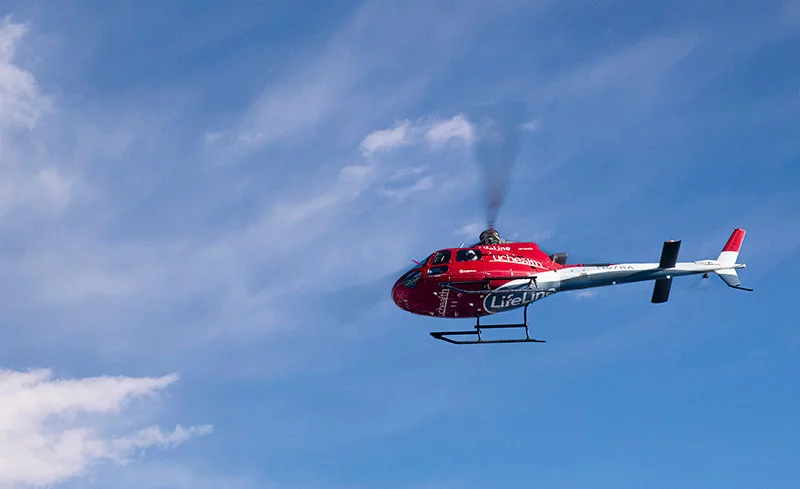
The LifeLine team responds to calls for help throughout northern Colorado. The team is based at Medical Center of the Rockies. They typically transport patients to their home hospital or sometimes to UCHealth Poudre Valley Hospital in Fort Collins. The helicopter medical personnel includes a pilot, a critical care flight nurse and a critical care flight paramedic who must have worked at least five years in a busy ICU, ER or 911 service.
They train with local first responders throughout the region to assess their capability to respond to emergencies and regularly practice landings and dry runs with equipment.
“Especially when in the back country, it’s a matter of all hands on deck,” said Boyer-Groff. “If we are going to have to do a rescue on a trail, and a patient is miles in, we have limited capability in terms of where we can land and because of our small medical crew. But local rescue squads can hike in and carry someone out – it takes a lot of manpower – and they have more people to do that.”
When the SOS call came in for Cody, a LifeLine crew member requested a CroFab kit (an FDA-approved antivenom derived from sheep blood) from the hospital pharmacy.
“We need CroFab, and it’s a finite resource,” he said. “It’s hard to manufacture, very expensive, and usually a patient needs four to six vials of it. We must be good stewards of limited resources and be able to discern when and if it is needed. Part of our job is to determine if a patient meets the criteria for an invasive procedure, like getting the antivenom, or if we need to hold off until we get them to the hospital.”
When LifeLine emergency workers arrive at the scene of a snake bite, they will determine whether the bite is a “dry bite” and the patient just needs to be brought to the hospital for further monitoring via an ambulance, or if the patient needs antivenom as soon as possible.
“We’ve got priorities of care on how we are going to approach a snake patient. We are looking at the patient’s symptoms, the rate of the venom’s spread, and any sign of shock,” Boyer-Groff said. “A patient like Cody will be given the antivenom, then prepped for the flight and then taken to the hospital so they can get more in-depth care.”
Other symptoms of a venomous snakebite include:
- Two visible fang marks (if the snake is venomous).
- Possible teeth marks from the bite.
- Swelling and pain in the bite area.
- Blue and black discoloration of the tissue.
- A metallic taste in the victim’s mouth.
- Painful swelling of lymph nodes in the groin and armpit areas within about an hour of the bite.
- Possible bleeding or bruising.
- Difficulty breathing.
- Low blood pressure.
- Muscle spasms.
- Extreme pain.
- Shock (in rare cases).
Other factors that paramedics consider when they decide whether a person should receive antivenom include their age, the location of the bite and whether the venom is causing severe pain, bleeding, bruising or swelling near the bite or circulation issues.
If people suffer rattlesnake bites, Boyer-Groff warned them never to touch the snake. Instead, take a picture, if possible, or describe any distinctive features to emergency workers.
“Our goal is to do best for the patient at the scene and get them to the hospital in the helicopter or in a ground ambulance so they can be observed in the ER with all of the capabilities and expertise they have there,” he said.
Recovering from a rattlesnake bite
As Cody was being airlifted to Medical Center of the Rockies, Allison and the kids drove there and met him in the ER. One of the LifeLine crew members had called her when they landed to tell her that Cody was doing well and was in good spirits.
Cody received more antivenom when he arrived at the hospital and spent the first two days in bed because his leg was so swollen and achy that he couldn’t bear to put any weight on it.
On the day he was discharged, the medical team helped him get out of bed and use a walker.
“It was still tingly and numb and was crazy swollen,” he said. “It really hurt to stand, which it continued for several days after I left.”
After a rattlesnake bite, the Windsor community rallies around a local family
Cody and Allison have made Windsor their home for seven years. Married for 12, the couple met at University of Northern Colorado where Cody received a master’s in history and Allison earned a bachelor’s in education.
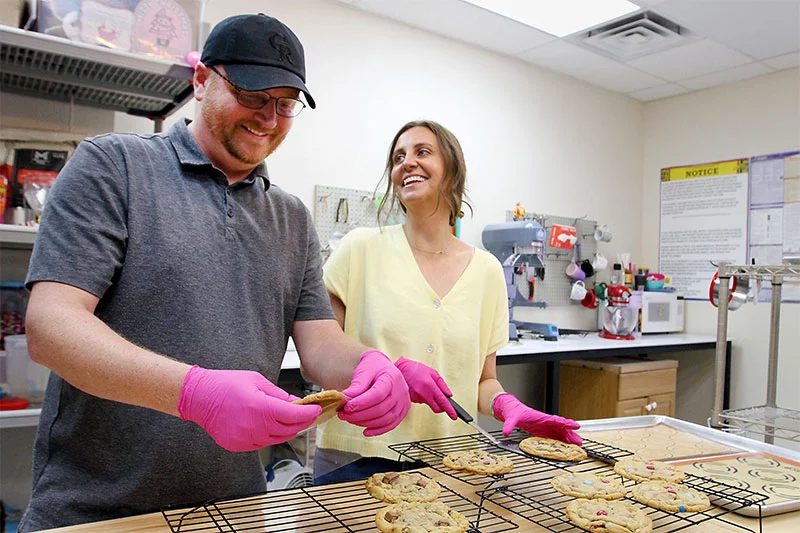
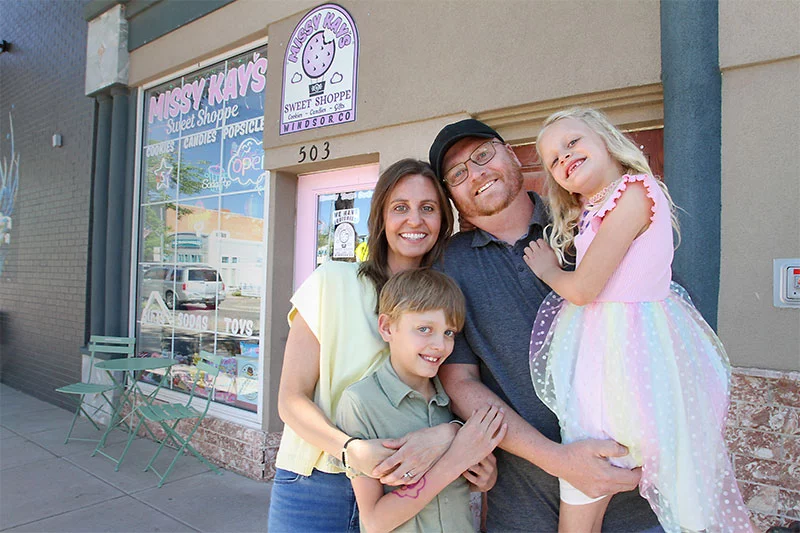
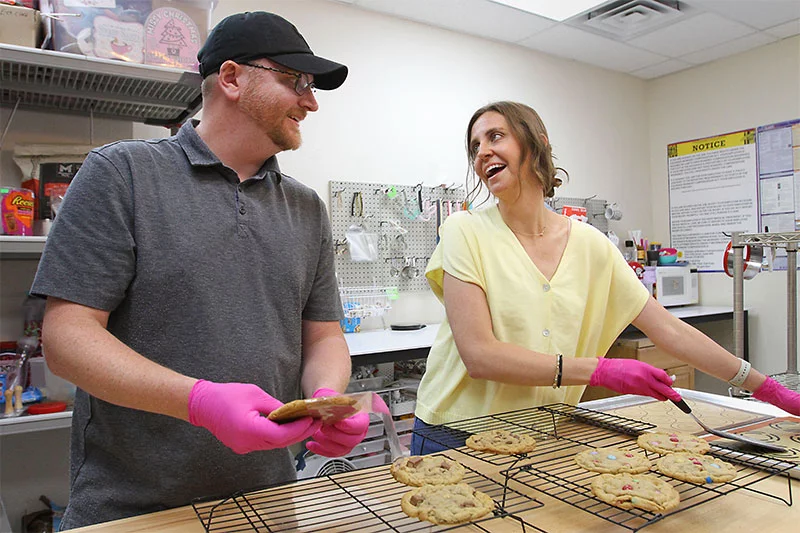
The couple eventually went into the restaurant business and opened a nearby smoothie shop, Inta Juice Windsor. Last summer, they launched a cookie and candy store called Missy Kay’s Sweet Shoppe, a nickname for their daughter. Their specialty is fresh-baked cookies, and they stock nostalgic candy, soda and fudge. So as not to exclude their son, the shop also has a toy section called Colson’s Corner.
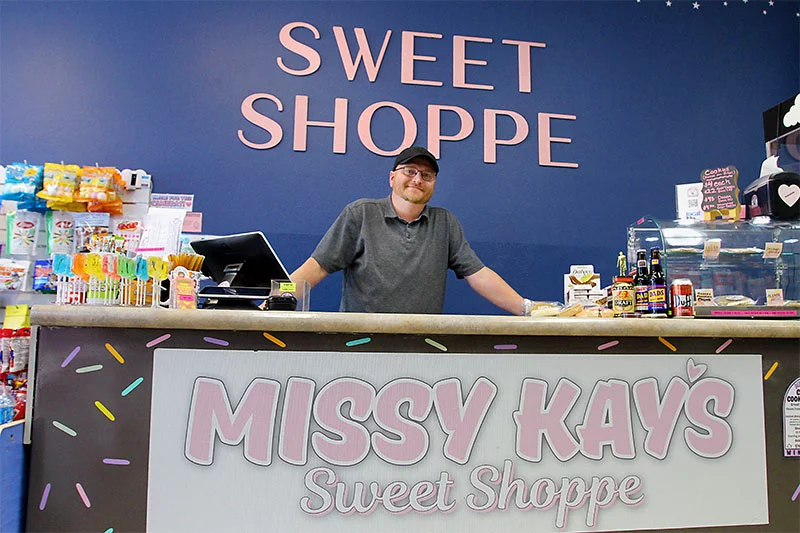
Cody and Allison are a good team, with Cody working the front of the shop and Allison making her sweet confections in the back. Operating two eateries is a seven-day-a-week job for the couple, and the last thing they needed was for Cody to be sidelined by the snake bite.
“It’s a lot of work, and we are constantly busy,” he said. “A snake bite and follow-up doctor visits can be a big setback.”
But if there is a silver lining to his accident, it’s been the warm response from the Windsor community, which has rallied behind the Neidert family and made them feel like an important part of the town.
“We have been blown away by the support people have shown for us. So many people have been stopping by to check on us,” Allison said.
Rattlesnake bite doesn’t stop family from enjoying Colorado outdoors
Cody and Allison are back at their cookie and candy shop.
His ankle and foot are still painful and swollen, but are slowly improving. Along with the local support, they are grateful for other things: the swift response from paramedics and LifeLine rescuers; the fact that they were within cellphone range and able to call 911; and the help they received from strangers who stopped and stayed with Cody on the trail.

“It could have been so much worse,” Allison said.
Getting back outdoors was important to the couple, and the family recently went camping. This time, though, they went to a higher elevation campsite where they would be much less likely to run into snakes.
When asked if he’d go back anytime soon to the scene of his snakebite, Cody thought for a few moments.
“Not in the summer, but maybe in the winter. And maybe we’ll even find that same rock. But this time, we’ll make sure the rattlesnakes are hibernating.”