
Dr. Jessica Rove had used surgical robots to replace the heart valves of 230 patients UCHealth University of Colorado Hospital by the time Matt Hogue, 52, rolled into a surgical suite earlier this year.
His, though, was different.
It would be the first robotic aortic valve replacement in the Rocky Mountain West.
Rove had used a Da Vinci surgical robot to repair tricuspid valves that keep blood moving in the right direction after entering the heart, and mitral valves separating the heart’s powerful left chambers. The aortic valve — the gateway to bodily oxygenation — remained the robotic-surgery holdout.
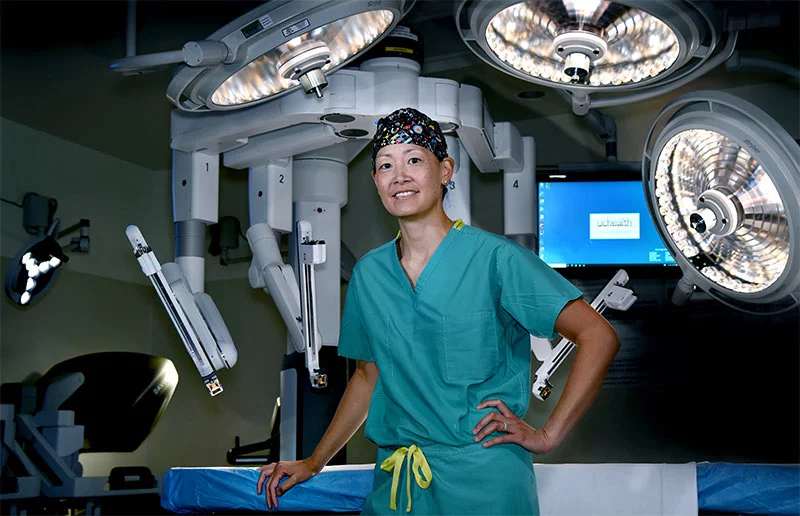
The aortic valve presents unique challenges for a heart surgeon. The aortic root in which the valve sits is tight and narrow, and the left and right coronary arteries that dip back down to sustain the heart itself both emerge from it. There’s also a lot of blood pressure, so surgical closures must be tight. Because of all of these challenges, the first robotic aortic valve replacement surgery — known among experts as RAVR — didn’t happen until West Virginia University surgeons pioneered it in 2020.
Robotic approach speeds recovery
The motivation behind robotic heart-valve surgery lies mainly in the vastly lower collateral damage involved. With the robot, the main incision is a three-inch cut below the right armpit. Without it, surgeons need a 12-inch incision through the middle of the chest that involves splitting the sternum. RAVR patients are typically out of the hospital in half the time and recover weeks faster. But an array of considerations are at play, ones that demand a cardiac team’s careful assessment and, most importantly, the patient’s preferences.
If a patient’s aortic-valve problem is a calcified valve (aortic stenosis), a minimally invasive transcatheter aortic valve replacement, known as TAVR, may be the right answer. However, if the problem isn’t aortic stenosis, but rather a bicuspid valve (one with two flaps that open and close rather than the typical three) or some other valve problem, TAVR won’t work. A TAVR valve needs that calcification to anchor itself to the aortic root’s walls.

Life expectancy also matters. TAVR valves last an estimated 10 to 15 years. Aortic valve replacement options such as the Ross Procedure, where the surgeon swaps out a patient’s problem aortic valve for their healthy pulmonary valve and then replaces the pulmonary valve with a donor valve, also have a roughly 10-to-15-year sunset. Mechanical valves typically implanted in open aortic-valve replacements — and, now, robotically — can open and close for decades, but patients need to take blood thinners for the rest of their lives.
Also, open and robotic aortic valve procedures let surgeons address other structural heart issues such as atrial fibrillation, Rove said.
A leaky aortic valve needed replacing
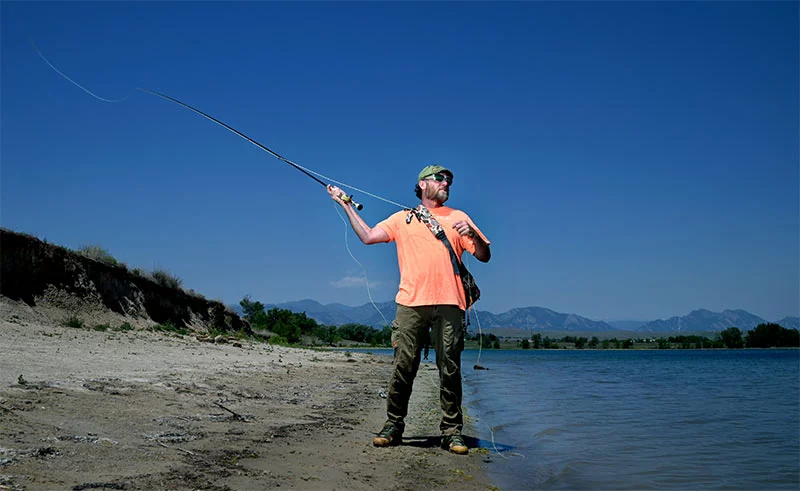
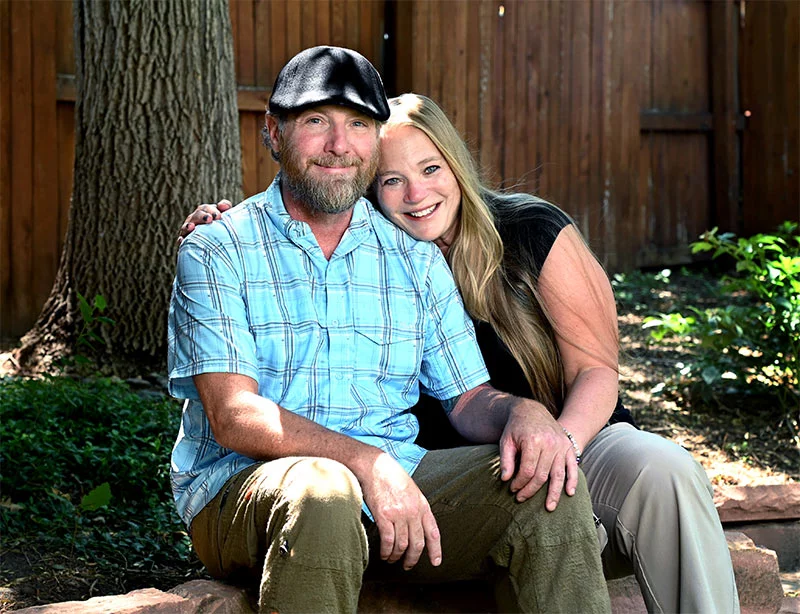
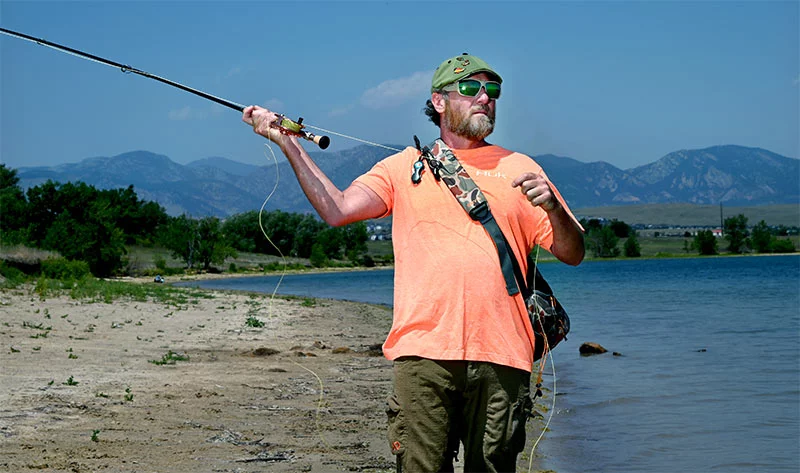
In Hogue’s case, the aortic-valve problem wasn’t stenosis. He was diagnosed with dilated cardiomyopathy in 2007. It’s often genetic, and his father also has it. Hogue was in his early thirties at the time, an avid hunter and outdoorsman who worked, and works, in a physical job at a brewery not far from his and wife Heather’s home in Arvada. The UCHealth Structural Heart and Valve Clinic team has helped him manage his dilated cardiomyopathy with medications and, in 2018, with a surgically implanted pacemaker-defibrillator called a CRT-D to manage atrial fibrillation.
But by late 2025, Hogue’s leaky aortic valve needed replacing. He met with Rove, who’s also an associate professor of cardiothoracic surgery at the University of Colorado Anschutz School of Medicine, and her colleague Dr. Brett Reece. They discussed the options and decided that the robotic approach would be best.
“I wasn’t excited about taking blood thinners the rest of my life, as young as I am,” Hogue said. “But what appealed to me about it was the less-invasive way about it and the quicker turnaround to get back to work, back to life.”
RAVR got him home in a week
The RAVR procedure on Feb. 26 went smoothly. Rove credited the surgical team’s three years of experience doing robotic heart valve surgeries as well as similarities to other robotic heart-valve procedures. For example, the incisions were identical to those used in robotic mitral-valve replacement, she said.
“It ended up really not feeling all that much of a step up for us to do the aortic valve,” Rove said. “I think we were all kind of pleasantly surprised that it felt very straightforward.”
And the robotic approach’s ability to do so much with so little disruption impresses the surgeon herself.
“It’s just crazy when you see how small their incisions are. Even we’re shocked that we can do that through that little, tiny incision,” Rove said. “Otherwise, we would cut through their sternum to do this operation — break a bone just to reach the heart.”
Surgical ICU nurses had Hogue up and walking around the unit the next morning, and he was out of the ICU within 24 hours. He recalled nurses who, surprised by the mobility of someone who had had an aortic-valve replacement just a day before, looked at his chart and realized, “Oh, you’re that guy.”
Robotic aortic valve replacement got him ‘back to life’ sooner
Hogue spent a couple of extra days in an inpatient unit as doctors fine-tuned his blood-thinner balance. On his walks around the unit, he spoke with men who had had open aortic valve replacement surgery. They had spent a week in the ICU. Hogue was home in a week.
There was one complication. The surgical team deflated the right lung to access the heart during the procedure. That brings about coughing afterward, which is healthy. Hogue says he was coughing hard while his right arm was raised over his head when he felt a stitch pop and was found to have a pleural effusion (a buildup of fluid in the space around the lungs). Rove did a follow-up robotic procedure to drain the fluid.
Three months after the robotic aortic valve replacement, Hogue was back at work, doing 100 push-ups a day, and taking short hikes in the foothills west of Arvada. He’s thinking he’ll build up his strength and stamina for the rigors of mountainous elk hunting for the 2027 season. In the meantime, while the aortic valve seems solid, “I just still have got to deal with my cardiomyopathy,” he said.
Being the first RAVR patient in the region had been a risk, he says, but he had faith in Rove and the surgical team. It paid off.
“I think that’s the biggest thing, from my side, is just how fast the recovery was,” he said.