
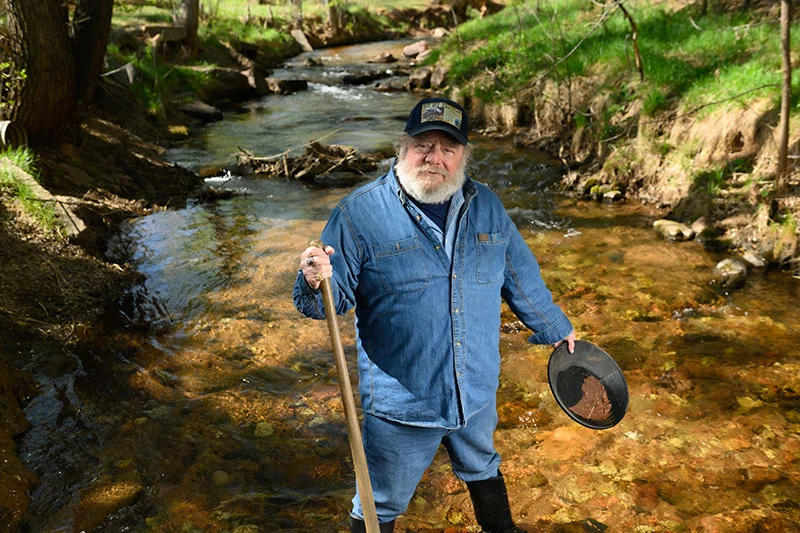
Ray Golden has embraced hard work throughout his life, whether doing door-to-door sales in the 1980s, sleuthing out the best gold-panning spots in Colorado or figuring out who was haunting his Colorado Springs house.
So, a year ago, when Golden left UCHealth Memorial Hospital Central with supplemental oxygen after surgery, he adopted his typical tenacious approach. He started pulmonary rehabilitation, a medically supervised program of education, exercise and support for patients with chronic lung conditions.
These days, Golden, 71, is no longer tethered to a supplemental oxygen tank at all times. And after treatment for two types of cancer and other health conditions, he is returning to the things that bring him joy: showing others how to prospect for gold, researching Colorado history and working on his next book of historical fiction.
“What they did for me was everything,” he said of the team at pulmonary rehabilitation. “The education they gave me enabled me to see that I could be helped. It made me believe. And then I did the work.”
A mystery that sparked a passion for history
Golden’s life story often mirrors the colorful characters in the novels he writes.
He grew up on the East Coast, one of six children in a family that lived for a time in an apartment in a Goodwill building. His father, who had had polio, was operations director there, and friends called Golden and his brothers “the Goodwilly boys.”
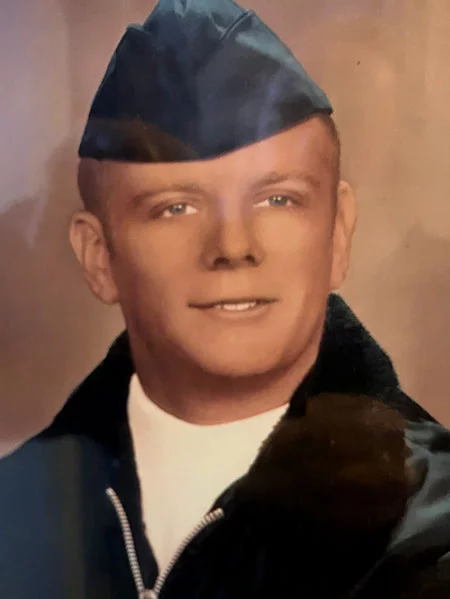
Golden joined the Air Force in 1976 and spent time at several bases before moving to Colorado Springs in 1979. He was stationed at the Cheyenne Mountain Complex, the Air Force operation housed inside the mountain west of Colorado Springs.
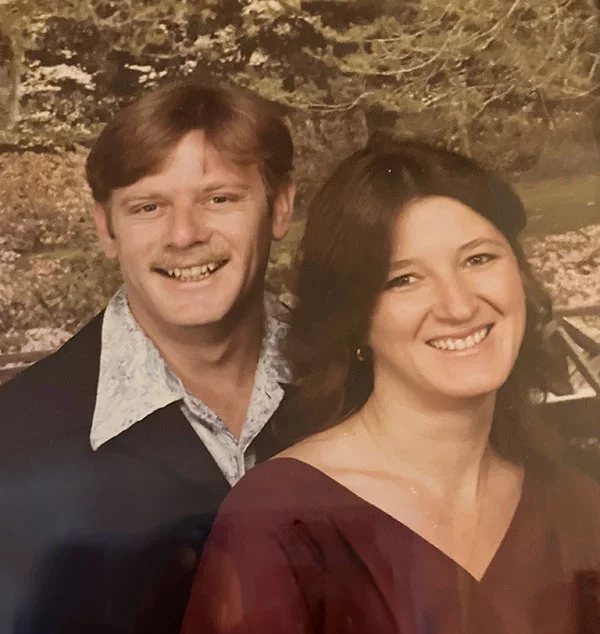
Golden made a fateful decision when he picked up a second job, emptying ashtrays and filling beer cases at Harmony Bowl, a local bowling alley. There, he met Meredith, his wife of 47 years. She was working at the front counter.
“She was so cute,” he said, laughing at the memory of tripping and, as he says, “falling for her” when they first met. Just three weeks later, they got married in the Peterson Air Force Base Chapel, east of Colorado Springs.
After Golden left the Air Force in 1980, he worked as a door-to-door salesman and sales supervisor for Royal Farm Dairy, signing up customers for milk delivery service. He’s worked as a salesman all his life.
Encounters with a ghost in his central Colorado Springs home launched Golden’s interest in local history. It started when a member of his softball team, who was at Golden’s house for a barbecue, went upstairs to use the bathroom. He told Golden he saw a ghost. Golden was dubious.
But then one night in 1987, Golden lay awake, worrying how he would earn enough money to support their growing family after he’d left the milk delivery sales job. Golden saw movement in the hallway outside their upstairs bedroom. It appeared to be a ghost, a woman, leaving the room Golden and his wife planned to use as a nursery for the baby girl they were expecting. Golden theorized that he startled the ghost – the same one his softball teammate had seen. Golden became intent on figuring out who she was.
His curiosity launched a 10-year quest to solve the mystery. And once Golden commits to a challenge, he doesn’t give up. He immersed himself in local history, becoming a regular visitor to the Colorado Springs’ Pioneers Museum and the Pikes Peak Library District’s local history section. He scoured history books, old newspapers and maps, slowly piecing together the story of his home and the people who came before him and his wife.
Initially, he thought the ghost was a woman named Christiana, whose name was on the deed.
But then one day, Golden found a crucial clue in a book that librarians had only recently put on the shelf. The book records permits that officials issued to move homes. Golden discovered that Christiana had purchased the house and had it moved from downtown to its current location, which was along a former streetcar route. Golden next discovered that Christiana never lived in the house. So, he read local obituaries to figure out who had and found records about a woman named Barbara. Golden tracked down Barbara’s living relatives, who showed him a photo of her. The image matched to the ghost he and his softball teammate had seen in the house.
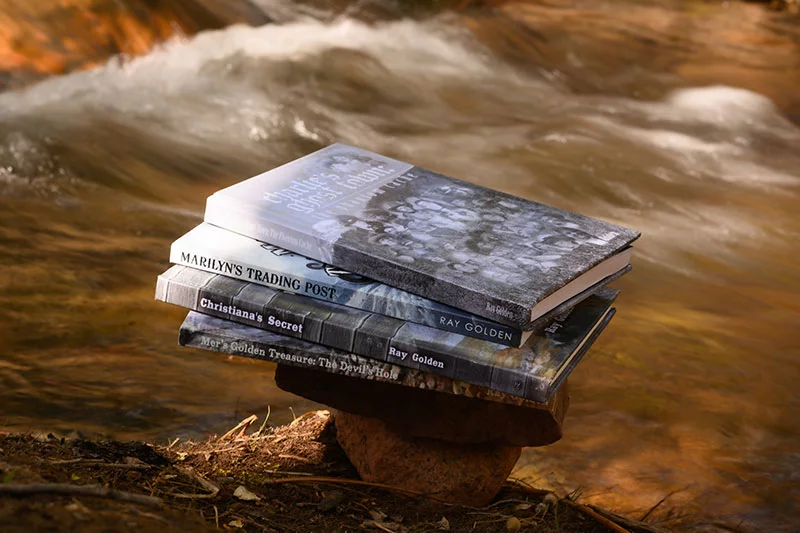
Golden’s search inspired his first novel, “Christiana’s Secret: The Lost Treasure of Dead Man’s Gulch,” a 2009 historical mystery that blends real events, Colorado locations and characters he imagined. Golden has since written three other books: “Charlie’s Ghost Town: The Phantom Cache,” “Mer’s Golden Treasure: The Devil’s Hole” and “Marilyn’s Trading Post: Gold, Ghosts and Murder.”
For Golden, history and gold panning go hand-in-hand
Golden’s interest in Colorado history led him outdoors, into the creeks and rivers where miners once searched for gold.
His first experience panning for gold came in the early 1990s. His father came to town for a visit and, after having seen a show about prospecting, suggested they try their luck in the mountains west of town.
With little experience and no expectations, Golden and his dad headed to Granite, Colorado, not far from the silver-mining boomtown of Leadville. To their surprise, they found three ounces of gold in a tributary of the Arkansas River. They celebrated by buying beer and chili dogs in town.
“We didn’t know anything,” Golden said. “It was just luck.”
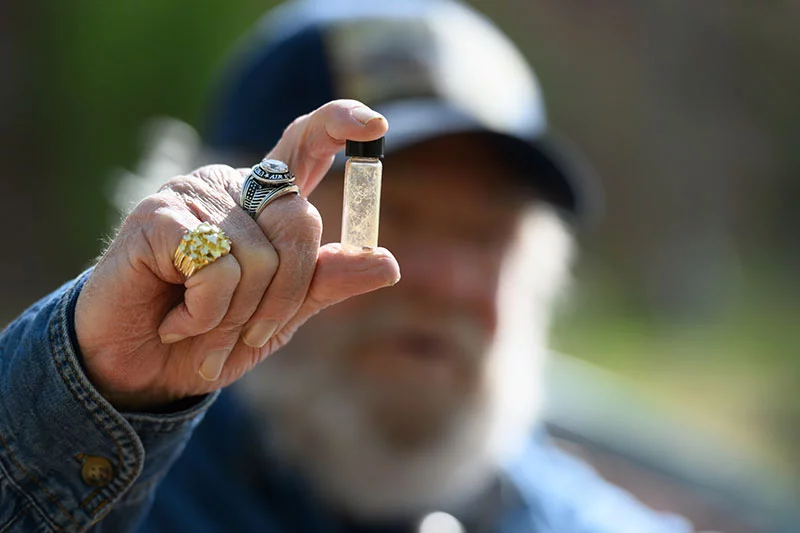
Golden soon realized that he could apply his persistence and knack for research to gold prospecting. He studied old newspapers, then created a large board on which he mapped news events from the 1800s, including gold strikes. He became an expert on the properties of gold and sediment, and on how they travel downstream in creeks and rivers. Getting rich was never his goal – though there were a few times when a successful day panning for gold helped pay a bill or two, he said.
“It was never about the money,” he said. “It was always about the challenge.”
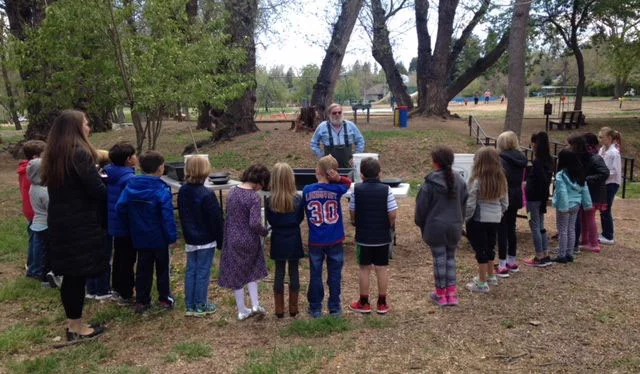
By the early 2000s, Golden was sharing his expertise with others, giving gold-panning demonstrations, talking about Colorado history and selling his books in Cripple Creek and beyond. He eventually began sharing his knowledge with children in schools, using gold panning to inspire young people to enjoy research and problem-solving.
“I used the gold panning as a tool, to teach them how to do their homework,” he said of his classroom visits. “You have to do your homework in anything in life.”
He also taught children never to give up — a lesson that helped him in his own life when he suffered some health challenges.
A series of health setbacks and a growing reliance on oxygen leads to rehab
The physical demands of prospecting – standing in cold mountain streams, balancing against the current, bending over a pan and swirling it to separate the sediment from the mineral – made it an activity Golden treasured. But by mid-2022, Golden’s health challenges made gold panning impossible.
In late 2022, doctors found a tumor in Golden’s small intestine and another on his left kidney after he went to Memorial Hospital Central with severe pain in his hip and back. Doctors diagnosed him with stage 3 colon cancer.
Dr. Brett Fair, a surgeon at Memorial Hospital Central, was working the day Golden came into the hospital and removed the tumor in his intestine and several of his lymph nodes. The kidney would have to come out later, Fair told Golden. Fair is also an assistant clinical professor of surgery at the University of Colorado Anschutz School of Medicine.
Fair warned Golden that he was facing a tough prognosis.
“I didn’t give him any assurance that we would get him to where he is today,” Fair said.
Golden received chemotherapy treatments for six months, and doctors removed his left kidney in late 2023.
Fair then performed two more surgeries on Golden, including a hernia repair. The doctor and patient formed a close bond, as Golden always made a point of asking about his family and regaling Fair with stories about his adventures in ghost hunting and gold prospecting. At one point, Golden offered to teach Fair’s young children how to pan for gold.
For a long time, given Golden’s health challenges, it wasn’t possible for him to follow through on his offer. Along with facing cancer, he had survived two life-threatening sepsis infections and is a disabled veteran who struggles with memory loss. Doctors also have diagnosed Golden with chronic obstructive pulmonary disease, or COPD, an umbrella term for lung diseases that make it hard for people to breathe and for which there are no cures.
In late 2024, after the hernia repair, Golden needed supplemental oxygen — four liters per minute — to maintain adequate blood oxygen levels.
Using supplemental oxygen can be a frustrating and isolating experience. In Golden’s case, he would sometimes walk to the kitchen counter in his home only to find that the tubing from his oxygen canister wouldn’t reach that far. He could no longer pan for gold.
“It was terrible,” Golden said. “I was tethered. I had to have more freedom.”
Golden’s doctors suggested pulmonary rehabilitation. After nearly a year on oxygen, Golden doubted whether it would work for him. But he was willing to give it a try.
What is pulmonary rehab: Learning to breathe – and believe – again
Pulmonary rehabilitation is a structured program of exercise, education and support for people who have chronic lung conditions, including COPD, interstitial lung disease, pulmonary hypertension, lung cancer, asthma or a lung transplant, said Lori Smith, manager of cardiopulmonary rehabilitation for UCHealth in Colorado Springs.
“It’s vital for patients who have any type of lung disease,” she said.
Patients begin the program by establishing their goals. Some want to be able to get dressed, use the stairs or walk to the mailbox without getting short of breath. Gaining independence can be a significant and meaningful accomplishment for them and their loved ones. Other patients want to be able to walk their dog or play with their grandchildren. Some, like Golden, want to get off oxygen, if possible.
Pulmonary rehabilitation includes cardiovascular exercise, weight training, a cool-down, breathing exercises and classroom teaching. Smith makes sure patients understand that “the heart and lungs are a buddy system. Therefore you need to exercise your heart, not just your lungs.”
Weight training to build muscle strength is a key part of the program. Stronger muscles use oxygen more efficiently, which improves a patient’s overall lung function. Patients also learn how to breathe more efficiently, she said.
Some patients are so weak that they can barely walk from their car into the facility. They may suffer from anxiety or depression or feel isolated because of their need for oxygen. Mental health experts provide support and resources during the program, which offers a safe place where patients are monitored as they get better, she said.
Diving into rehabilitation, despite his doubts
Golden said he was dubious when he started the regimen.
“I didn’t think it would help me,” he said. “And then it started working.”
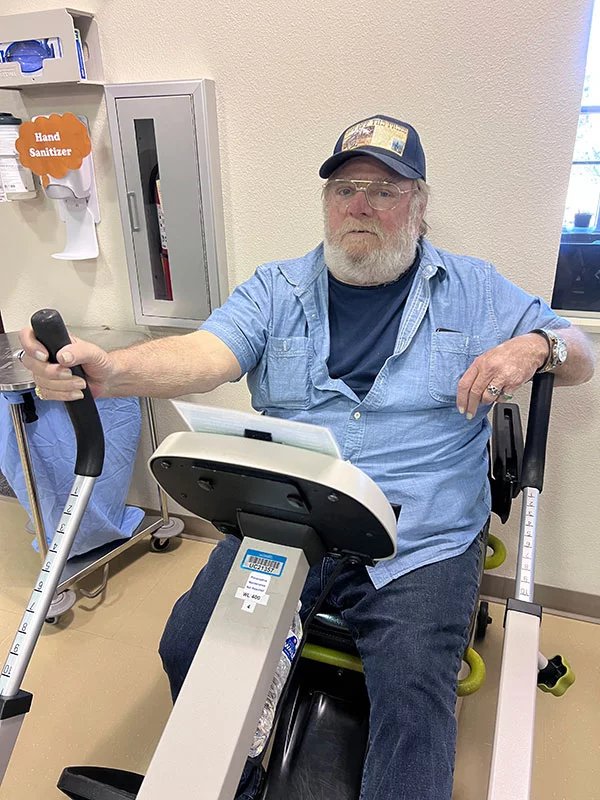
At first, Golden was able to taper down from four liters of oxygen per minute to two. Then he was able to get off oxygen most of the time. (He still uses it at higher elevations or when he’s doing vigorous activities.)
“I had to apologize to Lori,” he said. “I told her, ‘You were telling the truth. I thought I was too far gone. It worked. It really did.’”
Golden suffered a setback in February, when he needed gallbladder surgery, then had another bout of sepsis. For a time, he had to go back on oxygen.
“I was angry,” he said. “I had done all that work and then lost it.”
Smith assured him that pulmonary rehabilitation would work once more. And Golden knew what he had to do: “I just had to work again.”
After five sessions, Golden was able to once again reduce his oxygen use.
He continues to work out twice a week at the rehabilitation clinic. Smith said patients can enroll in an optional phase of the pulmonary rehabilitation program and continue to visit the clinic and use the stationary bikes, treadmills and other fitness equipment. Golden also walks 30 laps around his home, several times a week.
He praises every aspect of the rehabilitation program, including the upbeat music that fills the clinic as patients work out. And yes, Smith takes music requests.
“I can’t say enough about her,” Golden said. “Lori is amazing.”
In a gesture of gratitude, Golden had large prints made of street maps of Colorado Springs from 1882 and 1890 to give to Smith. Golden found them at the U.S. Library of Congress after a local librarian showed him where to look. The maps hang in the clinic for patients and staff to see.
A promise kept with the surgeon who ‘saved my life’
Golden also wanted to express his gratitude to Fair with the pledge he had made so long ago: to teach the surgeon’s children how to pan for gold.
Fair does not typically introduce patients to his family. But he had developed a close relationship with Golden through the ups and downs of his health challenges.
“I could tell how much it meant to him to be able to do this thing that he had been telling me about doing for so long,” he said.
Golden has persevered despite numerous and serious health challenges, Fair said.
“He has an amazing way of getting through problems,” Fair said. “He has a resolve and once he decides to do something, he gets through it.”
Golden is succinct in how he describes Fair: “He saved my life.”
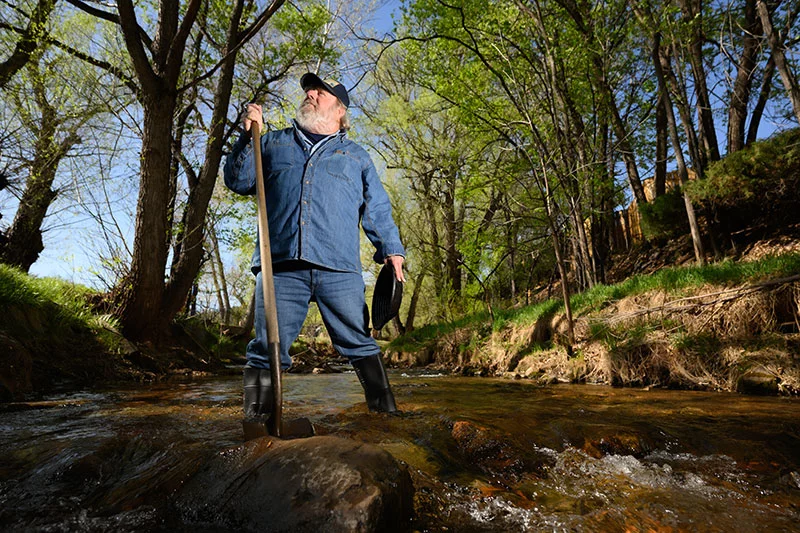
So last fall, Golden met Fair and his family at a creek in the foothills outside Colorado Springs. Golden arrived early to set up the equipment they would need – and perhaps plant a few small gemstones in the creek bed for the children to find. He showed them how to wade into the slow-moving water and look for places where treasures might hide.
The outing was meaningful for Fair’s children, who kept the gemstones as keepsakes, and for the patient who had worked so hard to recover from one health setback after another.
“It was a moment of victory,” Fair said. “It was a huge milestone that we were able to get to. There was lots of uncertainty at every step of the process. And while we helped him, he made it happen.”
Back to writing with a colorful new cast of characters
During his second rehab stint, Golden said, he began to think about writing a new book, realizing he felt well enough to undertake the work of research and writing. He’s already written the first chapter. It’s about Civil War widows who come West after the war ends. Golden has created his typically colorful cast of characters, some of whom are based on the rehabilitation clinic staff members who helped him get healthier: Lorilita, Doc Jane, Shotgun Tori and Calamity Carson.
As with his previous books, he plans to build their story around actual historic events. He loves when readers ask him, “Did that really happen?”
“I don’t like to answer,” he said with a grin. “Let them wonder.”
Golden’s wife, Meredith, has been by his side through many ups and downs — including taking him to 7 a.m. chemotherapy treatments and cheering him on as he began pulmonary rehabilitation. She never doubted he would put the rehabilitation to good use.
“When he goes to do something, he does it totally,” she said. “Was I surprised? Not really.”
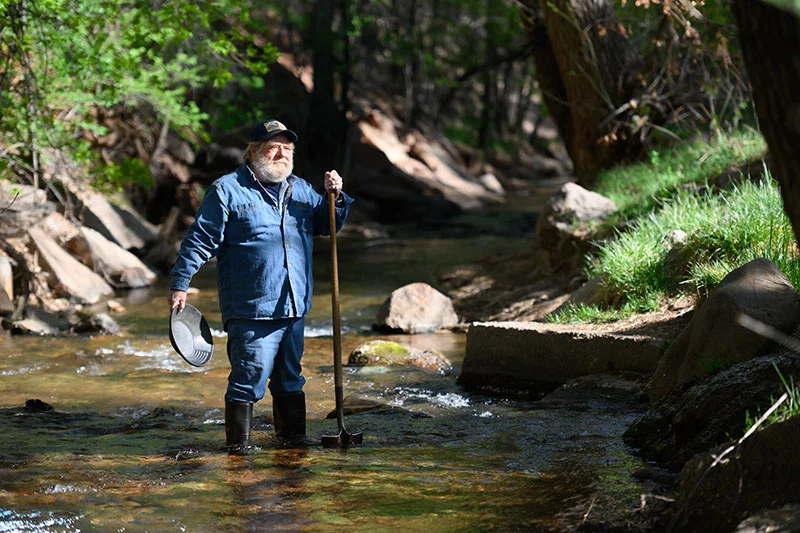
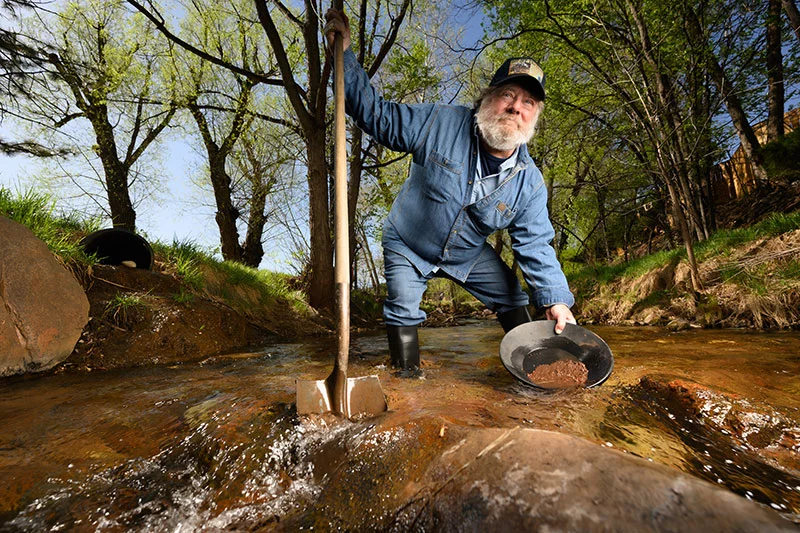
On a recent spring morning, Golden was wearing his lucky denim shirt and jeans and a pair of black rubber boots as he stepped into a local creek to demonstrate proper gold panning techniques. He showed how to move the dirt around in the pan to reveal the sought-after mineral, and how to tell fool’s gold from real gold. As he panned for gold, he shared a steady stream of historic anecdotes about Colorado.
Golden is excited about the freedom afforded by his newfound health, thanks to the experts at the pulmonary rehabilitation clinic who helped him largely get off oxygen.
“I’ve always done the work,” he said. “That’s the key to it all.”