
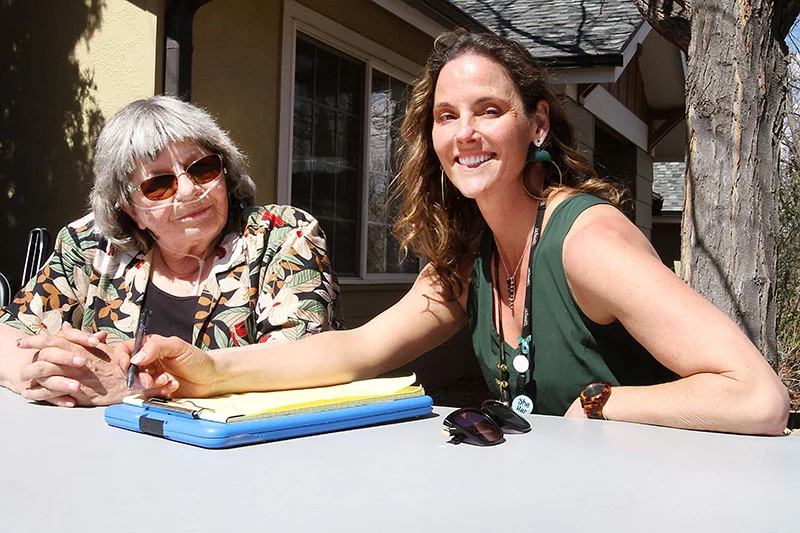
The Fort Collins woman once worked as a software engineer and earned a good salary. She owned her home, loved skiing at Aspen and enjoyed road trips to explore natural areas across the U.S.
Then Ute Willmore (whose name is pronounced “ooh-teh”) faced health challenges that led to mounting instability, and eventually, homelessness.
For decades, Willmore’s “salt of the earth” German resilience carried her through life, from immigrating to the U.S. in 1979 and earning a college degree to building a successful career as a software engineer. She worked hard and valued her independence.
But grit alone was not enough to stop a compounding crisis for this now 67-year-old woman. Chronic pain began to limit her ability to work. A job loss followed. Then the COVID-19 pandemic hit. As Willmore’s health challenges grew more complex, navigating the healthcare system and unemployment became increasingly difficult. Eventually, the stability that Willmore worked so hard to build began unraveling.
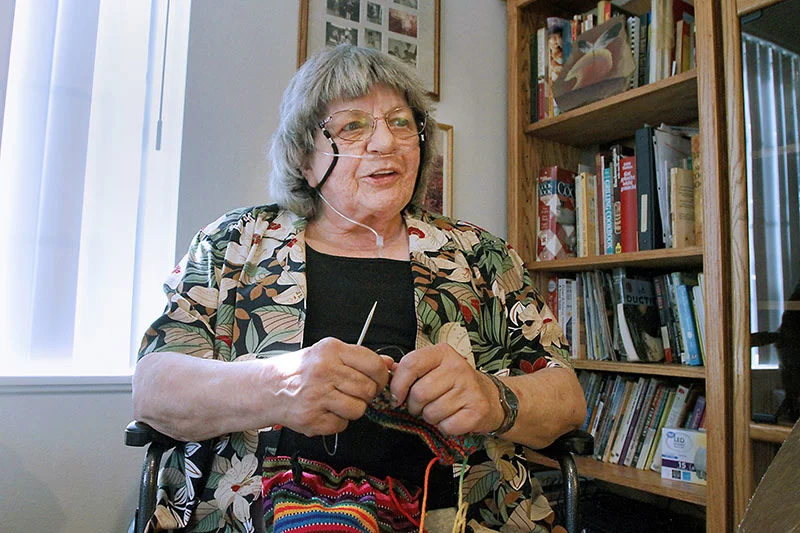
Willmore’s path from achieving the American dream to homelessness is a stark reminder of how easily life can fall apart when health challenges and financial hardships overwhelm people. But her journey also shows how people can rebound from the toughest challenges. With support from dedicated community health workers who take a “whole person,” approach, Willmore is stable again. She now has a place to live and can seek help from her UCHealth care manager whenever she’s facing new challenges.
Willmore rebounded thanks to a program designed to improve long-term health outcomes and reduce healthcare costs and by providing intensive, ongoing support to people with complex medical and mental health needs. Rather than relying on emergency services when challenges reach a breaking point, program participants receive consistent support from care managers.
Health experts have learned that when barriers to care go unaddressed, people often delay treatment until their problems become so severe that they must rely on emergency services. This approach strains the healthcare system and results in big costs and complications for the entire community, while offering only a short-lived Band-Aid for underlying chronic conditions and psychosocial stressors. By stepping in to help patients earlier, care managers help people stay healthier and avoid expensive health emergencies.
Willmore is a perfect example of how the program helps people succeed.
One setback after another: How Willmore’s problems compounded
Willmore built a successful career in government contracting as a software engineer before moving to jobs in the private sector for several more years. She enjoyed the work, but long hours sitting at a desk began to take a toll. Over time, Willmore’s lower back problems worsened, and she developed scoliosis and a bulging disc.
She first sought help from her primary care doctor in early 2000s. Medications eased her symptoms at first, but as the years passed, Willmore needed larger doses of pain pills to function. Eventually, she was taking the highest dose of morphine that her insurance plan would cover.
Then, everything else began to unravel.
Her employer ran into economic problems and laid Willmore off. At age 60, she was not ready to stop working and began applying for new jobs. But age discrimination makes it tough to get a new job at age 60. Then, the COVID-19 pandemic shut down much of the economy, along with Willmore’s chances of finding a job.
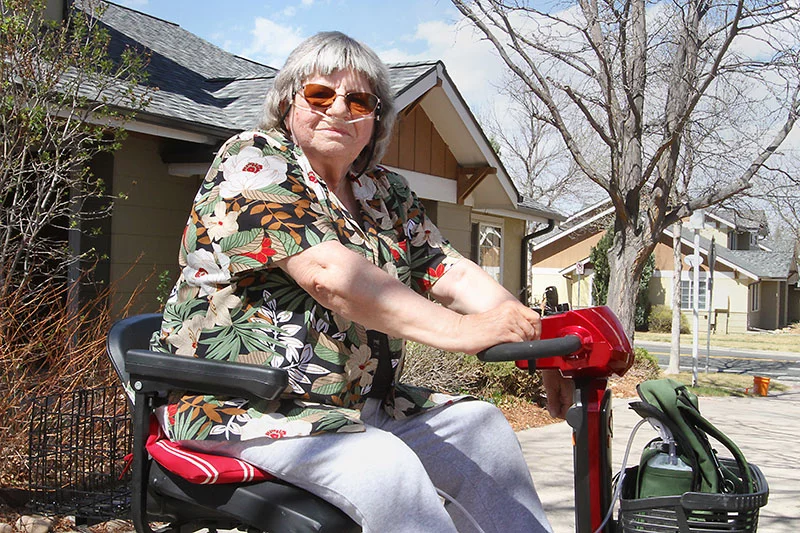
She applied for unemployment benefits immediately, but it took months before she got any payments. Her savings were already gone, and she began living on credit cards. Realizing this way of living was unmanageable, and with few options left, Willmore sold her home and moved into a room at a Motel 6. She managed the cost of the room for about a year, but money troubles forced her to leave and move into a friend’s guest room.
On top of losing her home, Willmore was dealing with agonizing pain. Her pain specialist had retired. With the opioid epidemic raging, Willmore struggled to find a new provider who was willing to prescribe the medications she now relied on to function.
Managing her health became overwhelming, and the barriers in front of her felt insurmountable.
During a call with a Medicaid representative, she was offered a lifeline if she would take it.
Willmore agreed to a referral to what’s known as the Medicaid Accountable Care Collaborative.
“They asked me if I wanted an advocate. I said, ‘Sure.’ But I didn’t really think anything would come of it,” Willmore said. “Then Emily called.”
How intensive help from a care manager and health coordinator changed Willmore’s life
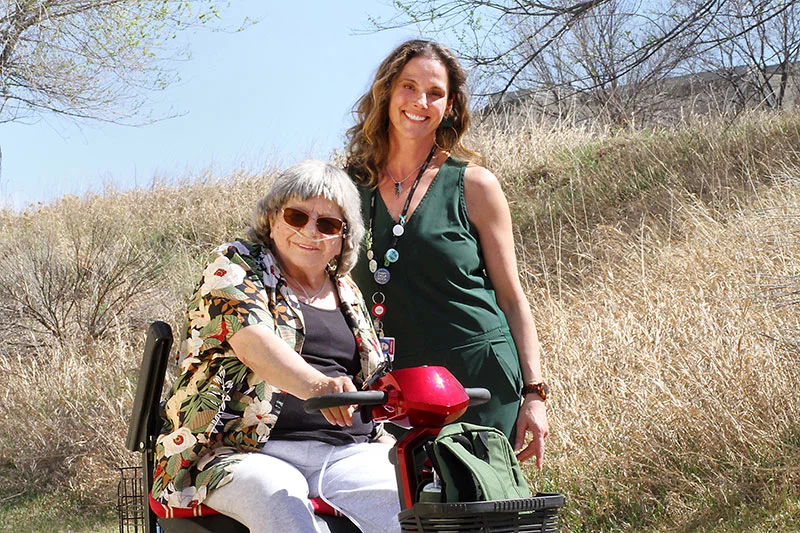
Through the UCHealth Medicaid Accountable Care Collaborative, known as MACC, Willmore connected with a care manager named Emily Everett.
Everett has a background in psychology and is a licensed professional counselor. She learned about MACC while working at a behavioral health center and providing crisis assessments in local emergency rooms. Everett made referrals to MACC from her prior job and was so impressed with the intense care management program that she soon applied for an open position and joined the team. That was six years ago.
Her experience as a licensed professional counselor is foundational to her work as a MACC care manager. Her training in building connections and rapport as a precursor to change, growth and healing has become her core approach, she said. That relationship-first focus shapes how she does her work every day.
The MACC provides community-based care management for high-risk, complex patients, like Willmore, who receive health insurance through Medicaid, the government-funded program for people who are disabled or who earn very little.
Stephen Thompson manages care coordination for UCHealth’s Community Health Improvement department in northern Colorado, and oversees three community-based care management programs:
- MACC, which supports adults.
- Healthy Harbors, which focuses on children and families.
- Postpartum Nurse Home Visit program, which focuses on mothers who have Medicaid and their newborns who are born at UCHealth Poudre Valley Hospital.
The MACC program follows a statewide framework established in 2011 in what was launched as a Health First Colorado (Colorado Medicaid) initiative. The aim of the program is to improve health outcomes and reduce avoidable healthcare costs for Colorado Medicaid members.
In 2025, MACC and Healthy Harbors received over 840 referrals from doctors, community partners and emergency medicine managers. Each person who is referred to the program goes through an initial screening process to verify their Medicaid eligibility, then is assigned to a care manager. In 2025, the two programs were able to help 70% of patients become stable. In the first quarter of 2026, 11 full-time care coordinators were managing more than 300 active clients, Thompson said.
MACC workers do not bill for their services. Nor do they receive direct reimbursements from Medicaid for the support of complex patients like Willmore.
Instead, UCHealth Family Medicine Center and Salud Family Health Center in Fort Collins, two primary care clinics where both MACC and Healthy Harbors are fully integrated, provide a portion of the programs’ “pooled-resource funding.” Healthcare experts have learned that this community-based care management program model lowers overall costs to communities and to healthcare and is effective for improving health outcomes and overall stability for program participants.
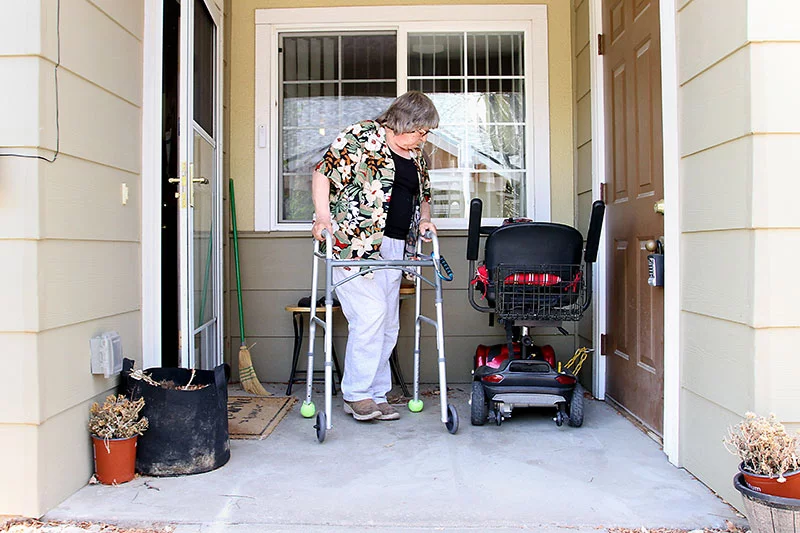
“We know that people’s ability to work and remain solvent is healthcare. Housing is healthcare. When you think about Ute, she is one of these clients,” Everett said.
Everett said the compounding issues of Willmore’s case were so complex that “you couldn’t make this stuff up.” From financial and legal predicaments to being shuffled among pain management clinics, Ute faced a web of challenges. Despite the complications, Everett stayed by Willmore’s side, helping her navigate pressures that kept mounting.
“There were a lot of mountains to climb,” Everett said. “The things we had to navigate were so outside the box.”
That complexity is where Everett’s work begins.
Everett’s job is to serve as a bridge between patients, healthcare providers and community organizations, focusing on five pillars: connection to a primary care medical home, vision, dental, mental health and specialty care/community resources.
Her knowledge of local programs, their services and how to navigate them helps clients move through systems that can feel overwhelming.
“Ute is one of those people you can’t believe this has happened to them,” Everett said. “And because the system can keep people tethered in perpetual cycles of crisis, it can sometimes take years to get them out of these crisis situations.”
And that was the case with Willmore.
Chipping away at the complex problems Willmore was facing
Together, Everett and Willmore began addressing the issues one by one:
- Medication crisis resolved: When Willmore was left without opioid refills, Everett secured a temporary bridge prescription until Willmore could connect with a new doctor to help her manage her pain.
- Pain management transition: Everett helped Willmore find a pain specialist who gradually helped her transition from high-dose morphine to buprenorphine, which helps people reduce their use of morphine while still addressing their chronic pain.
- Medicaid navigation: Everett assisted Willmore in applying for and receiving Medicaid’s Elderly, Blind and Disabled Waiver. More recently, Everett completed Willmore’s recertification paperwork while Willmore needed rehabilitation following a hip replacement, ensuring her healthcare coverage did not lapse.
- Medical coordination: Everett helped establish a primary care medical home for Willmore through Salud Family Health Center and continues to serve as a liaison among her care teams.
- Housing stability: Everett helped Willmore secure a Foothills Gateway housing voucher for individuals with disabilities, helping her transition from homelessness and couch surfing into her own apartment in an unusually fast five-month timeframe.
- Legal and financial advocacy: Everett connected Willmore with the Denver University Tax Clinic, which helped resolve her tax case. Then she connected Willmore with legal counsel, which helped her with her disability claim.
- Home and quality-of-life improvements: Everett referred Willmore to the CAPABLE program, which provided items such as a lightweight vacuum cleaner, and coordinated the installation of a walk-in shower and accessible shelving while Willmore was in rehabilitation. She also connected her to Goodwill services for discounted items, such as a shower chair, and for rentable items, such as the wheelchair she needed after hip surgery.
- Moving support: Everett arranged assistance through the Useful Public Service program to help Willmore move her belongings from storage into her new apartment.
- Nutrition and community resources: Everett connected Willmore with a senior nutrition pilot program, food pantries and the Larimer County Office on Aging Chore Voucher Program, which provides funding for services such as gardening and window washing.
- Ongoing advocacy: Everett continues to check in monthly or bimonthly, helping Willmore manage new needs and prepare for potential back surgery.
All of the changes have been a huge relief for Willmore.
“I thought it would be years before I had a place of my own,” Willmore said. “I’d be dead or on the streets if it weren’t for Emily. She knew where to go and what to do.
“Every time, she was right there,” she said. “She’s been my angel the last few years.”
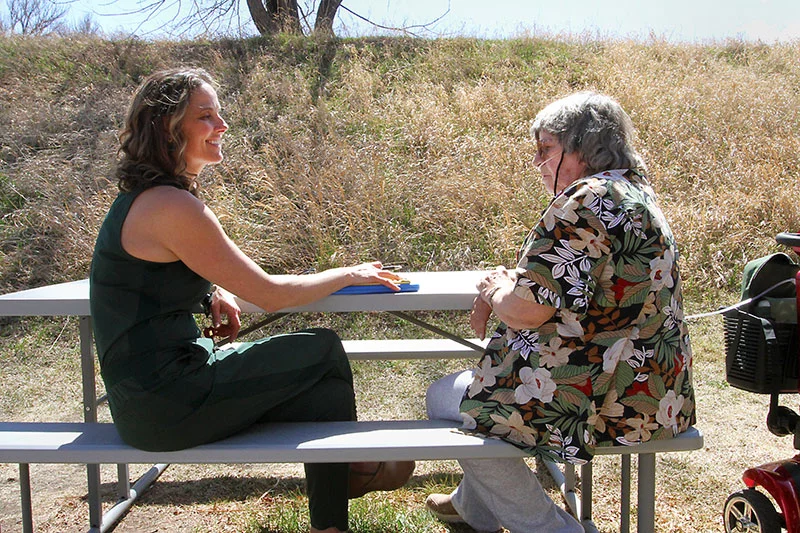
Everett said staying current on community resources is part of her role, but successful outcomes also depend on client engagement.
“It takes a client who’s willing to stay involved,” Everett said. “I may coach or nudge, but Ute has been fully willing to advocate for herself.”
Everett said Willmore is willing to do telehealth appointments, she responds to her emails and accepts calendar invites so they can stay organized. And because of that strong collaboration, Willmore now lives in her own apartment, manages her medications safely and is focused on rebuilding her independence.
Willmore’s experience underscores a broader truth: healthcare extends beyond clinic walls. Stable housing, coordinated support and trusted partnerships can mean the difference between an ongoing crisis and a path forward.