
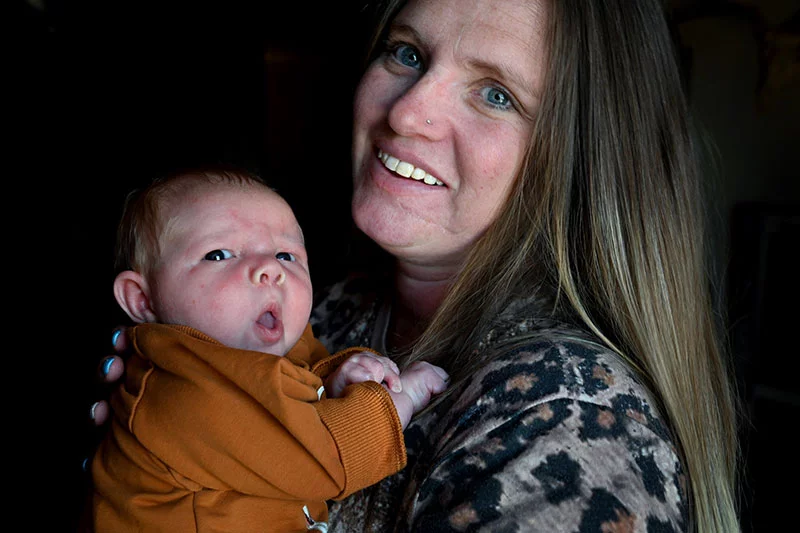
Jade Jacquart can predict which heifers are close to giving birth on the southeastern Colorado farm and ranch she shares with her boyfriend and their blended family. She watches how the cattle lie on the ground, or whether they have a certain kink in their tail while standing.
“This one will be our last,” she said, pointing to the black heifer with a “100” on its ear tag.
Jade could tell that this heifer — a female cow who hadn’t given birth yet — wasn’t as far along as their 45 other heifers.
She watches the family’s cows throughout the day. At night, when she’s awake feeding her newborn son, she checks the cameras trained on the pens outside their home, to see if any heifers appear ready to give birth and might need help.
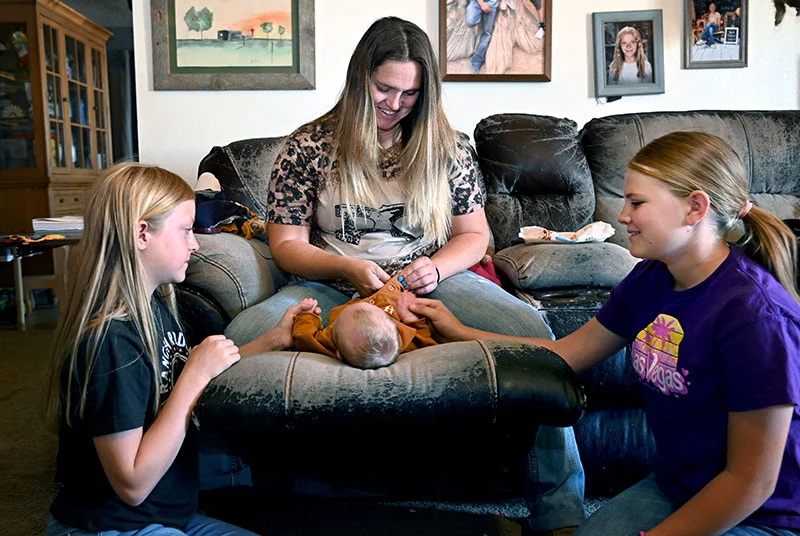
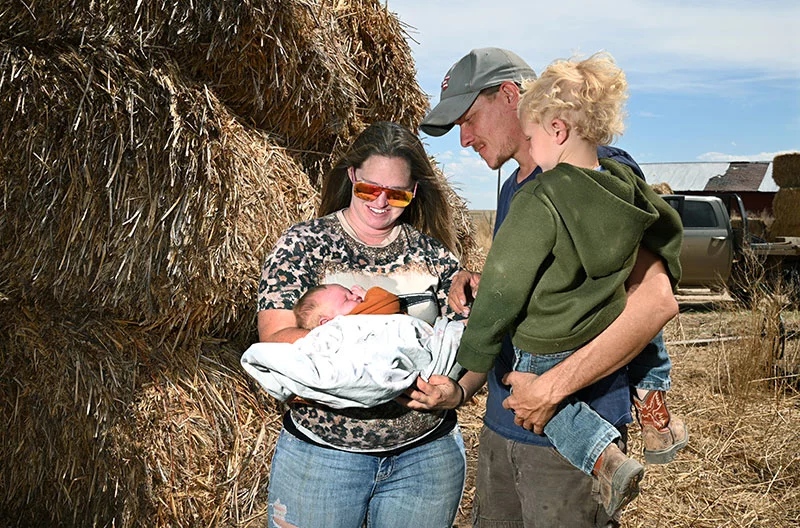
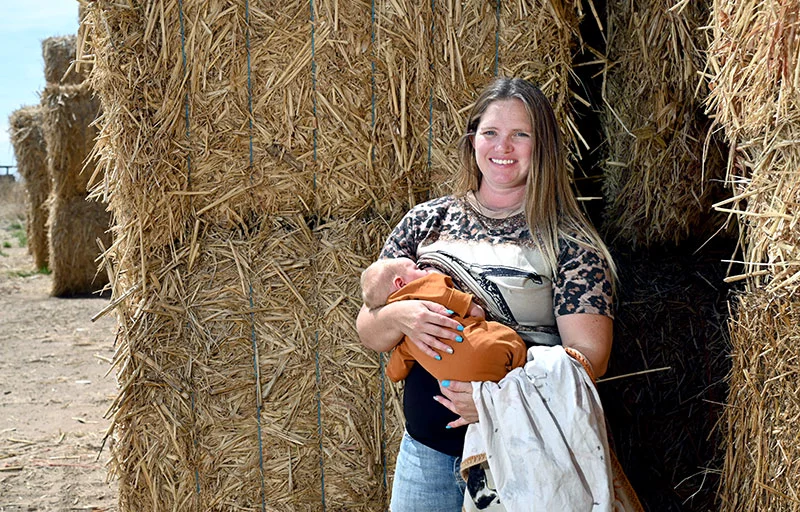
It’s the season of new life at their farm, with kittens under the front deck, puppies in the basement and the calves born just yards away. And then, of course, there’s Beauden, who arrived just a few weeks ago, the youngest son of Jade and her boyfriend, Branden Dunlap.
They all live outside of Eads, a town of 700, where downtown’s main street features a movie theater, the visitor center for the Sand Creek Massacre National Historic Site outside of town and offices of the local newspaper.
But when it was time to give birth to Beauden, Jade and Branden traveled nearly two hours to UCHealth Parkview Medical Center in Pueblo.
The family lives in what experts call a “maternity care desert.” These are places in the United States that don’t have a hospital, or where their hospital doesn’t have a birth center. That’s the case in Kiowa County, where Jade lives. A nearby hospital in La Junta – the one where she was born – closed its labor and delivery unit in April 2025. The hospital in Lamar, Prowers Medical Center, is about an hour away and has a birth center, but Jade wanted to deliver Beauden at Parkview because it has a neonatal intensive care unit, or NICU.
Lack of maternal care is a growing problem across the U.S., one that forces expectant mothers to make sacrifices of time and travel to get care, and to develop a certain level of comfort with being far from an obstetrician or midwife should they need one. For Jade and Branden, their decision to schedule an induction date for Beauden in Pueblo boiled down to one thing:
“I didn’t want to be the person on the side of the road having a baby,” Jade said.
Deep roots in southeastern Colorado have shaped Jade’s life and family
Jade has deep roots in southeastern Colorado. She’s the sixth generation of her family living in this part of the state.
Dr. Marion Lee Schmucker brought her into the world at Arkansas Valley Regional Medical Center in La Junta. Then, 23 years later, it was Schmucker who broke her water with her first son, Landon. Jade remembers the doctor arriving at the hospital, wearing his trademark cowboy boots and hat. He delivered more than 6,000 babies before his death in 2017.
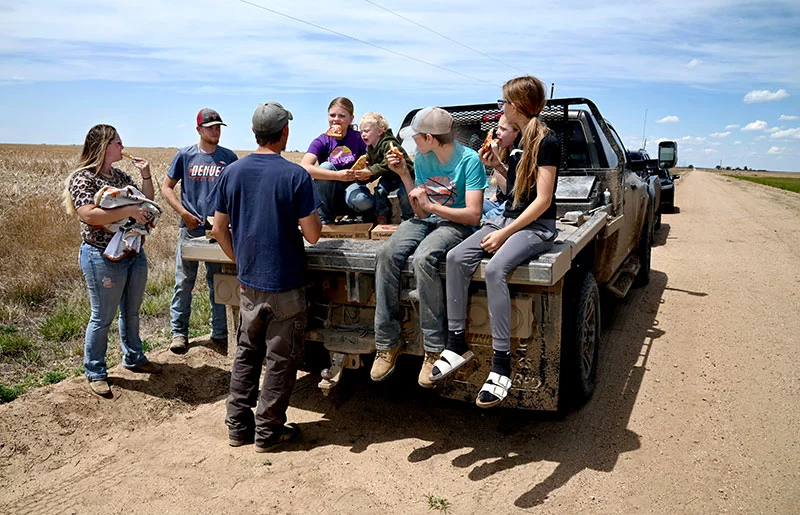
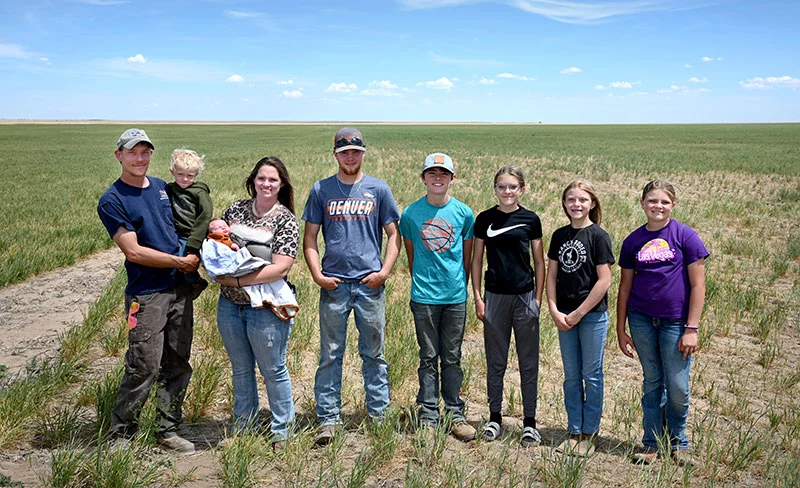
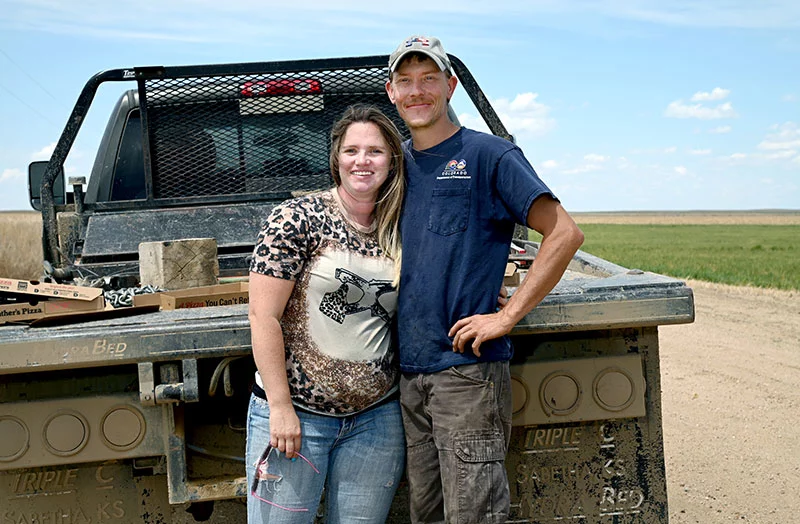
Jade grew up nearby in Las Animas, where her father owns a farm and raises cattle. She met Branden through mutual friends about five years ago. Their blended family includes seven kids, ranging in age from 19 to newborn: Kadan Dunlap, 19, Landon Jacquart, 12, Hadlee Dunlap, 12, Kynlee Dunlap, 11, Sadie Jacquart, 10, Raeden Dunlap, 2, and now Beauden.
Everyone helps on the farm and ranch, and Jade and Branden have day jobs, too. She works as a teacher at GOAL High School, an online statewide alternative high school, teaching early childhood education to students who, among other goals, want to work in or open a day care center.
Branden works as a spray technician for the Colorado Department of Transportation, keeping weeds at bay along the highways and driving a snowplow in the winter. His territory spans 130 miles, from the Kansas and Oklahoma state lines to the east and south, to Kit Carson to the north and Arlington to the west.
Indeed, this is a place of wide-open spaces, where two-lane highways connect small communities, forming a checkerboard map of eastern Colorado. Only the tiny specks of distant homes and ranches, a windmill or silo, perhaps a tree or two, interrupt views of the horizon. Signs warn “no snowplowing 7 p.m. to 5 a.m.,” and drivers can travel an hour between gas stations. Cell phone service is spotty.
Jade and her family live about 20 miles outside of Eads. This is home. But having a baby would require leaving the county for a hospital two hours away.
After a nearby hospital closed its labor and delivery unit, families face fewer choices for rural Colorado maternity healthcare
In early 2025, Arkansas Valley Regional Medical Center leaders announced they would close the labor and delivery unit there because the hospital could no longer sustain its $220,000 monthly deficit.
“Keeping a labor and delivery unit open is harder in rural areas,” hospital leaders said in a January 2025 press release announcing their decision.
They blamed low birth rates in the area, along with Medicaid reimbursement rates that don’t cover the cost of services.
That left the nearest birth center in Lamar, about 40 minutes from Eads. But Jade had decided to have her three other children, including Beauden, at Parkview.
“I didn’t want to be stuck at the hospital if my baby had to go to a NICU at another hospital,” she said.
When Jade became pregnant with Beauden, she was 34 years old, which doctors call “advanced maternal age.” Starting at that age, moms face a higher risk of complications during pregnancy and birth. With her three recent pregnancies, she has worked with her medical providers to schedule an induction date, rather than let her pregnancy go full term. She wanted to make sure she had time to arrange childcare for her kids and get to the hospital.
Her induction date for Beauden was April 8, about a week before her due date.
If worse came to worst, she and Branden figured they could deal with an emergency birth if they had to. He’s been a volunteer firefighter with the Kiowa County Fire Protection District for half his life, since he was 18. Still, he said, he’s never had to deliver a baby, “and I hope I never have to.”
“We have calves all the time,” he said. “I can deliver a calf, but there’s a lot more at stake with a baby.”
The number of maternity care deserts is growing across the country
In southeastern Colorado, the map is dotted with counties that experts classify as maternity care deserts. These are counties where there are no hospitals offering obstetric services or birth centers and no obstetricians, gynecologists or certified nurse midwives in the county, according to the March of Dimes’ 2024 report “Nowhere to Go: Maternity Care Deserts Across the U.S.”
“Where you live matters when it comes to the options available for maternity care,” according to the report, which paints this picture of maternity care:
- 35% of U.S. counties are maternity care deserts.
- More than 2.3 million women of childbearing age live in maternity care deserts. Another 3 million live in counties with limited maternity care.
- Most women who live in a maternity care desert must travel more than 30 minutes to get care.
- Women who live in a maternity care desert are most likely to receive inadequate prenatal care.
- Living in a maternity care desert is associated with a 13 percent increased risk of preterm birth.
- One in every 25 obstetric units in the United States closed its doors in 2021 and 2022, resulting in fewer choices, increased stress and longer travel times for pregnant women.
In southeastern and southern Colorado, March of Dimes researchers identify the counties of Baca, Lincoln, Crowley, Kiowa, Cheyenne and Elbert as maternity care deserts. Other Colorado maternity care deserts include Grand, Rio Blanco, Dolores, Hinsdale, Mineral, Conejos and Costilla counties.
Branden has a perspective on rural healthcare both as a father and an emergency responder. He said he understands that it’s difficult for rural areas to support the expense of maternity care. Still, it’s tough knowing that expectant mothers in his county must travel long distances for care.
“It would be nice to have something closer,” he said. “But it’s just not sustainable.”
Like Arkansas Valley Regional Medical Center, the hospital in Trinidad does not have a labor and delivery unit. That means patients from all over southeastern Colorado and northern New Mexico come to Parkview to have their babies, said Kristin Blair, Parkview’s director of women’s and children’s services.
“Not only do they not have a place to deliver, but they don’t have a consistent place to get prenatal care,” she said.
She and her colleagues have watched the trend of declining rural access to care for years and have focused on collaboration and communication to meet the growing need. For example, medical providers in Arkansas Valley Regional Medical Center’s emergency department let the team at Parkview know when they need to send a patient to Parkview for care. Parkview leaders also work with the Pueblo Community Health Center, where the center’s midwives provide prenatal care both in Pueblo and rural areas, and deliver babies at Parkview. And when a mom and new baby leave the hospital, nurses send them home with a list of resources in their home county, she said.
Parkview doctors and midwives will deliver about 150 more babies this year than last, Blair said. Last year, an increasing number of mothers from several nearby rural counties had their babies at Parkview, including from Prowers (12 births, an increase of 71%), Otero (137 births, an increase of 43%) and Las Animas (82 births, an increase of 55%).
In a recent 24-hour period in April, doctors and midwives delivered 14 babies at Parkview, filling nearly every delivery and postpartum room at the hospital. And it wasn’t the first time this spring that the labor and delivery unit has been close to capacity. The growing number of babies means “we’re always running,” Blair said.
“We want to give the best care possible, whether they live a block away or live farther away,” she said. “We are here and available to whoever walks through our doors.”
Late last year, editors at U.S. News & World Report released their 2026 Best Hospitals for Maternity Care ratings, recognizing hospitals that provide services to underserved communities. Parkview was one of two hospitals recognized in Colorado. The other was Montrose Regional Health on the Western Slope.
There’s something deeply meaningful about a baby being born at its hometown hospital, for the parents, their loved ones and the medical providers and staff who care for them. In fact, it’s a point of pride at Parkview that some of the unit’s staff live in rural areas themselves and commute to Pueblo for their shifts, Blair said.
“It’s important to our staff that we reflect the communities we serve,” she said.
At Parkview, the song “Rock-A-Bye Baby” rings out over the intercom every time a baby is born (except overnight), Blair said.
“It is very gratifying to know that we are a place people know they can trust, and they can be as close as possible to their families,” she said. “I would love for them to be able to deliver closer to their homes, but that’s unfortunately not the state of the world that we’re in right now. I’m very proud that we get to be that sort of lighthouse for them.”
Getting prenatal care required a four-hour round trip by car for Jade
During Jade’s pregnancy, she made the two-hour drive to Pueblo for her prenatal visits, first monthly, then every two weeks, and then every week as her due date approached.

Every appointment involved a four-hour round-trip car ride to Pueblo, most on a two-lane highway.
Every appointment meant finding care for her other children and taking time off from work or scheduling an appointment after work hours. She said she developed a strong bond with Abigail Meyer, a certified nurse midwife with Associates in Women’s Health, and who delivered Beauden at Parkview.
“She is amazing,” Jade said. “She answered all of our questions, was knowledgeable and very compassionate.”
Careful planning each morning as her due date approached, then, nearly 9-months pregnant, she had to help a heifer give birth
As Jade entered the final months of her pregnancy, Branden would ask each morning how she was feeling. Her answer determined how far away he would travel for work that day, in case she went into early labor or had a medical emergency. By the end of her pregnancy, Jade’s answer was 20 minutes.
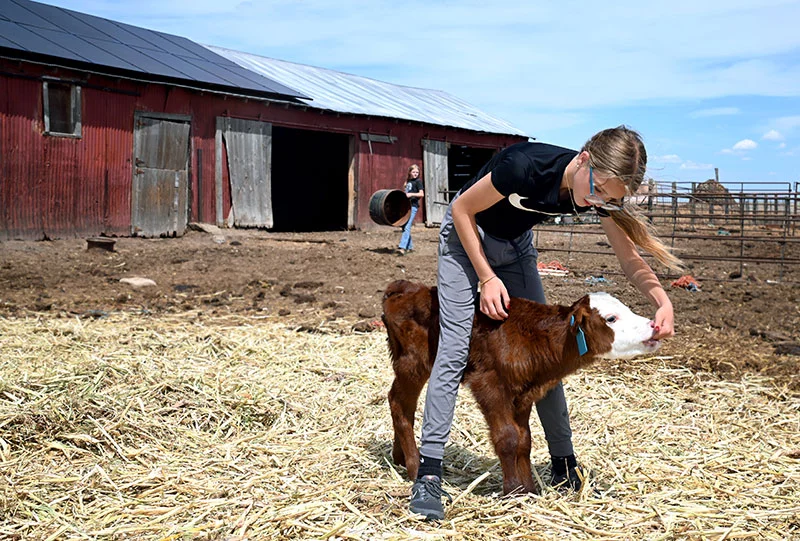
Then, a few weeks before the induction date, with Landon, Sadie and Raeden at home with her, Jade noticed that one of the heifers was struggling to give birth. Earlier in the week, a calf had died during birth, and Jade didn’t want to lose another one.
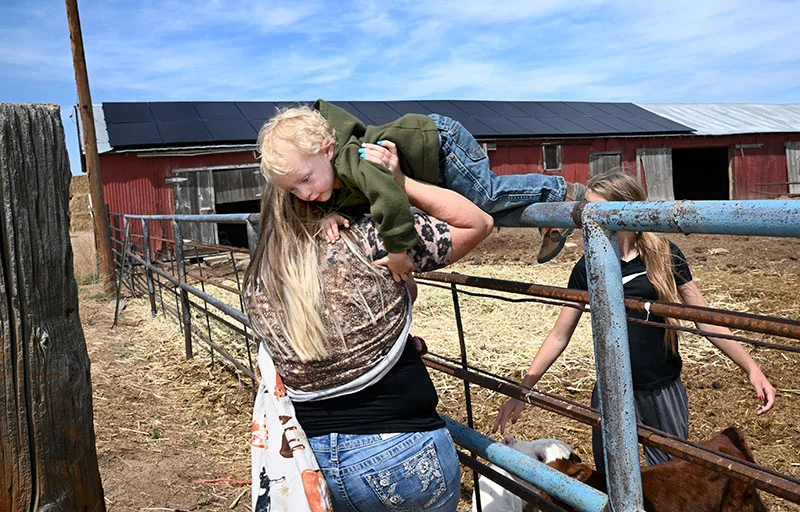
She called Branden, who was on the other side of Eads. It would take him 20 minutes to get home. He told Jade that she was going to have to help the heifer, and her son, Landon, would have to help.
Jade yelled to Landon to grab the calf puller, a mechanical device used to help pull a calf from the birth canal, and meet her at the pen. Her toddler, Raeden, was napping with his big sister, Sadie, in the house.
“You’re going to have to help me,” she remembers telling Landon. “This calf needs to come out.”
Jade and Landon climbed into the pen, where the heifer had wedged herself against the fence, unable to move. They could see the unborn calf’s tongue, nose and two front hooves starting to emerge, but knew that the calf was stuck because of the way the heifer was struggling. Jade moved quickly, knowing they didn’t have much time to save the calf.
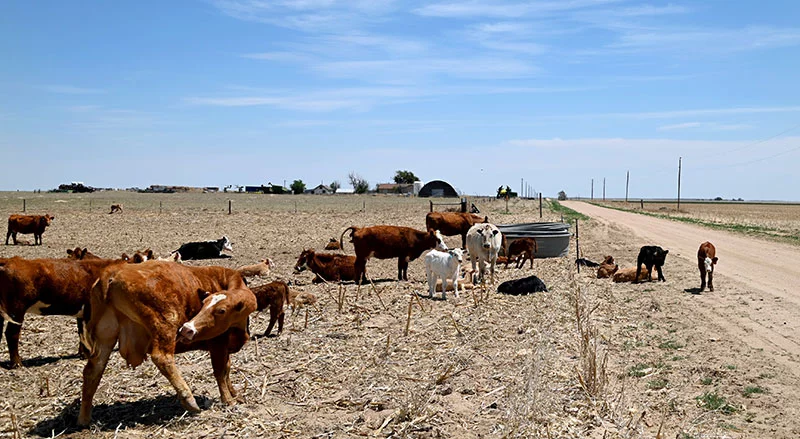
She told Landon to attach the calf pullers’ chains to the calf’s hooves, even as he objected to the “gross and disgusting” birthing scene.
“If you’re going to have cattle, it’s time to learn how to do this,” she told him.
But because of the way the heifer was lying on the ground, the chains fell off the unborn calf’s hooves. So, Jade grabbed the calf’s slippery legs and gently guided it out of the birth canal, working in tandem with each of the heifer’s labor contractions. Within a few minutes, the calf slid gently onto the ground – just in time for Branden to arrive home.
He helped the heifer stand. Her calf was OK, and so was she.
Landon joked with his mom: “Are you going to have your baby, too? Do I need to call the ambulance?”
Jade was exhausted but relieved. Just weeks away from her induction date, she had delivered a calf by herself for the very first time.
“I came back inside and sat down for the rest of the day,” she said, with a laugh.
“I didn’t want to deliver a calf when I was pregnant, but I knew it had to be done.”
After months of planning and lots of driving, Beauden arrived safely at Parkview
Just a few weeks later, Jade’s own baby made his big debut. He was born at 3:18 p.m. on April 9, weighing 7 pounds, 6 ounces.
“It was a difficult delivery, but when they put him on me, it was all good,” she said.
Branden praised her midwife and the other medical providers at Parkview, reserving special appreciation for the comfortable bed in their rooms.
Meanwhile, Beauden is thriving.
“He’s getting bigger already,” Branden said.
On a recent, warm April morning, Jade walked toward the cattle in the pen near their home. She held her two-week-old baby close, wrapped in a blanket to protect against the wind. Raeden ran toward the pens with their three dogs.
Jade was planning to return to work part-time in a few days. Her high school students had been sending her messages for days, hoping for help before the semester ended. And she had finals to grade, too.
She and Branden were considering what to plant this spring on their dryland farm. With little moisture in recent months, they were leaning toward milo, a heat and drought-tolerant crop. They’re partway through remodeling parts of their house; the ranch and farm always take priority.
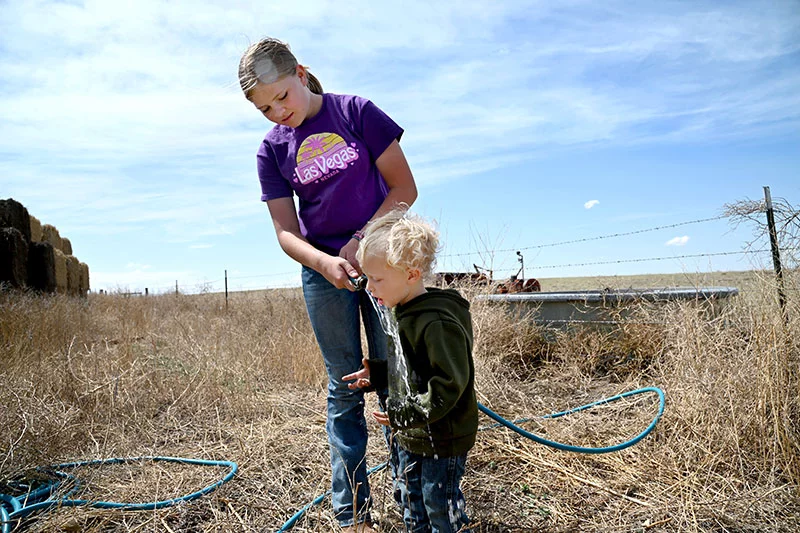
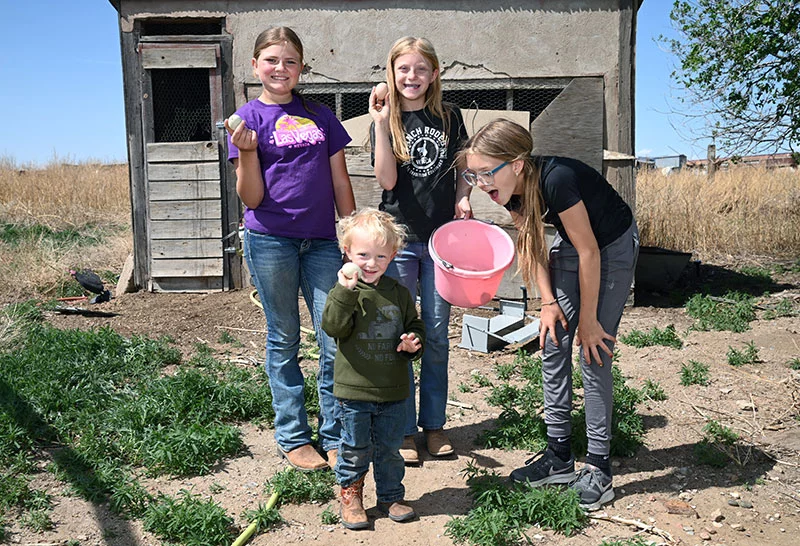
On some weekends, they’ve got a full house, with some or all seven of their children there. The kids feed the chickens, ride the tractor, play with the puppies and tackle the chores.
And of course, there are the heifers in the pen outside their house.
Jade laughed when asked how she manages it all.
“It’s a lot of stress, and a lot of pressure,” she said. “I’m out here checking cows, helping feed, making sure no one is having complications. I don’t really get to rest very much.”
She and Branden expect the last of the heifers to give birth by June.
By that time, Beauden likely will be smiling.