
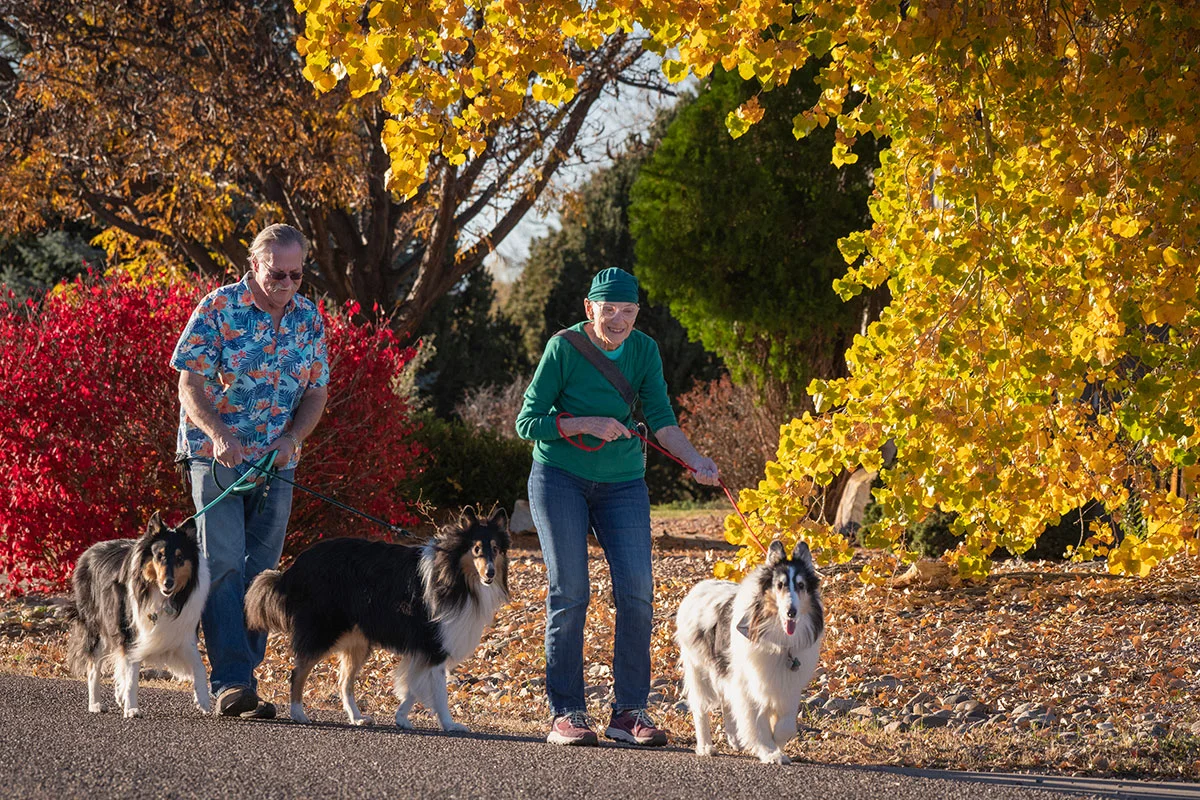
The couple strapped leashes to their dogs’ collars and headed out on a sunny fall afternoon walk.
What might have seemed like a mundane activity was anything but for Pat Topping and her partner, Bob Hadley.
Pat was able to attach and hold the leashes of her beloved collies, Feather, Ponderosa and Zoe, as they strolled through their Pueblo West neighborhood thanks to low-dose radiation therapy that has provided great relief for osteoarthritis in her hands.
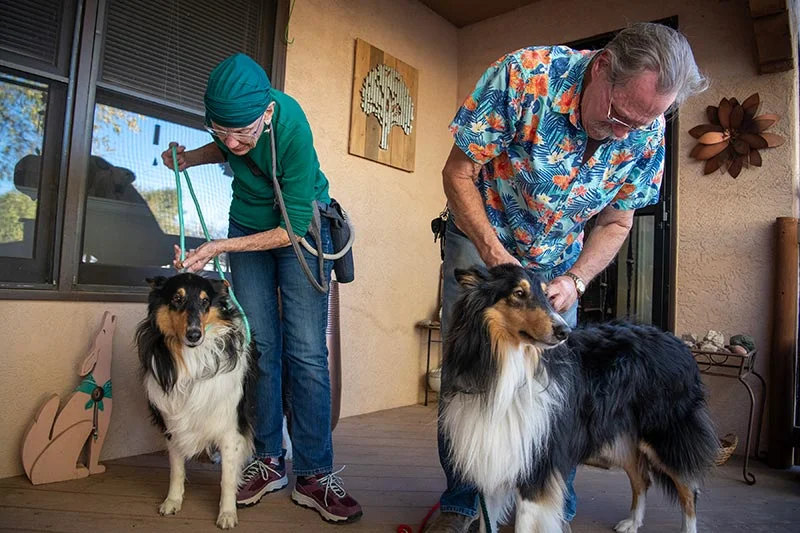
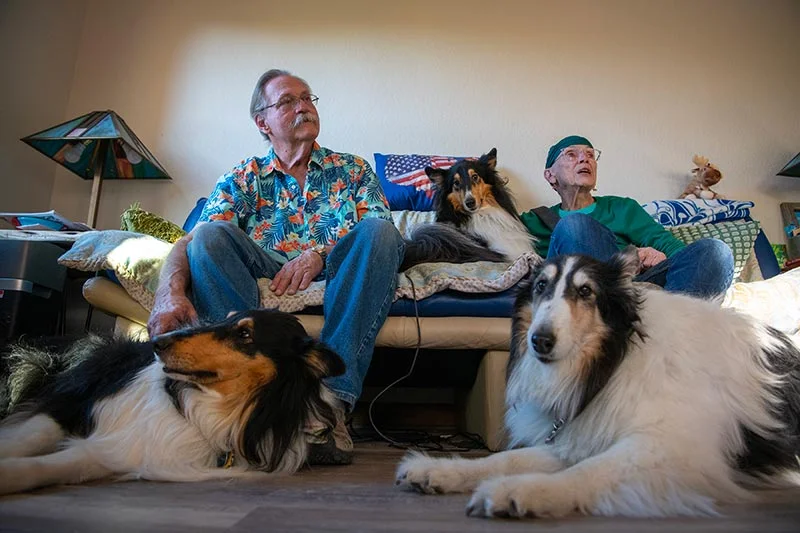
Feather, the oldest of the pack at 13, is still spry and curious, but she likes to walk close to Pat. Ponderosa barked at passing cars while Zoe stopped frequently to sniff bushes and trees along the way.
Pat, 74, faced a grim brain cancer diagnosis in 2023. Then, earlier this year, when osteoarthritis threatened Pat’s independence and her ability to enjoy the life she fought so hard to keep, she found relief with a treatment called low-dose radiation therapy.
Dr. Katherine Tzou, a radiation oncologist who cares for patients at UCHealth Memorial Hospital Central and UCHealth Memorial Hospital North, told Pat that the same type of radiation that helped shrink her brain tumor also could treat her hands, just at a lower dose.
Pat was all in. Her osteoarthritis had gotten so bad that she couldn’t hold her dogs’ leashes, work in her gardens or cook – all the things that make life meaningful for Pat.
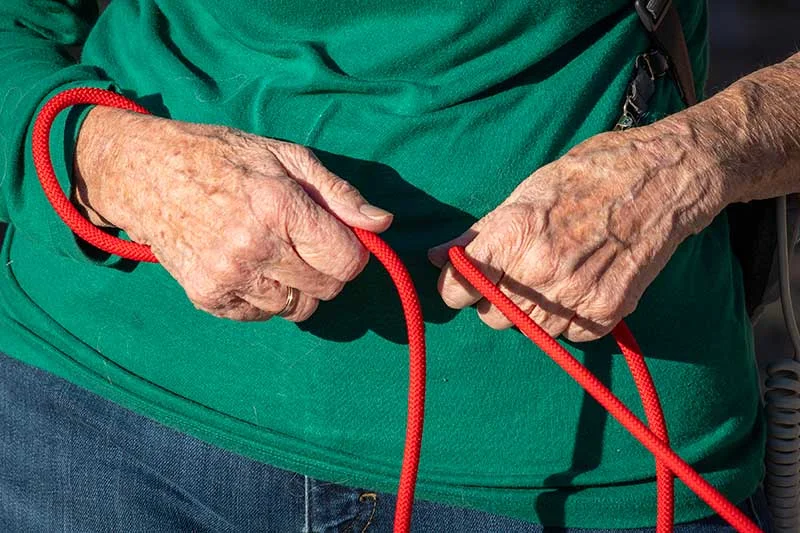
“Your hands are one of your most important things. You brush your teeth, feed yourself, and I have dogs,” she said. “I love my dogs. My dogs are part of my life.”
Low-dose radiation therapy worked. After six sessions on each hand, Pat’s pain has diminished, and she can easily do the things that had become impossible.
“The big things, like cancer, attack,” Bob said. “The little ones, like arthritis, will trip you up. Pat’s hands were the little one, but they kept tripping her up.”
A shared love of dogs helped bring them together
It’s fitting that Pat and Bob’s life together began with a funny dog story.
In 2013, they matched on a dating app and hit it off on their first date at a restaurant in downtown Colorado Springs. Each of their spouses had died.
Pat knew the real test for Bob would be meeting her dog, Bounce, a border collie. When Bob arrived at her home one evening, Bounce jumped into his arms and snuggled his nose in Bob’s neck.
“Bob looked at me and said, ‘It’s a lot easier when you wear a pork chop around your neck,’” Pat said, recalling the moment with a laugh.
Turns out, Bob is a lifelong dog lover, too. A retired Navy SEAL, he jumped out of military planes with German shepherds and Belgian Malinois dogs during deployments in Vietnam, Grenada, Panama and Iraq.
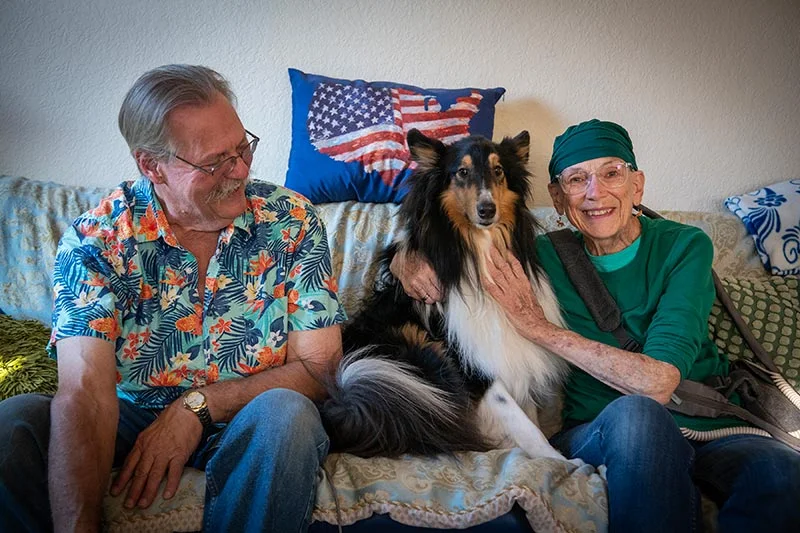
Since meeting, Pat and Bob have built a life together with dogs and family at the center. Between them, they have five adult children, six grandchildren and two great-grandchildren. They travel often to spend time with family members.
And then, there are the dogs. Thirteen years ago, Pat and Bob began volunteering with Rocky Mountain Collie and Sheltie Rescue. Since then, they have fostered more than 100 dogs, usually one or two at a time. Pat and Bob also care for aging dogs as they approach the end of their lives.
Pat and Bob also transport dogs around Colorado and the country in their large white van. They recently returned from a trip to Trinidad to pick up a rescue dog, and they have traveled to eight states to pick up dogs. One time, they picked up a mother dog and her 10 puppies and brought them back to Rocky Mountain Collie and Sheltie Rescue.
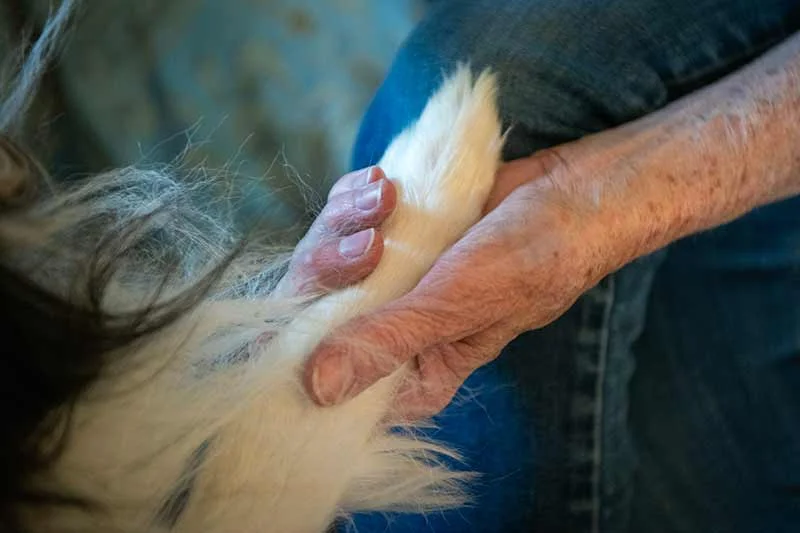
Feather, Ponderosa and Zoe are never far from Pat and Bob, curling up around their feet when they sit or following them around their yard. Pat often reaches down to stroke the fur of whichever dog is closest to her. The simple gestures comfort both Pat and her dogs.
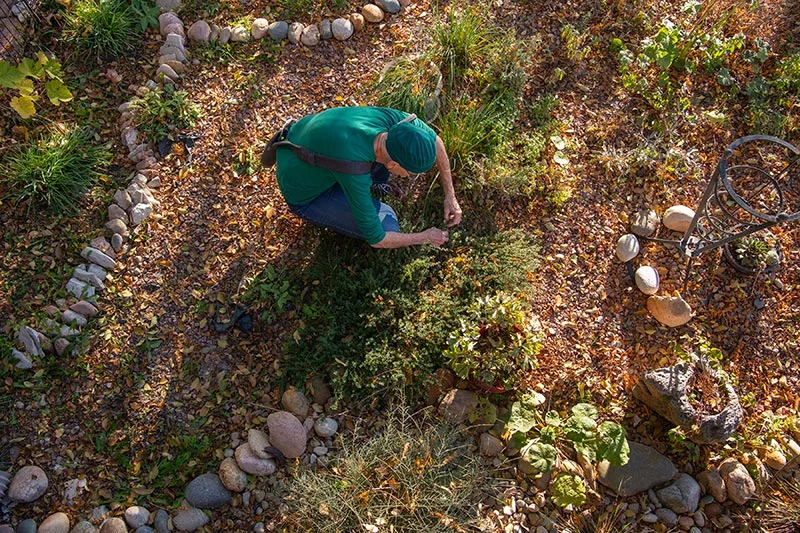
Pat and Bob moved from Colorado Springs to Pueblo West in 2025. They are avid readers and recently finished building a large bookcase in one room. Their home is filled with books and artwork, including some gifts from other dog lovers who now own dogs that Pat and Bob fostered. Outside, Pat and Bob maintain a lovely xeriscaped yard, with a number of beautiful gardens in the front and back yards. When Pat’s not tending to the dogs, she loves spending time tending to plants.
When osteoarthritis pain makes everyday activities difficult
In summer 2023, Bob took Pat to the UCHealth Memorial Hospital Central emergency department when she had trouble remembering words while she spoke. Pat, who previously survived breast cancer, was shocked when doctors discovered a glioblastoma, a form of brain cancer.
The median survival for glioblastoma is about 14 months, Tzou said. About 10% of patients survive five years.
“She has survived this life-threatening tumor,” Tzou said. “She’s done remarkably well.”
After overcoming a diagnosis that often gives patients little more than a year to live, Pat continues treatment with chemotherapy and Optune Gio, a wearable device that treats glioblastoma by delivering low-intensity electric fields to her head to disrupt cancer cell growth.
“She’s a fighter,” Bob said. “She’s tough.”
While Pat contended with her biggest foe — the brain tumor — she also was dealing with frustrations from a health issue that’s far more common: osteoarthritis.
Osteoarthritis is a type of arthritis that affects an estimated 32 million Americans. It is the leading cause of disability among older adults. Osteoarthritis develops when cartilage in a joint breaks down. The condition also causes changes in the surrounding bone, including bone spur growth and inflammation inside the joint, leading to pain, stiffness and loss of function.
For some people, osteoarthritis can prevent them from enjoying favorite activities and rob them of independence.
Which treatments work well for knee osteoarthritis.
Colorado doctors performed a game-changing surgery for thumb arthritis.
Pat’s osteoarthritis was causing increasing pain and stiffness in two fingers on her right hand. Then, the symptoms worsened as the fingers on her right hand wouldn’t bend. She couldn’t grip things like dog leashes, garden pruners, kitchen gadgets or pens. She’s ambidextrous, so she started using her left hand more. But then, her left hand started hurting, too.
Treatment for osteoarthritis includes physical therapy, exercise, gel or corticosteroid injections, and pain medications. When medications and other treatments stop working, some patients opt for surgery, including knee and hip replacement.
For Pat, surgery is not an option because of her cancer treatments. She relied on pain medication and injections for a while. She also dipped her hands in a bowl filled with ice water and would wrap a cold washcloth around her hands to help ease the pain.
“You have to be able to use your hands,” she said.
Then, after an appointment earlier this spring, Tzou suggested an unexpected option: treatment for her hands using the same kind of radiation that shrank her brain tumor.
How low-dose radiation therapy works for osteoarthritis
While most people associate radiation therapy with cancer treatments, doctors in Europe have been using low-dose radiation therapy for years to treat osteoarthritis.
Low-dose radiation therapy uses a much smaller amount of radiation than what is used to treat cancers. The low dose of radiation interrupts the inflammation that causes the pain and swelling from osteoarthritis.
“It doesn’t cure arthritis,” Tzou said. “It treats the inflammatory pathway that’s driving symptoms.”
The Department of Radiation Oncology at Memorial Hospital Central and Memorial Hospital North began offering low-dose radiation therapy for osteoarthritis to patients in 2025.
For people who have exhausted other treatments and can’t or don’t want to get surgery for their osteoarthritis, low-dose radiation therapy offers an alternative. These patients are able to avoid a major procedure, anesthesia, and months of recovery, she said.
Who is a candidate for low-dose radiation therapy?
Not everyone is a good candidate for the treatment, and doctors are selective, Tzou said. Because the radiation exposure carries a theoretical long-term risk of secondary cancers, doctors evaluate each patient’s risk factors.
UCHealth in Colorado Springs currently offers low-dose radiation treatment for osteoarthritis of the knees, hands, hips, shoulders, elbows, and feet. Doctors do not offer the treatment on a person’s spine because of its proximity to organs that could be exposed to radiation.
“We look at each case individually,” said Tzou, who is also a professor of radiation oncology at the University of Colorado Anschutz School of Medicine.
“We offer it to patients who are well-informed about the risks and benefits, and to patients who have exhausted other treatment options and want to avoid surgery.”
Tzou said it is very gratifying to see patients regain independence and return to the things they love. She recalled another patient who suffered from debilitating arthritis pain. With low-dose radiation treatment, the patient was able to return to the volunteer work that gave her life meaning.
What to expect during low-dose radiation treatment for osteoarthritis
Patients typically receive six treatments over two or three weeks. Treatments do not require anesthesia since the procedures are not invasive. Side effects are minimal.
Low-dose radiation treatments for osteoarthritis do not reverse joint damage, but they can provide months or even years of relief. Some patients experience relief during treatment, while others might not notice improvements until months later.
Tzou said low-dose radiation therapy has been successful for most of her patients. Research suggests that 60% to 90% of patients who receive low-dose radiation therapy for osteoarthritis experience meaningful improvements, such as less pain, better movement and an improved quality of life.
“It’s a quality-of-life issue for a lot of our patients,” Tzou said. “We have a tool with minimal side effects that can help. It’s amazing how much joy you can bring someone by alleviating their pain.”
Tzou treated Pat’s left hand with six treatments, then did treatments on her right hand.
Within weeks, Pat could move her hands, and the pain was mostly gone.
Less osteoarthritis pain means renewed independence
Before walking the dogs on a recent afternoon, Pat stepped into her garden and leaned over a basil plant. Pat took stock of the dozens of plants she had been tending all year. A rosebush was still blooming, but the hollyhocks were finished for the year.
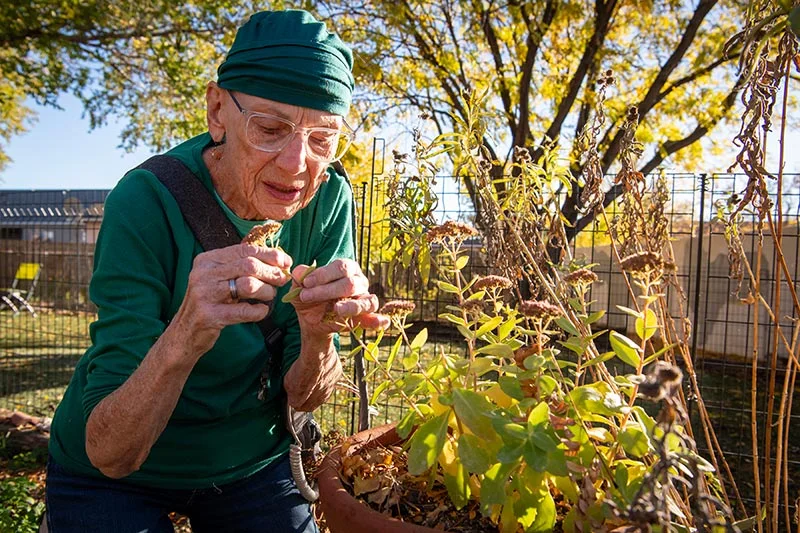
“I have to be able to use my hands,” she said. “I wanted to be able to plant. I can go out and work in the yard now, I can dig, I can plant, I can prune. I can do it all day long and it doesn’t hurt.”
Then, she and Bob leashed up the dogs and headed out.
“I can do all kinds of things with my hands now that I was having issues with,” she said. “It’s almost like I have forgotten that I had arthritis issues before.”