
A character in the Ernest Hemingway novel, “The Sun Also Rises,” was asked how he went bankrupt. “Two ways,” he replied. “Gradually, then suddenly.”
The past nine-plus years of Melissa Strong’s life turn the famous quote on its head.
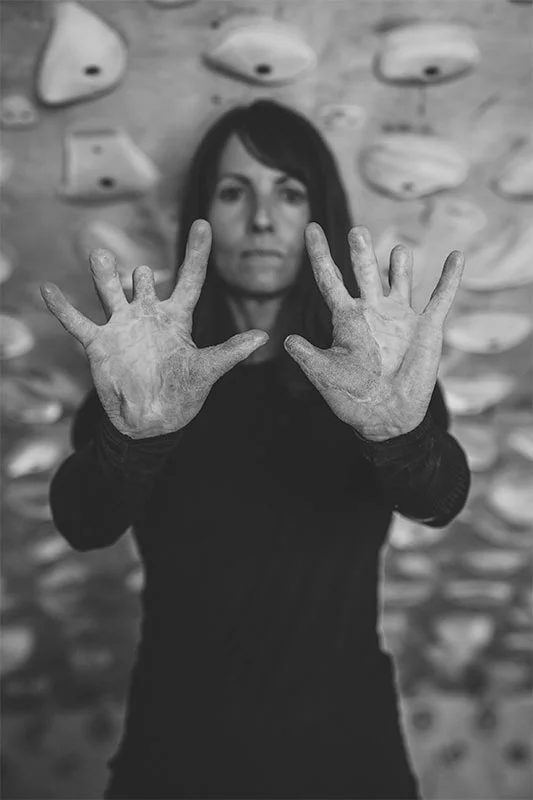
On April 2, 2017, a cool day in Estes Park, Colorado, Strong suffered a horrific electrical injury that turned her hands into a ruined landscape. She’d unwittingly grasped live electrical leads while attempting to burn decorative patterns in wooden tables she planned to use in her yet-to-be-opened restaurant.
The disaster upended her life suddenly. She spent weeks at UCHealth University of Colorado Hospital, endured multiple surgeries and followed a long recovery path.
But the burns also gradually spurred profound, positive changes and a powerful sense of gratitude for the life she continues to build.
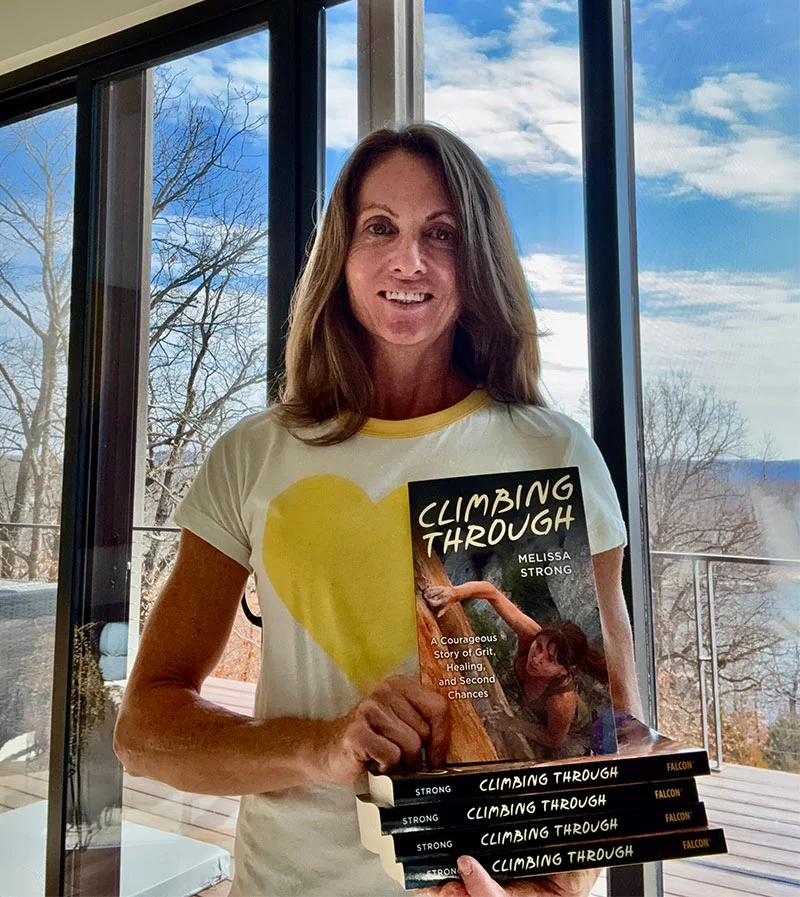
Strong tells that story in a new book, “Climbing Through,” published in March after several years of writing.
A climb interrupted
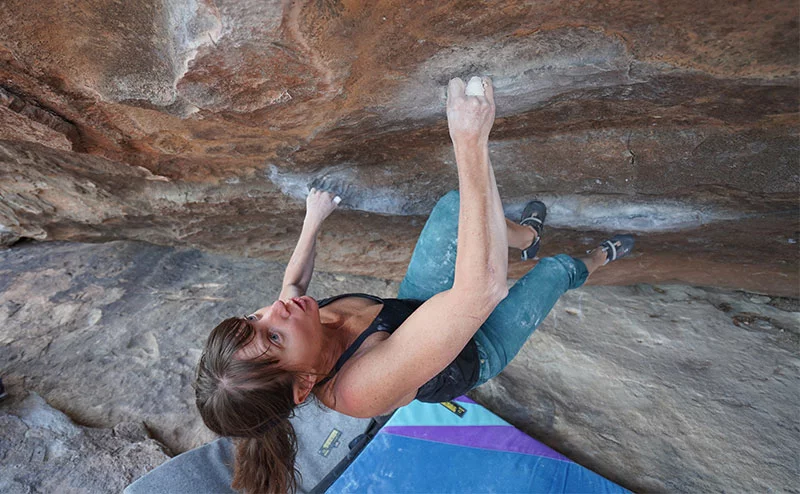
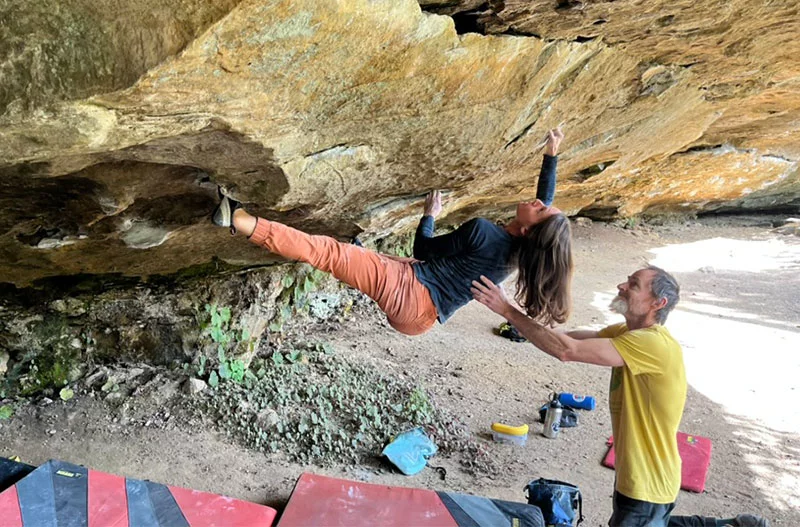
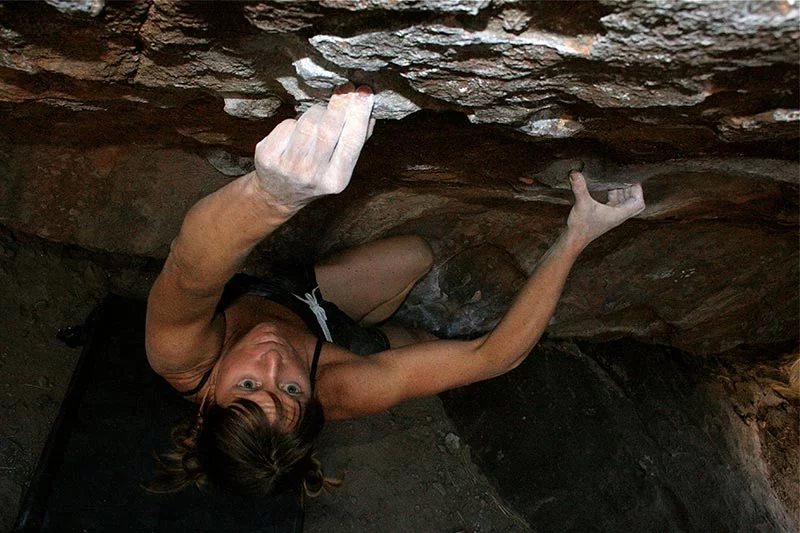
For years, Strong had used her fingers, in tandem with the rest of her body, to find tiny stone outcroppings, indentations and ledges necessary to complete the orchestrated sequence of moves that navigate the most difficult terrain of a climber’s ascent on a boulder.
Along with her husband, Adam, and a cast of fellow climbers, Strong scaled boulders in locales that included Colorado, Texas, France, South Africa and Australia.
That routine changed that April day in 2017. The electrical surge melted and charred the skin and bones on her hands, including her thumbs, and seared wounds in her chest as it exited her body. The accident also seemingly eviscerated any prospect of climbing again, let alone regaining fully functioning hands.
A surgical challenge – and success
However, Strong received innovative care from plastic and reconstructive surgeon Dr. Ashley Ignatiuk at UCHealth University of Colorado Hospital. Ignatiuk’s startling hand-saving solution required that he sew Strong’s thumbs to her forearms to restore blood flow and create a flap of skin he could use to reconstruct the remaining charred nubs.
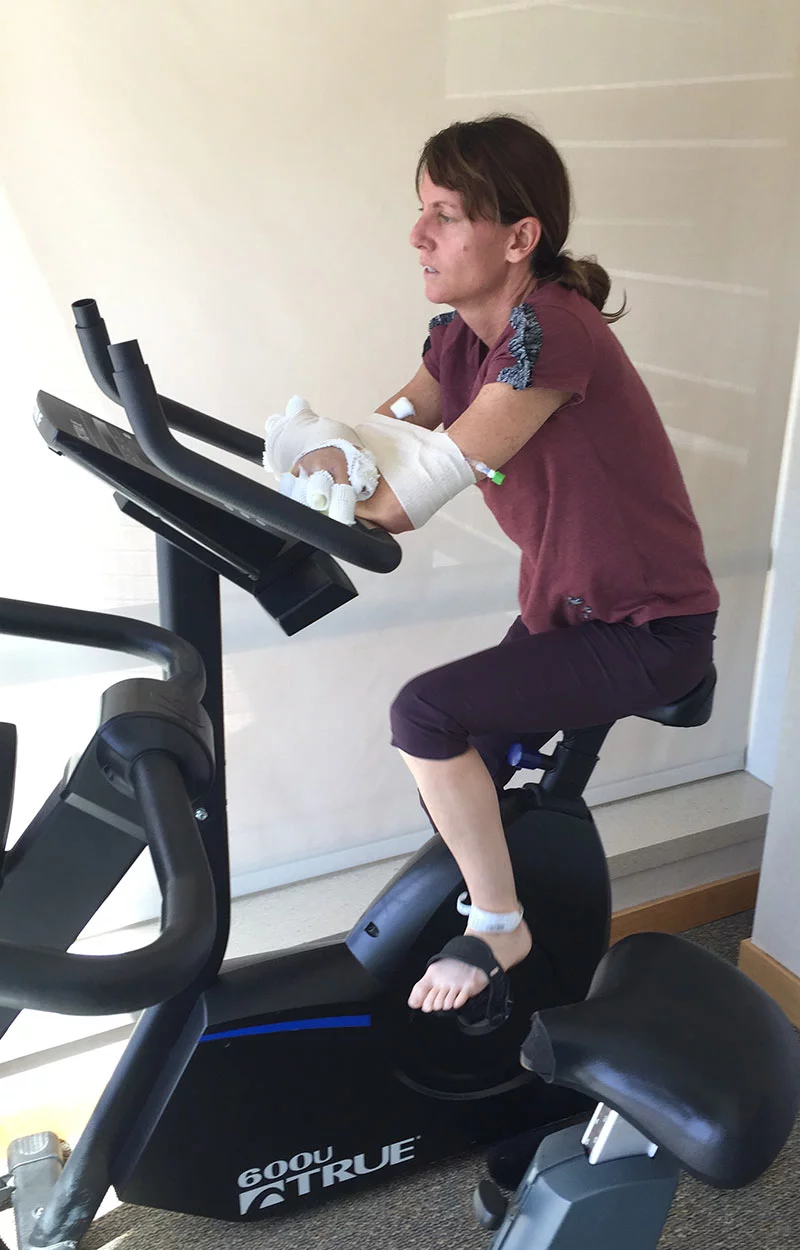
She was tethered to the “Dream of Jeannie” pose for three weeks, and she ultimately needed eight surgeries to rebuild her thumbs and other fingers, repair her chest wounds and restore as much function as possible to her hands.
The surgeries cost Strong most of the middle finger of her right hand and left her with reduced versions of the hands that had served her so well. But she does not have a prosthetic and, through determination and grit, has returned to bouldering.
The accident also threatened to derail her plan to open a remodeled restaurant in Estes Park. It didn’t. Only six months after her injury, Strong opened the restaurant, Bird and Jim, and a second, The Bird’s Nest, in 2022.
It’s tempting to simply applaud the successes. But Strong earned them only through the same painstaking effort and dogged determination she used to climb boulders. Along the way, she gained a renewed appreciation of everyday life and insights, which she shares in “Climbing Through.”
Summoning a story from the chaos of injury
In the book, Strong discusses the injury and her recovery, along with her early and young adult life, her arrival in Estes Park in 1996, her love of climbing, and strong attachment to her community and a wide network of friends.
She also writes candidly about difficult experiences – among them, an early failed marriage, unsuccessful attempts at in vitro fertilization and the loss of her brother to opioid addiction – as well as the self-blame she heaped on herself for the injury.
Strong describes how she shed recrimination and guilt and hopes her book can help others craft their own ways to avoid the same blame.
“Life is filled with hard times. It’s important not to let yourself live in a pity party because there is no forward momentum in it,” she said.
The book aims for personal insight and reflection rather than a recounting of sequences of events in her 52-year life.
“I didn’t want the book to read like a memoir,” Strong said. “I wanted it to read like a story that people would be interested in.”
Nor did she ask for input from her family, husband or loved ones as she put that story together.
“I wrote this book and not one person read a word of it,” Strong said. “It had to be pure, and it had to be for me.”
That story includes both the physical and emotional pain that Strong suffered from the injury and during her recovery and the healing that followed. It is brightened by her love of writing and climbing, both of which are essential elements of “Climbing Through.”
Writing through the pain
It’s not surprising that Strong chose writing to confront the challenges imposed by her injury. As the youngest of three kids growing up in Massachusetts, she was “very solitary” and took to journaling at an early age.
“I poured my heart out into little notebooks,” she said. “Writing was always a healing thing, something I did to get it out.”
In college she majored in literature, but abandoned plans for a master’s degree and life as a professor in favor of restaurant work and, later, the freedom it gave her to climb.
That passion began in 2000. With time and accumulated climbs, she began chronicling her “life as a working athlete” in dozens of blog posts.
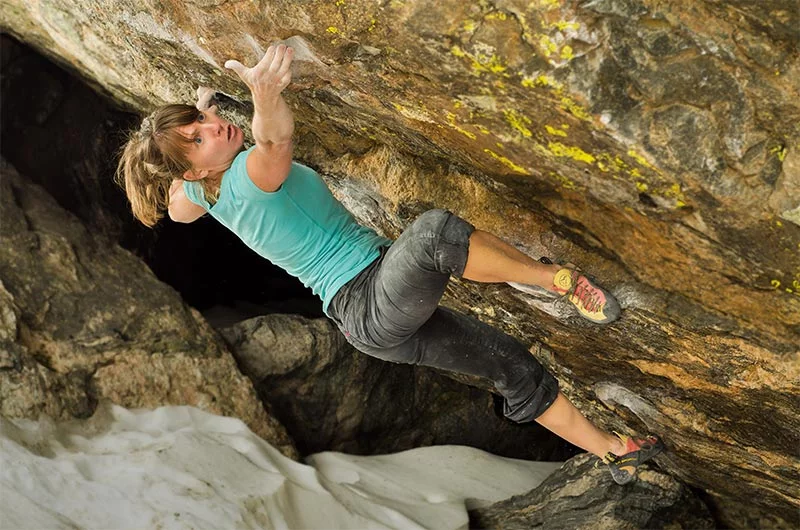
The pieces provide detailed accounts of her climbing challenges in Rocky Mountain National Park; Hueco Tanks, Texas; Fontainebleau, France; Rocklands, South Africa; and southeast Australia. Strong also describes daily life with Adam and their many friends in and around Estes Park.
That writing changed in the grim days following the accident. Strong spent a total of 38 days in the Burn and Frostbite Center and 7th floor at University of Colorado Hospital. She wrote in an effort to gain a tiny measure of control over her situation.
A key illustration of that occurs in the minutes after Strong sees what Dr. Ignatiuk called “the big reveal”: the skin grafts he used to repair her thumbs after they had been sewn to her forearms for three weeks, as well as other repairs to the devastated digits.
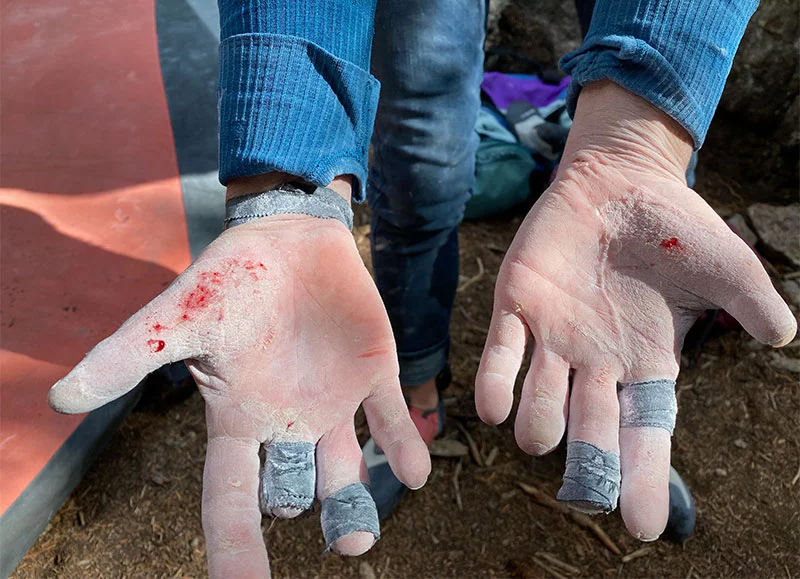
It was a gruesome sight, one worsened by Strong’s difficulty in believing that the long-awaited reconstructions would enable her to climb again. Yet in the moments that followed, she asked Adam for a sheet of paper and a pen.
Her description of the moment captures the power of words for self-persuasion. Even if they objectively provided little reason for belief, Strong chose to cling to them.
“I forced my hand into muscle memory movement and maladroitly began scratching words,” she writes.
“Hello, my name is Melissa Strong.
These are my first words written with my new hands.
One day I will climb again.
I will probably cry a lot along the way, which is okay.”
The words that follow, however, encapsulate both her uncertainty of what lies ahead and her commitment to persevere.
“I didn’t believe the words about climbing as I wrote them, but I was determined to try,” she wrote. “There is no doing without believing.”
It took time, but after Strong returned home for good, opened Bird & Jim and took the first painful but ultimately rewarding steps toward climbing again, she returned to writing in earnest.
The restorative power of words
“I started to see the healing process and how things were going to come out,” she said. “There were no guarantees, but it was like, okay, I can try to climb, I can get this restaurant open. Once I saw that, I thought I really need to write. I need to tell this story.”
Adidas, which sponsored her climbing, sent her to the John Long Writing Symposium in the summer of 2019 in Carbondale, Colorado. The goal was for the attendees to write an article with the guidance of a panel of instructors.
Strong insisted she was there to write a book.
“They told me, ‘Melissa, you’re here to write an article,’” she said.
After a brief verbal tussle – and a reminder that Jon Krakauer’s “Into Thin Air,” the acclaimed account of a disastrous expedition on Mount Everest, had begun as an article – Strong developed the story of her injury, medical care and return to climbing.
It was published in the October 2019 edition of the climbing magazine “Rock and Ice.”
The COVID-19 pandemic derailed her writing for a lengthy spell in 2020, but she returned to it in 2021 and 2022 and found a publisher for her planned book.
She added accounts of her hospital stay and recovery but decided that for readers to understand the impact of her injury, they needed a clear picture of her life preceding it.
“I realized I had to go back and write the beginning,” she said. “You need to know who I am, how I got to Colorado, why is rock climbing so important, why I was opening a restaurant.”
The meaning of the climb
Climbing is nothing short of a character in the story. Yet it had no place in Strong’s life when she drove into Estes Park in 1996 and got a restaurant job within 15 minutes. That began a routine familiar to many in Colorado’s mountain towns.
“I found the bars,” Strong said. “I was working, hitting the bars after work, and was having a great time spending my money. Sleep and repeat.”
Then she noticed something.
“I saw people coming into work bright-eyed and sun-kissed,” Strong said. She wondered what they were doing to feel so fresh and healthy, and the answer was hiking and climbing rather than barhopping.
“That’s when I found climbing,” Strong said.
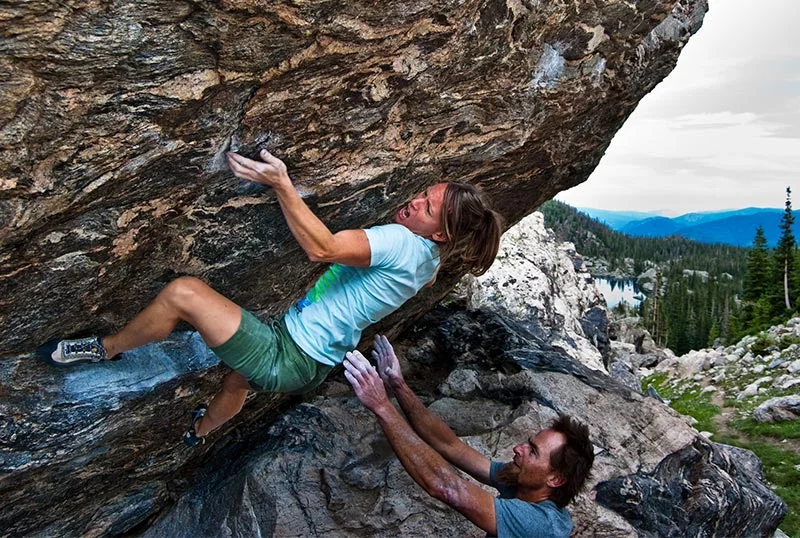
She wasn’t physically ready for it at first. As she writes in the book, “my barfly existence wasn’t compatible with climbing.”
That changed as she committed to learning the craft of challenging craggy rock faces and bouldering.
“It won me over and I knew I would never do anything but climb from then on,” she said. “It was a part of me. It shaped and defined me at a time when I was a bit lost. It gave me a reason not to go back to the bars.”
Falling and rising again
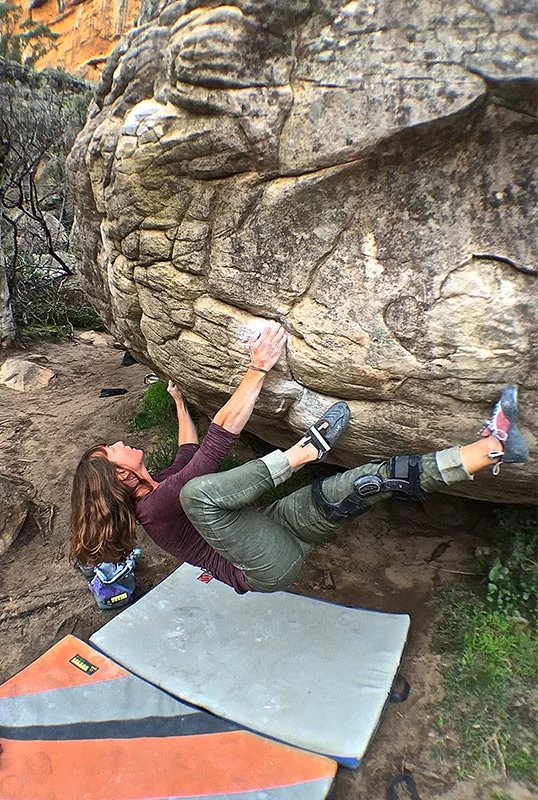
Strong’s explanations of the powerful pull that bouldering exerts on her help to explain why she chose the open road of hope over the dead end of despair after her hands burned.
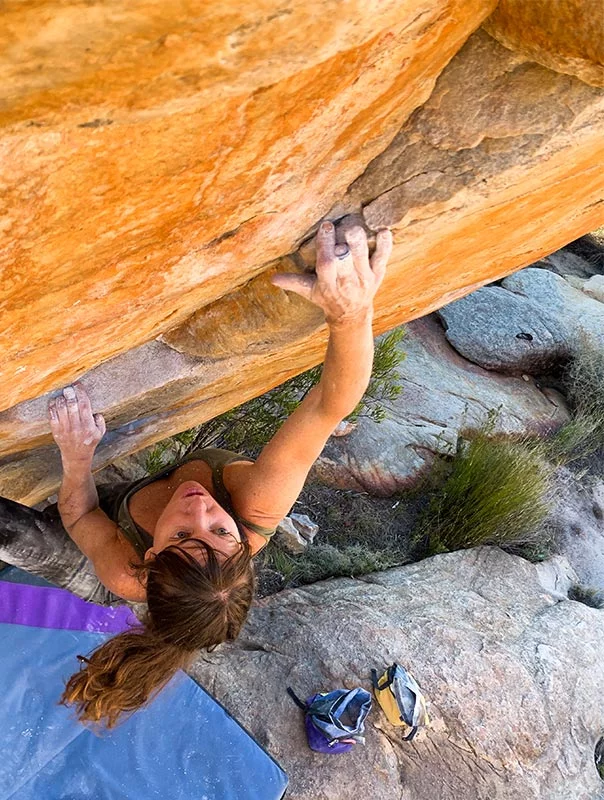
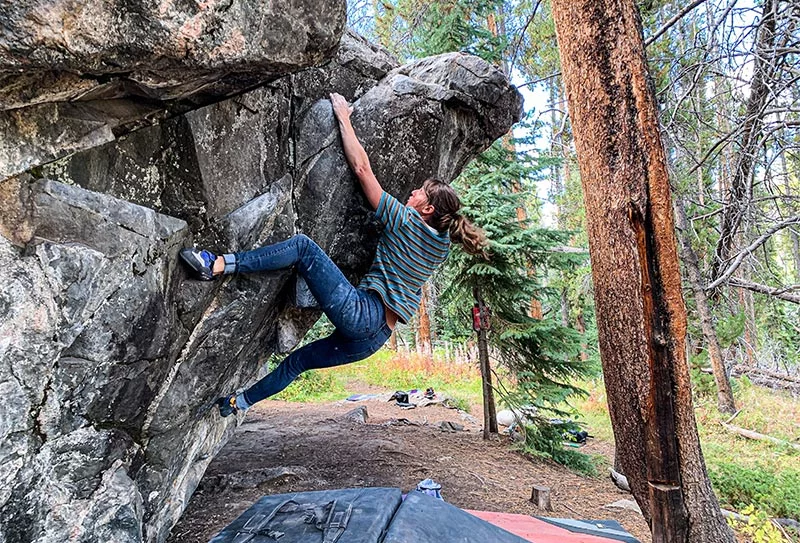
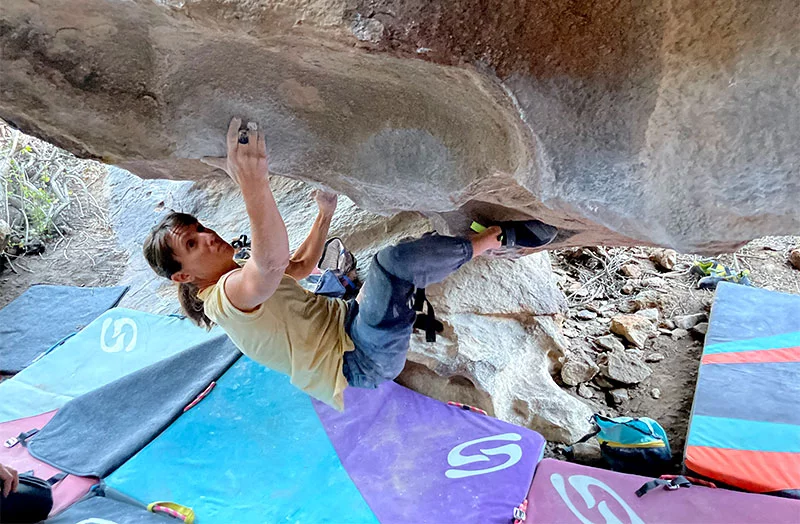
An attempt to reach the top of a boulder from the ground requires developing a plan that is unique to each individual and to the rock itself, said Strong, She relishes the challenge of addressing a “problem” of bouldering: gripping, grasping, reaching, turning and leaping to conquer a seemingly unyielding vertical expanse of rock, without a rope.
“It’s the physical puzzle of figuring it out, how it would work for me,” she said. “I’m a different size and shape than you. I have different strengths and weaknesses. And it’s mental as well as physical. There is a mental game of wanting to push your body farther than it feels like it is capable of doing.”
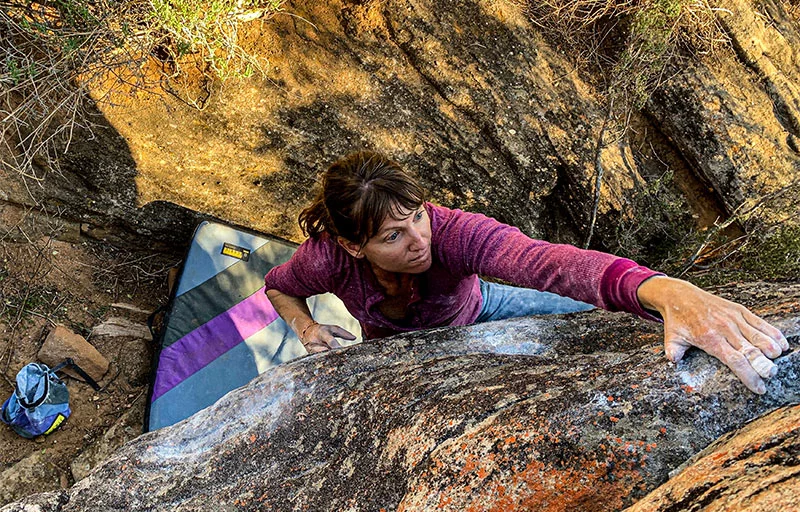
The book describes Strong’s first attempt at bouldering. She fell over and over again, landing inelegantly on a crash pad. In one sense, she was unsuccessful, but that wasn’t the point of making the effort, then or now.
“Falling from that boulder the first time was the story of my life,” Strong said. “There aren’t necessarily a lot of successes if you are going to look at it as, ‘did you get to the top of every boulder?’ I love it so much that I could do a move that I couldn’t do before. I found a sense of accomplishment just in that.”
Near the end of the book, she recounts confronting a boulder for the first time with her rebuilt hands. Both the rock and the pain in her hands resisted strongly, but she was determined to attempt the climb. That was the outcome that mattered.
“The pain to get back into climbing was overwhelming,” Strong said. “Sometimes I wonder how I did it. That’s how much I love climbing because I was willing to endure it. And I knew it wouldn’t be forever.”
Nine years later, Strong has completed a V8 bouldering problem – an advanced climb that requires significant strength and technique – and said she is working on a V10 problem in Texas the requires 27 moves.
Strength in numbers
Despite Strong’s emphasis on finding inner strength in the face of adversity, “Climbing Through” is not a story of individual heroism. A major metaphor in the book is the “safety net” she wove to prevent her from plunging into “an oppressive abyss” that yawned before her as she struggled with her trauma and an uncertain future.
The first strand of the net was hope, which sparked when Dr. Ignatiuk pricked Strong’s ruined thumbs and detected a weak but viable blood flow. It meant a skin graft was at least possible. A ray of light flickered in her mind.
“He said he would help me. I knew I needed to hold onto good things and not go into that darkness,” Strong said. “I started thinking there were other things I can use to not go into that despair.”
Strong’s friends, family, her husband and community fired a determination to resist the bleakness that had engulfed her brother in addiction. Together, they strengthened her safety net, even in the first hours after the shocking injury.
While Strong bore the weight of her physical and psychic wounds and struggled to forgive herself for causing her own injury, she also realized that she could take a step toward recovery by helping her friends, some of whom dealt with their own struggles.
“You don’t know how to be someone else’s friend when they are going through a hard time, but you know how to call someone up and say, ‘hey, let’s go for a walk today and get out of the house,’” Strong said. “You listen. That gave me strength. It’s a good reminder of the importance of human connection – to give and to receive.”
She is also deeply grateful to Dr. Ignatiuk and all the providers at UCHealth for the helping hands that preserved her own. In the immediate hours after the burn, life with four fingers – her index and pinky fingers the only survivors of the disaster – seemed to be her fate. Ignatiuk and his team had other ideas.
“His innovation got me to where I am today,” Strong said. “It helped me avoid having four fingers. I am so grateful to UCHealth. It was unbelievable care – to the point that I felt guilty about it. I was so fortunate that I wound up there.”
A desire to help others
Strong is now telling her story to audiences at book signings around Colorado and Wyoming. Despite the title and plenty of stories about climbing, the book aims for anyone struggling with a challenge – the end of a relationship, a diagnosis, losing a loved one or a pet – and seeking a path through it.
“Even though I ‘climbed through,’ the book isn’t about climbing,” Strong said. “Writing the story was part of my mental healing. For me, the longer I live, there are going to be challenges, and they will probably keep coming in all shapes and sizes. But my audience is huge. The book can be for anyone going through a hard time.”
The scars from Strong’s burns and surgeries are physical reminders of what she lost and what she gained through the hard work of recovery.
She looks at a thin line of scar tissue on her left forearm. It speaks of the fragile divide between the gloom she fell into after the injury and the lighted path she chose.
“I’m glad I never got tattoos,” Strong said. “My scars are my tattoos.”