
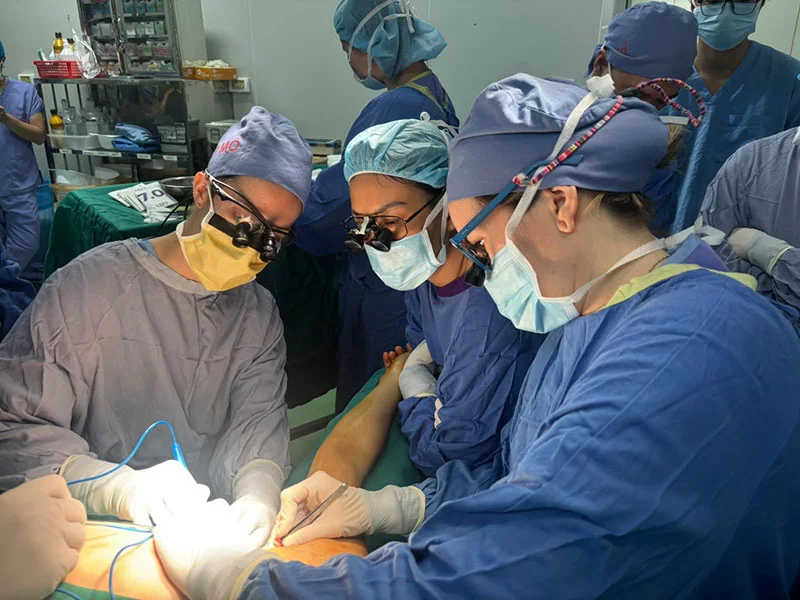
Trips by surgeons and other medical experts to low-income and developing countries are nothing new, and they’ve helped countless patients. But there’s a growing recognition that these trips do little to improve care once the visitors pack up and leave.
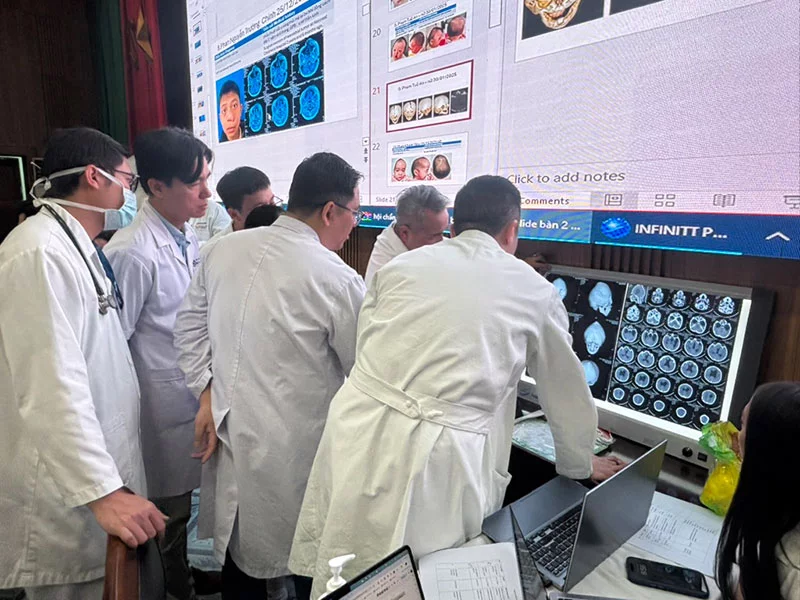
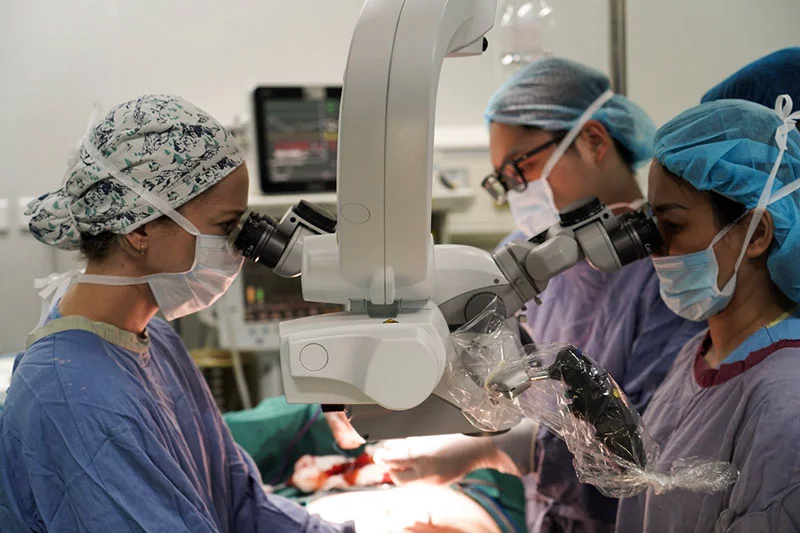
Dr. Phuong Nguyen, a plastic surgeon at the UCHealth Plastic and Reconstructive Surgery Clinic – Anschutz Outpatient Pavillion, and the University of Colorado Anschutz School of Medicine’s associate vice chair of Global Surgery, is working to change that, starting in Vietnam. In March, he led a trip to Hanoi. Nguyen and his team spent a week not only performing surgeries but also teaching advanced surgical techniques to local surgeons, who can then help patients after the Western surgical experts are gone.
Nguyen prefers not to use the term “medical mission.”
“I almost think of ‘medical mission’ as a dirty word, because it conjures this concept of, kind of, neocolonialism, where the Global North has to help the Global South that can’t help themselves,” he said.
Global surgery as ‘neglected stepchild’
Nguyen, a California native of Vietnamese heritage and a 20-year veteran of surgical trips to 15 countries, believes that lifting surgery from “neglected stepchild of global health” status, as global-health pioneer Paul Farmer once characterized it, requires ongoing collaboration with local surgeons and a focus on educating them on Western surgical techniques. In effect, teaching them to fish.
There’s a dire need for more surgeries than traditional medical missions could ever fill. A landmark 2015 report by The Lancet Commission noted 5 billion people who lacked access to safe, affordable, surgical and anesthesia care, and that 143 million people needed but couldn’t get surgery. This state of affairs has scarcely improved, and the global population is up 11% since then.
Improving surgical access in Vietnam and other developing countries has become Nguyen’s mission in life. He cofounded Nuoy Reconstructive International in 2020, and the nonprofit has built relationships with nine hospitals in three cities in Vietnam: Hanoi, Hui, and Ho Chi Minh City.
Building partnerships while doing surgeries
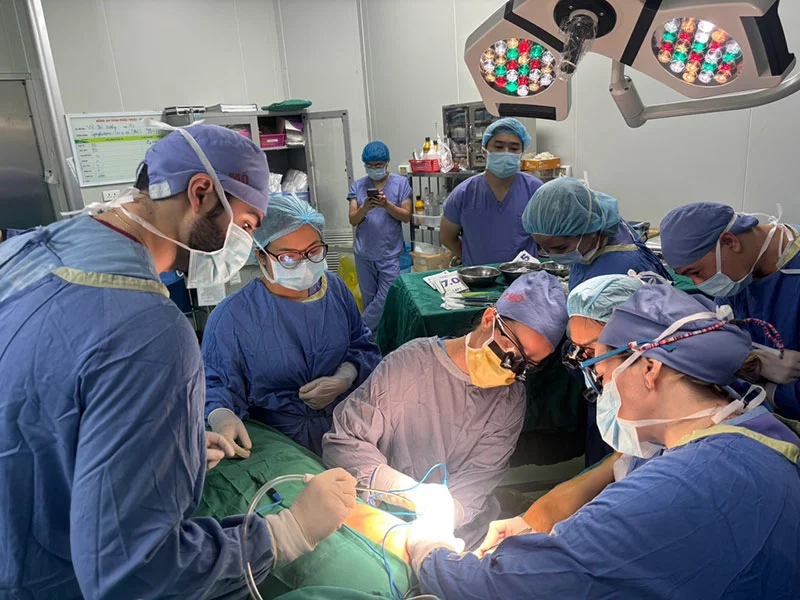
“The model is to go to hospitals on repeat, the same places with the same people over time, to work together and build relationships to really build sustainable capacity,” Nguyen said. Importantly, Vietnamese partners are the doctors of record for the patients the visitors team led surgeries on, he added.
Dr. Mark Greyson, who specializes in hand surgery at UCHealth University of Colorado Hospital, was among the Colorado doctors who traveled to Vietnam in March. (Read about new thumb arthritis surgeries that Greyson and fellow doctors are doing, and a patient who received the new surgery.)
He did a dozen surgeries himself, he says, primarily congenital (i.e., you’re born with it) injuries to the hand and lower extremities. The contrast with his experience on a traditional medical mission to Tanzania, which he did a few years back, was stark. In Tanzania, there was little expertise and few resources, he said. Viet Duc University Hospital in Hanoi, where the team worked, still lacked certain resources, so the University of Colorado team brought its own specialized instruments for microsurgery, he said.
“But a lot of the Vietnamese surgeons were quite talented. Many of them had done fellowships at prestigious institutions in Southeast Asia and some even in the United States,” he said.
Education that goes both ways
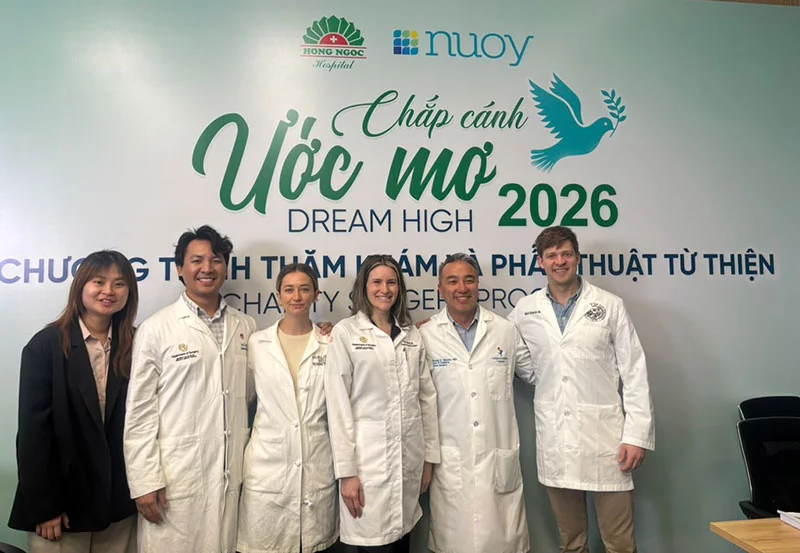
The education extended to members of the Colorado team. Nguyen has worked with the organization that accredits U.S. medical residents to ensure that surgical residents — doctors who are working toward board certification in surgery — get credit for procedures they perform overseas. So, in addition to Nguyen, Greyson and Dr. Katie Egan, an assistant professor of plastic and reconstructive surgery, surgical residents Dr. Taylor Allenby, Dr. Ariel Johnson, and Dr. Ton Doan worked with Vietnamese patients.
“From an education standpoint, it just gives you such a unique perspective culturally, but also how to work with resource limitations,” Nguyen said. “These cases count for their graduation, so it becomes an integral part of their residency, and I think a bit separator from other programs.”
Greyson said he also learned from the experience.
“I think this was a great cultural exchange, educating local surgeons, learning about the different pathophysiology they see in Vietnam, working with talented people, and hopefully bringing some of them out to the United States,” he said.
That’s in the works, Nguyen said. Viet Duc University Hospital’s head of plastic surgery has been granted status as a University of Colorado adjunct professor, enabling, among other things, a deeper dive into the nuances of organ transplant and access to PubMed, a valuable resource that’s not a given in many developing countries. Also, doctors at Hong Ngoc Hospital in Hanoi hope to explore osseointegration, a unique strength among University of Colorado surgeons.
The Colorado team hopes to continue to visit Vietnam to perform surgeries, too. Just don’t call them “missions.”
“This is a partnership, not a mission, per se, and it’s a partnership that evolves over time as the needs of your partners evolve,” Nguyen said.