

Losing her mother at a young age left a tragic mark on Kate Showalter.
So, when she faced her own mortality at age 36 with a horrific terminal cancer diagnosis and was given only a few months to live, she refused to accept the idea that her 3-year-old daughter would grow up not knowing her.
“I knew what it was like growing up without a mom. I didn’t want that for her. I just wasn’t done having adventures with my husband or my daughter. We have such an amazing life together, and what kept me going was hope and wanting to be there for them.”
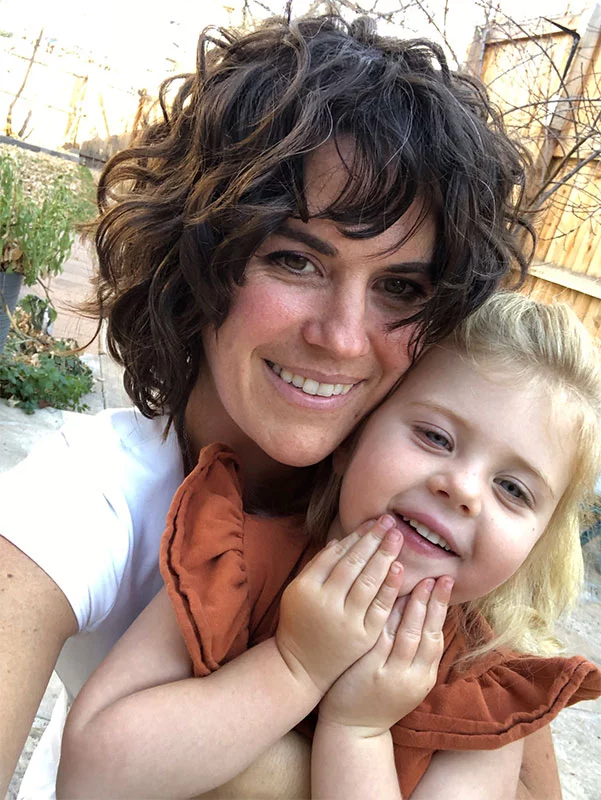
In the winter of 2022, after months of pain and medical dead-ends that had led her to UCHealth for answers, Kate was diagnosed with an extremely rare cancer called carcinoma ex pleomorphic adenoma that began in her salivary glands.
Even after multiple rounds of chemotherapy and radiation treatments, the cancer had spread to her lungs and spine.
But nearly five years later, Kate now 41, shows no signs of cancer.
“In my 15 years of taking care of salivary gland cancers, I’ve never had a situation when someone with that degree of cancer basically went into remission and is cancer-free even after finishing their treatments,” said Dr. Daniel Bowles, Kate’s medical oncologist at University of Colorado Cancer Center.
Kate never stopped fighting.
“Even when they said, ‘Your cancer has spread, and it’s terminal…you will die.’ I told them, ‘No, I’m going to be the first one to survive this.’’
Kate grew up on a llama farm in rural Colorado, but faced heartache with the loss of her mom
Raised on a rural farm between Larkspur and Sedalia, Kate grew up on 10 acres with lots of animals as companions, including cats, dogs, chickens, ducks, rabbits and llamas. The pack animals were rented by vacationers who took them to the mountains on trails.
She spent a lot of time outdoors and was enjoying her junior year in high school when tragedy struck, and her mother died of breast cancer. Feeling lost and angry, young Kate left her home and spent years on her own.
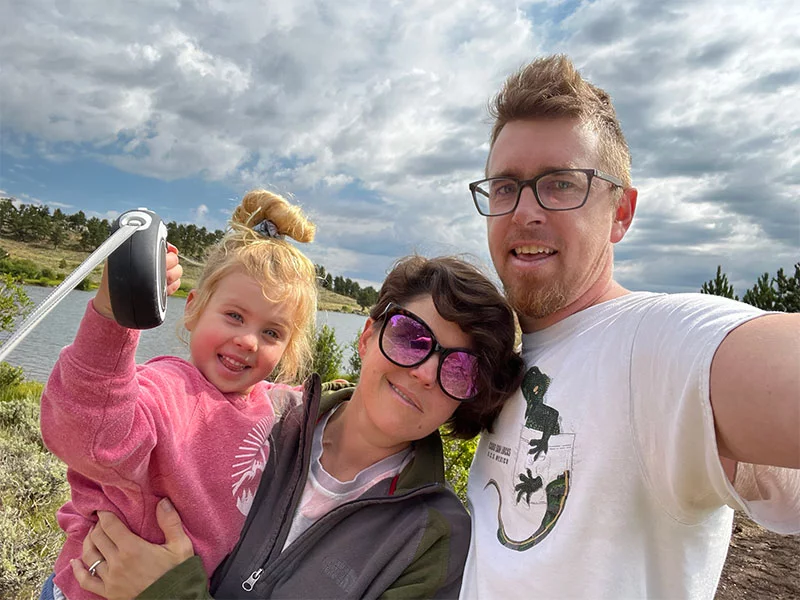
She came back to Colorado in her 20s and was working at a downtown Denver restaurant when she met her husband, Mike. They got married and had a daughter, Runi, who was 3 when Kate’s health saga began. It started innocently enough with a pain in her left ear.
It was September 2021, and Kate was 36 and otherwise healthy. After a visit to a naturopath, she was given antibiotics and a referral to an ear, nose and throat (ENT) specialist.
But after seeking help at several different ENT’s, Kate still found no relief. The nonstop pain in her ear had spread to her jaw, affecting her ability to chew. Already slim, she lost weight, couldn’t sleep and was having horrible migraines. A few months later, while she and Runi were in the mountains on a December ski trip, Kate developed a headache so severe that she could barely function. The next morning, her face was partially paralyzed.
After a trip to the ER, doctors gave her pain medications, and a subsequent MRI showed multiple masses and a potential blood clot on the left side of her face, near her left ear and neck.
A few days later, Kate saw medical experts at UCHealth University of Colorado Hospital. A CT scan showed two major masses: one in her neck behind her left-side jaw, and the other, behind her left ear. The latter one was destroying her temporal bone, which helps to form the side and base of our skull and regulates our hearing and balance.
While doctors surmised the tumors had originated in her salivary gland before spreading, more tests were needed. A biopsy of the tumor in her neck and jaw came back negative for cancer. Kate and her family were relieved, and they tried to enjoy Christmas as she prepared for a January surgery to remove the masses.
But as the new year arrived in 2022 and Kate waited to have her surgery, she was experiencing unbearable pain in her ear. She was taking high doses of pain medications, but they were providing little respite. Her doctors were wondering if something more serious was going on with Kate’s health.
“I didn’t think she should be in so much pain with just a benign tumor,” said Dr. Stephen Cass, an otologist and neurotologist on Kate’s care team.
Doctors performed a second biopsy, and unfortunately, this one came back positive for a very rare type of salivary gland cancer: carcinogenic ex pleomorphic adenoma.
Salivary gland cancer occurs in fewer than 1 of every 100,000 adults each year. And Kate’s specific type of salivary gland cancer, carcinogenic ex pleomorphic adenoma, is even less common.
The original biopsy had come back negative because cancerous cells had been lurking in a tiny malignant tumor hidden within a benign tumor behind Kate’s left ear.
“It’s a very complicated spot and difficult to assess,’’ said Cass, who is also a professor of otolaryngology and head and neck surgery at the University of Colorado Anschutz School of Medicine.
“That area of the ear is a pathway for blood to flow to the brain, to the heart from the brain and to the cranial nerves. It is involved with our voice, and vocal cords, with swallowing, with balance and with our vestibular system – all these functions are engineered through small portals in the ear bone, and they were all involved in her cancer there.”
For Kate and her family, hopes that the new year would bring good news quickly faded.
“I thought, ‘This is a nightmare, it’s so surreal.’ I had done everything right; I ate well and exercised, and now they were telling me I had this very rare cancer.’’
Kate and her family confront a nightmare scenario when she receives a terminal cancer diagnosis
In late January, Kate underwent a nearly 12-hour complex surgery to remove the tumors while at the same time doing as little damage as possible to her hearing and facial nerves.
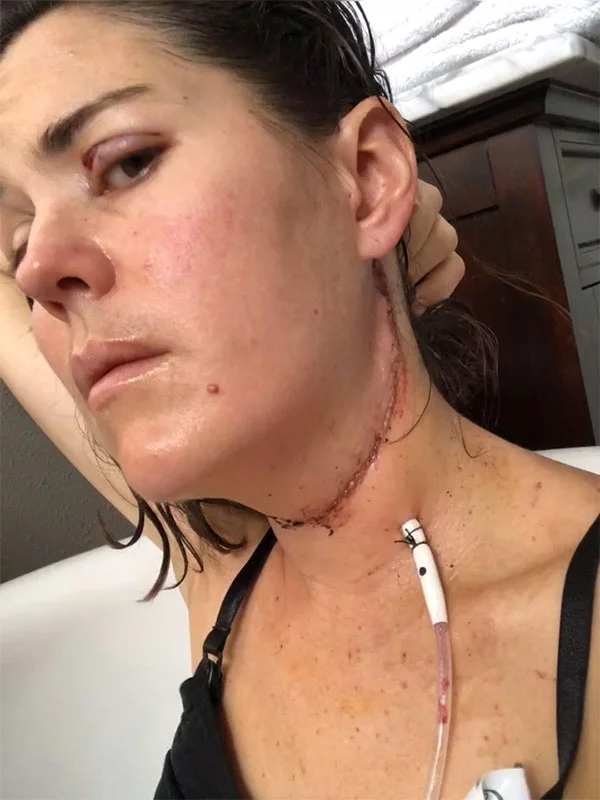
Cass focused on the ear and jaw area where the malignant tumor lurked, while a second ENT removed the mostly benign tumor in her carotid artery in Kate’s neck, as well as a parotid tumor in her cheek. Parotid tumors start in the parotid gland, which is a salivary gland located in front of the ears.
As they took out as much of the tumors as possible, the procedure included removal of her left facial nerve, which was grafted to her trigeminal nerve so she wouldn’t lose the ability to move that side of her face. The trigeminal nerve is a large nerve responsible for our being able to feel specific areas of our face.
Because the tumor was destroying the small bones in her ear, to remove it, Cass closed off Kate’s ear canal and eardrum.
“The tumor there was hard to remove because so many critical structures and nerves important and integral to functions like swallowing were involved. Because the cancer was so deep in the bone, I spent the lion’s share of time preserving what I could,” he said.
Still, Kate would lose hearing in her left ear.
“We see cancers in the ear, but they tend to be in patients in their 80s. It’s so rare to see it is someone her age,” Cass said. “She was so young and yet so courageous. She fought so hard for her child and family. She is amazing and strong and resilient and had such a will to survive.”
The two ENT surgeons had done all they could to remove as many of the tumors as possible while still preserving essential functions that Kate needed. Now, control of her disease depended upon treating it with chemo and radiation.
That is when another key person on her care team, medical oncologist Bowles, stepped in.
Kate wakes up from surgery to remove tumors in her neck and cheek
Kate would need to recover, gain strength and participate in rehabilitation after her operation.
Side effects of the surgery included breathing and swallowing difficulties, and her vocal cords needed to heal, so she had to speak softly until they got stronger.
“When you have a 3-year-old, whispering doesn’t always work,” she said with a laugh.
Palliative rehabilitation included collagen treatments for her throat to aid in its regeneration. Fat from her stomach had been grafted into her neck, so there was soreness throughout her body.
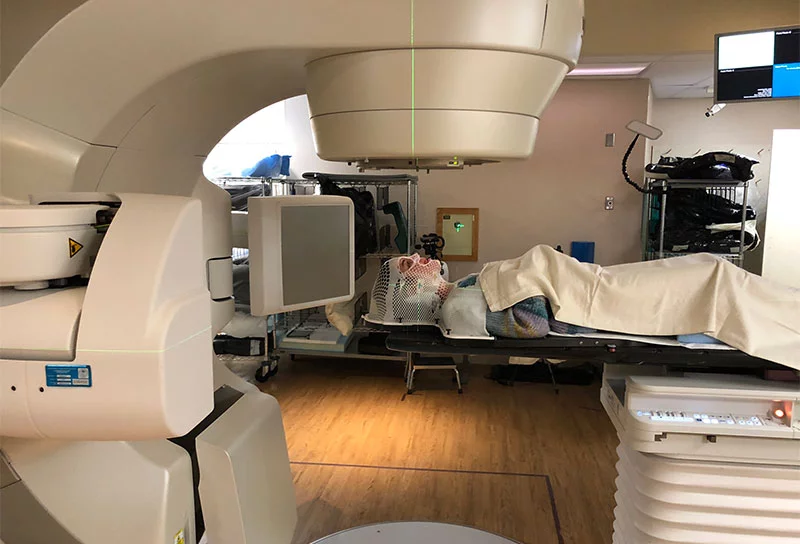
Her care team was led by Bowles, who is also an associate professor of medicine-medical oncology at the University of Colorado Anschutz School of Medicine. He wanted to start her on follow-up chemo and radiation right away, and in March, she began 35 rounds of radiation, five days a week for seven weeks, along with weekly chemo treatments.
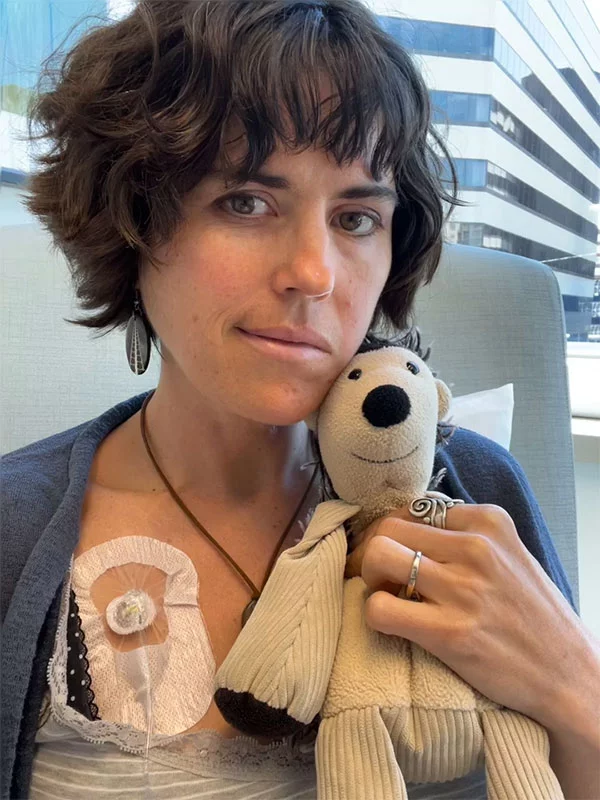
She was fitted with a special mouthguard during radiation to protect her tongue, and she lost hair on one side of her head. She dropped to 96 pounds; she couldn’t taste anything, and the chemo and radiation left her feeling exhausted and weak.
Unfortunately, despite the aggressive treatment, a PET scan that summer showed the rare cancer had metastasized to her lungs and neck lymph nodes.
“They said it was too many nodules to count, that I would probably die and to get my affairs in order,” Kate recalled.
As her rare salivary gland cancer spreads, Kate and her doctor look for a ‘Hail Mary’
Neither Kate nor Bowles was willing to accept the devastating diagnosis without a fight. Both began searching for answers, looking at drug trials and searching for other cases like hers that might offer a potential cure.
“I was not OK with cancer. I was not going to die,” she said.
Bowles started her on a regimen of two different chemo drugs along with a third anti-cancer drug called bicalutamide, typically used to treat prostate cancer, in hopes it would work against her rare cancer. She also underwent radiation to target a large tumor in her spine.
Still, these methods did not stop the cancer’s spread.
As Bowles said: “The cancer didn’t bat an eyelash.”
They would have to take a new tack and be creative, as this cancer did not have much clinical research or experimental drug trials to try.
According to Bowles, because salivary cancer is so rare, it does not get the same attention from researchers looking for new treatments; he is one of 15 or 20 oncologists in the entire country specializing in it.
But after talking with those colleagues, he had an idea.
In addition to the chemo, he would start Kate on an immunotherapy drug that is typically used for head and neck squamous cell cancer (most often occurring in people who smoke).
Immunotherapy uses a person’s natural defenses of their immune system to fight cancer by boosting or changing how the immune system works so it can find and attack cancer cells. Immunotherapy primes the immune system to recognize cancer cells as foreign to better fight them.
There was no record of this immunotherapy drug, Keytruda, having been used to treat the type of rare salivary cancer that Kate had, but they were running out of time and options. Part of Bowles’ hope that it would work came from his experience working with this drug regimen on other types of cancer, and part of it came from his discussion with his peers. They had talked about Kate’s case and agreed that immunotherapy was worth a try.
“If you look at studies looking at immune therapy for salivary gland cancer, most don’t work and because there is a wide variety of these types of cancer, all behave differently. But it was a little bit of ‘let’s go for broke’ at this point.”
In fall 2022, she began the treatments — delivered through a port in her chest that she had received the chemo through — for 72 continuous hours every three weeks. The drugs physically wiped her out for the entire two weeks after she finished them; she would have one good week and then begin the process all over again.
Still, she was not about to give up. She held her breath and prayed it would show promising results.
“Kate never accepted that she couldn’t beat this no matter how dark the diagnosis was. Even in those times, she said she just needed to hang in there long enough for a medical trial or some new treatment to come along,” Mike said. “She didn’t let the word ‘terminal’ become her identity.”
Three weeks after the first treatment, she went to see Bowles for her first imaging since she began the immunotherapy. It was Mike’s birthday, and the present was a big one.
“All of the lung nodules had drastically reduced in size,” Bowles said. “Within a couple of months, she started to have significant improvement of her symptoms, and we saw significant improvement in her CT scans.”
Kate continued with the regimen; almost unbelievably, after one year, scans showed zero signs of cancer.
Though Bowles said that oncologists like himself are “optimistic by nature,” even he could not have predicted that Kate would go into remission so quickly. What makes her case so special to him is how hard she fought for her family.
“She is always a joy to take care of her, and she makes it easy to take the extra steps to help her.”
Making it through cancer with support of husband, daughter, in-laws and friends
Throughout her ordeal with cancer, Kate relished her roles as a wife and a mom.
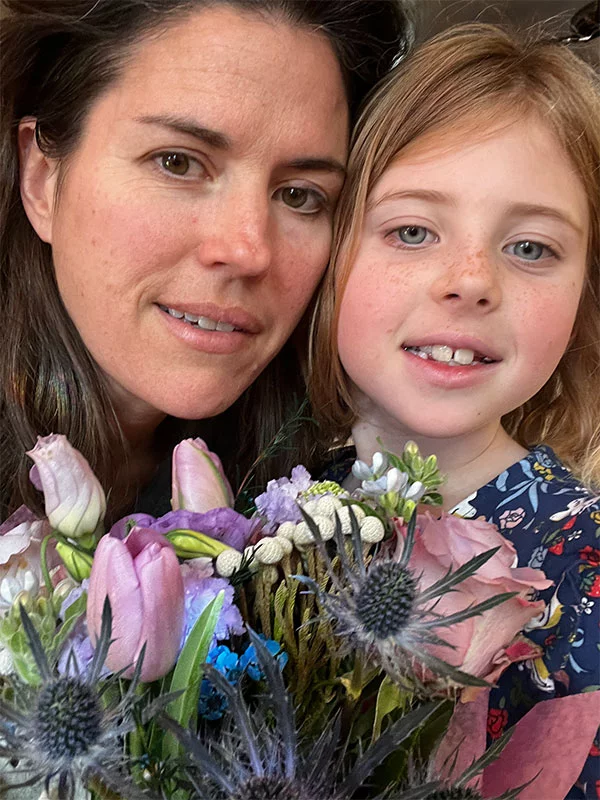
“Life doesn’t take a pause when you have cancer. I just kept going. During a week when I felt good, I would race to get things done so I could play with Runi. And when I couldn’t, she was so great. Even though my face changed a lot with the surgery, she would hold it and tell me I was beautiful.”
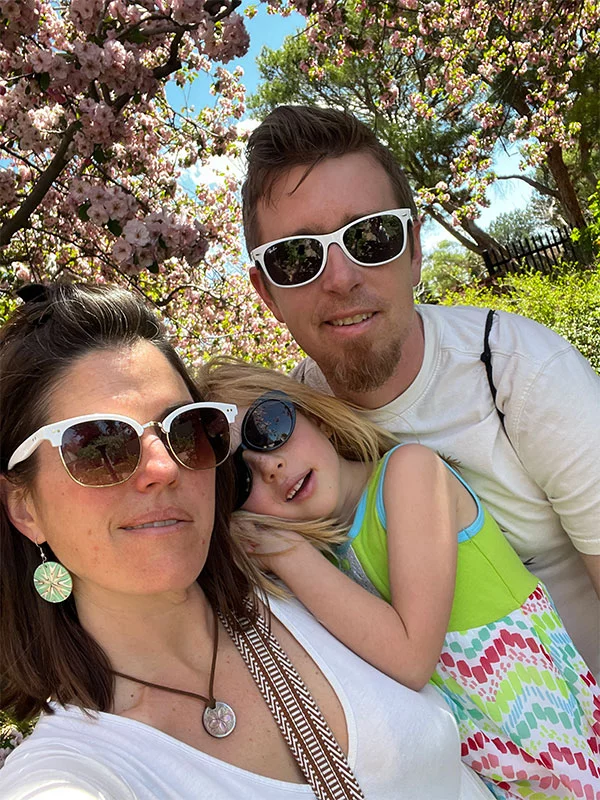
It was important to Kate that she was as honest as possible with Runi.
“When I was first diagnosed, she was 3 and she asked me if I was going to die. I was honest with her. When I was growing up, my mom was trying to protect me and wasn’t forthcoming with information. I told myself if I was ever in her situation, I would be honest. We would both cry and snuggle together.”
With her every step of the way was her husband, Mike.
“At first, it was shocking and devastating,” he said. “You’re really angry. It took a long time for me to come to a place of accepting uncertainty.”
Being an engineer, Mike wanted empirical evidence — facts and evidence that were black and white — as opposed to living in the gray area of uncertainty, which was difficult and forced him to face agonizing feelings at the prospect of losing Kate.
“I had come to a dark place of acceptance, as a young father and individual, of life beyond Kate. I had to digest and unpack that the pain of her not living her life with me and without being a mom to Runi … Our daughter wouldn’t be the person she is now without Kate, and that worried me. And then for myself – losing my partner – the person you have made forever plans with. It changed me. You realize that time is the only true equity everyone holds because anything can happen to any of us at any given moment.”
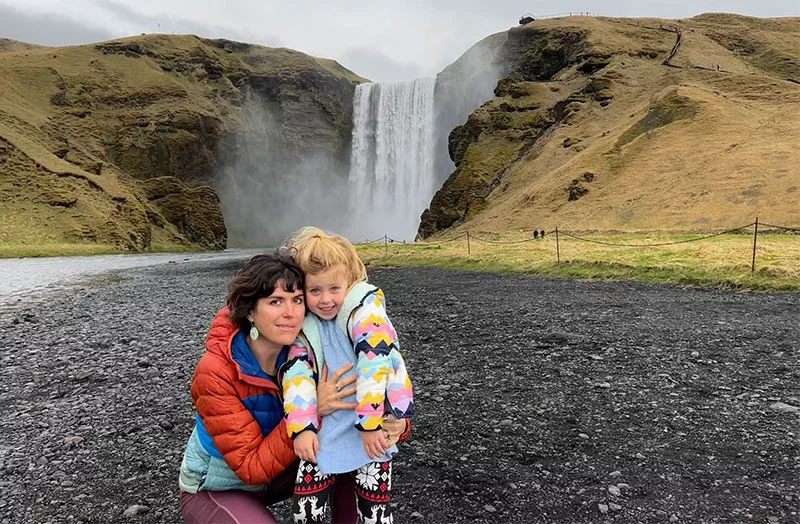
His appreciation for “time” and being grateful for both the small and big moments that the three of them spent together grew: The couple went to Europe through the Dear Jack Foundation, and his parents treated them to a trip to Iceland. But the quieter times were perhaps even more special.
“There were lots of mornings when Runi would bounce into our bed in the morning, and with the sunlight coming through the window, although I’m not a religious person, I thought, ‘Maybe this is as close as you get to heaven.’’’
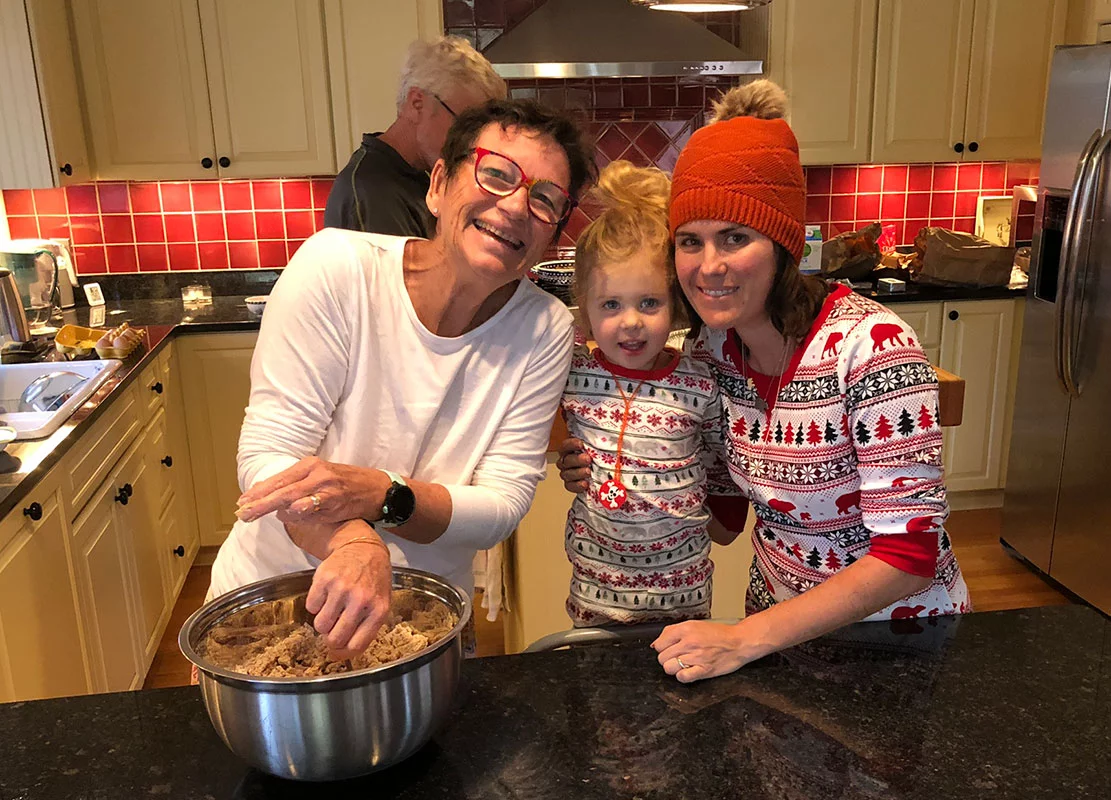
The couple is thankful for the support of friends and family. For instance, Mike’s mom, Kelly, took Kate to many medical appointments. She and Mike’s dad, Peter, were instrumental in watching Runi and became fixtures at their granddaughter’s school.
Kelly sent an email to friends asking for a miracle when she first learned of Kate’s diagnosis. She is convinced that is what happened.
“The care from UCHealth doctors was there. The miracle was there,” she said. “So many people helped — everyone on her care team, friends and neighbors. But it was Kate who ultimately did it. She is a force. When she learned she no longer had any evidence of disease, she would say, ‘I had cancer.’ She put it in the past, and we all follow her example.’’
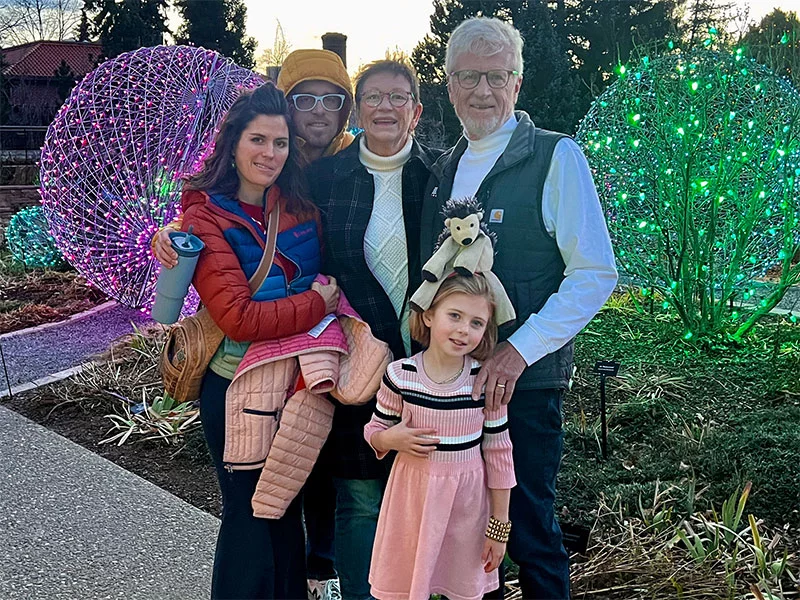
Kate, Mike and Runi have a new home, and she is planning an enchanting garden
As of October 2023, one year after the immunotherapy treatments began and despite there being no evidence of the disease, Kate endured an additional year just as an extra precaution, finishing up in fall 2024.
After 54 rounds of chemo and 37 rounds of radiation, Kate finally got her chest port taken out in March.
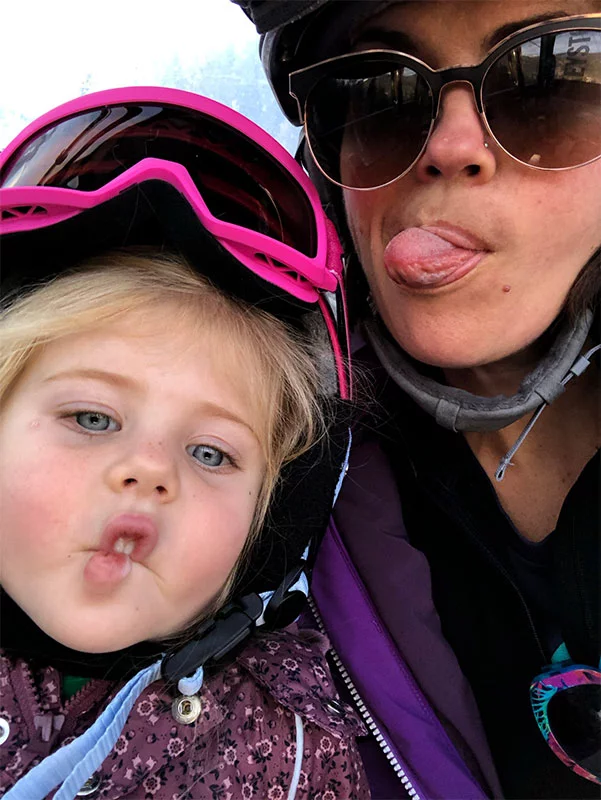
Her family said that she put on a suit of armor every day to battle cancer, emerging from the fight ready to put it behind her and enjoy life in a new home, with space for the hobbies she loves, including lots of gardening. She also is an artist who paints, makes jewelry and pottery.
She meets with Bowles every three months and has scans twice a year. At some point, she will graduate to getting annual scans. Waiting for test results can be a terrifying experience, and the family is on ‘’hyper alert’’ for any changes in Kate’s health, even false alarms.
Still, they are eager to settle into a “normal” life full of skiing, hiking and planning for the future with a trip to Mexico and camping excursions with Runi, who is now a happy, active second grader.
“Life is so precious, and this world would be such a better place if we focused on what really matters. I was so lucky and so fortunate. Dr. Bowles cared enough to search for a treatment that saved me. He didn’t quit, and neither did I,” Kate said.
These days, Kate is working on a “secret garden’’ at their home and recently planted a cherry tree and a Bonsai tree, indulging in the relaxation and peace of mind that is gives her, perhaps for the first time in years.
“I am a caregiver and love to take care of things,” she said. “I wish people could feel the way I feel – it puts everything in perspective. Life is so precious, even the mundane things like laundry. When I got this cancer, I told people I would be the first one to survive it. And I was.”