

In her fight against breast cancer, Kayla Calkin took on a new challenge.
Surfing.
“Surfing is a really good allegory for cancer. You get hit by the waves, but you have no choice but to get up. I also wanted to try something I had never done before.”
Kayla took up the sport with the help of First Descents, a Denver-based program for people under 40 with cancer or multiple sclerosis. With the group’s help, she flew to the Outer Banks of North Carolina two years ago for rest and a break from health challenges. She had just finished chemotherapy and radiation treatments to fight stage 2 invasive ductal breast cancer, a type of breast cancer that spreads from the milk ducts to the breast tissue and surrounding lymph nodes.
The goal of First Descents is “to empower you to live a life of adventure.” That philosophy already had been Kayla’s long-time mantra, and it gave her the opportunity to be surrounded by her cohorts – younger people like herself – whose lives had been turned upside down by their cancer diagnoses.
“You need a community when you are young and you get cancer. It is so disruptive to your life, and you need people who understand,” Kayla said. “I also liked First Descents because it has you actively doing something and not just sitting around being sad.”
Neither “sitting around” nor “being sad” is part of Kayla’s lexicon.
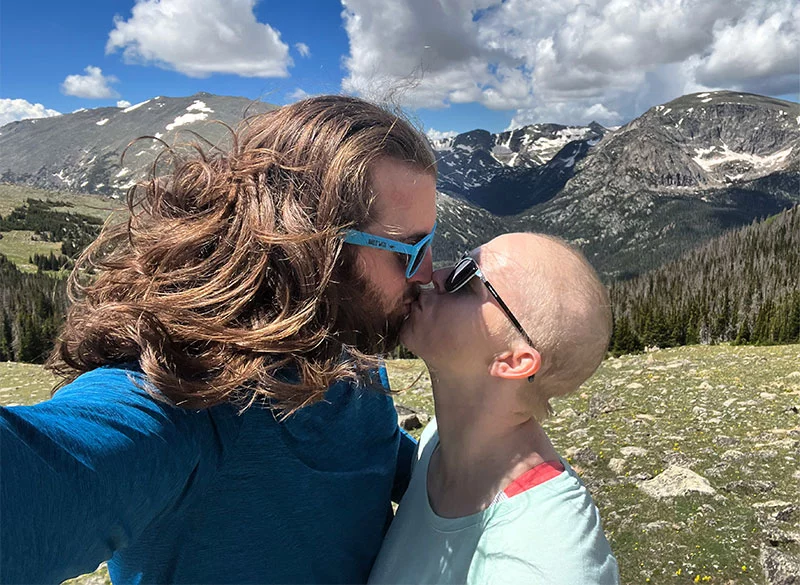
A natural organizer and advocate, the Denver resident has crisscrossed the country since she graduated from college, working on myriad political campaigns, including those of Barack Obama, Hillary Clinton and Kamala Harris. She also worked for progressive social justice organizations, including Planned Parenthood and the Natural Resources Defense Council (NRDC).
Kayla moved to Denver in 2020 with her partner Zac, and the couple planned to start a family. Sadly, Kayla suffered two miscarriages. Then Kayla experienced an ectopic pregnancy in January 2022. An ectopic pregnancy occurs when a fertilized egg accidentally implants in other parts of the abdomen rather than the inner lining of the uterus.
Although she had noticed a lump in her left breast a month prior to the ectopic pregnancy, emergency surgery to save her life and the trauma that followed during the following weeks put the concern about the lump on the back burner.
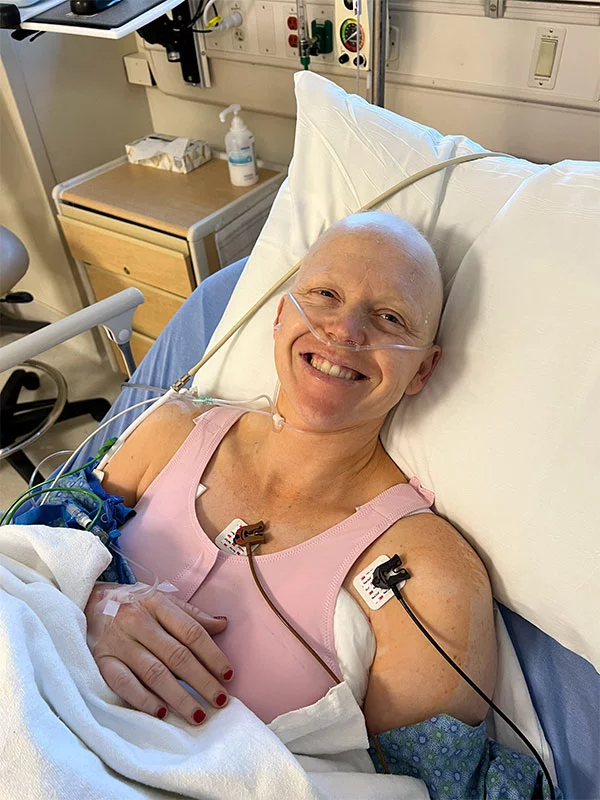
But when Kayla woke up in February with her left armpit and surrounding lymph nodes swollen, she could no longer ignore this new health challenge. She booked a mammogram, and later that month, she was diagnosed with breast cancer at just 36.
When Kayla decided where to seek care, she chose UCHealth – because, as someone who appreciates structure and preparedness, it checked all the boxes important to her.
“I liked how all the doctors and caregivers worked as a team. Everything was so well organized,” she said.
UCHealth University of Colorado Hospital also is known for its premier Young Women’s Breast Cancer Program.
Progressive causes and candidates are front and central to Kayla’s ethos
An “army brat,” Kayla was born in Texas but grew up in Evergreen, Colorado. Always someone to take her health seriously, she skied on Team Breckenridge and ran marathons as an adult.
Her brother Chris said that his sister has been strong, resilient and focused as long as he can remember.
“She was valedictorian,” Chris said. “She set the bar high: being focused and determined. She’s also very strongly opinionated and intelligent, so if she felt something was right, she pushed hard for it. She has truly been an amazing aunt to my son, even while going through chemo and radiation. She really loves doing things with, and for others, and gets immense satisfaction from it.”
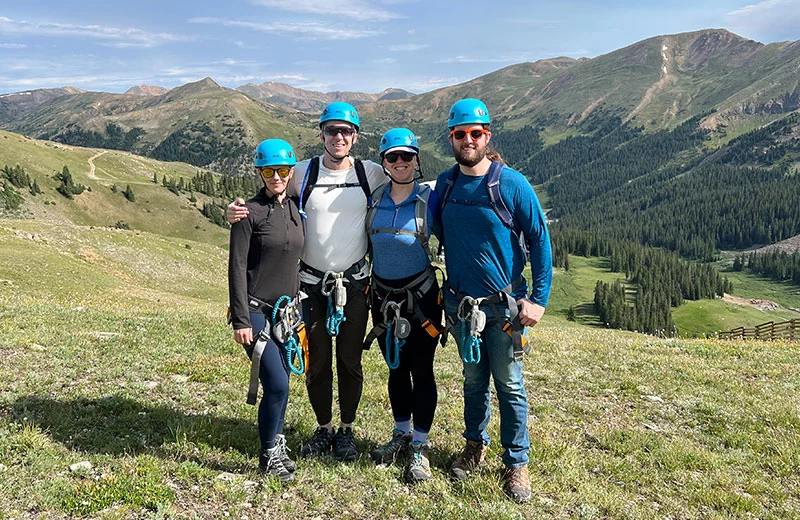
Kayla received a bachelor’s degree in women’s studies and political science from Wellesley College and a master’s degree in public policy and women’s studies from George Washington University.
“I’ve been a big feminist, and I’m really passionate about progressive rights and the importance of making your own decisions about your body,” she said.
When faced with cancer, Kayla appreciated that her medical team always made sure she had a say in how to fight the battle. They talked with her about her fertility struggles, which became more complicated due to the cancer drugs she had to take.
“It’s really important that young women know that they can safely conceive and have children after breast cancer treatment,” said Dr. Jennifer Diamond, Kayla’s oncologist at the UCHealth Diane O’Connor Thompson Breast Center in Aurora. “For patients like Kayla, we make sure they always have that option.”
Kayla’s fight against breast cancer meant pausing her plans to have a baby
While Kayla and Zac wanted to start a family, cancer drugs further complicated their fertility struggles.
“I saw my siblings and friends having kids, and it was so hard,” she said.
Breast cancer treatments typically plunge younger women into medical menopause. They also would throw a temporary wrench into Kayla’s successful career working for the NRDC as its federal campaign director. She even had to cancel an invitation to visit the White House to celebrate the passage of the Inflation Reduction Act because she wasn’t feeling well enough.
“Being in your 30s is a really weird time of your life to have cancer. At support groups, you would hear 70-year-olds talking about it, and while their story is still valid, you think, ‘You’ve had your life, your kids and your career,’ but when you’re younger, you haven’t experienced as many of those things yet.”
Kayla would eventually undergo two surgeries: a lumpectomy in her left breast along with the removal of two lymph nodes, and an additional procedure to remove 13 nearby lymph nodes, one of which had cancer.
She also endured 16 rounds of chemotherapy and 20 rounds of radiation. Along with launching her into menopause, side effects included extreme fatigue, nausea and weight loss. She also lost her hair. A case of meningitis landed her in the hospital, and she had to go through cancer treatments during the COVID-19 pandemic, which made hospital stays and appointments even more complicated and frightening.
“She had really great support from her family,” Diamond said. “On a personal level, she is a person who wants to make an impact in this world and be an advocate for others.”
Breast cancer in young women and how UCHealth is countering a worrisome trend
Breast cancer in young women is more tenacious and typically more dangerous than breast cancers that emerge later in life. Women ages 45 and younger account for about 10% of new cases of breast cancer in the U.S., according to data from the U.S. Centers for Disease Control and Prevention. Like 75% of young women diagnosed with breast cancer, Kayla had no family history of breast cancer or genetic predisposition.
Younger women have a higher mortality rate from breast cancer because it is usually not caught as early as in women who are 40 and older. That’s because they generally receive annual mammogram screenings. Also, breast cancer in younger women usually involves more aggressive biological features than in older women. Doctors are currently researching why young women face more aggressive types of breast cancer.
Unfortunately, by the time a young woman notices a lump in her breast, it’s usually more advanced than if providers catch cases of breast cancer during screenings.
The UCHealth program for young women with breast cancer has been providing unique care since 2004 to women aged 45 and younger with breast cancer. Researchers are conducting ground-breaking research for younger women, with a strong focus on helping survivors live fully after a breast cancer diagnosis.
Kayla participated in a clinical trial called ISPY2 to look at new treatments to improve cancer outcomes for young women.
“We’re hoping it gives us the ability to eliminate live cancer cells before surgery,” said Diamond, also a professor of medical oncology at University of Colorado Anschutz School of Medicine.
For Kayla, it was a chance for something positive to come from her bout with cancer.
“Dr. Diamond suggested a study, and I knew I wanted to join. I wanted something good to come out of what I was going through,” she said.
Kayla takes a break from her treatment to become a mom
In the past, Kayla might have had to forfeit her dream of having a child.
But research has shown that women can safely pause hormonal therapy, which is used to fight the type of breast cancer Kayla had. Women can choose to get pregnant, give birth, breastfeed and then resume treatment to complete the five-year recommended medication course.
“That is something we address for all young women with a diagnosis,” Diamond said. “We always offer ongoing fertility education for those who haven’t conceived yet, and we work with our reproductive specialists if patients want to harvest eggs and store embryos.”
Kayla underwent cancer treatment for two years after her lumpectomy. The regimen included three drugs. One was a drug targeted specifically for her type of cancer, which she completed. But she paused the other two, both of which suppressed her ovaries from producing estrogen, (which can fuel breast cancer) and cause women to experience menopause symptoms.
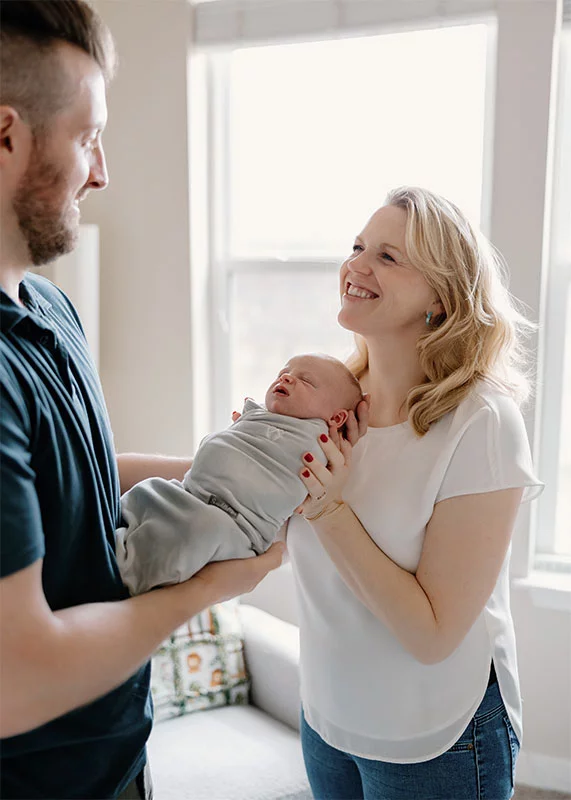
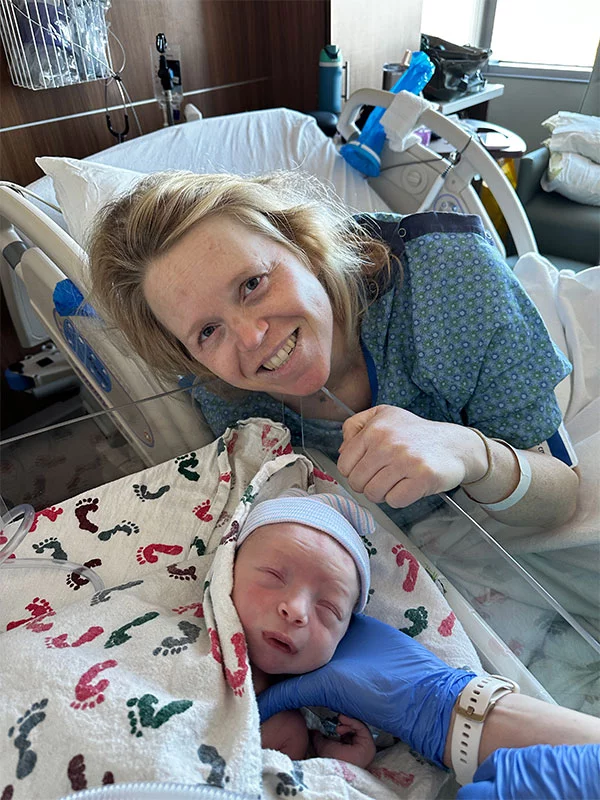
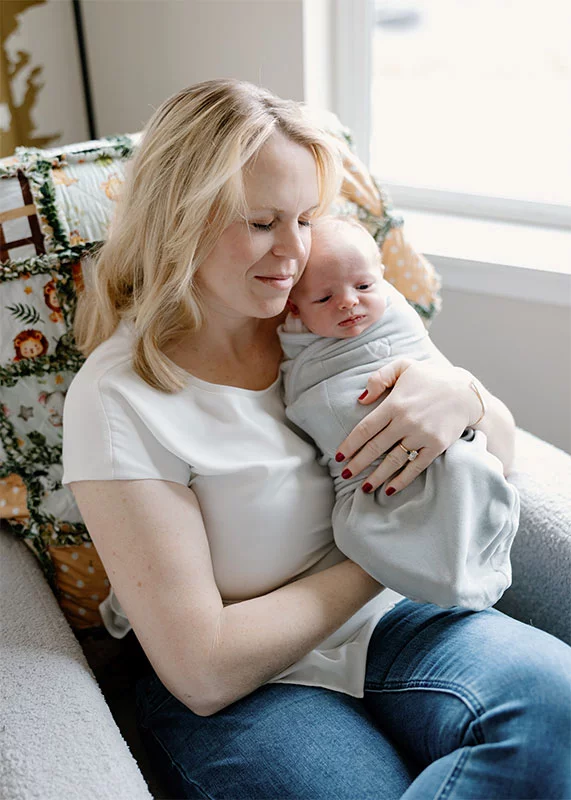
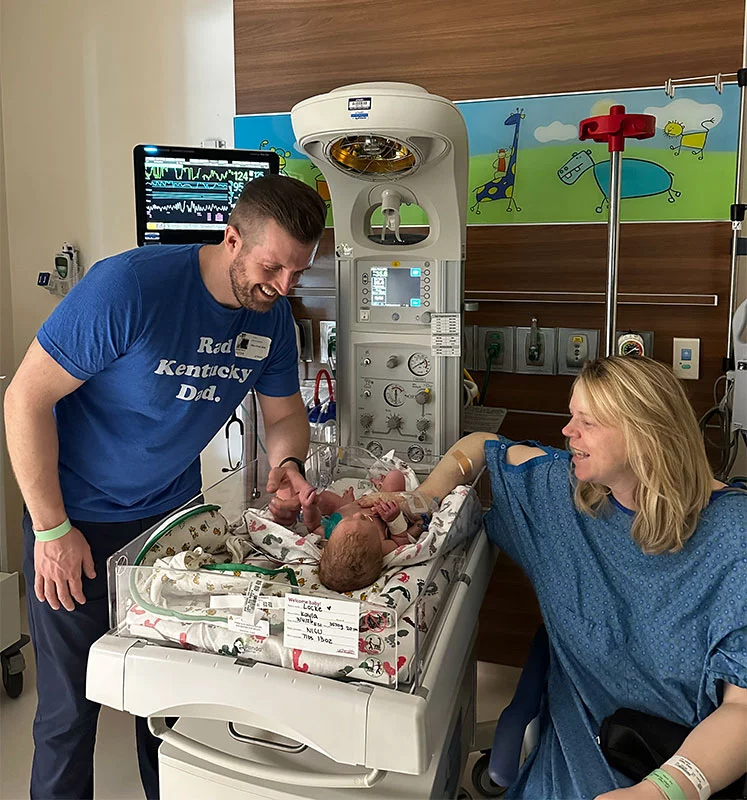
Kayla took a break from these two drugs in spring 2025 and in June, used IVF, a procedure that entails doctors creating embryos outside the womb. Nine months later, the couple’s son, Locke, was born.
“Everything that I had gone through and everything we went through as a couple – it was all worth it when he was born,” she said.
Importance of mental health while Kayla fights cancer
Clearing the physical hurdles of cancer was one thing, but getting up after being repeatedly knocked down emotionally and psychologically was another. Kayla credits Kimberley Makela, a UCHealth oncology counselor, with providing her the tools she needed to get through her ordeal with her psyche intact.
“It was really tough, and I had a lot of guilt,” Kayla said. “Since I don’t have the gene that caused the cancer, I thought, ‘What did I do that could have caused this?’ I wanted a clear, logical line that would bring me to that answer, and I spent a lot of time trying to find that reason.”
Cancer can be very isolating, Makela said, as it puts a hold on a patient’s life while others continue their same trajectory. This can be especially frustrating for younger patients whose cancer diagnosis comes at a time when they may be at the peak of their career or wanting to start a family. Instead, they are dealing with chemo, radiation, endless doctor appointments, illness and their own mortality.
“Counseling gives people that space so individuals can take ownership of those decisions and talk about their fears.” Makela said. “For women, it’s acknowledging they have a voice and that it matters.”
Accepting that it was OK to rest, recuperate and heal were important lessons for Kayla.
“Our society praises movement and productivity. But what we don’t see is all the work and productivity that occurs on a cellular level – the healing, repairing and resting that needs to happen,” Makela said. “It’s about paying attention and honoring how your body really feels and recognizing the balance between rest and work, which Kayla eventually understood.
“It was such an honor and privilege to get to know her and walk alongside her.”
Kayla deals with lymphedema, a side effect of cancer treatment
While Kayla wrestled with slowing down and tending to her emotional needs, she also was dealing with another unfortunate physical side effect of cancer – lymphedema.
Lymphedema is chronic swelling in tissue resulting from trauma to the lymphatic system, a group of tissues and organs in our body that help us stave off infection and disease. The lymphatic system allows for healthy maintenance of body fluid levels.
The greater the trauma to the lymphatic system, the greater the risk of developing lymphedema. Once the trauma has occurred, the risk of developing lymphedema never goes away.
In a healthy lymphatic system, that fluid funnels into the vascular system, where it is eliminated as waste. But for patients like Kayla whose lymph nodes have been removed or damaged through surgery, chemotherapy or radiation, that “one-way system” of fluid drainage gets retained in the body and causes swelling in nearby tissue, which for her was her left breast.
“Lymphedema is a common side effect of breast cancer treatment and can develop in the breast, chest wall or arm following lymph node removal and radiation therapy,” said Erica Brooks, UCHealth occupational therapist who worked with Kayla during her treatments. “Radiation can affect both the lymphatic system and surrounding tissues, while surgery may also lead to cording (axillary web syndrome), which can cause pain, tightness, and limitations in range of motion.”
She met with Kayla for treatment sessions that included manual lymph drainage, scar tissue and cording management, compression therapy and education on long-term self-management. She also used a pneumatic compression pump and compression garments to help manage swelling. Because lymphedema is a chronic condition, ongoing self-care is important for maintaining results.

Patients with breast cancer are monitored closely for lymphedema during the first two years following treatment, but lymphedema can develop at any time. They are educated on the signs and symptoms of swelling and encouraged to return for evaluation if concerns arise in the future.
“It was wonderful to get to know Kayla,” she said. “She’s awesome and has been through so much.”
Looking toward a bright future: a book and a baby boy
Now cancer-free, Kayla is riding the wave to her next projects: She has a healthy baby boy, she will return to her NRDC job this summer, and she has written a soon-to-be-published book about her battle with cancer and her fight for progressive causes.
While her illness affected everything in her life, not all of it was painful – she is grateful for the experience and the clarity it brought.
“It was certainly transformational in the best way,” she said. “I have formed deep friendships with the people I met along the way, and it taught me to only spend time on things I really care about.”
She advises cancer patients to seek a second opinion, get help from an oncology therapist and join support groups if it’s something they are comfortable with.
“Cancer is very isolating even though there are millions of people with it. But there is a community out there … and people you can build community with.”