

Uterine fibroids affect as many as 20% to 25% of women of reproductive age. These noncancerous uterine masses cause symptoms, sometimes severe, such as heavy bleeding and painful cramping. A minimally invasive procedure available at UCHealth has been highly effective but underused in stopping fibroid growth and reducing their symptoms.
The procedure, uterine fibroid embolization (UFE), has a success rate of around 90% in shrinking fibroids and sharply reducing menstrual bleeding, said Dr. Leigh Casadaban, assistant professor of Interventional Radiology at the University of Colorado Anschutz School of Medicine. Casadaban practices at UCHealth Radiology – Anschutz Inpatient Pavilion.
Casadaban said UFE, which she performs, is an important alternative for women who want to avoid a hysterectomy or surgery to remove fibroids from their uterus.
The procedure has been available for about 30 years, and has been declared “very effective for many women” by the American College of Obstetrics and Gynecology. Yet Casadaban describes UFE as “underutilized” for a variety of possible reasons.
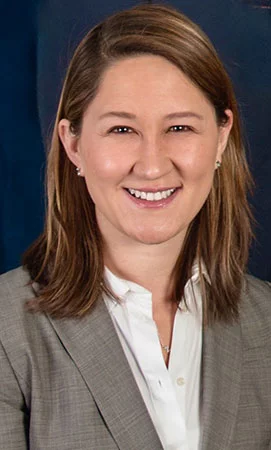
“A lot of patients just don’t know about it,” Casadaban said. “Sometimes providers don’t remember to counsel their patients about it.” She said she personally performs about one UFE a month, a number that hasn’t changed much over time. With more information available for women to make a decision, she hopes it can.
How uterine fibroid embolization works
How does UFE work? The essential idea is to starve the fibroids. Providers use X-rays to guide a catheter, inserted through a patient’s groin or wrist, to the two arteries that supply blood to the uterus. There, they insert tiny, FDA-approved plastic beads that block blood flow to the fibroids. Without a blood supply, fibroids gradually shrink, as do the symptoms they produce.
The beads cut off blood flow not only to the fibroids but to the entire uterus. They also remain in the arteries permanently. That sounds like a problem, but the uterus adapts to the change.
“What we find is that over time, the uterus will get new blood flow back, but the fibroids do not,” Casadaban said. “The body has a miraculous way of resupplying blood flow to our necessary organs.”

Uterine fibroid symptoms and how treatment helps
Casadaban said UFE helps patients with two kinds of problems. One is “bulk” symptoms caused by fibroids that get large enough to put pressure on the bladder and other organs and cause bloating that is sometimes so severe it makes a woman look pregnant, she said.
The procedure also stops heavy menstrual bleeding caused by the fibroids, making the uterus bigger and disturbing its lining.
“Most of the time when patients come to us, they are having very abnormal, heavy periods,” Casadaban said. “They are having a lot of fatigue and are having to take time off work because of their symptoms.”
What to expect during a uterine fibroid embolization
In most cases, UFE patients can go home the same day, Casadaban said. A few stay overnight, mainly for cramping pain, which patients should expect for a few days after the procedure. Patients manage the pain with Tylenol, ibuprofen, and oxycodone. Many get a nerve block as part of the procedure, which numbs the nerves around the uterus and controls pain after the procedure is over.
Some patients experience “post-embolization syndrome” symptoms, which include pain, fever, nausea and vomiting, for three to five days after UFE, Casadaban said. Others may pass fibroids from their body. That occurs when the fibroids enter the endometrium, the mucous membrane that lines the uterus.
“I always warn patients that this can happen, especially if they have that special type of fibroid,” Casadaban said.

Uterine fibroids treatment options: UFE vs. surgery
Of course, a woman’s decision to have UFE relies on several factors, and Casadaban said that she and her colleagues do not discourage surgery but rather counsel women on all their options for treating the fibroids.
Surgery to remove fibroids or the entire uterus produces symptom relief more quickly but also requires hospitalization and a longer recovery time. There is a small risk that UFE may cause women to enter early menopause. However, the documented risk is very small for women under 45 years old.
“It’s never happened in our practice,” Casadaban said, adding that she informs patients of the risk.
Casadaban also noted that hormones play a big role in driving fibroid growth, so a woman who is getting near menopause might want to wait for that time rather than having UFE or surgery.
“The fibroids tend to shrink after menopause,” she said. However, she added, “most of the women I see don’t want to wait. They want to take care of them now.”

Severe uterine fibroids symptoms: One patient’s experience
That was the case for Margot – she asked that only her first name be used because of her area of work – who suffered severe symptoms from uterine fibroids before finding relief from UFE.
Margot, a 44-year-old lawyer who lives in suburban Denver with her husband of almost 20 years, was diagnosed with thyroid cancer at 30, but finished treatment at UCHealth a decade ago and is now cancer-free. She said she was “pretty active” and enjoyed hiking, biking and movies and trivia with friends until a little more than two years ago. That’s when uterine fibroids turned her life upside down.
The ordeal began when she began noticeably bleeding – something that had not been a problem since she had gotten an intrauterine device (IUD) seven years prior.
“I thought the IUD was just failing,” Margot said. But when she went to her provider to get a new one, she got two surprises. The device was not there, and she had a very large fibroid that had grown between the muscles of her uterus. The fibroid had ejected the IUD.
Margot got a new IUD, but a couple of weeks later, she saw it ejected in a large blood clot. At that point, she began bleeding heavily – so much so that over a four-day stretch, she went through a pad an hour. She also had cramps she described as “raging, horrible, worse than I ever remembered.”
Living with untreated uterine fibroids
That was the start of a long ordeal that produced a cascade of problems. Margot could work from home, fortunately, but the steady, heavy bleeding from the fibroids put an end to the activities she had enjoyed. When she had to drive, she kept a towel ready in the car. In one “horrifying” experience, she bled through her jeans during a plane ride.
“I had to stay pretty close to the house,” she said. “It was really debilitating. I was literally like a child with a diaper again.”
Even at home, the difficulty of managing the bleeding marred her life. Margot is a dedicated artist who paints and said she has filled 37 sketchbooks with her work. “It’s a major passion,” she said. She also finds quiet satisfaction in journaling with a personal collection of fountain pens.
The fibroids made painting, sketching and writing nearly impossible, not only because she couldn’t sit for extended periods of time but also because her blood loss caused severe anemia that left her badly fatigued. Even staying awake to read was a challenge. Not surprisingly, the bleeding disrupted her sleep, which compounded her exhaustion.
Choosing uterine fibroid embolization over surgery
Margot resisted surgery to remove the fibroids due to a personal, deep-rooted fear. She suffered through persistent bleeding and anemia throughout 2025 but reached a crossroads that December. Her gynecologist told her that she was approaching the need for blood transfusions – she already had been recommended to have lengthy IV infusions of iron for her anemia – and suggested that she might look into UFE as an alternative to surgery.
With that, Margot called Dr. Casadaban, learned about the UFE procedure and scheduled it at UCHealth. Casadaban performed it in early March.
Thanks to the nerve block, Margot found the two-hour procedure, during which she remained awake, largely painless, save for some relatively minor cramping afterward.
“After what I had experienced, it was a relief,” she said. She went home with a plan for five days of recovery.
The greatest immediate relief and surprise was that the procedure immediately stopped the bleeding that had plagued her.
“I went in with a giant pad and went out without bleeding,” Margot said. The bleeding stopped completely for two or three weeks, she said, and when her regular cycle returned, it produced only “a thimble” of blood.

Life after the UFE procedure
Margot returned to work the afternoon of the fifth day of her recovery period. She said she controlled her pain adequately with medications, suffering only one extremely painful bout of cramping after the nerve block had worn off, and she waited too long to take them.
“I never waited to take my pain meds again,” she said.
Within a couple of weeks, Margot said, her energy had rebounded. She has returned to sleeping through the night. The fears of uncontrolled bleeding that tied her to home have vanished. For example, she recently took a five-day trip to Las Vegas, walked around the city and caught a concert at Sphere – all without pain and worries about bleeding.
Without that burden, Margot has also returned to pursuing art. She said she recently led an “art meetup” in which she worked with 14 people through several hours of watercolor instruction without a hitch.
“The problems have completely resolved,” she said.
Two months after the procedure, Margot called it “totally life changing. The fibroids had been life-ruining.”