
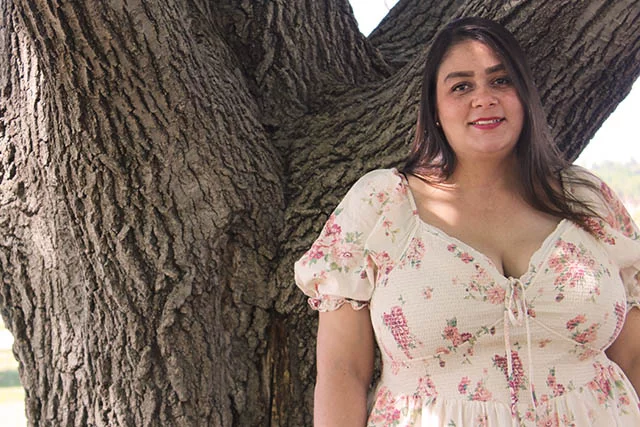
For eight years, Leidy Monsalve lived with the feeling that something was not right with her health. Her energy would suddenly drop, and her weight gain seemed to have no explanation.
Once a dynamic and active woman, she became someone who felt exhausted most of the time.
By age 36, recurring energy crashes were affecting not only her daily routine, but also her mood and — eventually — her relationship with her partner.
Between work responsibilities and demands of family life, Leidy’s health took a back seat.
An ER visit after a car accident revealed a hidden problem: thyroid cancer
Everything changed on the night of July 25, 2025. While waiting for a traffic light to turn green in Denver, the vehicle Leidy was driving was struck by another car.
Leidy was taken to the emergency room and then hospitalized for three days. That unexpected hospital visit would mark the beginning of a diagnosis that had been years in the making.
During her hospital stay, the medical team performed several imaging tests, and what they found would not only identify the extent of Leidy’s injuries, but it would lead to a diagnosis that shook Leidy’s life.
As a result of the collision, Leidy suffered a fractured sternum, an injury that typically does not require surgery and, in most cases, heals gradually with time. However, the imaging tests also revealed a nodule on the left side of her thyroid gland — an abnormal growth of cells — a condition that typically causes no symptoms and, in up to 95% of cases, is benign.
Leidy was not among the majority.
The thyroid is a gland that plays a major role in metabolism
The thyroid is a small, butterfly-shaped gland located at the front of the neck. It plays a critical role in keeping the body healthy. It produces the hormones thyroxine (T4) and triiodothyronine (T3). Thyroid hormones help the body use energy, maintain body temperature, and keep the brain, heart, muscles and other organs functioning properly, according to the American Thyroid Association.
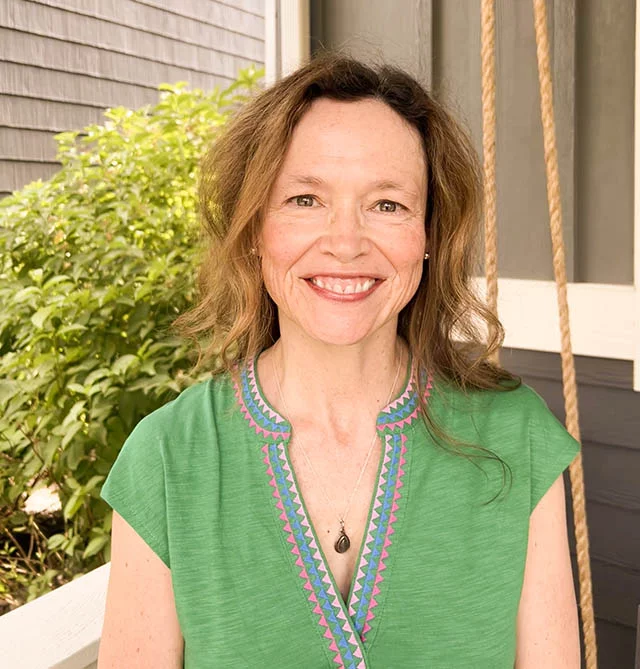
Leidy was referred to Dr. Jennifer Morrison, an endocrinologist who specializes in benign thyroid disease, thyroid cancer, diabetes, and metabolism.
Morrison, who also serves as visiting associate professor in the Division of Endocrinology, Metabolism and Diabetes at the University of Colorado Anschutz School of Medicine, sees patients at the UCHealth Anschutz Outpatient Pavilion.
To determine whether the nodules were cancerous, Morrison performed a fine-needle aspiration — a type of biopsy — removing small tissue samples for laboratory testing.
The biopsy results confirmed the most common type of thyroid cancer, papillary thyroid carcinoma, Morrison said.
Thyroid cancer is the second most common cancer among Hispanic women, surpassed only by breast cancer.
Hispanic women with thyroid cancer have greater unmet information needs about the disease than other patient populations.
Overall, thyroid cancer is the eighth most common cancer in the U.S., according to the American Cancer Society. About 44,000 Americans are diagnosed with the disease each year.
White Americans have the highest incidence of thyroid cancer, followed by Hispanics, according to data from the National Cancer Institute’s Surveillance, Epidemiology, and End Results SEER Program.
The impact of delaying medical care
As Leidy processed the news, she couldn’t stop thinking about the times she had considered seeking medical care years earlier but decided to wait.
In fact, she had scheduled a medical appointment just a few days before the accident and was waiting to be seen when the crash unexpectedly accelerated her visit to the hospital.
“If I had sought medical care eight years ago, I would probably only be taking medication to manage thyroid problems,” Leidy said. “I don’t think I would have developed cancer if I had acted sooner.”
Leidy´s cancer had already metastasized. Cancer cells had spread from the thyroid gland to the neck.
‘‘Continued lack of detection could likely have resulted in further advancement of her cancer. Fortunately, it appears that her disease at diagnosis was limited to the neck,’’ Morrison said.
Leidy’s treatment plan included surgery followed by radioactive iodine therapy.
Because small amounts of radiation remain in the body for a short period of time, patients must temporarily limit close contact with others to reduce radiation exposure.
For Leidy, that meant days of isolation. She couldn’t work, and she couldn’t see her friends while she recovered.
The isolation took both an emotional and financial toll. Unable to work during treatment, she temporarily lost the income she relies on from cleaning homes and office buildings.
Why timely diagnosis for thyroid disease matters
An estimated 20 million people in the U.S. are living with thyroid disease.
Each year, approximately 15.7 new cases of thyroid cancer are diagnosed for every 100,000 people. Advances in imaging have led to higher diagnosis rates, according to the National Library of Medicine, part of the National Institutes of Health.
“Thyroid cancer is more frequently diagnosed among women than men,” according to the National Cancer Institute.
Yet timely diagnosis remains a challenge for many Hispanic patients.
Researchers found that Hispanic patients are more likely to be diagnosed with thyroid cancer at a later stage, when tumors are larger or the disease has spread to nearby lymph nodes.
Limited access to health insurance, language barriers and difficulty navigating the healthcare system can all contribute to delays in diagnosis and treatment.
‘‘There are a variety of factors that contribute to this issue. Language and cultural barriers, lack of consistent medical care and financial burden of treatment, to name a few,’’ Morrison said.
The type of cancer that Leidy developed tends to grow and progress slowly.
‘‘Most thyroid cancers are slow-growing and indolent,’’ Morrison said.
Importance of imaging tests powered by AI
Imaging tests help physicians identify abnormal cell growths, such as masses, cysts, tumors, or nodules, that otherwise could be overlooked.
Doctors found Leidy’s thyroid nodule during an imaging scan. This type of discovery, known as an incidental finding, flags potentially significant abnormalities that might otherwise go unnoticed during imaging studies.
Providers use AI-powered technology to support timely detection of medical conditions.
‘‘As many thyroid cancers are ‘clinically silent’ — which means there are no specific symptoms caused by the presence of the cancer — thyroid cancer can fly under the radar and go undetected for years,’’ Morrison said.
‘‘Eon AI detected the incidental thyroid nodule in the radiology report,’’ Morrison said.
‘‘With Eon AI technology, we can pick up incidental findings; then, in collaboration with UCHealth Endocrinology providers, follow-up studies and consultations are recommended upon review of these cases. This collaboration will lead to primary care being alerted to these incidental findings and ordering the appropriate follow-up studies,’’ Morrison said.
Thyroid cancer has a high survival rate when diagnosed and treated early
About 98% of people diagnosed with thyroid cancer survive at least five years after diagnosis, making it one of the most treatable forms of cancer when detected early, according to the American Cancer Society.
Advances in artificial intelligence are helping doctors identify patients with incidental findings who need further evaluation, making it possible to diagnose and treat thyroid cancer earlier, Morrison said.
‘‘Most patients with papillary thyroid carcinoma have an excellent prognosis when the condition is diagnosed early and treated promptly,’’ she said.
Although thyroid cancer is typically very treatable, Morrison emphasizes that timing matters, particularly with more aggressive thyroid cancers.
“Unless a tumor grows large enough to cause noticeable symptoms, the patient may be completely unaware of its presence,” Morrison said. “That’s why early identification of these cancers can be so important.”
She also credits primary care providers for recognizing concerning findings and ensuring patients receive the right follow-up.
“With timely identification and evaluation of these nodules, we are getting these patients in for further evaluation in a more streamlined fashion,” Morrison said.
Early cancer detection leads to better outcomes
Time is precious, especially when it comes to health. Being referred to specialists with expertise in managing challenging diagnoses can make a significant difference in a patient’s outcome.
“In the case of patients who are positive for thyroid cancer, we can quickly pivot and get them seen in our multidisciplinary thyroid cancer clinic and get them set up with consultation with one of our expert thyroid surgeons,” Morrison said.
“Early detection is important because, in some cases, the cancer can spread to lymph nodes or other parts of the body before any symptoms appear. Many thyroid cancers are asymptomatic or ‘clinically silent’ and there is no routine blood test to detect them.”
Is thyroid cancer hereditary? Who is at greater risk?
Among all individuals, there are patients who have a higher risk of thyroid cancer.
‘‘There are some genetic cancer syndromes that confer a heightened risk for development of thyroid cancer. Family history — specifically, having two first-degree family members with thyroid cancer — and/or a history of excessive radiation exposure to the head or neck area are two principal risk factors for development of thyroid cancer,’’ Morrison said.
“One thing I’ve learned through this process is how great our primary care providers are at responding to these incidental findings once alerted, ordering appropriate follow-up and making referrals to specialists,” she said.
Morrison helped Leidy understand her diagnosis and developed a treatment plan that included surgery to remove the cancerous thyroid tissue, known as a total thyroidectomy, and neck dissection surgery, followed by radioactive iodine therapy, an oral medication administered in a capsule form.
Leidy took one dose of radioactive iodine therapy to target any remaining normal thyroid and thyroid cancer cells after surgery. Most of the radioactive iodine leaves the body through urine within a few days.
‘‘Leidy had her surgery, adjuvant treatment with radioactive iodine, and she is currently in the active surveillance phase of her thyroid cancer journey. We are following labs and neck ultrasounds closely to monitor for persistent or recurrent cancer,’’ Morrison said.
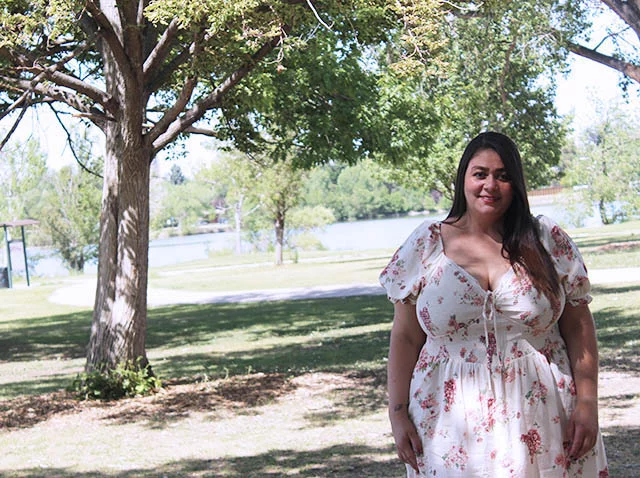
The patient-provider communication dynamic and trust
Looking back, Leidy said one of the most important parts of her journey was the reassurance she received from Morrison.
“My doctor told me everything was going to be OK,” Leidy said. “She explained that among the different types of cancer thyroid cancer is one of the most treatable and has one of the highest survival rates.”
That conversation transformed Leidy’s initial fear into hope.
For the first time in years, she not only had an explanation for the physical and emotional changes she had been experiencing, but also the confidence that effective treatments were available and that she could regain her quality of life.
“Having my doctor explain the disease, the treatment options and the survival rates gave me peace of mind,” Leidy said.
Effective communication matters during diagnosis
How patients and caregivers perceive their care is highly impacted by effective communication.
‘‘We had this difficult conversation about her new diagnosis of thyroid cancer. Then, through our UCHealth Thyroid Multidisciplinary Clinic, we were able to get her case reviewed by our team of thyroid specialists (endocrinology, general surgery, ear, nose and throat specialists, pathology) and expedite consultation with a thyroid surgeon,’’ Morrison said.
Leidy and Morrison continue to work closely.
“The radioactive iodine treatment showed the expected response in the neck, with no evidence that the thyroid cancer had spread to other parts of her body,” Morrison said.
When Leidy thinks back to the day she received her diagnosis, one moment stands out above all others.
“Seeing my doctor’s expression when she told me I had cancer helped me more than she probably realizes,” Leidy said. “She was calm and professional, but she was also compassionate. She wasn’t just my doctor — she was there for me as a human being.”
In the medical setting, ensuring that patient care is delivered with integrity and excellence has a powerful influence on patient outcomes and the overall quality of care.
‘‘I feel that Leidy and I have developed a close working relationship. I genuinely care about her, and I look forward to continuing to work with her on her journey.
‘‘I would never wish a car accident on anyone. It was fortunate that the imaging performed as a result of her accident led to the identification of her incidental thyroid nodule,’’ Morrison said.
Caring for your health after cancer
Leidy now takes lifelong thyroid hormone replacement therapy to replace hormones her thyroid can no longer produce, as her thyroid gland has been removed.
She was prescribed levothyroxine, a synthetic thyroid hormone.
‘‘I take my prescribed medication every day as directed and never miss a dose,’’ Leidy said. “I’ve always been a very positive person. I knew I was going to overcome this disease, and I try to find something positive in every situation.”
She is still under medical follow-up.
‘‘Leidy is currently in the active surveillance phase of her thyroid cancer journey. We are following labs and neck ultrasounds closely to monitor for persistent or recurrent cancer,’’ Morrison said.
Leidy continues treatment for hypothyroidism, a condition that make patients feel tired or gain weight unexpectedly.
‘‘We are in the process of adjusting her thyroid hormone dose with goals of keeping thyroid function labs at goal from a thyroid cancer management standpoint,’’ Morrison said.
Morrison said Leidy is a special and strong person.
‘‘Despite all she has gone through, she has a positive attitude and brave spirit. She is truly an inspiration to work with, and I feel lucky to be her doctor,’’ Morrison said.
Leidy hopes that by sharing her journey, she can encourage others to listen to their bodies and seek medical attention when symptoms persist.
“When you notice even the smallest sign that something doesn’t feel right, make a medical appointment,” she said. “It’s always better to see a doctor right away so you can find out what’s happening and get treatment if you need it.”