
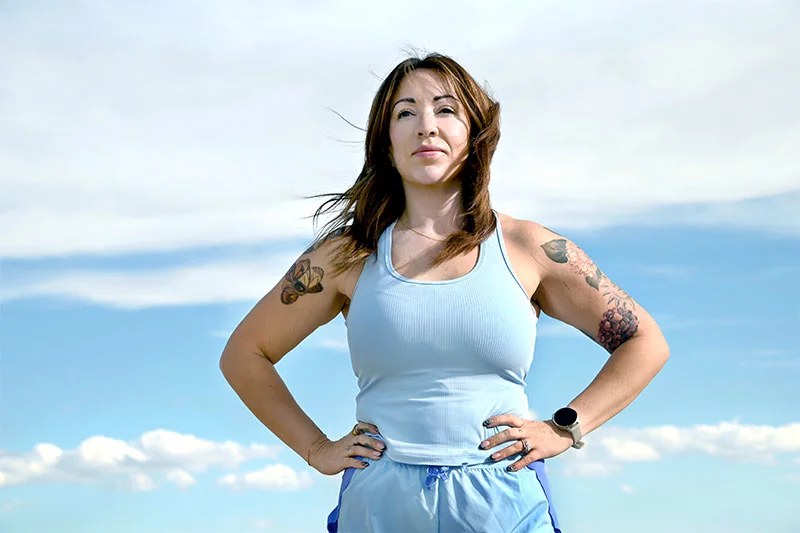
Kristine Ortiz had no family history of breast cancer, but years ago, she donated a vial of blood to the Colorado Center for Personalized Medicine’s biobank, a partnership between UCHealth and University of Colorado Anschutz.
That decision, and Ortiz’ choice to learn about gene mutations that increase her risk of cancer and other diseases, might have saved her life.
That’s because Ortiz, now 36, learned through the biobank that she has the BRCA2 gene mutation, which significantly increases her risk of getting breast cancer.
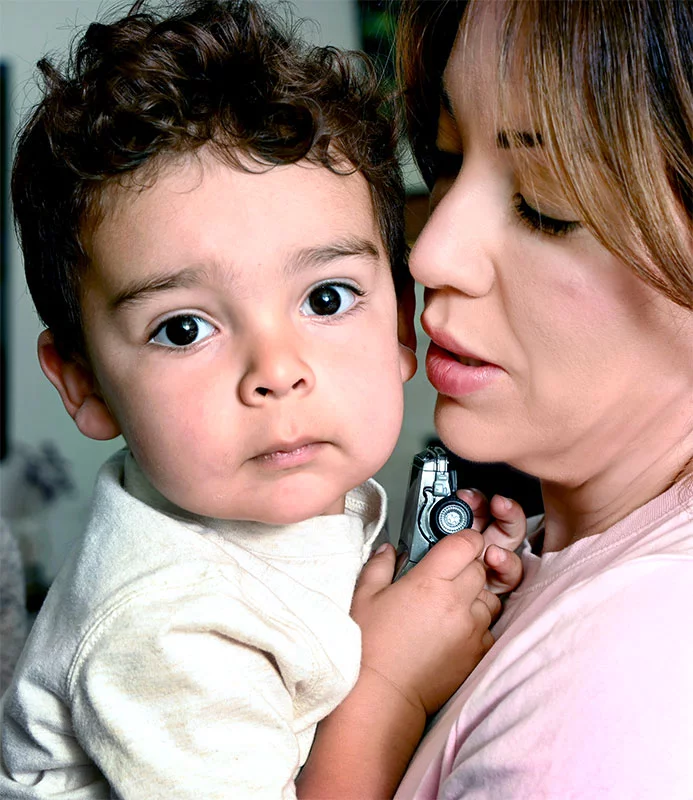
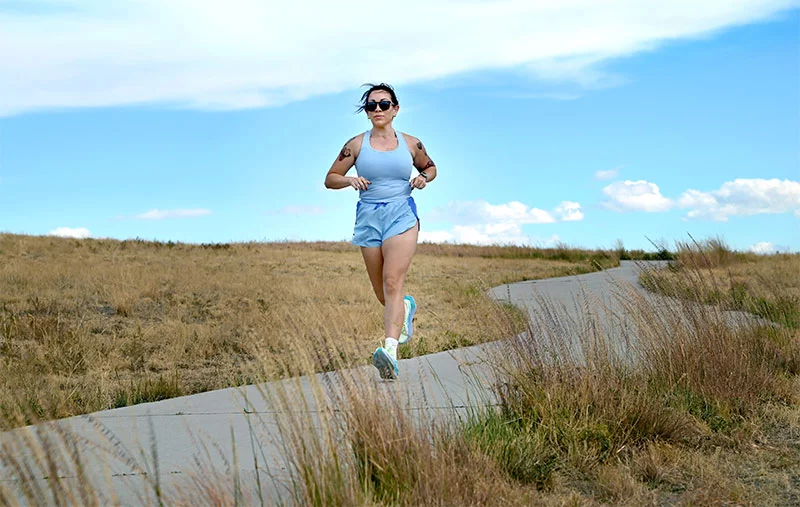
Since learning she carries a variant of the BRCA2 gene, Ortiz has shared the news with family members and decided to get a preventive double mastectomy in January.
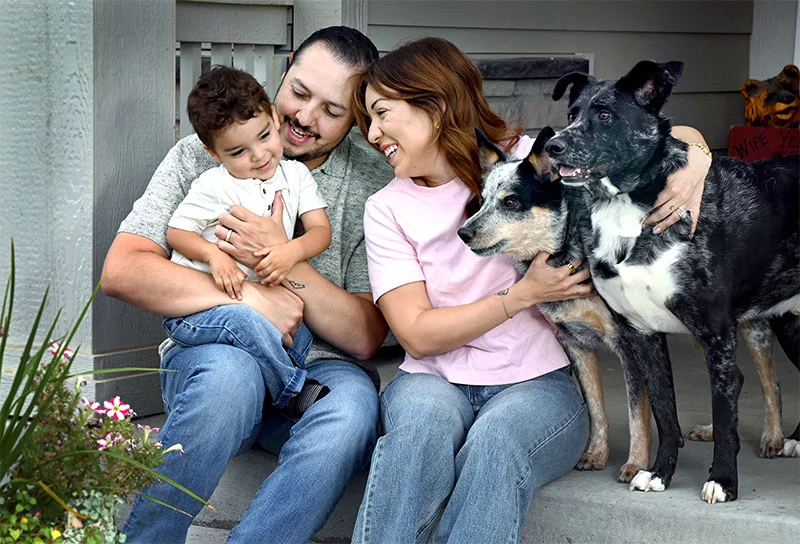
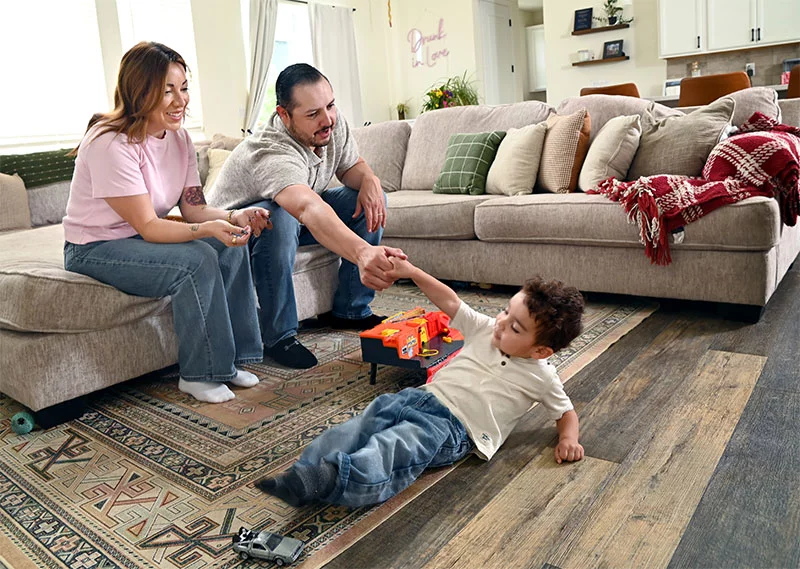
She and her husband have a 2-year-old son and look forward to having more children.
Participating in the biobank is easy. How to get started.
- Join the biobank by signing a consent form in your My Health Connection Account.
- You must be a UCHealth patient who is age 18 or older.
- After you sign up, during an upcoming visit that requires a blood draw, a medical provider will collect an extra vial of blood for the biobank.
- Learn more about the biobank.
Learning about the BRCA2 gene mutation through the biobank has been challenging but incredibly valuable to Ortiz.
“It’s a big impact on our family because this was something that was not on our radar at all,” Ortiz said.
“Now we can make decisions on what’s right for our family, and what steps we want to take.
“It’s nice to have the education component and understand what it is, and to know that we can take the proper steps and kind of take our own paths.”
Knowing that the BRCA2 mutation runs in the extended family also can help the next generation, Ortiz said.
“As we have kids, we have to talk to them and educate them, especially with my nieces,” she said.
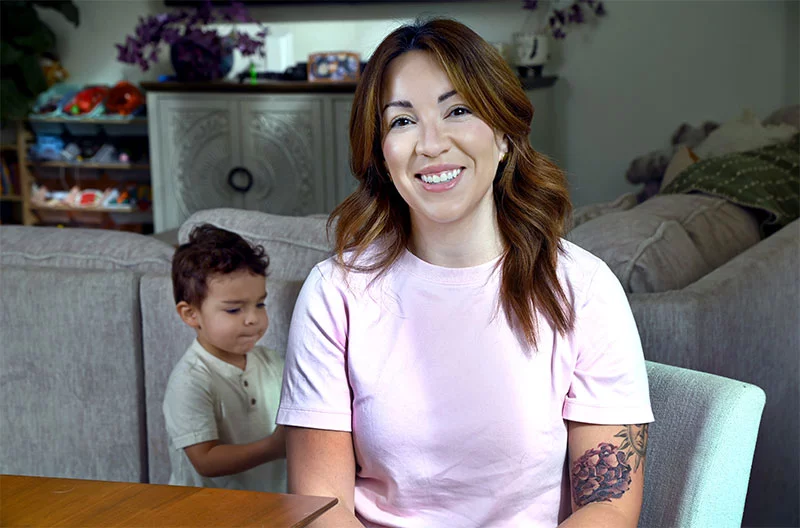
Breast cancer prevention efforts began with a biobank donation
Ortiz works in human resources at UCHealth Longs Hospital in Longmont and UCHealth Broomfield Hospital.
UCHealth patients and employees can join the biobank. When participants opt in, technicians simply collect an extra vial of blood for the biobank at the patient’s next scheduled blood draw.
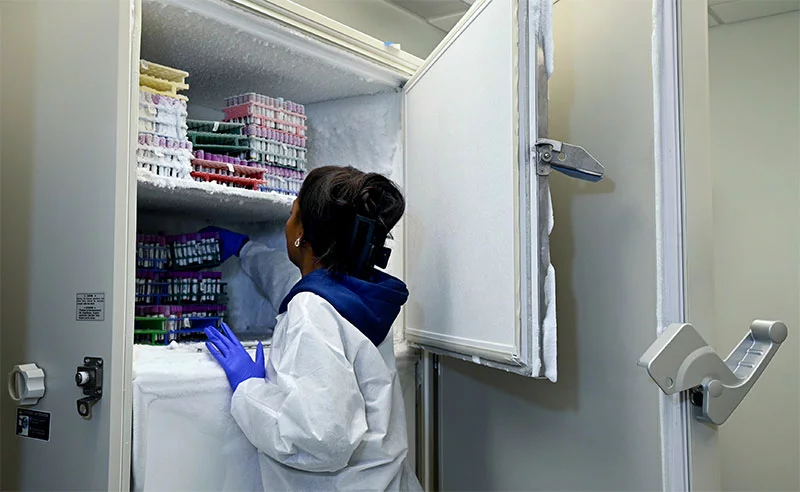
Since the biobank launched in 2015, study volunteers have provided 200,000 samples, making the Colorado biobank one of the largest in the U.S.
The biobank’s primary aim is to generate research, and so far, Colorado biobank experts have produced more than 200 studies on topics including cancer genetics and treatment, heart disease, autoimmune disorders, human ancestry and more.
Sharing biobank findings with patients
Biobank experts also share findings directly with patients through two pathways.
One is called pharmacogenetics. Through this pathway, biobank experts enter genetic findings directly into a UCHealth patient’s My Health Connection medical record.
The genetic findings can help medical providers prescribe optimal medications. For instance, people with certain genes may metabolize medications differently. A cancer doctor might avoid giving a patient a specific type of chemotherapy medication that could cause more severe effects in that person. Or a certain type of statin medication could cause painful muscle cramping in some patients.
Biobank experts now have sent more than 1.5 million pharmacogenetic results back to over 137,000 participants.
The second pathway involves patients who want to be notified about potentially concerning gene variants that increase the risk of cancer, heart disease and other diseases.
In these cases, a biobank counselor will contact participants to discuss genetic findings.
So far, biobank counselors have provided results to more than 1,500 UCHealth patients who have genetic variants linked to disease. Roughly 40% have been cancers, another 40% have had to do with heart disease, and the rest have related to other genetic risks.
Patients decide whether they want to know about disease-linked genetic variants
Biobank experts don’t automatically share findings about disease-risk gene variants. Sometimes, patients don’t want to know if they have gene variants that increase disease risk.
And counselors share results only for conditions that can be medically confirmed and have screening, treatment or therapy options, said Emily Todd, a genetic counselor with the Colorado Center for Personalized Medicine.
But 30 to 40 times a month, Todd and fellow genetic counselor Lisen Axell provide patients with a disease-risk genetic finding.
In October 2025, Ortiz was one of those patients.
The biobank’s genetic screening detected a BRCA2 mutation. The mutation boosts a woman’s risk of breast cancer from an average of about 13% to more than 60% by age 70. It also increases the usual 1% risk of ovarian cancer to 13% to 29%.
Disease-risk gene variants beg complex questions, trigger care
Back when Ortiz signed up for the biobank study, she said she wanted to be informed of disease-related results.
Still, when Todd called Ortiz, she again confirmed that Ortiz wanted to know about a finding before she shared the news.
Todd had already checked Ortiz’s medical record and confirmed that the BRCA2 gene mutation had not yet been noted. If Ortiz or her doctors already knew she had the mutation, biobank counselors would not have reached out.
While speaking with Ortiz, Todd explained the potential impacts of knowing about a genetic susceptibility to disease. Those impacts can span healthcare, employment and the ability to get life insurance.
“There’s a lot to unpack for people trying to decide if they want to receive a genetic result,” Todd said.
Ortiz still wanted to know. On a separate call, Todd walked her through what having the BRCA2 mutation means and the care path Ortiz might consider. Not everyone does the recommended follow-up. Ortiz did. She scheduled a mammogram and an MRI. She also set up appointments with UCHealth genetic counseling experts, gynecologic oncology, and dermatology specialists and with Meredith Bales, the nurse practitioner who would take the lead on Ortiz’s care at UCHealth Cancer Care and Hematology Clinic – Loveland.
Telling extended family members about gene variants linked to disease
Ortiz didn’t stop there. She let her family know, and several immediate and extended family members have since gone for genetic testing. Some also had the high-risk BRCA2 variant. Ortiz’ mom, Dina Whittier, 69, was among them. She’s undergoing testing and is contemplating preventative surgery like her daughter.
Biobank finding leads to surgery to prevent breast cancer
Ortiz’s love for her son Baker, 2, and her desire to have more children with husband Jeremy led her to opt for the double mastectomy.
Todd said she’s pleased that the biobank study has helped Ortiz and her family guide their healthcare.
“This is the reason we share this information with people. Then they can take the right steps, inform their families, and, if they do develop one of these conditions, we catch it early,” Todd said.
Catching breast cancer early can make a huge difference. Early detection and treatment can mark the difference between a 99% five-year breast cancer survival rate when doctors catch the cancer early and it hasn’t spread, versus a 32% five-year survival rate if the cancer has spread widely.
Ortiz has no intention of letting cancer gain even a foothold.
“They changed my life, right? And my family’s life, and how we approach healthcare,” she said. “This is not something I would have ever thought to test for.”