
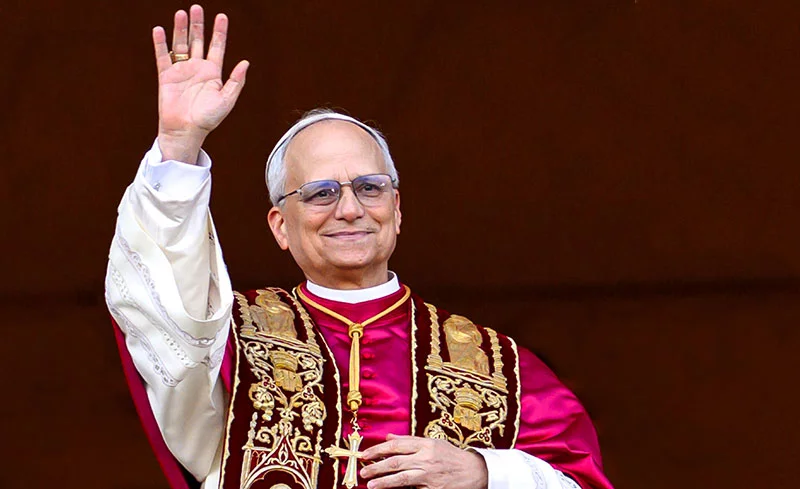
Early medical intervention to remove a nodular lesion from Pope Leo XIV’s right lung on Tuesday is a hopeful sign that the pontiff could make a full recovery, according to renowned global lung cancer expert Dr. Ross Camidge.
Doctors diagnosed the 71-year-old Chicago-born pope with pulmonary adenocarcinoma, a cancer that affects both smokers and non-smokers alike. Pope Leo is not known to have ever been a smoker.
“It’s the most common form of lung cancer,” said Camidge, a UCHealth doctor and a professor of medical oncology at the University of Colorado Anschutz School of Medicine. “Ten to 20% of people who get this have no history of smoking, but because it’s so prevalent, that’s still a huge number.”
Camidge is not one of Pope Leo’s doctors and is not advising medical experts about the pope’s treatments.
Camidge is, however, a renowned global lung cancer expert who provides much-sought-after second opinions for oncology cases throughout the U.S. and around the world, participating in online consultations with doctors and patients where he shares his expertise and experience. Camidge is also the director of the University of Colorado Thoracic Oncology Program.
In a sad irony, Camidge himself is now facing lung cancer.

Lung cancer is one of the most common types of cancer
As one of the most common cancers, lung cancer is a global health crisis and one of the deadliest — killing more people than breast cancer, prostate cancer, bowel cancer and pancreatic cancer combined.
But many patients are experiencing better outcomes and higher survival rates through clinical trials that include breakthrough treatments, in addition to standard protocols such as surgery, chemotherapy and radiation.
“More information could be coming out from the Italian doctors through the Vatican in the following days, but the hope is they caught it in the earliest stage and if so, he would need no other treatment,” Camidge said.
According to the Vatican statement, the “pope’s lower lobe of the right lung was removed using a video-assisted technique. Intraoperative histological examination confirmed the diagnosis of pulmonary adenocarcinoma, as suspected from pre-operative tests.”
What is adenocarcinoma, the type of lung cancer that Pope Leo has?
Adenocarcinoma is a type of lung cancer that forms in glandular cells on the outer parts of the lung, Camidge said, and is likely to be diagnosed earlier than other lung cancers because it spreads more slowly.
“Adenocarcinoma originates from the glandular tissues which produce mucus in the lungs,” Camidge said.
Mucus plays a vital role in our lung’s immune system, as it traps irritants in our airways and expels them through coughing.
As far as a culprit for cancer in non-smokers, researchers are studying many factors such as radon gas, secondhand smoke, genetic mutations and workplace chemical exposure. Camidge has his thoughts as well as it relates to Pope Leo.
“His case being related to air pollution is the most likely thing. It’s still relatively rare, but likely the reason,” Camidge said.
Early diagnosis and treatment make a big difference in health outcomes
While experts at the Vatican have not stated what stage the pope’s cancer was before doctors identified it, or if it spread, Camidge said it is likely doctors there did PET scans and brain scans before the surgery.
“The assumption is that they did appropriate scans ahead of time before so they could operate successfully and take out the nodule, with that being the end of it,” Camidge said.
While symptoms of lung cancer include fatigue, shortness of breath, coughing and back pain, Camidge said that it is most likely that Leo had no symptoms at all since it was caught so early. He suspects that doctors saw the affected nodule during a routine medical exam.
“My guess is because he is the pope, they do regular CT scans as part of his physicals. You wouldn’t see it on chest X-rays, so most likely he had a screening scan for other reasons. They would have found it, done a biopsy, discovered it was cancer and then taken it out. If he is lucky, it wouldn’t have spread anywhere or to any other lobes or lymph nodes, and his chance of cure would be 80 to 90%.”
As far as continued treatment, Camidge said the pope will be up and moving already, shortly after the operation, and should be back to his papal duties after about a week or so of recovery. He will need ongoing scans for the rest of his life: one, to monitor for recurrence and two, because he is at a higher risk of having another cancer in another lung nodule.
“I’m sure the holy father will be getting CT scans every few months for the next few years,” Camidge said. “We can also guarantee that he is receiving prayers from millions around the world.”