
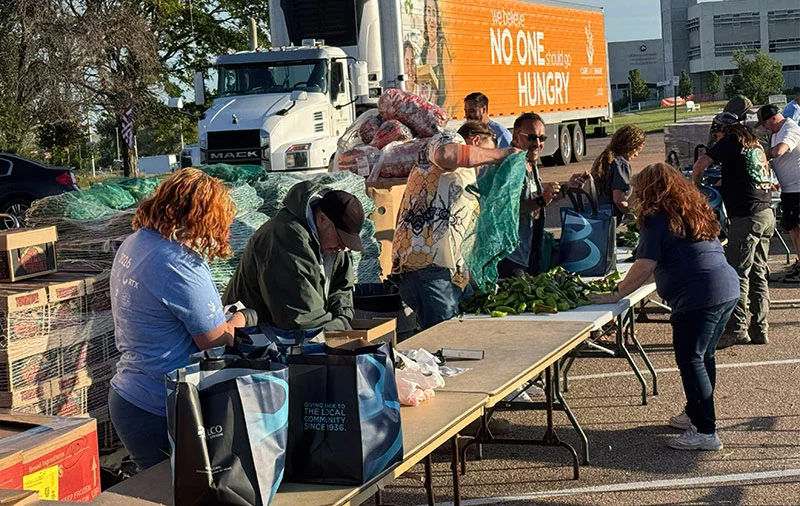
This fall, a box of food and plenty of fresh produce provided welcome assistance to hundreds of veterans across southern Colorado.
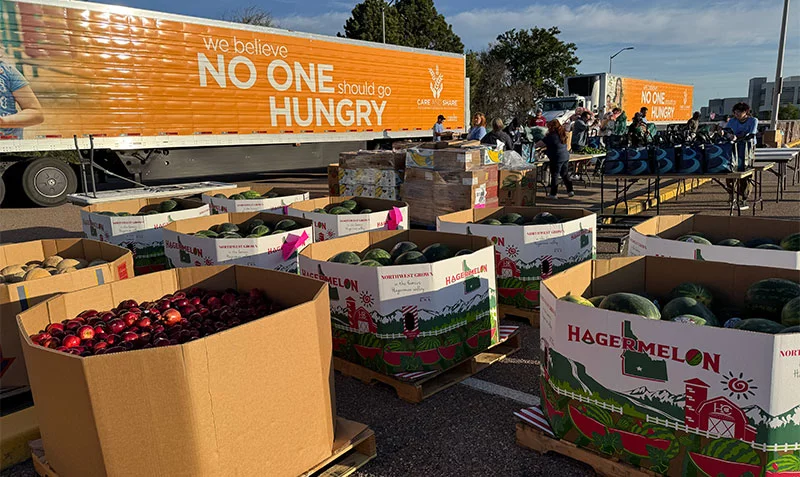
The annual “Heroes Helping Heroes” event in Pueblo also brought resources and support to veterans and their families that last long after people finished food like watermelon, chiles and non-perishables.
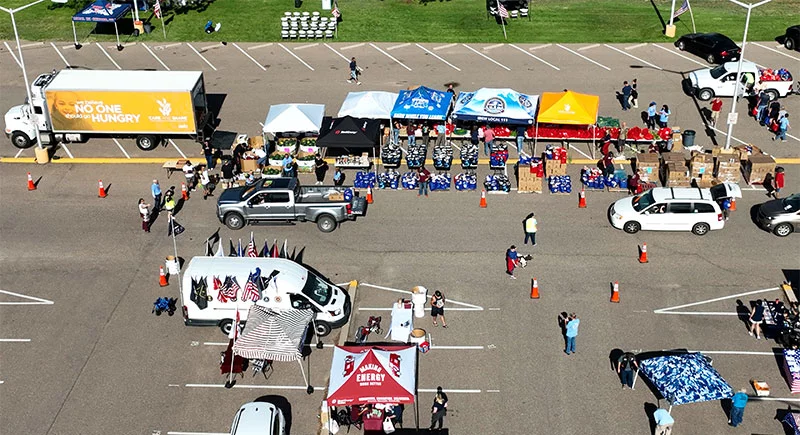
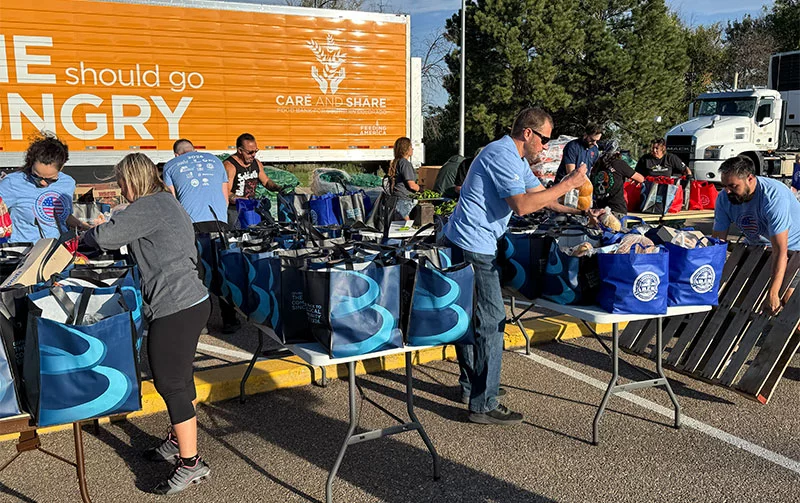
Care and Share Food Bank for Southern Colorado led the Heroes Helping Heroes event on Sept. 12 at Colorado State University Pueblo. The event organizers have earned national recognition for creating one of the largest food distribution events in the country that supports veterans, according to Feeding America.
“It’s really neat to do the largest distribution of food to veterans in the state here in Pueblo, the ‘Home of Heroes,’” said Nate Springer, president of Care and Share Food Bank of Southern Colorado, one of UCHealth’s community partners and a UCHealth grant recipient.
“There are hundreds of veterans who participate in this food drive, and people from the community just want to be part of this,” Springer said. “There is no way to do an operation at the scale of this event without hundreds of volunteers putting food bags together and then putting that food into cars.
“Think about how wonderful this is. It is veterans and community members helping their fellow veterans and community members,” Springer said.
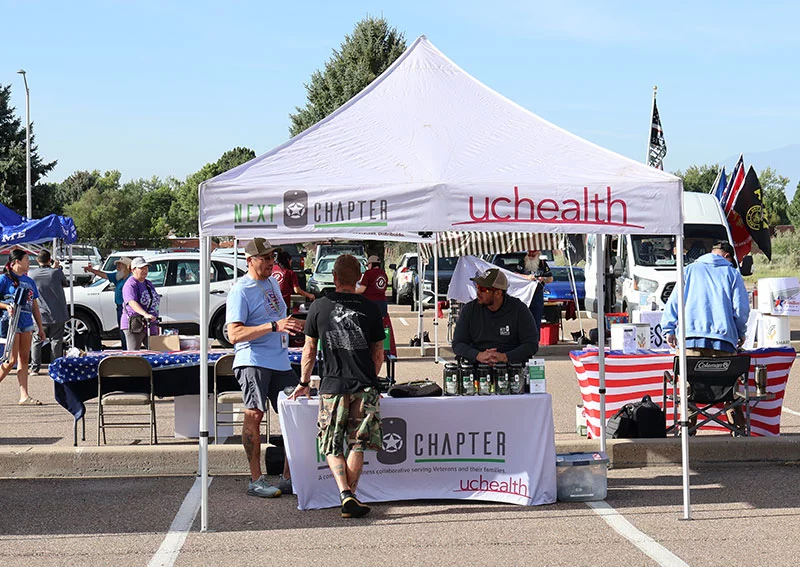
Jose Ramirez, community health manager for UCHealth’s southern Colorado region and a veteran himself, helped plan the event, packed boxes in advance and was on hand to support the Heroes Helping Heroes event in September.
Ramirez worked with 25 UCHealth employees who volunteered on their days off to pack boxes for Heroes Helping Heroes. They filled boxes with non-perishables like rice, macaroni and cheese and canned goods and made sure all boxes weighed the same.
“The volunteers helped pack 950 boxes for Pueblo and additional 450 boxes for people in Colorado Springs,” Ramirez said.
“It was awesome. We had two or three veterans among those who helped out. Some also had spouses or family members who have served and one is still on active duty. Everyone wanted to pay it forward,” said Ramirez, who served 25 years in the military, including 17 as a Green Beret.
On the day of the event, Ramirez said it was wonderful to see people coming from many miles and hours away.
“We had people from as far away as Costilla and Conejos counties in the San Luis Valley come and get boxes from us,” Ramirez said.
Ramirez and his team worked with representatives from veterans service organizations, American Legion posts and Veterans of Foreign Wars (VFW) groups across 14 counties to reach veterans who could benefit. The regional network also helped extend the program to veterans who could not attend in person.
“For some of the veterans who are homebound or can’t make the drive, those veterans service organizations or those VFWs or American Legions will come up, load up the truck and take it back to them,” Ramirez said.
Local farmers and agricultural producers also supported the effort, donating fresh produce such as tomatoes, strawberries, chiles and jalapeño peppers, as well as meat to supplement the food boxes.
“They pitch in and help us out, which is greatly appreciated,” Ramirez said.
More than a food distribution event, Heroes Helping Heroes connects veterans with support services
While food brought veterans to the event, connecting them with resources was another key part of the effort.
About 25 resource tables at the event gave veterans and their families an opportunity to learn about services available through a variety of groups, including Home Front Military Network, the U.S. Department of Veterans Affairs (VA) and other community partners, including Next Chapter, a joint effort that UCHealth and Mt. Carmel Veterans Service Center launched in 2022.
Next Chapter aims to drive down suicide rates among veterans in the Pikes Peak region by connecting veterans and their family members with behavioral health care and other support services.
“Next Chapter provides counseling to service members and families,” Ramirez said.
Veterans and family members also can get help as they navigate transitions from military careers to civilian life and can get food assistance, job training and financial and marriage counseling.
Ramirez said the program managers initially aimed to serve 700 veterans in El Paso and Teller counties. Organizers reached that milestone early in Next Chapter’s second year and have since served more than 1,250 veterans and family members throughout southern Colorado.
Bringing fresh food and support services to veterans in rural parts of southern Colorado
One of UCHealth’s Next Chapter partners is the Mt. Carmel Veterans Service Center.
Sal Katz is Mt. Carmel’s director of rural Colorado services. He’s based in his hometown of Pueblo and runs Mt. Carmel’s service centers in Pueblo, Alamosa, Las Animas and Westcliffe.
Like others supporting veterans, Katz is a veteran himself. He served in the U.S. Army for more than 32 years.
Katz said both Next Chapter and the Heroes Helping Heroes event provide critical support to people who went above and beyond to serve our country.
“No veteran should have to face a difficult season alone,” Katz said. “Every box delivered is more than food. It’s a reminder that someone cares.
“It’s a connection to community and often a first step toward getting additional resources and support. Together, we are just delivering assistance. We’re building relationships, restoring dignity, strengthening families and making sure our veterans know that the community has their backs,” Katz said.
Katz said many veterans — especially those who might be coping with post-traumatic stress — like living in rural parts of Colorado.
In remote areas, they can find peace and serenity, but services and behavioral health care can be harder to find. And while VA counselors provide health care for veterans, they don’t support family members.
That’s where community partners, like Mt. Carmel, the Care and Share Food Bank, UCHealth and Next Chapter, can play a key role.
“The VA supports one person. We support the entire family,” Katz said.
Along with the annual Heroes Helping Heroes event each September, Mt. Carmel Veterans Service Center teams up with Care and Share to provide groceries to between 200 and 300 veterans in southern Colorado on the first Wednesday of every month.
“They get perishables and non-perishables. And inside these food boxes, there’s also information about organizations that serve veterans,” Katz said. “This is not a handout. It’s a hand up. It’s about saying, ‘Thank you for your service.’”