
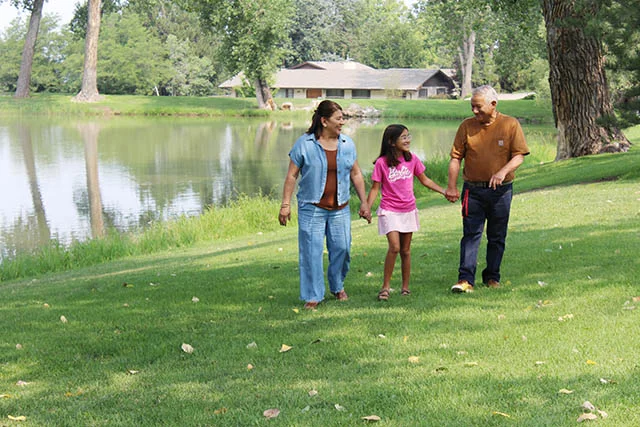
For Ramon Cordoba, life has always revolved around work.
For decades, he planted and harvested onions on the farms in Greeley, Colorado, and he also worked at an auto repair shop.
After long days under the scorching sun or surrounded by motor oil and machinery, Ramon headed to a laundry business where he and his wife, Maria, worked together, often staying on the job until late at night.
Always eager to do whatever work needed to be done, it was an exhausting and rewarding life. Providing for his wife and three children made him proud.
Suddenly, though, everything changed. At the age of 68, Ramon’s health took a dramatic turn.
With a family history of kidney disease, Ramon had always been diligent about having blood and urine tests done every six months at a laboratory. Over the years, his kidney function declined, and tests showed Ramon’s kidneys were no longer effectively filtering waste and toxins from his bloodstream.
By 2024, he had to begin dialysis treatment, which replaces some kidney function by removing waste products and excess fluid from the blood.
Starting dialysis presented major challenges, not only physically and emotionally, but financially as well. Ramon didn’t have health insurance, and although he qualified for Medicare, he did not know how to apply for it.
The healthcare system seemed overwhelming. When his kidney disease reached stage 5, the most advanced stage of kidney failure, he sought help from UCHealth.
Now 71, he needs a kidney transplant and waits every day for the phone call that will bring him a donor kidney.
Holding on to hope when faced with stage 5 kidney disease
Routine blood and urine tests can identify signs of kidney damage, helping detect kidney disease early and improve treatment outcomes.
When test results showed Ramon’s kidneys were severely declining, he felt burdened by his diagnosis and in denial about the severity of his illness. He searched for answers in traditional medicine, hoping for a miracle cure.
Committed to supporting his family and unwilling to give up the life he had built, he clung to the belief that a cure was within reach.
Traditional medicine provides a cultural connection that can give emotional and spiritual support when an individual is battling a disease or treating a chronic condition, according to a study published by experts at Consumer Reports.
Ramon sought desperately for a cure that would make the condition disappear.
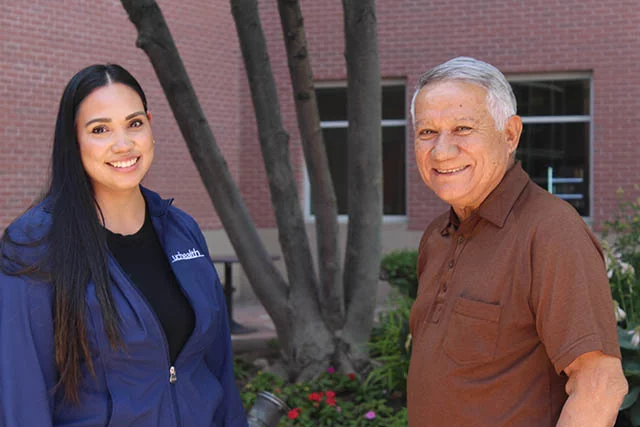
‘‘This is very common among the patients we see,” said Gladiz Martinez, a nurse at the UCHealth Hispanic Transplant Program. “Many have difficulty accepting the diagnosis. It’s a natural part of the grieving process that comes with confronting a chronic illness.’’
Martinez is dedicated to helping underserved communities overcome barriers to organ transplantation, with a particular focus on supporting Hispanic patients in Colorado, like Ramon.
‘‘I looked for remedies, sought Chinese traditional medicine, all seeking a miracle,’’ Ramon said. ‘‘The miracle did come, but not in the way I had imagined.
“The miracle came through the support of the UCHealth team who helped me apply for health insurance and access the care I needed. Today, I’m receiving treatment for my disease and waiting for a kidney transplant.’’
The emotional and mental health challenges of living with a chronic illness
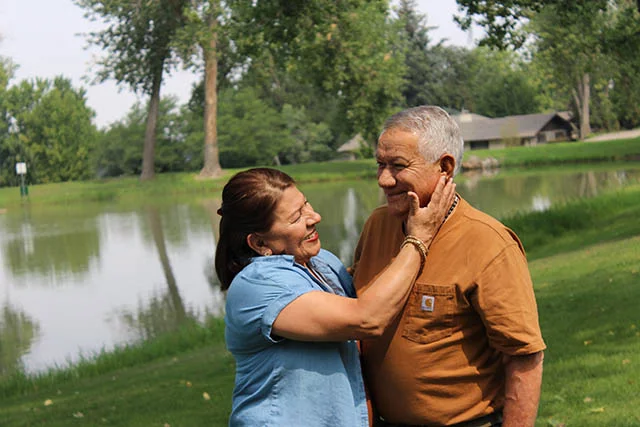
Ramon had to stop being the one who cared for others and become someone who needed support himself. The experience took a profound emotional and psychological toll on him.
“I worked until I was 68,” Ramon said. “To be honest, I felt incredibly strong. I was used to working all day long. What affected me most about the illness was not being able to work. My greatest concern was becoming a burden to my family.’’
Ramon is far from alone in feeling this way.
In the U.S., more than 75% of adults live with at least one chronic disease, according to expert data from the U.S. Centers for Disease Control and Prevention.
It is estimated that at least 60% of people living with chronic illness experience high levels of stress as a result of their condition. At least half of people living with chronic illnesses report experiencing mental health challenges related to their condition, according to experts at the Chronic Disease Coalition.
‘‘Before I came to UCHealth, I was carrying an overwhelming amount of stress, and it affected me deeply,” Ramon said. “My conditions put a strain on my relationship with my wife, and there were times when I felt completely overwhelmed.’’
Taking care of your kidneys
The kidneys play several essential roles in maintaining overall health, including:
- Clearing waste and extra water from your body.
- Helping your body make red blood cells.
- Keeping important minerals in balance.
- Supporting healthy blood pressure.
- Helping keep your bones strong and healthy.
Healthcare providers recommend routine blood and urine tests to assess how well the kidneys are removing waste from the body.
Learning to accept help for advancing kidney disease
Advancing kidney disease forced Ramon to rethink the role he had played throughout his life.
“I was always the one others relied on,” he said. “When I became ill, I had to learn how to accept help and be the one receiving support. That was incredibly difficult for me. But with God’s help and the support of the hospital staff, I was able to keep moving forward.”
After unsuccessful attempts to find healing through natural remedies, a discouraged Ramon eventually sought medical care at UCHealth Greeley Hospital, where he was referred to the UCHealth Hispanic Transplant Program.
A support team, including social workers, financial advisors and interpreters, helped him navigate the process of applying for health coverage through Medicare.
Medicare is health insurance for people 65 or older who meet citizenship or residency requirements.
Health insurance literacy and language barriers remain a significant challenge for many Hispanic patients, families and communities. Providing culturally appropriate health literacy interventions is essential to improving healthcare service utilization.
Disnarda “Dee” Santacruz, a UCHealth transplant financial case coordinator, was part of Ramon’s support network, guiding him in the process of applying for health insurance.
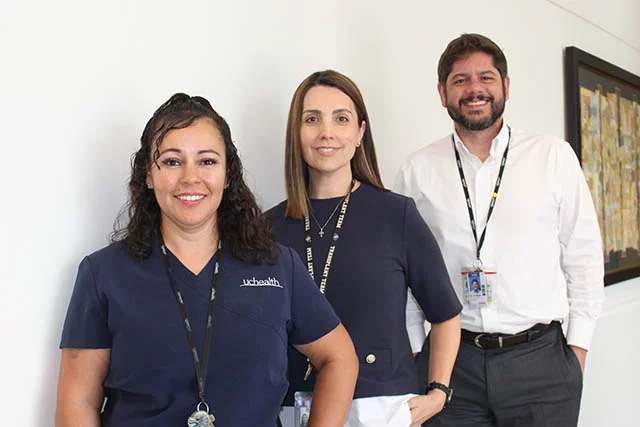
“The UCHealth Hispanic Transplant Program is very close to my heart,’’ said Santacruz. ‘‘Every time an authorization is issued and approved (from insurance), and every time a patient’s financial questions and concerns are addressed, it brings joy and satisfaction.’’
Stages of chronic kidney disease
By the time Ramon was referred to UCHealth, he had already reached stage 5 kidney disease.
“He started dialysis in April 2024,” Martinez said. “Initially, he was reluctant because he had not fully accepted his diagnosis. Patients with stage 5 kidney disease face a critical decision: either begin dialysis or pursue a kidney transplant, because kidney function can no longer be restored.”
In Ramon’s case, the damage was caused primarily by obstruction.
‘‘His kidneys were blocked,” Martinez said. Several conditions can lead to kidney damage, including diabetes and high blood pressure, as well as cancer, tumors, or kidney stones. Genetics can also be a factor. In Ramon’s case, Martinez said there was a hereditary component as well.
Blood and urine tests determine the stage of chronic kidney disease. The blood test estimates the glomerular filtration rate (eGFR), and the urine albumin-creatinine ratio (uACR) helps assess kidney health.
Chronic kidney disease has five stages. These stages define how well the kidneys work. Stages 1 to 3 are early stages. The kidneys can still filter waste. In the later stages (4–5), the kidneys work harder to filter blood and may stop working,’ according to experts at the American Kidney Fund.
Waiting for a kidney transplant: Living with hope
With the start of dialysis treatments, Ramon’s life stopped revolving around work and began focusing on medical appointments and dialysis sessions.
He changed his diet and the way he spent his days. His fast-paced life defined by long work hours was now behind him. Today, his life is shaped by waiting for the call that will tell him a donor kidney has become available.
‘‘For many of my patients, this may be the most challenging period of their lives,’’ said Maricarmen Nares Ramirez, a nurse and kidney transplant coordinator at UCHealth. “It brings me joy to hear patients saying they feel more at ease as they navigate through this process. Knowing I can support them, understand their culture, and, overall, feel heard.’’
Helping others navigate kidney disease and transplant care
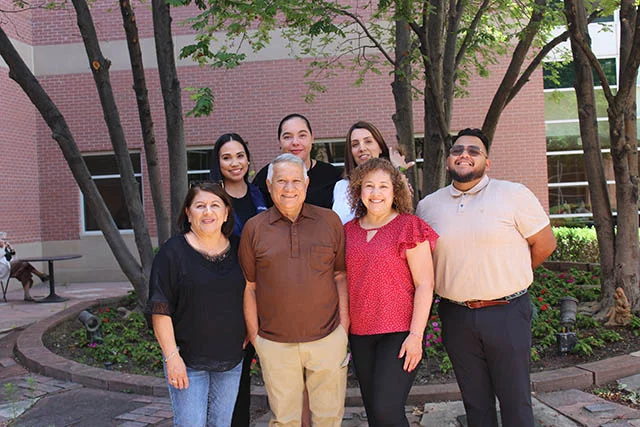
Supporting patients like Ramon in the Hispanic Transplant Program and helping them navigate a complex health system “feels like a privilege,’’ Nares said.
“I felt a tremendous burden and a lot of anxiety because I thought I wouldn’t be able to understand what was happening with my health,” Ramon said. “When I came to UCHealth I felt an immediate sense of relief. I felt more comfortable, more confident, and better able to manage my care.”
Through the UCHealth Hispanic Transplant Program, Ramon became involved in community outreach events designed to educate and support Hispanic patients and their families.
“The UCHealth team has stayed in touch, offered guidance, and invited me to educational events,” he said. “Those resources have made a real difference in my life. I feel very hopeful about the future.”
By promoting health literacy in culturally relevant ways, these events help community members better understand organ donation, the lifesaving role of living donors, and the importance of maintaining kidney health.
“What brings me joy in working with Hispanic patients is being able to help and provide support. I believe this job is a great and direct way to serve my community,” said Jorge Lopez, UCHealth’s Living donor outreach coordinator.
A patient-centered focus improves patients´ experiences and the quality of care.
‘‘I love guiding patients to discover health insights and commit to lasting healthy lifestyle changes. I am deeply moved, witnessing their journey change — and ultimately helping save another life,’’ said Lindsay Munoz, nurse and transplant coordinator at UCHealth.
The search for a living kidney donor
Every day, Ramon waits for the phone call that will tell him when his kidney transplant will take place.
His children underwent compatibility testing to determine whether they could donate a kidney.
Ramon’s children are not able to donate because of concerns about genetic risk and the possibility that they, too, could develop kidney disease in the future, a condition known as genetic kidney disease.
Having a family history of kidney disease means that one or more of your relatives has or had kidney disease. This does not always mean you will develop kidney disease, but your chances are higher than someone with no family history, according to experts at the National Kidney Foundation.
Among patients on the organ transplant waiting list (as of July 30, 2026), 85% are waiting for a kidney transplant, representing 95,492 individuals. Hispanics are the third-largest ethnic group awaiting an organ donor, behind White Americans and Black Americans.
Culturally relevant care is a key component of quality healthcare
UCHealth’s Hispanic Transplant Program care team is bilingual and multi-faceted, including social work and mental health professionals who provide counseling to help patients improve emotional well-being.
Martinez, who brings warmth and empathy to her work, said her dedication to patients needing transplants stems from personal experience.
“Like many of the patients and families, from a very young age I accompanied my family members to medical appointments and helped them navigate a healthcare system that often felt overwhelming,’’ she said.
Those experiences became the foundation of Martinez’s calling.
“Those experiences are a big part of what inspired me to work with the Hispanic Transplant Program,” Martinez said. “Transplantation is an inherently complex process, filled with important decisions and difficult medical terminology. For me, and for the rest of our team, the most important thing is being able to guide our patients through that journey, ensuring they feel heard, understood and supported every step of the way.”
Ramon has continued to make encouraging progress.
His medical evaluations, including cardiac testing, have shown positive results, and he has successfully reached a healthy weight, helping position him as a strong candidate for a kidney transplant.
‘‘The echocardiogram helps us evaluate how well his heart is functioning. Sometimes dialysis patients can retain excess fluid, and that extra fluid can put additional strain on the heart. We needed to make sure his heart is strong enough to withstand transplant surgery,’’ Martinez said.
Preparing for a kidney transplant also involves testing the body’s resistance.
‘‘A stress test is performed. Patients take an exercise test on a treadmill because we need to put the heart under controlled stress to ensure it is strong enough for the operation,’’ Martinez said.
Today, while he waits for the call that could change his life, Ramon remains focused on his health, supported by his family and care team, and hopeful for the future.
Ramon had to learn to adopt a healthier diet and reach a healthy weight in preparation for a transplant. Eggs are his favorite food, and his wife, Maria, has been his steadfast partner and source of support throughout the journey, helping him care for his health so his body will be ready to receive a donor kidney.
‘‘Ramon is in very good condition. He has lost weight and taken good care of himself,’’ Martinez said.
The wait is not always easy, but Ramon now faces it with hope of soon receiving a kidney transplant. He faces this stage of his life with gratitude and faith. Ramon believes that a tomorrow lies ahead.