
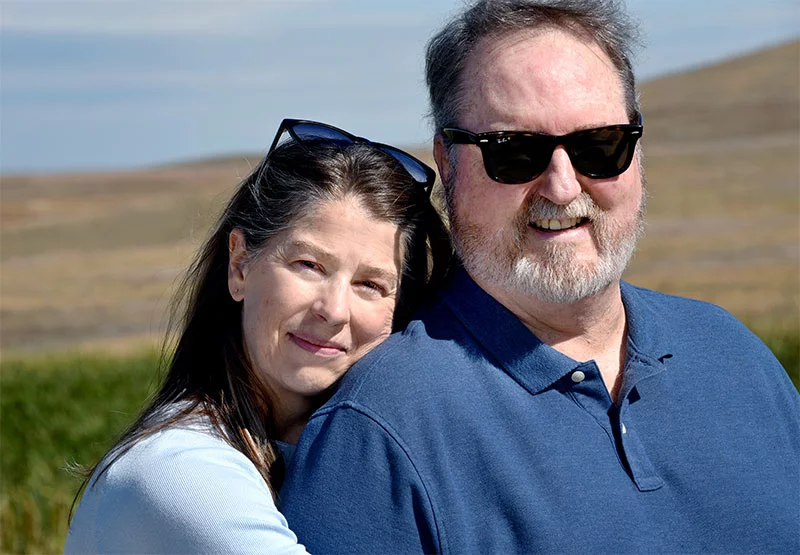
Even the most die-hard fans will admit that a Denver Nuggets game is not a life-or-death affair.
For Ted D’Arcy, however, the game on Feb. 27 was.
D’Arcy, then 61, and his wife Kate had stayed up late to watch an overtime thriller in Oklahoma City where the Nuggets came up short against the defending NBA champions. D’Arcy decided to watch the postgame press conference on Altitude Sports Network. Kate kept him company despite encouraging him to head upstairs and get some sleep.
They sat on opposing couches separated by a sizable ottoman. Kate popped open her laptop to catch up on some work. Moments later, she looked up to see her husband slumped over. He made “a kind of guttural noise,” she recalled.
Kate at first wondered if he had dropped his glasses. Then she saw that he was unconscious. She yelled for her older son Conor, then 27, who lives with them in Erie. She managed to maneuver Ted from between couch and ottoman, get him on his back and start CPR chest compressions. She then told Siri to call 911.
An Erie police officer showed up minutes later, Conor having left the door open when hustling to a neighbor’s home in search of an automated external defibrillator, or AED. The officer asked Kate to leave the room. He’d take it from there until the paramedics arrived. As she walked out, she heard her husband’s ribs crack under the force of the officer’s efforts to keep him alive.
It felt like GERD. It was much more serious.
Ted had had a heart attack. But not that night.
A couple of weeks before, what he figured was a nasty case of gastroesophageal reflux disease, or GERD, had set in. Kate had fetched Prilosec, but the apparent stomach pain didn’t stop, and it hurt to the point that he was sleeping upright.
Kate had been pressing him to get checked out at urgent care, but Ted was busy with his work as an attorney doing family law and high-conflict divorce cases. Finally, on the Saturday morning of Feb. 21, the pain was such that he asked her to take him in.
The urgent care provider took vitals. “His eyes got really wide,” Kate said. “Then he said, ‘You need to get to the hospital.’”
At a community hospital in Lafayette, providers found his heart’s left anterior descending artery — known as “the widow maker” — completely blocked. They performed a balloon angioplasty and inserted a stent to reopen it. Ted stayed in the hospital overnight. But by Sunday afternoon, his heart function looked good despite the heart attack. Ted went home with instructions to get more rest, change his diet and enroll in cardiac rehabilitation.
Heart attack triggers a ventricular tachycardia storm
Five days later, he was in an ambulance. Paramedics managed to restart his heart through defibrillator shocks. The heart attack had in fact damaged Ted’s heart, and in a dangerous way: It was now prone to ventricular tachycardia storms, in which the heart contracts haphazardly and stops moving much blood. That, in turn, further damages the heart.
Ted’s condition deteriorated, and he landed in the ICU. He developed pneumonia. Between that and the pain from the broken ribs, doctors decided to put him on a ventilator. The Tuesday after he collapsed, he was transferred to a larger hospital in Denver.
The initial hope was that an implantable cardioverter defibrillator, or ICD, could be the next step in treatment. But the damage to Ted’s heart was too great. A ventricular tachycardia storm before dawn the following day took several external defibrillator shocks to restart his heart. Ted’s heart was failing. Doctors put him on extracorporeal membrane oxygenation, or ECMO, delegating the work of Ted’s heart and lungs to a machine.
That’s a temporary solution. Ted would need a heart transplant, and soon. The second-closest heart transplant center for adult patients was a 500-mile drive away. The closest was eight miles down the road at UCHealth University of Colorado Hospital on the Anschutz Campus, ranked in the top 10 nationally in terms of the number of procedures done a year. And — vitally in Ted’s case — its 15-day average wait for a heart transplant was about half as long or less than it was among the rest of the top 10. Ted went straight to the hospital’s cardiac ICU.
Assessing for a heart transplant is an involved process
Patients on ECMO to support both heart and lung function, as was the case with Ted, typically can only stay on it for a few days, and the clock was ticking.
Dr. Prateeti Khazanie, an advanced heart failure and transplant cardiologist at the UCHealth Transplant Center – Anschutz Outpatient Pavilion in Aurora, took the lead with D’Arcy’s care. She ordered various scans and other tests to assess his physical state as others attended to financial and other issues surrounding a heart transplant. For example, Khazanie said, the recovery time of a heart transplant requires consistent family or outside support for a solid three months after transplant, so a social worker must ensure that the patient has that support.
Khazanie, also an associate professor of cardiology at University of Colorado Anschutz, then met with a multidisciplinary team including specialists in cardiology, cardiac surgery, pathology, radiology, and others to talk through the viability of the transplant and the path forward. They agreed that Ted needed a transplant ASAP.
The UCHealth Transplant Center listed him for a donor heart on Friday, March 6. By that Sunday, they had found a possible match. Khazanie and Dr. Michael Cain, a UCHealth transplant surgeon and an assistant professor of cardiothoracic surgery at the University of Colorado Anschutz School of Medicine, based that call on factors as diverse as the size, age, and health status of the patient to the sorts of antibody proteins in the donor’s heart.
Just six days after hospital admission, a heart transplant
Cain does about 40 heart transplants a year, roughly half of the UCHealth transplant center’s total. This one would happen on Tuesday, March 10, four days after D’Arcy was listed.
Not all transplant centers would take a high-risk case like Ted’s, he said. But Colorado’s geographic isolation means that very sick patients have no other option, as would be the case in a major coastal city with multiple heart transplant centers. Khazanie added that the transplant center’s geographic isolation provides a wider local catchment for organ donors, and therefore less competition for scarce donor organs. So, the hospital has in recent years refined its critical care and other competencies to sustain high-risk patients prior to surgery and help them with recovery afterward.
Whether the patient is typically sick or gravely ill, a heart transplant procedure doesn’t differ much, Cain said.
“But the management of his physiology and the recovery — that really requires the comprehensive team that we have here, and it’s a team that’s built experience over a long time of doing transplants,” he said.
A successful heart transplant on a very high-risk patient
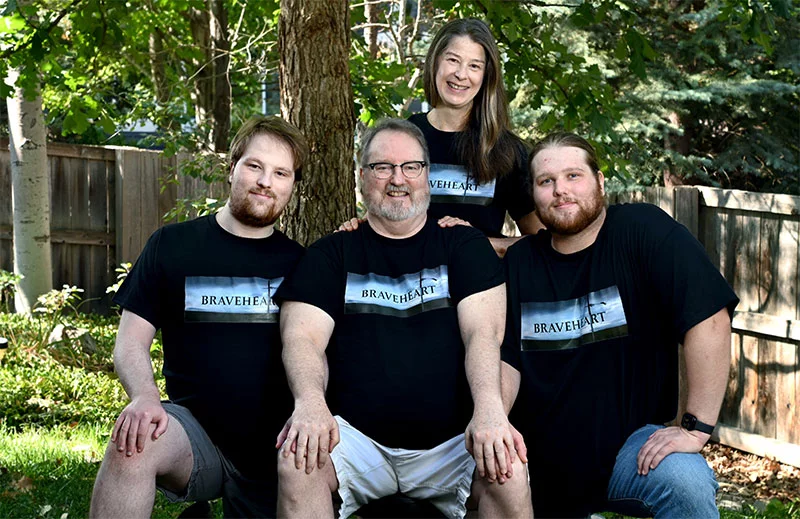
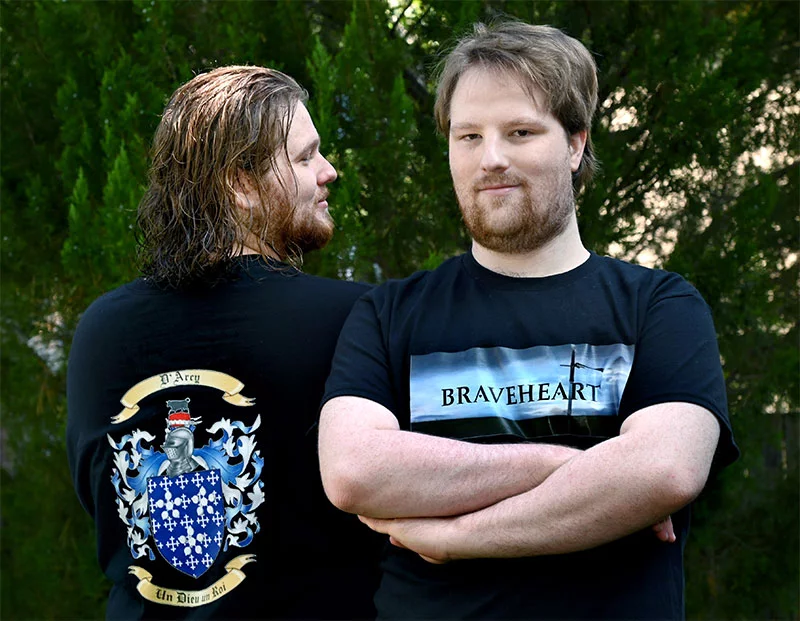
Ted’s extended family, sporting “Team Ted” T-shirts, filled a good portion of the waiting room.
“I just needed to get through those hours and to just stay focused on nothing but positive thoughts that he is obviously going to be just fine,” Kate said.
The roughly four-hour operation went smoothly.
Ted came off ECMO in the operating room right after surgery, “which is always a wonderful sign that the new heart is doing all the work for him,” he said.
Ted spent 10 days in the cardiac ICU, transferred to the cardiac floor, and then the inpatient rehabilitation unit. Ted’s heart was working well; the rest of his body now needed a lot of work. Kate recalled the surgeon remarking that her husband was the weakest person in the state, and maybe the region, for the last 48 hours he was on ECMO.
“How much I had deteriorated physically, that’s still a shock,” Ted said. “I could not believe that I couldn’t stand. I tried, but I couldn’t stand when they were trying to get me up.”
Ted did three hours of physical therapy a day and also occupational therapy to work through the shakes the antirejection drugs caused. Khazanie monitored him for cardiovascular issues and potential infection as well as assessing the impact of immunosuppression drugs through biopsies and other tests. On April 8, more than a month after he arrived at University of Colorado Hospital, he headed home.
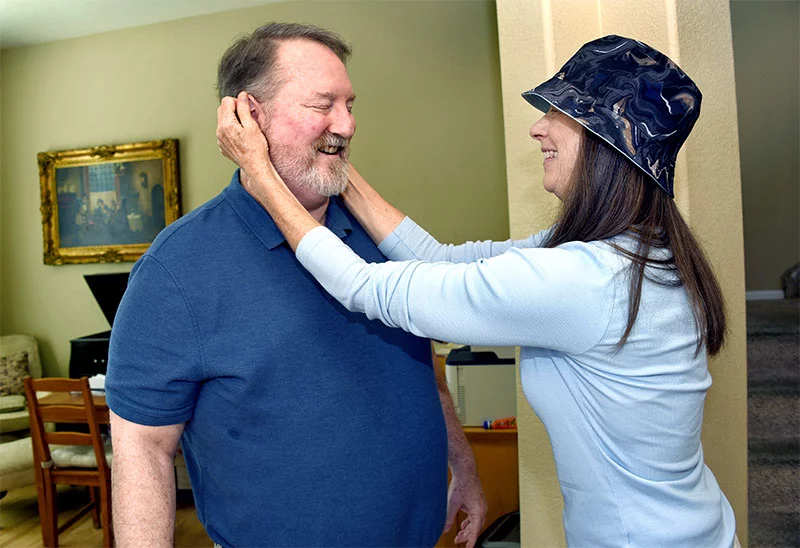
Months later, his heart transplant recovery continues
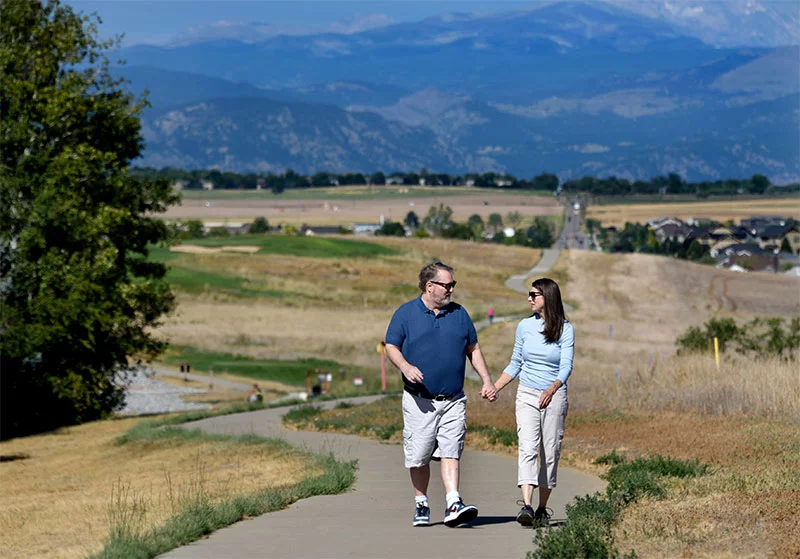
Five months after his transplant, Ted’s incisions have healed, and cardiac rehabilitation three times a week has built strength enough to ditch the walker he was frustrated to have to rely on. He’s going on walks with Kate, doing light weight training, and aims to start hiking soon. His transplanted heart is performing well, and there are no signs of rejection.
“I still can’t run, but that’s one of my goals,” Ted said.
His only transplant-related health problem was the emergence of skin cancer, probably a result of his immune system being suppressed. Dermatology experts, on the lookout because it’s common among organ-transplant patients, removed them, Ted said.
“All in all, I’m pleased with my progress,” he said.
Khazanie echoed that.
“I think he’s doing great,” she said. “If he wasn’t in the right place at the right time, and if other things hadn’t happened, he would have died.”
One of those other things was staying up late to watch a Denver Nuggets game. When the team returns to the court this fall, Kate and Ted D’Arcy will be tuning in. Win or lose, it won’t be life-or-death.