
By Mary Gay Broderick, Donovan Quintero and Katie Kerwin McCrimmon
A giant remnant of a volcano juts up from the desert on the Navajo Nation and is visible for miles and miles, including in the distance from Joseph Armenta’s hometown in Farmington, N.M.
This peak is called Shiprock, and it’s sacred to the Navajo people.
The name for this soaring formation in Navajo is Tsé Bit’ a’í, which means “Winged Rock” or “Rock with Wings.”
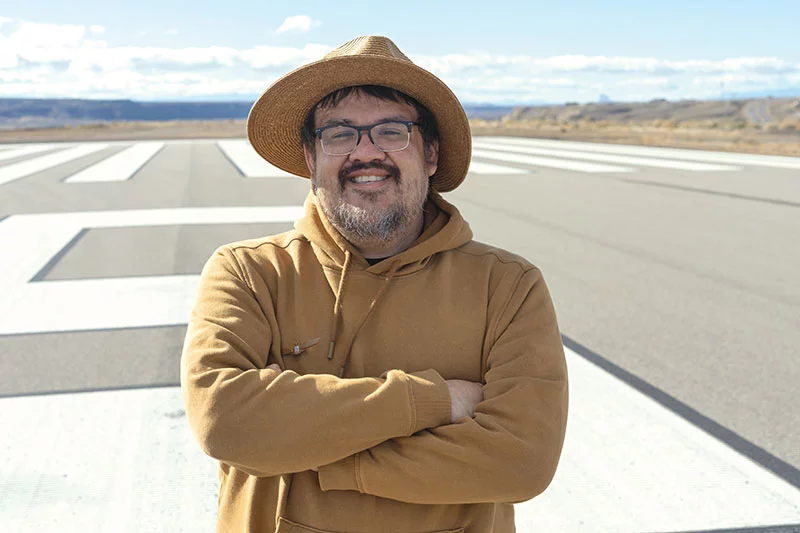
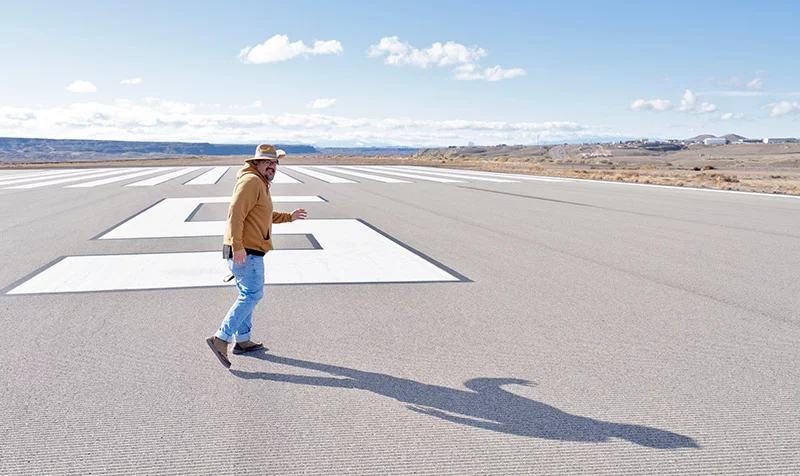
These days, Joseph, 35, loves peering to the west from the airport where he works in Farmington toward Shiprock. And for a guy who had barely ever flown on an airplane until he had a scary medical crisis last year, Joseph is surprised that he now feels a bit like the mountain in the distance. He wants to take flight.
Joseph was raised in two cultures: Hispanic and Catholic on his dad’s side and Navajo on his mom’s side. He lives in the Four Corners region, where four states — New Mexico, Colorado, Utah and Arizona — meet and lead into tribal areas.
Along with his blended heritage, Joseph is now a man with two hearts: the heart that propelled him through his first three and a half decades and a new one that saved his life.
Thanks to a heart transplant in September, Joseph now has a new “let’s do this” attitude. He feels driven to explore his region and the world.
“I’m a mixture of everything: four states, two cultures. And now, I’ve got new things I’m going to do,” said Joseph.
Among the items on Joseph’s to-do list is taking his 80-year-old grandmother to Shiprock. She speaks Navajo, and Joseph wants to hear more of her stories.
“Shiprock is a sacred mountain. It used to be a volcano. It’s a beautiful landmark and a place of worship. A lot of people are fascinated by it,” Joseph said.

In the months following his heart transplant, Joseph has been appreciating the beauty of his life and also pondering big questions.
“It’s really emotional. I’ve always been a spiritual person, and I’ve always had respect for my Navajo roots. But I want to go out and do more now. I’ve got this second chance at life. I want to prove myself. I want to try new things,” Joseph said.
He recently taught himself to paddleboard and loves exploring serene waters near his home, such as Navajo Lake and Lemon Dam.
“In the summer, I want to try paddling out to the middle of the lake,” he said.
He might even try to do a handstand on the board.
He’s prioritizing his health now and carves out time every day to go on walks.
And he wants to visit Europe.
“I want to go to Spain and the Vatican. That’s on my list,” he said. “I’m feeling like a million bucks. Every day is a blessing.”
The contrast between how hopeful and adventurous Joseph feels now and how drained and sick he felt last year is striking.
Heart failure: ‘I couldn’t even pick up a pack of Cokes’
Joseph had been living and working in Albuquerque when he came home to Farmington last Easter. He felt like he had a cold. His mother and relatives were carrying groceries into the house. Joseph tried to help.
“I couldn’t even pick up a pack of Cokes,” he said. “I had to just stand there and watch. I felt so helpless.”
Joseph tried to explain away his lack of energy.
“‘Maybe I’m just out of shape,’” he told himself.
He attempted a lap around the coffee table but couldn’t breathe.
Joseph had been short of breath for months; he was constantly fatigued, and he could barely walk. He later learned that his heart at one point had been pumping at just 9% of its capacity. It was enlarged and full of blood clots. Medications, blood thinners and diets had helped only so much.
“You think you are living a full life, and then something like this happens. It was really scary because I was so young. It makes you wonder. But I’ve had to keep pushing and put my best foot forward.”
For Joseph, that meant taking more than a step, but a leap that included distance, faith and patience. He had to leave his town, his family, his community and the place he trusted, and place his trust — and his damaged heart — in the hands of the skilled UCHealth Heart Transplant Program team at the UCHealth Transplant Center on the Anschutz campus in Aurora, Colorado.
Airport worker becomes precious cargo on medical flight to Colorado
The first part of Joseph’s journey was taking that medical flight. The story would have been funny if things hadn’t been so scary and serious.
You see, Joseph worked at his hometown airport as an agent for the Transportation Security Administration (TSA), but he himself had only ridden on a plane once before. His job, as he saw it, was to make customers happy. And he was used to handling luggage as passengers embarked on their travels.
Then, Joseph experienced what it felt like when he became precious cargo after he was loaded onto a medical plane and flown to Denver from his hometown in a desperate effort to keep him alive.
His heart was failing, and he desperately needed help.
“Now I understand better when customers ask me to be careful with their stuff,” Joseph said, displaying his trademark humor.
“Here I was, kind of like a piece of baggage myself, as the medics jammed me into a little plane to fly up to Colorado.
“I was retaining so much fluid in my legs that I looked like an NFL player, and I felt really bad. They told me I needed to get to UCHealth as soon as possible so they could save me.”
Growing up in the ‘Land of Enchantment’ with a strong support system
Joseph was born and raised in Farmington, population 50,000. Ancestorial Puebloans, Navajo, Hopi, Ute and Apache people have called the region home for generations, and it is a land rich with important cultural and geological sites that is now a mecca for outdoor enthusiasts.
“It was good growing up there. It’s a small town, and people want you to do well and go to school. It’s always been a supportive community,” Joseph said.
He played football in high school, and after deciding college was not part of his plan, worked for 10 years in a local furniture store before getting a job in 2017 with the TSA in Albuquerque, about three hours south of Farmington.
“I was tired of lifting heavy couches and thought it was time to become an adult. Working for the TSA, I learned a lot, made friends, played basketball and had an insurance plan. It was fun.”
But by spring of 2025, Joseph found himself wanting the ease and comfort of the smaller city where he grew up and where most of his family still lived. His father recently had died, and when he learned that the TSA would reopen the Four Corners Regional Airport in Farmington, which had been shuttered for a decade, he was thrilled to be relocated there.
Yet, as Joseph was transitioning to that job, his health problems emerged. He was often winded and out of breath.
“I thought, ‘This was kind of strange.’ I’m a big guy, but it’s not adding up that I should be this tired. I thought I was just getting sick. I’m like most men, and I just kept working, even though I couldn’t breathe right and I had cramps like Charlie horses in my legs all the time. I kept thinking it would get better.”
When it didn’t, Joseph eventually needed help from heart specialists.
By the time he arrived at UCHealth University of Colorado Hospital, Joseph was disoriented.
“I didn’t really know where I was, what was going on or who any of the people surrounding me were.”
Joseph remembered wanting to sit up and look presentable, with a semblance of the harmony and balance indicative of the Navajo culture.
“I wanted to be in a priestly way. I thought, ‘If this is the end, at least I want to have my dignity.’”
Joseph’s mom and sister encouraged him to get help. It turned out he had an enlarged heart.
Back in Farmington, when Joseph was struggling to breathe, his mom and sister urged him to get help at the local medical center. Doctors performed an EKG and told him he had an enlarged heart. They recommended he rest, eat a healthy diet and take blood thinners.
During the next few weeks, Joseph was pleased that his heart, which had been pumping at only 9% capacity, improved to 25%. Maybe the diet and medication were working. But soon, his health began to deteriorate again, and rapidly.
At his June checkup, Joseph lacked the energy to walk from his car into the doctor’s office. Time off from work, where he lay in bed resting, didn’t help either.
The breaking point was his mom’s birthday in mid-June.
“All she wanted was our family to be together to hang out, but I was in my room, and I couldn’t get up. I would have moments when I couldn’t breathe. I was trying not to ruin her special day, but eventually I came out and told everyone that I needed to go to the hospital.”
Joseph returned to the local medical clinic, where he spent a week as medical providers monitored him and ran more tests. Staff members soon realized that Joseph’s medical needs were far beyond what they could offer. One of the doctors told him he needed to be seen by heart specialists as soon as possible.
A few days later, on June 24, Joseph flew to Colorado. He was carrying an extra 25 pounds of retained fluids, and his body had swollen to 270 pounds. Joseph was uneasy as medics strapped him into a gurney and placed him in the small passenger area.
While he always had been happy to help others take to the friendly skies, Joseph now found himself a passenger heading on a trip, one that he was very nervous about.
“I’m not a big-city person…I like to be on a trail and outside. My sister, my mom, my grandma and aunts and uncles, all live nearby. This was something so different to be happening to me.”
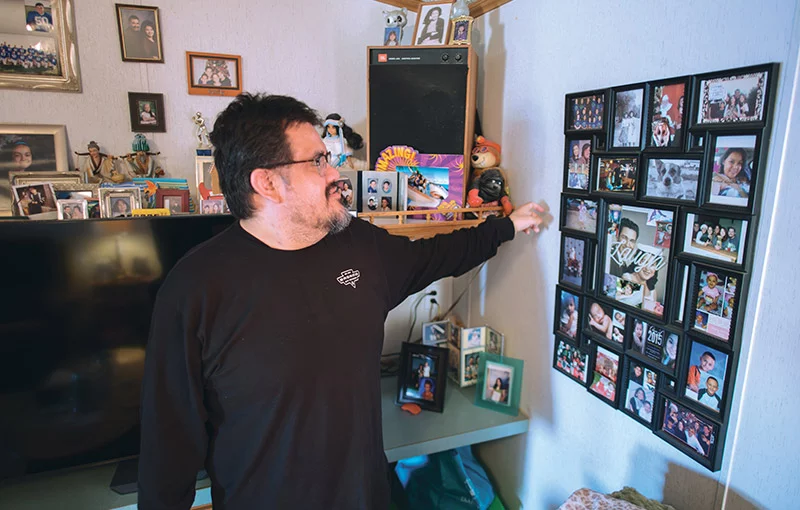
Away from home, Joseph tries to keep the mood light and humor going as he rides a roller coaster of emotions, waiting for a suitable heart
Once Joseph arrived in Colorado, doctors needed to learn the extent of his heart damage and whether he was a candidate for a transplant. That included a series of comprehensive exams and a battery of cardiac, pulmonary and kidney tests, as well as blood work, X-rays, EKGs and echocardiograms.
Doctors would eventually determine that Joseph had a BAG 3 gene mutation — a recessive condition he inherited from a parent — that can contribute to heart failure.
“It’s like you have a book report that needs to be 300 pages, but you have only 200 pages. My body didn’t know how to pump my heart correctly,” Joseph said.
The decision about his transplant would be made by a multidisciplinary team that included a cardiologist, a cardiothoracic surgeon, a physical therapist, a transplant nurse, a pharmacist, a dietitian, a social worker and a financial coordinator.
After reviewing Joseph’s test results, the team determined that he needed a heart transplant. On July 11, doctors added Joseph to the waitlist in the national organ matching database called the United Network for Organ Sharing. This computerized listing is maintained to ensure fair and equitable distribution of donated organs throughout the country.
“He was pretty sick, but we determined that the rest of his body was in good enough shape to get him on the transplant list,” said Dr. Amrut Ambardeker, the transplant cardiologist who was part of Joseph’s care team.
Whether patients are physically strong enough to thrive with a transplanted heart is just part of their medical ordeal. They must also grapple with the emotional and psychological challenges of undergoing a transplant.
Unlike kidney and liver donations, which can come from living donors, a heart needs to come from a recently deceased person.
“Before a transplant, patients are doing everything they can to stay alive. Then, after the surgery, it hits them that they have a different heart, and that can be a very emotional thing to process,” said Laura Peters, a UCHealth cardiac transplant nurse practitioner who worked with Joseph during both his hospital stay and after his discharge.
“People are waiting for someone to die so that they can live, and that’s very intense. It’s common for patients to feel shame, guilt or a sense of burden afterward. They may feel like they need to live a certain way to honor and respect the gift of that organ,” said Peters, who is also an associate professor of medicine at University of Colorado School of Medicine.
“I try to encourage patients to remember that bad things happen all the time, and that death happens all the time. But in that space, if there is an opportunity for an organ to come from a donor, then out of something tragic that person or family has the opportunity to give a gift to someone who needs one and otherwise would have died.”
For Joseph, those questions wouldn’t hit him until months later, when he had left the hospital and was home contemplating all he had endured. While in the hospital, he was trying to stay positive as doctors worked to keep his heart pumping as efficiently and strongly as possible before a suitable transplant became available.
A few days after his arrival in late June, doctors implanted a device called an intra-aortic balloon pump in his chest to relieve some of the pressure from his heart and help it pump more blood.
A month later, they switched it out for another temporary device that would support his heart with more rigor, a type of LVAD, or Left Ventricular Assist Device, called an Impella. LVADs help blood flow from the left ventricle, which is the largest and strongest heart chamber, to pump oxygenated blood into the aorta and then to the rest of the body.
Through all of this, Joseph tried to stay busy. He did puzzles, listened to music, watched TV and read. He counted the tiles of a nearby roof that he could see from his window (56), and he took as many walks around his hospital unit as he could muster.
“I was bored. I tried to stay active. I did laps. They might have been small, but they were really important to me and mattered a lot,” he said.
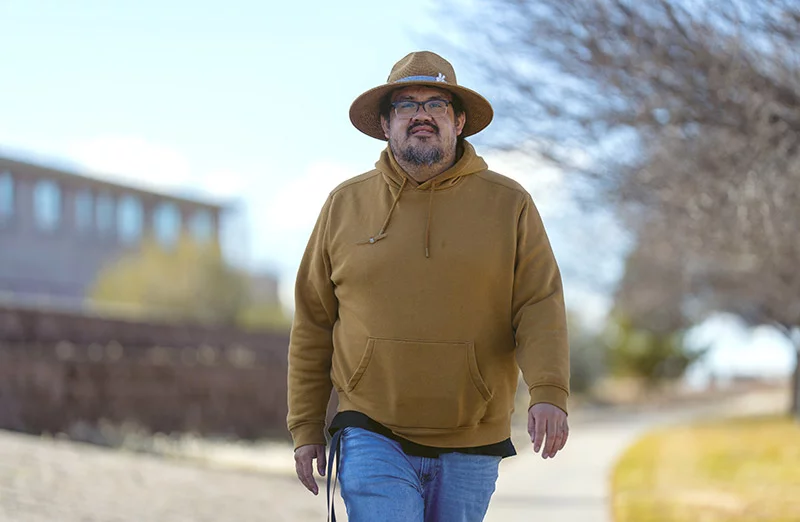
Joseph tried to keep the smiles coming and the mood light: warning staff he was going to steal other patients’ shoes; wanting to race other patients around the unit; joking with doctors about getting pizza and discussing favorite foods with his nurses.
“I wanted to get everyone laughing. If I was going to be there for a while, why not try to have a little fun?”
The days passed slowly.
“A lot of these patients are going through so much,” said Ambardeker, who is also a professor of medicine-cardiology at the University of Colorado School of Medicine. “You are waiting for a heart, which means something bad has to happen to someone else. Joseph had a great mindset the whole time. He was patient and knew when it happened, it was meant to be.”
Then he finally received news during the first week of August. His wait for a heart might finally be over.
Joseph eagerly awaits a heart transplant but faces a setback
“There were so many mornings I would wake up thinking, ‘Please, let this be the day.’ I had a routine doing puzzles and video games, walking laps and talking to my mom and sister. My 85-year-old grandma called every day, and we would chat about her garden full of cucumbers and chili peppers.
“Everybody from work and home was checking in on me and praying and praying that everything was going to be OK,” Joseph said.
Six weeks into his stay, his care team told him that they had a heart for him.
“Everyone in the ICU was excited for me. They all wanted me to get out of there. They told me I was the perfect patient, but they didn’t want me there anymore,” he said and laughed. “They said I needed to get back to my life.”
Joseph called his family and shared the good news.
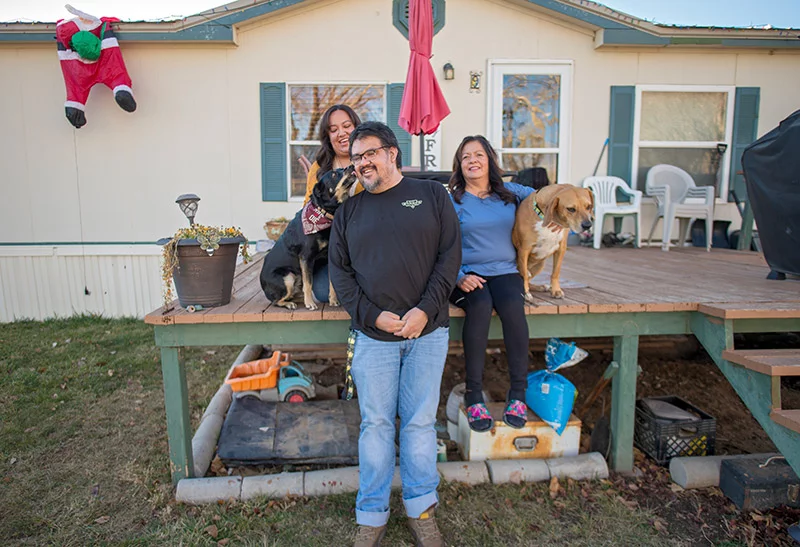
But it turned out to be premature. After being prepped for surgery and waiting in the operating room, too much time had elapsed for the heart to be viable, and doctors had to cancel Joseph’s transplant.
The near miss marked a low moment.
“I felt like I had hit rock bottom. I really didn’t know what was going to happen or how long I was going to have to wait,” Joseph said.
Then a week later, doctors told him they were cautiously optimistic that they might have another heart for him. He signed all the paperwork and was prepped again for surgery. This time, he didn’t tell his family and friends in New Mexico so as not to raise their hopes.
At 5 p.m. on Aug. 12, Joseph went into the operating room again. As the team prepared to give him anesthesia, he finally let himself believe that this was the real deal.
“I thought, ‘I didn’t call anyone … I’m not ready.’ But a nurse promised she’d call my mom and sister and told me it would be OK. It was nice and calm in the room, and everyone was being so pleasant. I cleared my mind and said, ‘Let’s just make this happen.’’’
A leading transplant program in the state, region and country
The UCHealth heart transplant program is the largest in the region and draws patients from states including Montana, Wyoming, New Mexico, Arizona, the Dakotas, Kansas and Nebraska.
Program doctors work with colleagues at hospitals around the U.S. and even around the world. The UCHealth program is on track to perform about 75 heart transplants this year, about the same as last year. And the University of Colorado team is celebrating the recent completion of more than 10,000 transplants in the program’s history.
“Because we draw from such a wide geographical area and get a wide variety of patients, we honor their backgrounds and belief systems and make sure we are respectful as we move through the transplant process, often while we treat a high level of medical acuity,” said Dr. Jordan Hoffman, the thoracic surgeon who performed Joseph’s transplant.
“We have been successful at bringing in people before they are sick and when they are sick. Joseph is a good example, as he was seen by hundreds of staff and faculty while he was here. It’s a huge group effort to get patients like him what they need — and not only deal with their medical issues but the psychological aspects that they face as well,” said Hoffman, and also a professor of cardiothoracic surgery and surgical director of Heart and Lung Transplantation at the UCHealth Transplant Center.
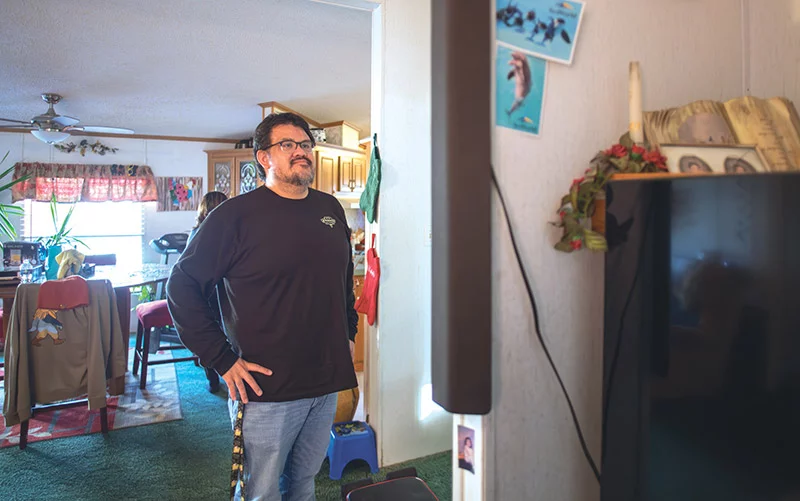
Joseph wakes up from surgery with a new heart
When Joseph woke up in the recovery room, he was cold and, for a moment, was unsure where he was. A nurse took out a breathing tube from his mouth and the first thing he asked was: “Am I in the morgue?”
She assured him that he most certainly was not in the morgue. He was in the ICU, and the surgery had gone well.
Joseph’s new heart was working.
“It started right away and did what it was supposed to do,” Joseph said.
He felt the difference immediately.
“As soon as they sat me up, I felt like a brand-new person. I could move more, and I was stronger and so much better.”
After three weeks of post-surgical monitoring, Joseph was discharged on Aug. 21, nearly two months after he arrived. With his mom by his side, Joseph stayed at Brent’s Place while he recovered. Located near University of Colorado Hospital, Brent’s Place provides furnished apartments and financial assistance to patients facing medical crises so they’ll have a home away from home.
There, Joseph would undergo cardiac rehab that included exercises such as treadmill work and walking laps, while his body adjusted to tasks like laundry and light housework.
“I was sort of starting over and each day, feeling stronger about my body. My new heart was trying to put everything back to work and helping me become the person I used to be.”
Back home and pondering big questions about his donor and his life
On an autumn day in late October, Joseph finally got to return to Farmington. He had a new heart and a lot to think about. He had been away for more than three months, and while he still felt like his same upbeat self, his health ordeal weighed on him.
While in the hospital, Joseph’s jokes and smiles made the nurses and staff laugh, but now he had been thinking more about his own mortality — and his future. He also began to think about his donor and their family members.
“When you get the transplant, you don’t really think much about the person,” Joseph said. “They’re just like, ‘We’re going to get you a new heart.’ And you’re like, ‘Oh, right on. Score.’”
But after the shock of his health ordeal wore off, Joseph said questions began to surface: Who was the person? What kind of life did they have? What did they never get to finish? And what did Joseph owe them now?
“The idea of the donor starts to hit you really hard,” he said. “Sometimes you do feel guilty.”
Joseph learned that his donor was young, so he still thinks about the opportunities and milestones that his donor will never experience, like getting married or having children.
Sadness about another family’s losses can turn into pressure, especially for someone as kind and sensitive as Joseph.
“Do I have to achieve double?” Joseph thought to himself. “Now that I’m back, do I have to do more? Because I get a second chance, and I feel like I have to live for that person who passed away, too. So, it feels like I’ve got to set these standards high, and sometimes, that just becomes a little overwhelming.”
The weight of these questions isn’t just philosophical. It’s physical, too, tucked into the sound of a now-stronger heartbeat.
The first time Joseph rested on his side and truly listened to his new heart, he was startled by how loud it was, how full, how strong, as if the new heart carried a kind of confidence his failing one had lost.
“When I would hear my heartbeat, it was very, very faint,” he said, thinking back to the time when he felt so awful, before his transplant.
Now, the beat sounds different.
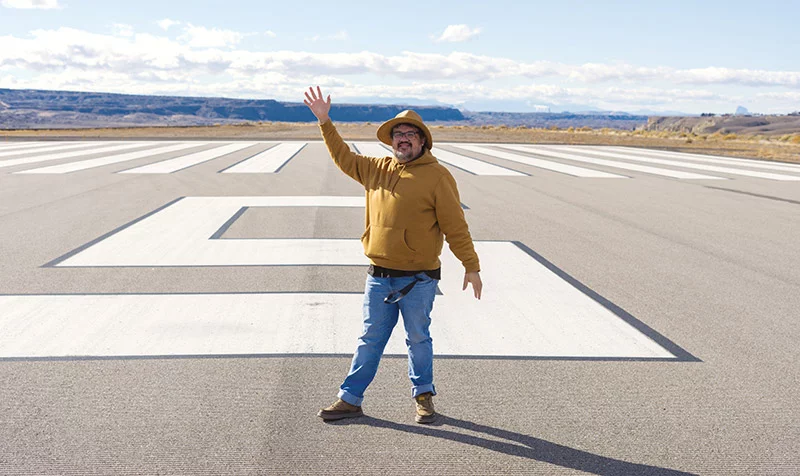
“It sounds like the donor who gave me this was, had a very strong, strong heart. It’s supposed to be loud and proud, banging like AC/DC’s drummer or something like that.”
It is, he said, both comforting and strange.
“It’s not really mine,” Joseph said.
But he’s getting used to this new, powerful heart.
“It’s OK,” he tells himself. “It’s a good thing.”
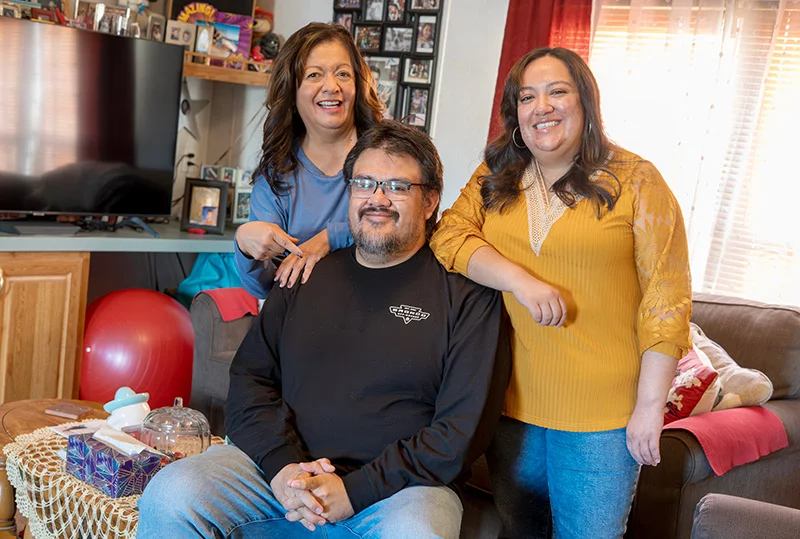
Joseph’s mother, Evangeline Armenta, understands the contradictions differently. She carries gratitude and sorrow at the same time, without trying to solve the paradox.
“It was sad and happy,” she said. “It was like, ‘I’m happy you’re getting the new heart, but I’m sad that this donor is dying in order for you to have a new heart.”
Joseph’s sister, Monica Armenta, is relieved that her brother is doing so well after he declined right before their eyes.
“We never would have expected anything like this to happen,” she said. “Especially because no one in our family has ever experienced any of this.”
At home, before the seriousness fully landed, there were days when Joseph stayed in bed, drained and quiet. Monica admits that her first thought then wasn’t heart failure. It was annoyance, then guilt for feeling it.
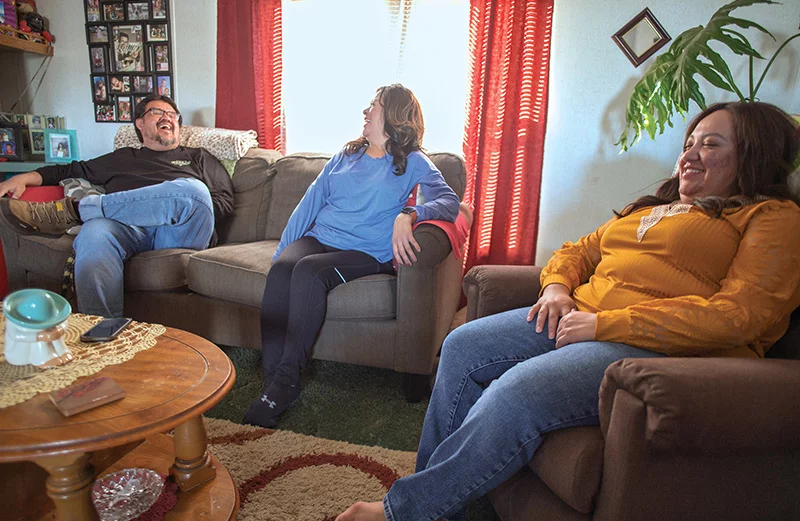
“There were days he would just lie there in bed, and we’d just be like, ‘What’s wrong with you?” she said. “Thinking that I thought he was just faking it. Like, ‘Are you just doing this for the attention type thing?’ I know that sounds harsh.’
Joseph, after hearing his sister’s comment, turned it into a sibling joke.
“Surprise, I wasn’t faking it,” he joked.
Their family’s humor is part of how they survive heavy things. Evangeline credits her late husband for teaching family members to tease one another without cutting people down.
“Your dad used to joke around with us all the time,” she said. “And I think they just kind of kicked in and got the same sense of humor. Now we all mess with each other.”
A new heart. A new life.
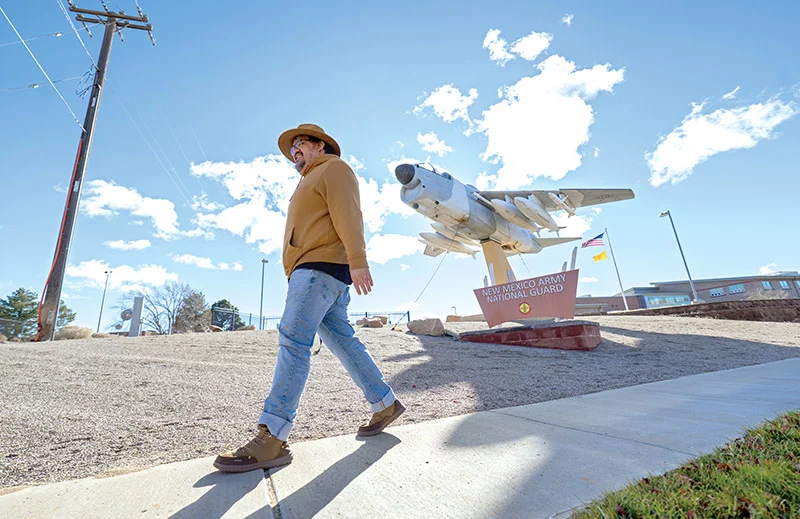
Now, as Joseph settles back into his life, he realizes that taking care of himself, exercising, keeping up on his medications, engaging with family and friends and having some adventures will help him adjust to his new heart.
“Now is the time to do some fun and crazy things and just enjoy life,” he said.
He intends to pay his gratitude forward in his community. In the past, organ transplants have carried some stigma with some in the Navajo community, but that is changing, and Joseph hopes to be a part of that conversation.
“Some of the elders might frown on it, but my mom has lost her husband and two brothers and is just happy I am here. My grandma is too. They didn’t want me to suffer, and others shouldn’t have to either.”
Joseph wants his immediate and extended family to get tested for the BAG 3 gene so they can take preventative steps to avoid heart disease and having to go through what he did.
He will need to be monitored and tested so that his body does not reject his new heart, and he continues to take immunosuppressants, which, as a side effect, can make him susceptible to other illnesses. To that end, he’s enrolled in a clinical trial that uses a simple blood test to detect any organ rejection occurring in his body as opposed to a more involved inpatient procedure.
“I want to take my medications, stay healthy and do my best every day. It’s just so great to be home,” Joseph said.
Carving out space for love. Learning to put his new heart out there.
The New Mexico sky seems to stretch forever over Farmington. During most days, it’s brilliant turquoise. At night, the sky turns a dark, inky blue. Twelve family members, including Joseph’s grandmother, aunt, uncle and cousins, live very close to Joseph and his mom and sister. There’s a trampoline out in the yard. Sometimes at night, Joseph lies on his back on the bouncy surface and looks up at the stars twinkling overhead. His new heart beats and seems to have big plans for him.
Joseph wants to make more space for love. Maybe he’ll get married someday. And while his family never has been into talking much about feelings, Joseph wants to open up more.
“I’m trying to get more comfortable putting my heart out there. I wouldn’t discourage anyone from getting a heart transplant, but you will go through a lot of emotions,” Joseph said.
Losing his dad, who was only in his early 60s when he died after suffering breathing challenges, was really tough. Then came Joseph’s ordeal.
He was determined to recover so his mom wouldn’t have to endure the loss of both her husband and a child.
The family has grown closer, Joseph’s mom said.
“We’re just so happy that Joseph is here and alive,” Evangeline said.
These days, Joseph is appreciating quieter moments.
“My new goals now are to make more connections with family, to see the world and not to take anything for granted,” he said.
He wants to run again, maybe not five miles, but a mile. He wants to take his dad’s mom to the Vatican because she’s in her 80s and always has wanted to see it.
“I’m like, ‘Well, I got a second chance, and you’re still here.’ I’m like, ‘Let’s go,’” he said.
The donor’s family remains the most delicate part of Joseph’s new life. He received a letter from the family and plans to respond, but he’s not ready yet.
Joseph sees the emotional storms as something transplant patients and families should talk about more openly, not hide from.
“The emotional aspect of it is very, very crazy,” he said. “It’s like a whirlwind.”
His advice to families is simple: give the person space to feel everything without being judged.
“Be a little bit patient,” he said. “Take a moment to listen. Allow them to have their feelings.”
Evangeline’s advice to her son is just as direct. Don’t spiral into fear. Don’t dig for pain. Let the medical team do their work and live because you’ve been granted a new shot at life.
“As long as you’ve got a smile, just leave it alone,” Joseph’s mom said. “Just move forward.”
Joseph is working on following his mom’s guidance.
“I’m at peace but still growing,” he said. “Comfortable with what happened. But I know there’s more I can still do.”
Then, almost like punctuation, he added what sounds like both gratitude and resolve:
“That’s all. Amen.”
Donovan Quintero is a Diné freelance journalist based on the Navajo Nation. He reports and photographs stories spanning environmental issues, missing and murdered Indigenous women, politics, feature narratives and sports. He is a two-time recipient of the Nina Mason Pulliam Environmental Journalism Award, earning the honor in 2019 and 2020. His photojournalistic coverage of the COVID-19 pandemic was exhibited at the Smithsonian’s National Museum of the American Indian in New York City in 2021 and at the Eiteljorg Museum of American Indians and Western Art in Indianapolis, Indiana, in 2024.