
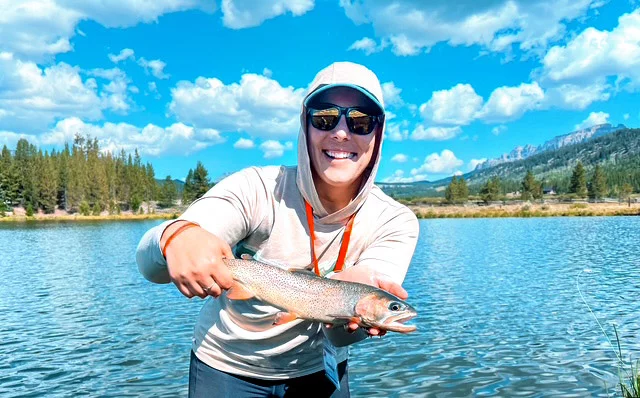
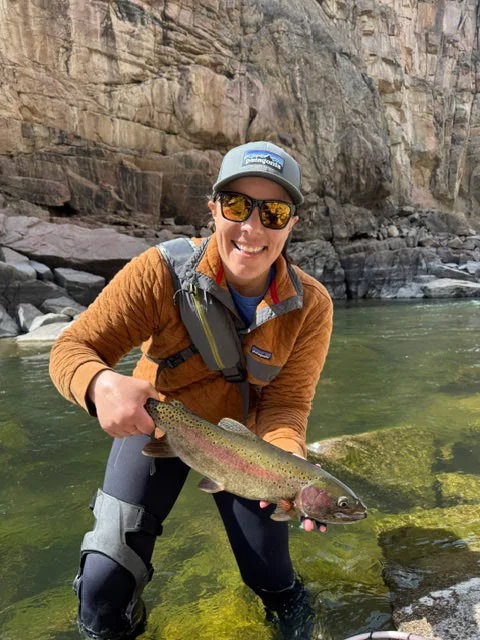
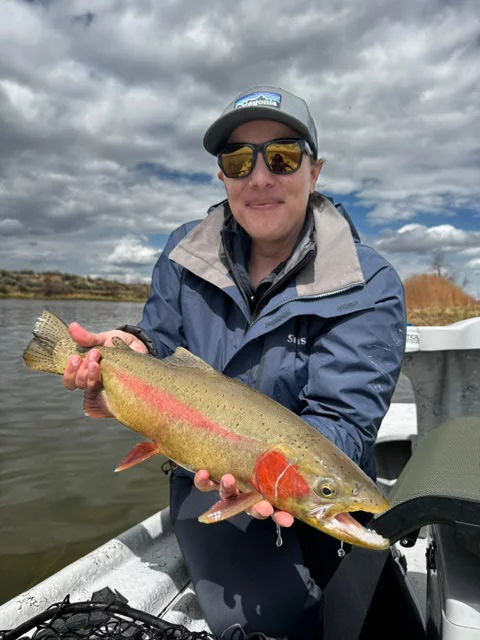
While dealing with physical therapy after a mountain biking accident injury to her knee, Karissa Goossen was annoyed that a torn ACL was taking time away from her favorite hobbies of fly fishing, hiking and cycling.
Little did she know that the coming months would bring enormous challenges far surpassing a damaged meniscus in her knee. The young Wyoming woman would face breast cancer, thyroid cancer and the beginnings of colon cancer in the space of a few months, and all when she was just 35.
“As simple as it sounds, you just have to keep going,” Karissa said. “It’s hard to do when you think you are at the end, but nope, there is still something to learn. I’ve always been an impatient person, and this has taught me a huge lesson to take it step by step, have goals – even little ones – and always be ready for what comes next.”
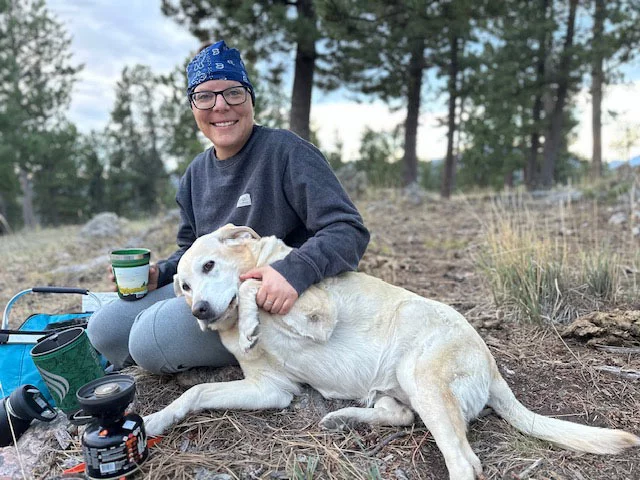
Two years later, Karissa credits her Colorado medical team with saving her life.
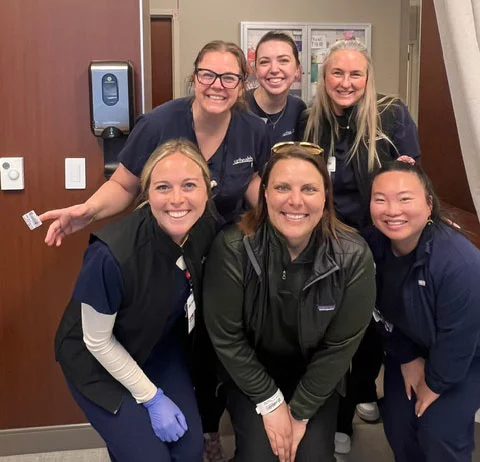
“I truly believe I wouldn’t be here if it wasn’t for the amazing team I have at UCHealth. From the doctors, nurses and even my favorite valet guy who gave me a big hug at every appointment. They kept me going.”
Karissa would go. And go and go.
She racked up thousands of miles on her black Toyota Tacoma truck as she made the 7-hour round-trip from her hometown of Douglas, Wyoming so many times she lost count. There were scores of appointments for visits with doctors, tests, scans, chemotherapy, radiation and follow-up exams.
“When you are trying to take care of patient who comes from a distance, it can be challenging. As a provider, you try to make it as easy as possible to coordinate everything,” said UCHealth oncology nurse practitioner Brooke Ferguson, who was part of Karissa’s care team.
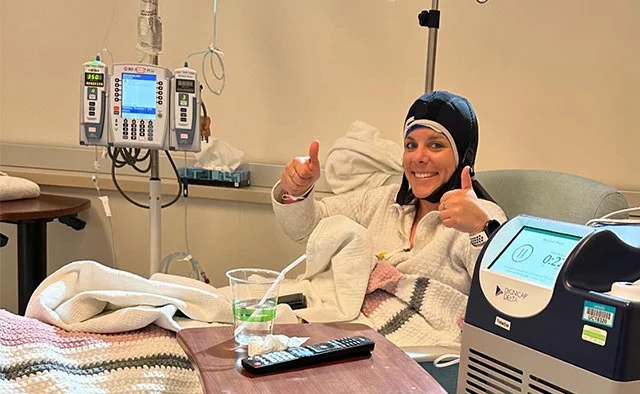
“We had tears for sure, but she would keep getting up and showing up every time something knocked her down. Breast cancer is not a sprint, it’s a marathon. Cancer or not, she is someone who has touched my life … she makes me want to show up and support my patients,” Ferguson said. “She’s just amazing.”
“Amazing” is an attribute used by everyone who knows Karissa, including breast surgeon Dr. Colleen Murphy at the UCHealth Breast Center – Cherry Creek.
“She was a great partner in her care,” Murphy said. “This has been such a long journey for her. She put so much trust in us, and we are so humbled and grateful when a patient does that. She reminds us why we do this work. She has always come in with a smile on her face even with setbacks.”
Dr. Katie Egan, who was Karissa’s reconstructive breast surgeon, called her a “warrior.”
“She has met any challenge with complete grace. For someone who has faced so many different types of cancer at such a young age, she is unique in how she has taken it all in stride and faced every challenge at it comes.”
Karissa had no idea of the depth and breadth of the difficulties that were heading her way as she nursed a sore knee. She would need to draw down deep for the strength that would propel her through a tsunami of gut-wrenching diagnoses, but she would weather them all.
A healthy, active Wyoming woman is stunned by breast cancer diagnosis at 35
Born and raised in Douglas, a small town in east-central Wyoming about 45 miles east of Casper, Karissa always has loved small-town life. She was homeschooled through third grade and then attended a “rural school” housed in a double-wide trailer with the children of ranchers.
From fourth through eighth grade, she and the other students were taught in two classrooms taught by two teachers, with her biggest class having four other students. After she graduated from high school, she moved to Casper, but four years ago a job opportunity in Douglas lured her back.
“It has its perks. Once I graduated and moved to Casper, I said I was never going back to Douglas but never say never. It’s definitely different living in a small town as an adult, but I really enjoy it.”
Aside from having her appendix out when she was 7, the ACL/meniscus surgery in January 2024 to repair her right knee from a mountain biking accident was the only injury she’d suffered.
In February 2024, as she completed physical therapy for her knee, she noticed a discharge from her right breast, along with a lump. Too young for annual mammograms, Karissa wasn’t too worried, since she’d had a manual breast exam six months earlier during her annual OB-GYN appointment and nothing had been amiss.
But she was puzzled. She was a few months shy of her 35th birthday and was fit and healthy. Her job in the oil industry kept her active. Both her work and her many recreational activities allowed her to spend plenty of time outside. She wondered if perhaps she had a blocked duct, some type of infection or was having a hormonal reaction to medication.
A few weeks later, she had imaging, including a mammogram and an ultrasound. As she was getting dressed, the technician said a biopsy was necessary, and if she had time, the team could do it immediately. Before Karissa left, staff members told her that while the definitive answer would come a few days later with the biopsy results, they suspected that the lump was cancer.
“I’m just trying to process all of this and hold it together, but I had no idea what was going on. I walked out to my truck, and I just lost it. I went into the exam thinking I had a blocked duct and came out thinking I had cancer.
“It was a long weekend waiting to get the results. I didn’t want to believe it, but I knew. Monday, they called me and said it was cancer. I was going in blind, but I had to begin piecing all of this together.”
A healthy 35-year-old woman suddenly faces Stage 3 breast cancer
Karissa was diagnosed with Stage 3 invasive ductal carcinoma, a type of breast cancer that has spread from the milk ducts to the breast tissue and surrounding lymph nodes. It was also HER2- positive, meaning the cancer cells have the HER2 protein on its surface. While this cancer is an aggressive and fast-growing one, it also responds well to targeted therapies.
Breast cancer in young women is more tenacious and typically more dangerous than when it occurs later in life. Women ages 45 and younger account for about 10% of new cases of breast cancer in the United States, according to the U.S. Centers for Disease Control and Prevention. Though 75% of young women have no family history of breast cancer, Karissa’s cancer likely had a genetic component, as her fraternal grandmother had breast cancer.
She was lucky she sought help early, as age 40 is typically the age recommended by medical experts for a baseline mammogram (though women with a family history of breast cancer should speak to their doctor about whether to get one earlier).
Younger women have a higher mortality rate from breast cancer because it is usually not caught as early as women 40 and older who receive annual mammogram screenings. Also, breast cancer in younger women usually involve more aggressive biological features than in older women, for reasons doctors are currently researching.
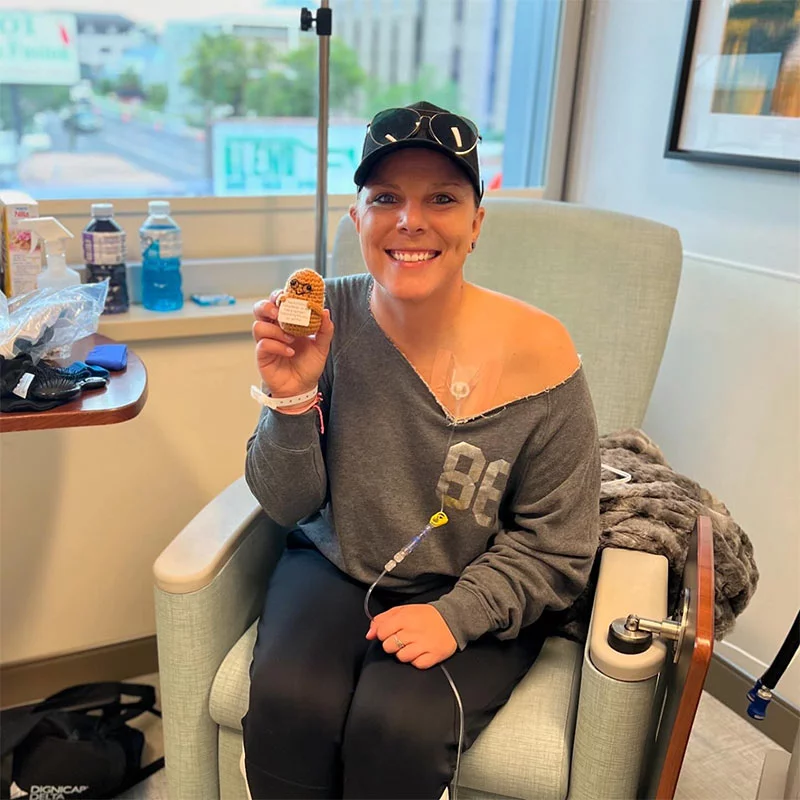
“Unfortunately, by the time a young woman notices a lump in her breast it’s usually more advanced than if it’s caught in a screening mammogram,” said Murphy, also an associate professor of surgical oncology at University of Colorado Anschutz School of Medicine.
While eating well, exercising and living a healthy lifestyle like Karissa has always done are beneficial to reducing the risk of cancer, healthy habits do not guarantee that people will stave off cancer.
Unique program helps young women who are battling breast cancer
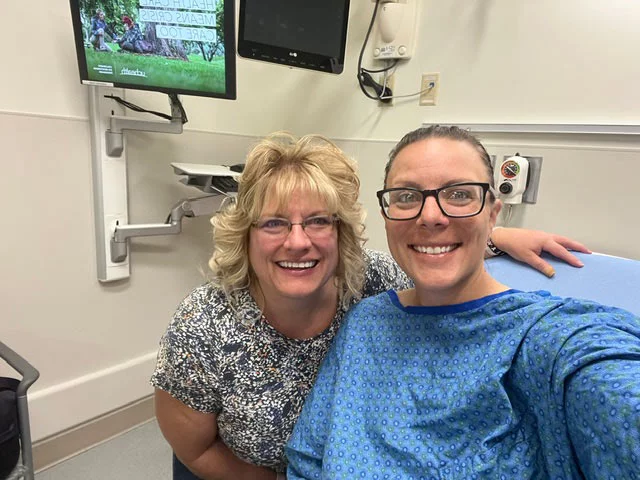
“Young onset breast cancer is on the rise, and it’s rising faster than the average age for other women, and we don’t know all the reasons why,” said Dr. Virginia Borges, who specializes in young women with breast cancer at the UCHealth Diane O’Connor Thompson Breast Center Anschutz.
“What happens, too often, is that young women present with a concern or a mass and the provider doesn’t have breast cancer on their radar,” said Borges, Karissa’s oncologist and head of the Young Women’s Breast Cancer Translational Program. “The whole medical system has to put its antenna up in a new way for this.”
The program has been providing unique care to women 45 and younger with breast cancer and conducting ground-breaking research since its inception in 2004, with a strong focus on life after breast cancer.
Hearing through a friend about the important work Borges has done with cancer and young women, Karissa knew she wanted to receive her care there, despite the distance from her home.
“I went down to UCHealth and met with Dr. Borges, and it was my saving grace. I hugged her and knew I was in good hands,” she said.
Because she was worried that any cancer treatment might harm her fertility, Karissa had to make a quick and important decision about harvesting her eggs before she started chemotherapy and radiation.
In April 2024, a few months after her initial diagnosis, she began the arduous and sometimes painful process of harvesting her eggs. The ordeal included having to give herself injections (despite the fact she has never liked shots) and once even had to do it after she pulled over in a gas station parking lot on the way back to Wyoming from a doctor’s appointment.
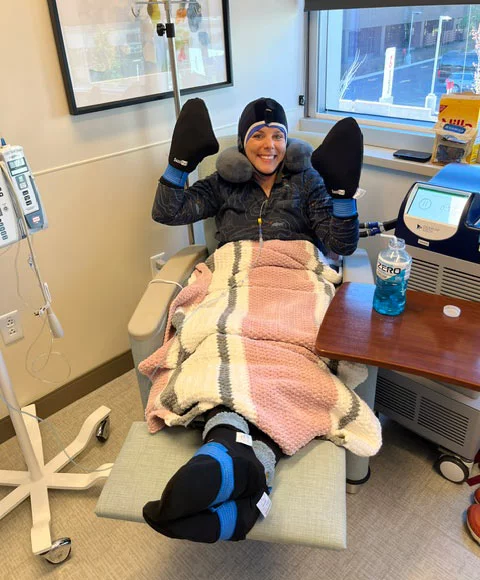
The next week, she began chemotherapy, arriving at UCHealth the night before her infusion treatments that lasted from the early morning through most of the day. A friend or relative would then drive her home to Douglas.
To help save her hair, she used a cold cap treatment, which worked well, she said.
In September, she underwent a double mastectomy and had four lymph nodes removed as well.
After her surgery, she had to make several twice-weekly trips to fill her spacers to the correct size, then she completed 15 rounds of radiation.
Spacers, or tissue expanders, create a pocket-like space that will eventually hold a breast implant, or in Karissa’s case, a space for breast reconstruction using tissue taken from the lower abdomen.
“Karissa keeps going and keeps fighting. She is a warrior for sure; she has met any challenges with complete grace,” said Egan, also a University of Colorado assistant professor of plastic/reconstructive surgery.
Karissa’s mom, Cari, had no doubt that her middle child would forge through the health catastrophes that life was throwing at her.
“She’s very determined and always has been. She’s a very independent person. She’s fearless.”
But Karissa’s ordeal was far from over.
Genetic testing shows a CHEK2 gene mutation, increasing the risk for thyroid and colon cancers
During the course of her breast cancer treatments, genetic counseling showed Karissa had a mutation of the CHEK2 gene. We all have two copies of this gene, one from each parent, but women who have a CHEK2 gene mutation have an increased risk of breast cancer, thyroid cancer and colon cancer.
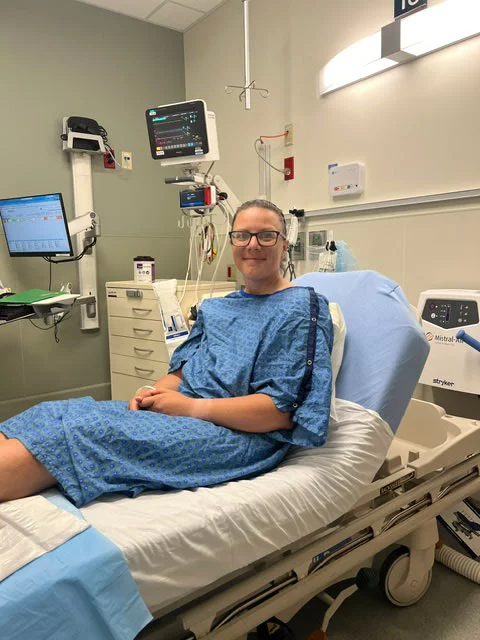
As a precaution, Karissa had an ultrasound and biopsy of her thyroid. The thyroid is a small butterfly-shaped gland in the front of the neck. The hormones it produces control many important aspects of our health, including regulating our metabolism, growth, weight, energy level, internal temperature and skin, hair and nail growth.
A few days before Thanksgiving 2024, and just three days before her radiation treatments for breast cancer had wrapped up, doctors told her she had thyroid cancer.
Two weeks later, Karissa had her thyroid removed.
At this point, Karissa was two for three in getting the cancers that come with having the mutated CHEK 2 gene. She and her doctors were concerned about her risk for the third one: colon cancer. New data from the American Cancer Society has highlighted the alarming danger of colon cancer to younger people.
Because current screening guidelines recommend that screening for colon cancer begin at 45, Karissa likely would not have had a colonoscopy for several years if she had not known she had the mutated CHEK2 gene. Fortunately, during a colonoscopy, doctors found – and removed – several pre-cancerous polyps from her colon, and she will now undergo colonoscopies every five years.
But after having battled cancer on multiple fronts, cancer was still not done with Karissa.
Breast cancer returns through a skin lesion
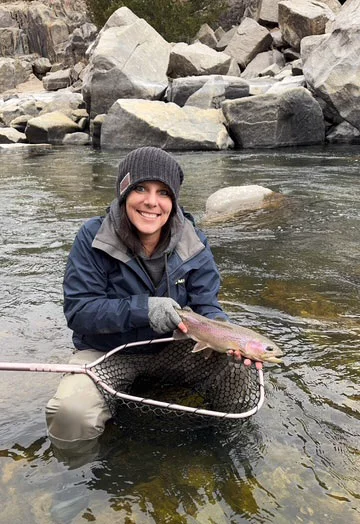
In Spring 2025, Karissa was hoping the worst was behind her. She was having reconstructive surgery in May when Egan noticed a spot on her right breast near her collarbone that looked like a mosquito bite. Karissa thought it was just a skin irritation, but Egan didn’t like the look of it.
In June, a biopsy of the bump came back. It was HER2 cancer. Because of the cancer’s spread, Karissa had to go through six rounds of chemo last summer, followed by skin graft surgery to remove the affected area of her breast, and an additional six rounds of chemo that she just completed in April of this year.
Her doctors have marveled at her strength, stoicism and pragmatism in facing so many different types of cancer at such a young age.
“Karissa is super unique in how she has taken everything in stride and takes every challenge as it comes,” Ferguson said. “She is just the essence of positivity. It’s hard to maintain that through multiple setbacks but she just did. She asked, ‘What do I need to do to get better?’ She took every turn, and there were many, and stayed on course.”
Working in a ‘man’s industry,’ Karissa has never backed down from a challenge
A manager in the oil and gas industry, Karissa is accustomed to being self-reliant and independent.
“You can’t play the ‘poor me’ card. Either you do it or it doesn’t get done,” Karissa said.
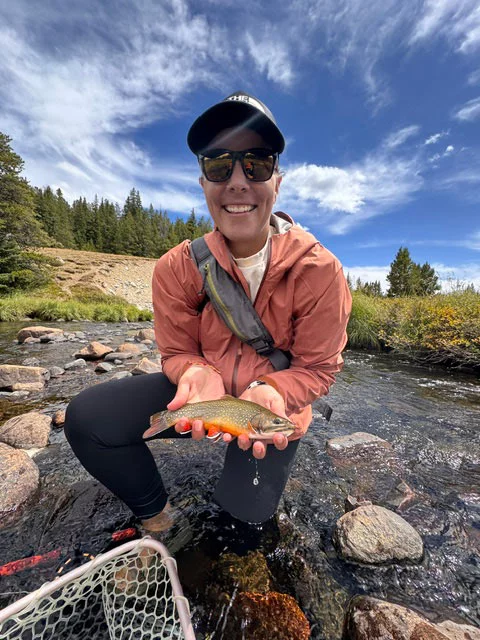
While two years of battling several cancer diagnoses simultaneously has temporarily reduced her typically robust stamina, she’s building her energy levels back and has a positive outlook.
“She is rock strong and has amazing fortitude.,” Borges said. “We’re hoping we have the cancer on the run, and she will be able to look it in the rear-view mirror from here on end.”
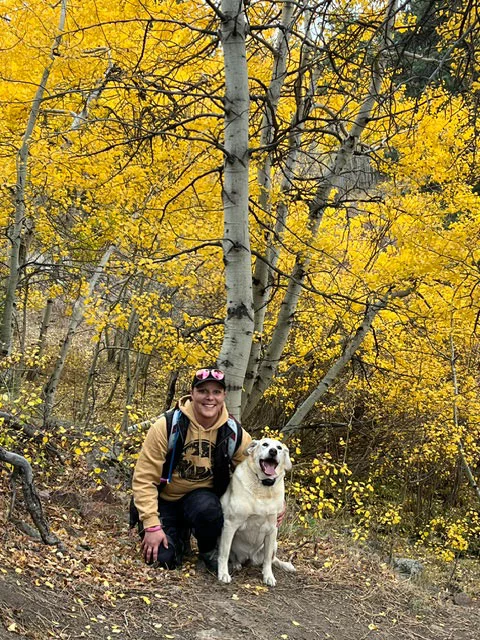
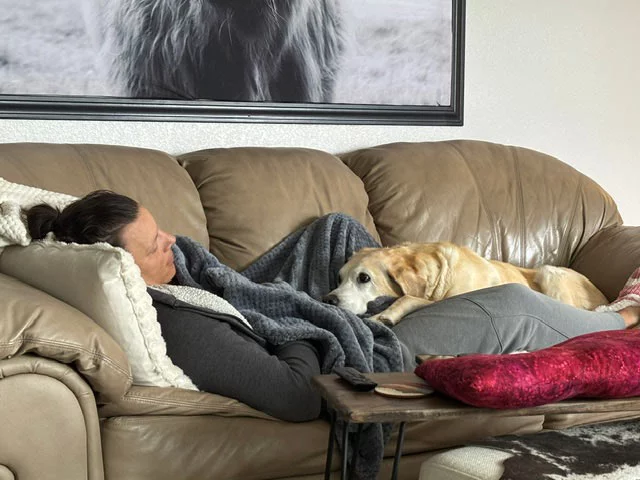
With her treatments completed, Karissa plans to return to outdoor adventures and hopefully a new four-legged friend, as sadly, she had to say goodbye to her trusty companion of 12 years with the recent loss of her dog.
“It’s always in the back of your mind that cancer might still be in you, every ache or pain makes you question if it’s back.,” she said. “The emotions of what you have been through come in waves, sometimes you’re OK, and other times you find yourself in tears talking or even just thinking about it. It’s an odd feeling to be going about your day as if everything is normal, while inside, your world feels completely upside down.”
The miles she put on her truck were painful ones, but also therapeutic, as she had time to ponder what she has gone through and what she wants for her future.
Last year, Karissa participated in a fly fishing retreat for women cancer survivors, and she envisions spending the coming weeks and months at a local lake fly fishing, camping and hiking.
“That was always my medicine, and that is the best medicine for me … being out there is my peace.”