
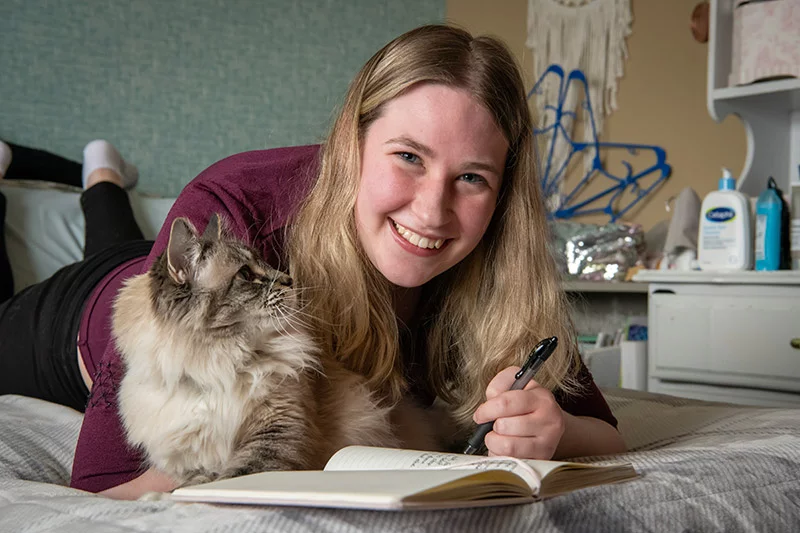
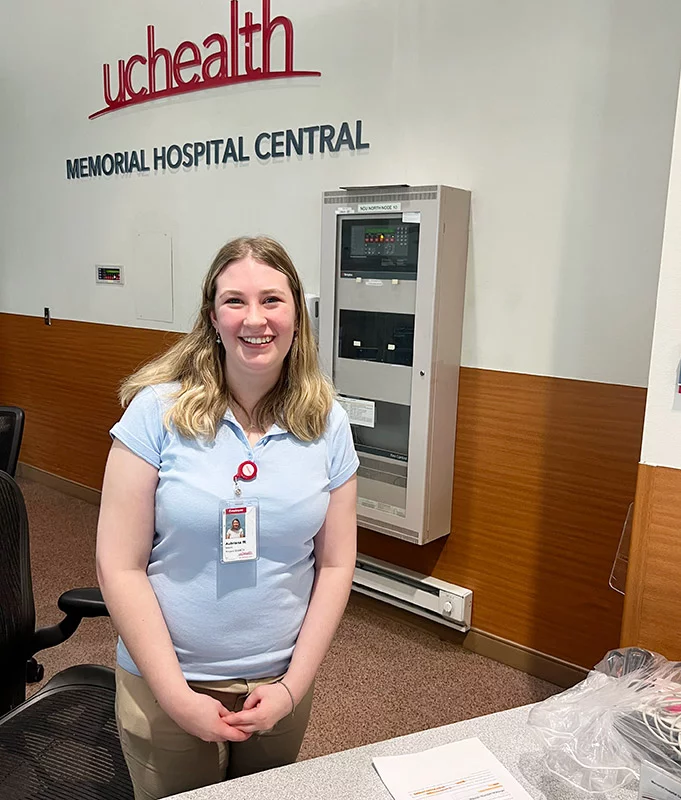
Aubriana Winters greets each person who walks up to the registration desk at the UCHealth Memorial Hospital Central north entrance with a big smile and a warm question.
“Hi, are you here to visit someone or for an appointment?”
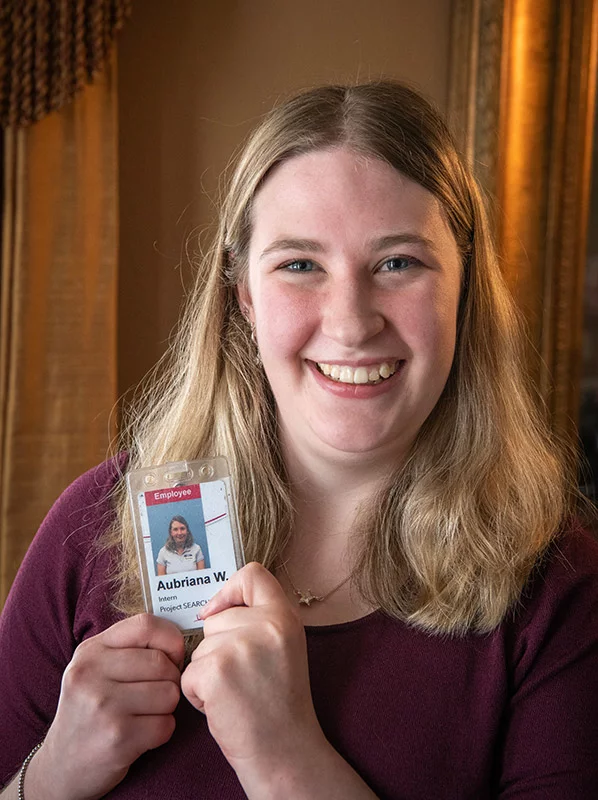
If the answer is “visitor,” Aubriana asks for an ID, prints out a badge for them to wear and offers directions if they don’t know their way around the large, circuitous hospital.
If they are patients who are coming for appointments, she refers them to a nearby colleague who checks them in.
For Aubriana, the chance to work as an intern at Memorial Hospital Central is a dream come true – and a full-circle moment for a woman who was a patient in the Memorial Neonatal Intensive Care Unit 19 years ago.
Aubriana suffered a stroke during birth and, as a result, sometimes has difficulties with comprehension, memory and processing. Now, she’s thrilled to work with Project SEARCH, a UCHealth program where young adults with intellectual and developmental disabilities learn job and life skills.
“I love everything” about working at the hospital, Aubriana said during a recent shift. “I love being able to help people in any way I can.”
Project SEARCH internship provides class time and on-the-job training for young adults
Project SEARCH is a school-to-work transition program for young adults aged 18 to 21. The emergency department director at Cincinnati Children’s Hospital Medical Center started Project SEARCH in 1996, seeing the need for employment opportunities for people with developmental disabilities.
Today, there are more than 800 Project SEARCH sites around the world. UCHealth leaders launched Project SEARCH in 2017, with programs now at Memorial Hospital Central, UCHealth University of Colorado Hospital, UCHealth Highlands Ranch Hospital, UCHealth Greeley Hospital and UCHealth Poudre Valley Hospital in Fort Collins. Dozens of young adults have participated in UCHealth’s Project SEARCH programs and transitioned into meaningful employment.
The program at Memorial Hospital Central runs from August through May in partnership with Academy District 20 in Colorado Springs. Students who participate in Project SEARCH work four days a week. They spend about 10 hours per week in a classroom learning life skills such as time management and conversational skills, and about 16 hours per week working in various hospital departments.
During the program, they learn job skills and valuable habits like showing up on time and speaking up when they need help. Project SEARCH leaders, including Sarah Benavides, who runs the program in Colorado Springs, want to ensure that students can secure “competitive, integrated employment” upon graduation from Project SEARCH. That means getting a job that is part of an employer’s larger workforce and earning the same wages as similar positions from a public applicant pool. And when possible, she loves to hire Project SEARCH graduates for UCHealth jobs.
‘Miracle baby’ now hopes for a career in the hospital where she spent time as a newborn
Aubriana hopes to work in health care after she graduates from Project SEARCH this spring.
It’s at Memorial Hospital Central, after all, where Aubriana became a patient not long after her birth on Sept. 28, 2006, at a smaller hospital in Colorado Springs. Aubriana’s mother, Alexandra Gromko, said she knew something was wrong with her firstborn after an 18-hour labor. She saw that her baby was blue, with the umbilical cord wrapped twice around her neck, and she didn’t cry.
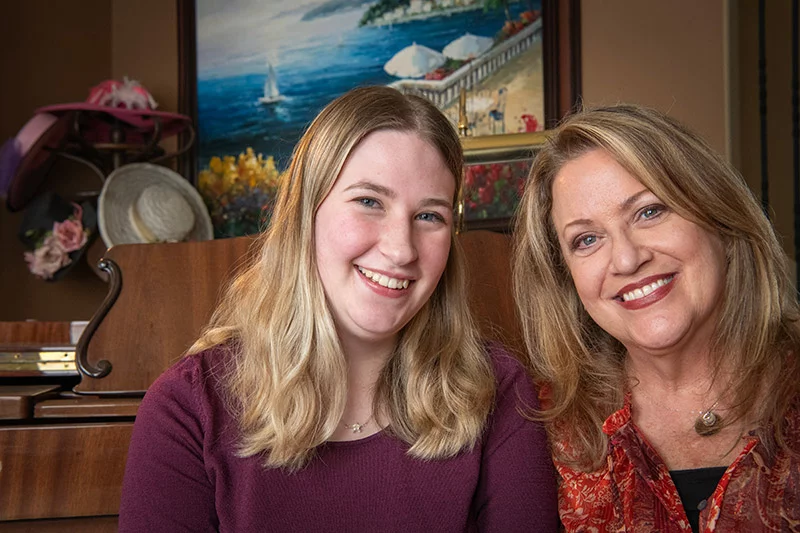
Medical providers called for an ambulance to rush Aubriana to the Neonatal Intensive Care Unit (NICU) at Memorial Hospital Central, where doctors described her as the sickest baby in the unit, Gromko recalled.
“She was hooked up to every machine imaginable,” Gromko said.
The doctors and nurses warned Gromko that her baby might not survive. They pledged to do everything possible to save Aubriana and encouraged Gromko not to lose hope.
“They were so amazing in how they cared for her,” she said. “They had a game plan and made Aubriana a priority.”
Gromko visited her baby every day. One day after leaving the hospital, she stopped at St. Mary’s Cathedral in downtown Colorado Springs.
“I knelt, and I prayed and prayed and prayed, the most fierce prayers I’ve ever said: ‘Please let her live. Send a legion of angels and let her live.’”
Aubriana’s condition began to improve, and doctors told Gromko that her infant was a miracle baby.
After 12 days in the NICU, Aubriana appeared to be having seizures, and her medical team ordered an MRI. Doctors told Gromko that her baby suffered from hypoxic-ischemic encephalopathy, or a stroke, caused by a lack of oxygen and blood flow to the brain before, during or after birth.
Due to the stroke, Aubriana’s medical team told her mom that she was likely to face disabilities throughout her life.
“We found out she had a stroke, but what did that mean?” Gromko said. “That started the journey we were about to embark on.”
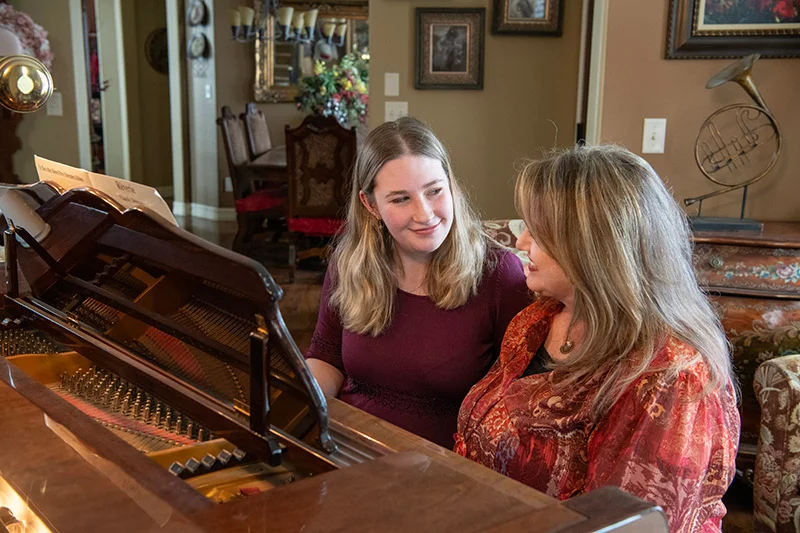
Gromko found a pediatrician who told her to watch for milestones in her baby’s development – sitting up unassisted, for example – and compare Aubriana’s growth to a more typical baby. He also told her to “never give up hope and never leave any stone unturned.”
When Aubriana was three months old, Gromko started taking her for regular visits with physical and occupational therapists. Aubriana achieved important developmental milestones but was usually about a month or so delayed.
At school in Academy District 20, Aubriana had an individualized education plan, or IEP, detailing the support services she needed in school. A counselor at her high school recommended Aubriana apply to Project SEARCH after she finished 12th grade.
Aubriana was “over the moon” when she was accepted, Gromko said.
“Working in health care has been her dream for many years,” Aubriana’s mom said. “Literally, this was a dream come true.”
As part of her Project SEARCH internship, Aubriana works with Benavides and coworkers on strategies to overcome her deficits with memory and processing challenges. For example, Aubriana memorized how other staff members at the registration desk greet patients and visitors and now uses the same wording.
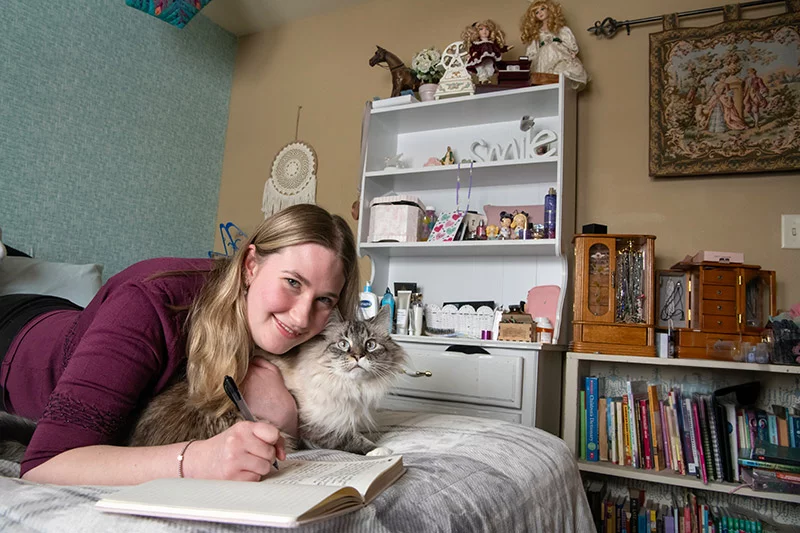
A hospital offers many career options beyond health care
Four interns are in this year’s Project SEARCH cohort at Memorial Hospital Central. Each week, the students ride an Academy District 20 bus to an administrative center one mile from the hospital, where they meet as a class for an hour with an Academy District 20 teacher. The interns identify their strengths, explore their career interests, and discuss barriers they could face in jobs.
On a recent Tuesday, Aubriana and her fellow interns created resumes and learned how to look for job openings on online job search boards. They talked about the types of job titles they should search for, and where they might like to work. On the white board in the room, the teacher spelled out different words they might use on a resume, just below an inspiring message: “Rejection is Redirection.”
To apply to Project SEARCH, students must be:
After class, the interns ride a shuttle bus to the hospital. Learning to get to the bus stop on time and find their way to their internship department is all part of getting ready for employment, Benavides said. After four hours of working their jobs, students ride the shuttle bus back to the administrative center for more class time.
Project SEARCH interns work in at least two departments at the hospital during the program. Aubriana worked during the fall in the patient rehabilitation care unit before joining the registration desk team this year.
While Aubriana hopes to one day work at Memorial Hospital Central, interns are not required to be interested in a health care career to participate in the program, Benavides said. There are lots of other job opportunities in a hospital, including food service, facilities, maintenance, human resources, information technology and more.
And Project SEARCH interns are not required to look for work at a UCHealth hospital after they graduate from the program. Previous interns in Colorado Springs, for example, have gone on to work at a local donut shop and a warehouse. The goal is to support students in getting meaningful, competitive work in a job that’s right for them.
That said, Benavides hopes to turn the Project SEARCH program into a talent pipeline for UCHealth, helping leaders identify potential employees, matching them with appropriate open roles and identifying what tools and support they may need in that job. For a role that involves sanitizing hospital areas, for example, a supervisor who hires a Project SEARCH graduate might need to create visual prompts on how to perform the steps of the job, she said.
Aubriana shows how someone with disabilities can excel when a leader or coworker takes the time to learn how a job can be altered or how to tailor certain tasks for their abilities. Benavides coached her to stand when greeting a visitor, so her soft voice would project farther, for example. Aubriana said it took her a couple of weeks to memorize the directions to various departments in the hospital.
Project SEARCH “challenges our departments to think differently about how to make jobs accessible,” she said.
“We’re learning in health care to be open to all sorts of individuals to fill these roles,” Benavides said.
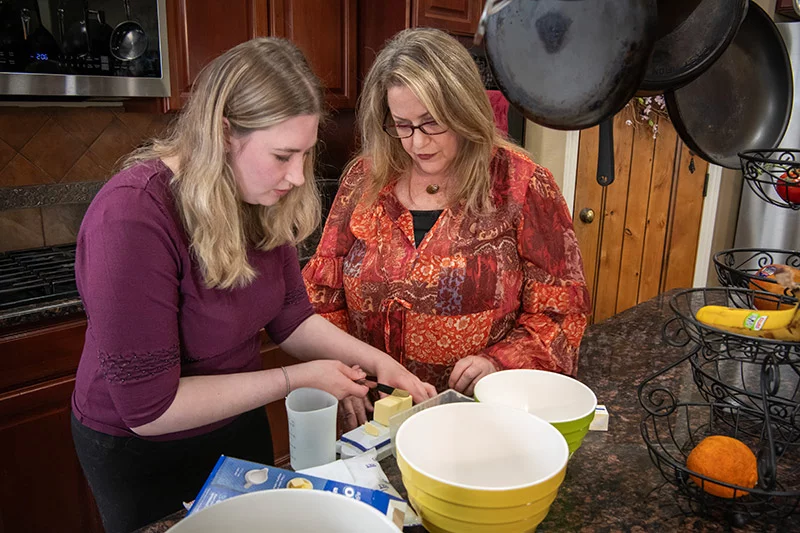
Inspired by those who cared for her, Aubriana now loves to care for others
Gromko calls Project SEARCH “a godsend” for her daughter.
Aubriana is inspired by the doctors, nurses, therapists and others who cared for her in her early days and years. And she wants to do her part in providing care to others, in whatever role she finds.
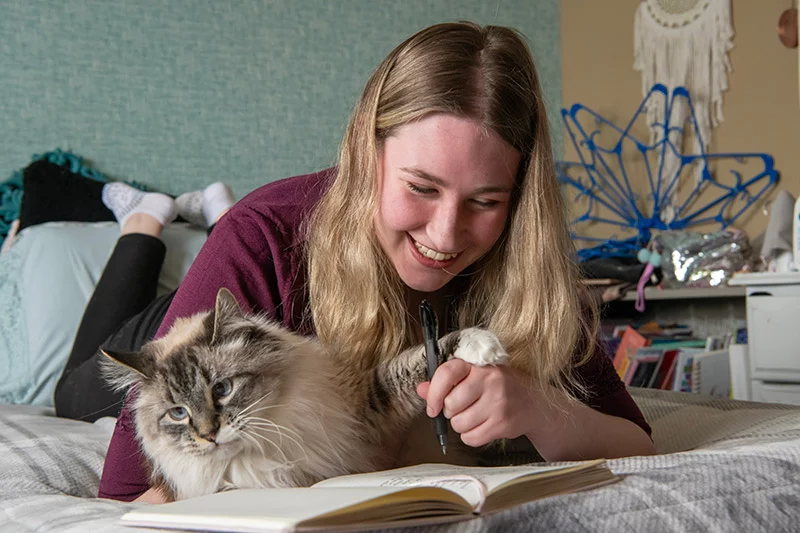
Not long after she started working at the registration desk, a visitor ran into the hospital entrance asking for help for the passenger in his car who had stopped breathing. Aubriana, her colleagues and another patient ran out to the car to help the passenger before medical providers took over. It’s a moment that signifies the meaning that Aubriana finds in her internship.
“What she really wants to do is help people,” Gromko said. “If they’re coming to the hospital to visit a loved one and don’t know their way around, Aubriana is providing help.”
For Aubriana, every day at the registration desk offers a new opportunity to help, even if it’s simply offering a smile to a worried family member trying to find their loved one in the hospital.
“It’s been a great experience overall,” Aubriana said. “It’s been amazing to get to see what it’s like to have a job.”