
With all the modern assaults on our health and well-being – extreme heat, microplastics, COVID-19 – it’s hard to pay attention to the old, dusty disease of rabies.
But we can’t afford to make that mistake.
True, rabies is literally ancient. We have evidence that it existed in 1930 B.C.E. when humans in Mesopotamia connected a man’s death with a dog bite he had suffered. You wouldn’t recognize Mesopotamia these days – but rabies is pretty much the same. And very, very present.
Key takeaways about rabies:
- Rabies is nearly always fatal once symptoms start, but prompt treatment can prevent the disease after an exposure.
- Bats, skunks, raccoons, foxes and other wildlife can carry rabies, even in urban areas.
- If you are bitten or scratched by a potentially rabid animal, wash the wound and seek emergency care the same day.
This year alone, 43 animals had tested positive for rabies in Colorado as of late August. Those 43 animals exposed six people and 26 domestic pets to the virus. From 2019 to 2023, experts at the National Rabies Surveillance System tracked a whopping 108 cases of rabies in animals in Larimer County, 50 in Boulder, 20 in Denver and 57 in Jeffco. You can check your county’s rabies cases. Rabies spreads and poses risks to humans and animals in Colorado – even urban Colorado.
According to public health experts at the U.S. Centers for Disease Control and Prevention (CDC), three out of four Americans live in a community where raccoons, skunks, or foxes carry this deadly disease. And if you live on the Front Range in Colorado, you can add bats to that list. Of the 43 animals that have tested positive for rabies this year so far, 31 were bats.
For a disease that humans have been battling for 4,000 years, you’d think we’d have a better handle on it. But we don’t. Last year, rabies killed 70,000 people worldwide. In the U.S. every year, 1.4 million Americans seek medical care for a possible rabies exposure, and 100,000 of those receive post-exposure prophylaxis injections to stave off the disease.
Considering what’s at stake and the fact that rabies is all around us, we thought we should check in with an expert. We talked with Lauren Bryan, an epidemiologist and infection prevention program manager at UCHealth Yampa Valley Medical Center.
Why is rabies such a big deal?
“Rabies is zoonotic, which means people can get it from animals. And it is 100% fatal once a person has symptoms of the disease,” Bryan said.
What happens to a human who gets rabies?
If a person gets exposed to the rabies virus through a scratch or a bite, and they do not get intervention, they will develop rabies symptoms as the virus invades the nervous system. But that invasion takes time. And the time can vary depending on viral load. This is the time to intervene – before the symptoms.
Rabies symptoms in a human include excessive thirst and salivation, hydrophobia, which means fear of water, fevers, chills, muscle aches. Often the person develops agitation or aggression. A human can live up to 10 days after developing symptoms.
“We can offer supportive care, intubation, sedation, hydration,” said Bryan. “But there is no treatment.”
Is there a cure for humans who get rabies?
No. There’s no cure for rabies. If a person is exposed to a rabid animal, doctors can give the person post-exposure prophylactic injections or PEPs.
“But once a person is showing symptoms from rabies, there are no treatments, except to help make the person comfortable while they die – which usually takes about 10 days after they start showing signs,” said Bryan.
So, public health experts focus on preventing transmission between animals (with pet vaccination and educating humans not to come in contact with potential carriers) and on stopping the virus once humans suffer a rabies exposure. It’s critical to prevent rabies from traveling into a person’s central nervous system before it causes symptoms.
How many rabies cases does Colorado see in a given year?
“Colorado usually runs between 55 and 92 positive animal rabies cases per year,” said Bryan. Our outlier year was 2019, when we had 163 positive animals in Colorado.”
But remember, these are animals, not humans. According to Bryan, while there have been plenty of human exposures to rabies in Colorado, a human has not developed rabies (or had it convert from a bite or exposure to symptoms) since the 1930s.
“This is the triumph of post-exposure prophylactic injections (PEP), and the work of our public health departments,” said Bryan.
Do I have to worry about rabies if I live in an urban area?
Everyone has to worry about rabies.
“Whether you live in a rural or urban area, you are around wild animals that have rabies,” said Bryan. “We’ve all seen foxes or raccoons in our neighborhoods. Bats too. It’s here, and we can catch it.”
Rabies is efficient at spreading among mammals. It is a disease nature designed to perpetuate itself. It will infect a wild animal that is usually quite docile. Changes in the nervous system then cause the animal to become unusually aggressive. Infected animals often bite other mammals. . Since the disease spreads through saliva, a bite or a scratch can be enough to transmit the virus.
Which animals carry rabies in Colorado?
“Rabies is present in Colorado wildlife like bats, raccoons, foxes, skunks and even coyotes,” said Bryan.
The presence of rabies in wild animals means that domestic animals like dogs, cats, cattle and horses can get rabies because infected wild animals can bite or scratch domestic animals.
In 2024, 17 people in Arapahoe Country had to receive PEP injections after they interacted with a puppy that was put up for adoption by Moms and Mutts Colorado (MAMCO) Rescue, a nonprofit organization. One of the puppies started showing signs of rabies after it was adopted. The puppy came from out of state, and the incident was particularly concerning because officials at the Colorado Department of Public Health had to find everyone who attended the event and interview them to figure out who was at risk. They had to determine who needed PEP and who didn’t.
“People wouldn’t think twice about playing with puppies and getting a few scratches at a rescue event,” said Bryan. “But public health officials can’t just wait and see who develops symptoms,” because at that point it would be too late.
Why don’t we test all animals for rabies to make everything safer?
Testing all animals for rabies is impossible.
“To test an animal for rabies, you have to euthanize it first,” said Bryan.
How do you test animals or humans for rabies?
It is tough to test for rabies. Even now, we still test animals for rabies the same way people did back in the 1800s: we cut an animal’s head off and test brain matter. The lab must receive tissue from both the brain stem and the cerebellum in order to rule out a rabies diagnosis. There is no way to do that on a live animal.
Experts only do live testing for humans. To do so, a medical provider must collect samples of saliva, nuchal (back of the neck) skin biopsies, serum and spinal fluid. There is only one laboratory in the U.S. that conducts antemortem (live) rabies tests, and that is the CDC’s National Rabies Reference Laboratory.
“It’s pretty awful,” said Bryan. “We had a pony acting strangely in this area. Of course it was the one all the children loved.”
It had to be euthanized so brain tissue could be sent to the lab. It turned out the pony didn’t have rabies and was suffering from another neurological disease. But because of the extreme consequences of exposure, the testing had to be done.
Why are bats such concerning carriers of rabies?
Bats can bite you without you knowing it. They have very, very fine, needle-like teeth that can allow them to take a nip that goes completely unnoticed.
“If I woke up in a room and there was a bat there, or a dead bat, I would definitely be concerned,” said Bryan. “You can’t wait to see if you get symptoms. It’s too late then. You’re a goner.”
So, if you ever suspect you’ve had contact with a bat, head to an emergency room, Bryan said.
“But don’t bring the bat with you! Call your local public health department or the Colorado Department of Public Health and Environment (CDPHE). They will arrange to get the bat and test it.”
“In addition,” said Bryan, “If an individual who has limited verbal abilities is in a room with a bat, even if they did not sleep in the room, they need to start on PEP, because they cannot tell you if the bat may have scratched them.
Why should I vaccinate my pet for rabies and keep those vaccinations up to date?
“Unlike children, who you can teach to stay away from wildlife, dogs are harder,” said Bryan.
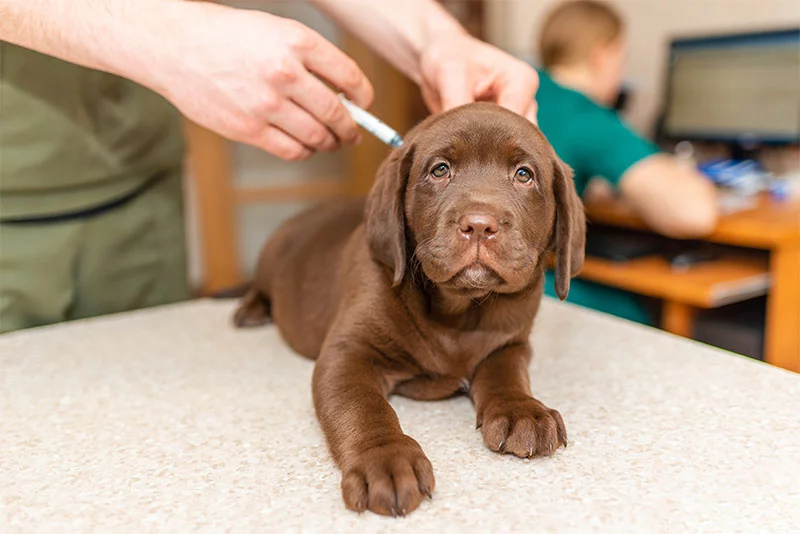
Not only do you want to prevent your dog or cat from getting rabies or getting it and giving it to you. You also don’t want your animal getting bitten by a rabid or questionably rabid animal and have a less-than-ironclad vaccination history. Because under state law, governed by CDC guidelines, how your animal is treated depends on its vaccine status.
If your animal is up to date on his/her rabies vaccination, then post-bite, he or she will receive an immediate booster on their rabies vaccine, stay under your supervision for 45 days and be monitored for signs of rabies. However, if your animal is unvaccinated, they will either be euthanized and their brain matter will be sent in for testing, or they will be held in a government quarantine facility for four months at your expense.
The middle ground: if your animal’s rabies vaccination is out-of-date then it will be handled on a “case-by-case basis” depending on how out of date the vaccine is and how intense the exposure (scratch or multiple bites). Don’t take a chance – get your animal’s rabies vaccine boosted today.
Can you really get rabies from just a scratch?
“Absolutely you can get rabies from just a scratch,” said Bryan. “It’s a very transmissible virus.”
And while the amount of viral load (how much infected saliva you get in your wound) will affect how long it takes for the symptoms to develop after exposure, there’s no free pass.
“This isn’t like a common cold. Even if you get a tiny viral load, you will eventually develop rabies,” said Bryan.
It can take between weeks to up to a full year to develop rabies from an exposure, depending on the viral load. But exposure means infection unless PEP is used to intervene.
Are there different stages of rabies infection?
“There are three stages of rabies infection in animals,” said Bryan. And it’s important because eventually, if untreated with PEP and H-RIG, a human will also develop these stages. The clinical course is shorter in animals than in humans, but results in similar symptoms and almost always death.
- The first stage in animals is usually one to three days long and is called the prodromal stage. It is characterized by behavioral changes.
- The second stage of the infection in animals is known as the excitative stage, which lasts three to four days. Also referred to as “furious rabies, ” this is when the animal is hyper-reactive to external stimuli and most apt to bite. In some cases, animals skip the excitative stage and develop paralysis,
- The third phase is known as the paralytic phase, or ‘dumb rabies.” The virus starts to affect the motor neurons, and the animal has trouble walking, has rear-limb paralysis and difficulty swallowing. “That’s why we say if you see an animal acting strangely, suspect rabies,” said Bryan. “People often think that if the animal isn’t aggressive, it’s not rabies…but it might be past that stage.”
Death occurs in the third stage, usually by respiratory arrest, as the animal’s diaphragm can no longer function to breathe.
What is the protocol if I get bitten by an animal who may have rabies?
“Wash the wound if you can,” said Bryan. “Ten minutes of running water should do it. Then go to the nearest emergency room. Don’t bring a bat or other animal into the emergency room. Just you.”
If the bite wound is visible (probably not a bat), the wound will be treated with Human Rabies Immune Globulin or H-RIG. This is used at the site of the wound for people who were not vaccinated against rabies previously (like shelter staff or veterinary workers). H-RIG provides antibodies immediately.
“Next, you will receive the first injection of PEP or Post-Exposure Prophylactic, which is a 4-vaccination protocol. These are given in the muscle on your hip or in your arm on day 0, 3, 7 and 14.”
Aren’t rabies injections given in your stomach?
“They used to be,” said Bryan. “But now they are given in the arm or the thigh.”
If I get bitten, how quickly do I need to get medical help?
“Within the day,” said Bryan. “And don’t go to your Primary Care Provider because they won’t have PEP on hand. You do need to be seen in a hospital emergency room.”
How long can it take for rabies symptoms to appear after a bit?
“Usually two to three months,” said Bryan. “But it really depends on the viral load.”
But don’t think you have time to wait around. Some cases develop faster than others, and the PEP protocol calls for the first injection to be given within 24 hours of the bite.
What is H-Rig?
“H-Rig is an immunoglobulin,” said Bryan. So it supplies immediate antibodies to rabies to allow your body time to build its own long-term defense from the PEP injections. H-Rig attempts to stop the rabies virus at the bite or scratch wound before it has a chance to move up your nerves to your central nervous system. It is NOT used on people who have had rabies vaccines before (like shelter care workers and other high-risk individuals who get the series before an exposure.)
What are post-exposure prophylactic injections or PEPs for rabies?
“This is the human rabies vaccine. If you’re in a high-risk profession like shelter worker or veterinary services, you might get a series of three of these before exposure. But most people only get them after a bite or scratch from an animal suspected of having rabies,” said Bryan.
The series is given in the period immediately after the wound for a total of four doses in two weeks. It takes advantage of the time it takes for the virus to climb up the nerves and invade the central nervous system. It is very important to get that first injection on the first day of exposure: Day Zero. And then one on Day Three, one on Day Seven and then one on Day 14.
Are the rabies injections, H-RIG and PEP, expensive?
“It’s expensive,” said Bryan. “And we don’t have any public funding to help mitigate that expense.”
Depending on your insurance and where you live, costs for the H-RIG treatment of a bite wound run between $1,500 and $5,000. The cost of the series of four PEP or Post-Exposure Prophylactic Vaccine doses (four injections over two weeks) is $1,200 – $2,800.
If the offending animal is able to be tested – and is negative, doctors can suspend the rest of the vaccine series, which may help reduce the cost.
Do I have to worry about squirrels and rabies?
“Squirrels are very low risk…but I wouldn’t ignore them completely,” said Bryan.
The low risk factor is mainly because of their size and their diurnal activity. Because of their size, they usually die from a rabies attack from a larger mammal. And squirrels are NOT nocturnal. They sleep in trees at night (away from predators that may have rabies), and they are active during the day (when bats, skunks and raccoons are not)
“There have been cases of squirrels testing positive for rabies, so don’t discount it entirely, but know that you have much more to fear from bats and skunks,” said Bryan.
What does ‘hair of the dog’ have to do with rabies?
In the 4,000 years of rabies virus history, medical practitioners had plenty of time to come up with cockamamie treatment ideas. ‘Hair of the dog’ was one of those treatment ideas. According to the first English-language journal wholly dedicated to medicine, back in 1684, some healers were prescribing putting the hair of the biting dog into the wound to treat rabies.
Did rabies inspire myths about vampires?
“Some experts believe that the rabies virus is behind the whole vampire legend,” said Bryan.
“It makes some sense,” she said, “the biting, the saliva, the transmission of an infection that changes temperament.”
Most researchers believe it was an amalgamation of myth and medicine. In the 1700s, vampires were a much-discussed concern. Even Voltaire commented on them. During the same period, there was a rabies epidemic in Hungary, the same area of the world where vampire tales first emerged.