
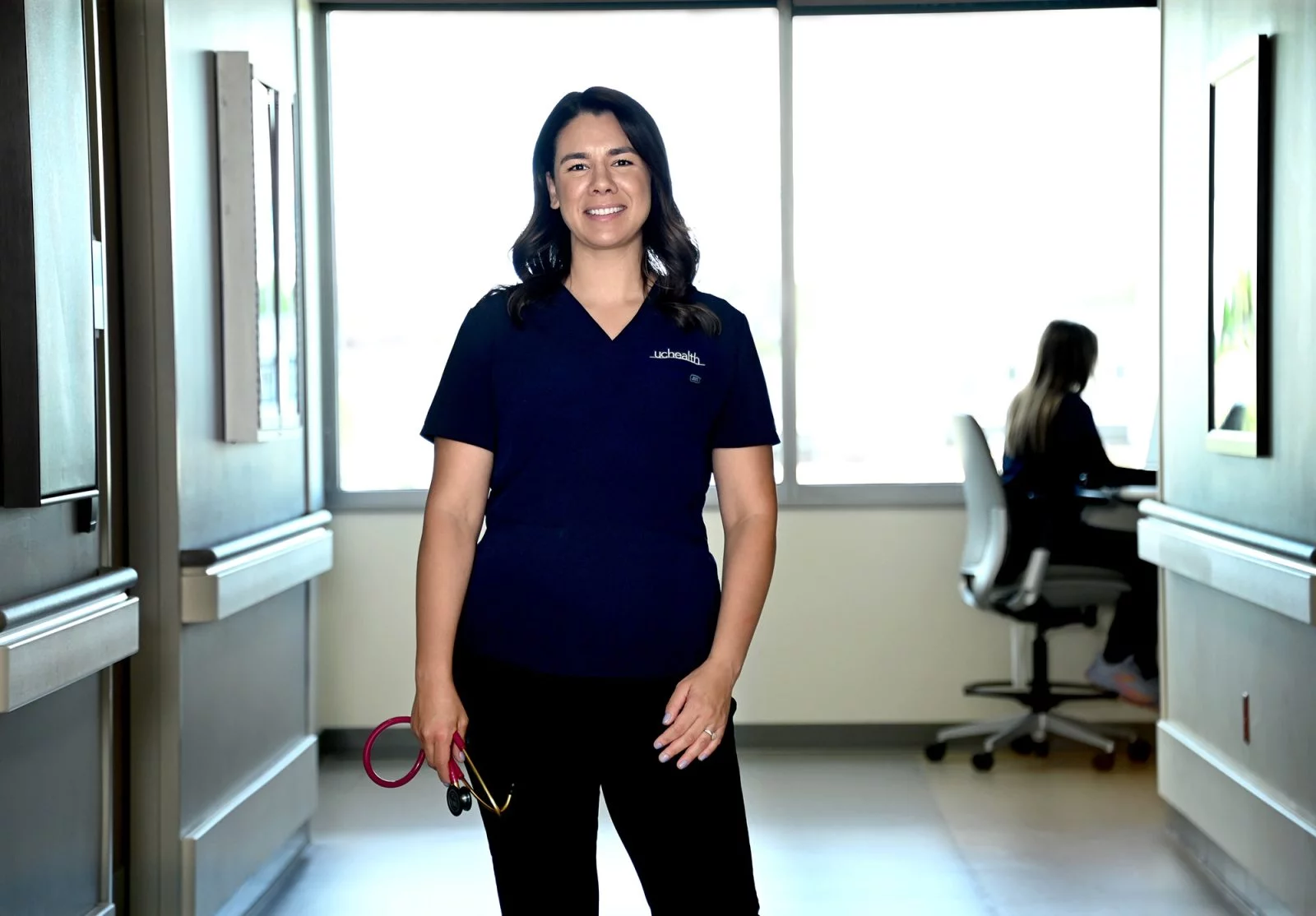
“Mobility is about more than simply getting a patient out of bed,” said Katrina Rodriguez, MBA, BSN, RN, nurse manager of the medical oncology unit at UCHealth Longs Peak Hospital. “It influences how patients feel both physically and emotionally, helps prevent complications like falls and pressure injuries, supports recovery and plays a critical role in helping patients maintain or regain their independence. We can’t lose sight of the person behind the numbers.”
That belief has shaped daily practice on Rodriguez’s unit, where a consistent focus on mobility led to the highest sustained patient mobility goal achievement outcomes in UCHealth over the past year. In 2025, daily mobility goal achievement on the unit increased by 32%, rising from 50% in January to 82% by December. With an annual average of 77% — well above the UCHealth target of 70% — Rodriguez credits her team’s collaborative approach rooted in clarity and shared accountability for patient recovery.
Supporting consistent patient movement means planning for it early. By completing activity measure for post acute care (AM PAC) assessments in the morning, nurses establish shared expectations that guide care across each shift.
“If we get the [AM-PAC] assessment done early, we have the time we need to meet the patient’s daily goal while also supporting other essential aspects of their care,” Rodriguez said. “It also strengthens continuity between day and night shifts so everyone is aligned on what the patient is working toward and how we support that together.”
Charge nurses reinforce these goals through regular check-ins, real-time coaching and tracking in the electronic health record, ensuring mobility goals and progress remain visible and prioritized throughout the day.
While structure and timing create alignment, success ultimately depends on how those plans show up at the bedside. For Rodriguez and her team, mobility goals are carried forward through empathy and conversation, particularly when patients feel hesitant or overwhelmed.
“We often hear patients say they don’t want to get out of bed,” Rodriguez shared. “That’s when we pause, meet them where they are and help them understand how movement builds strength and can ultimately help them return home sooner.”
The same approach guides how new team members are supported when they join the unit.
“I don’t assume that new nurses or care team members leave orientation with a full understanding of the impact mobility has on patient outcomes,” Rodriguez said. “When we take the time to explain the why behind our work, it creates stronger alignment and a shared sense of purpose.”
Over time, that shared understanding has made mobility part of the unit’s everyday practice rather than an added task. Patients gain strength and confidence; teams stay aligned across shifts and progress becomes something patients can see and feel. In these moments, movement becomes more than a task. It reflects care delivered with intention, reinforcing recovery one step at a time.
The visual companion to our 2026 Nursing Year in Review showcases the print edition’s visual storytelling with connections to all of the articles.