
In the rare case when a patient dies in an operating room, the process for organ donation is highly coordinated and time-sensitive. Even experienced staff may feel uncomfortable or distressed in such situations.
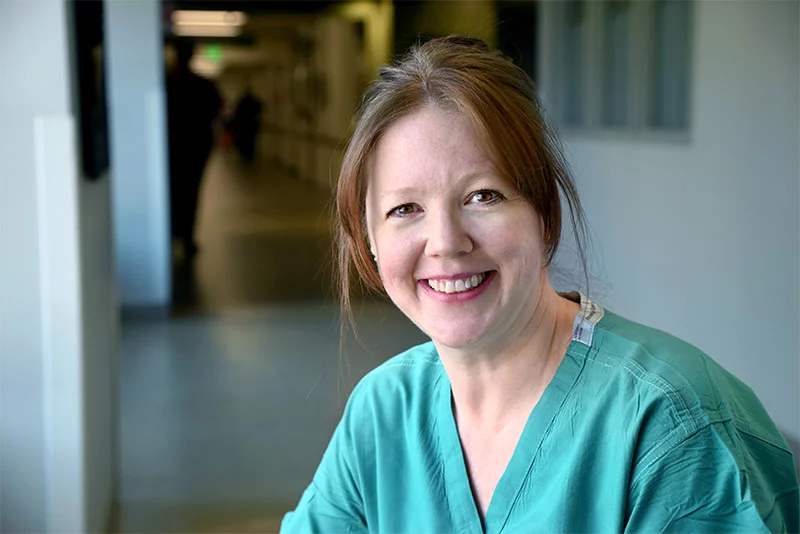
To support intraoperative teams, Karen Leavey, BSN, RNFA, CNOR, operating room RN first assistant with UCHealth Poudre Valley Hospital (PVH), developed a comprehensive binder with workflows and educational resources — providing clear guidance and greater confidence during a complex and emotional process.
“It requires communication between staff and everyone collaborating in the care of the patient,” Leavey said, “and honoring the patient’s final wishes, showing proper respect and a professional attitude of care and concern toward that donor and their family.”
Initially, Leavey prepared the binder for operating room staff at PVH, sharing it with colleagues at UCHealth Greeley Hospital (GH) for her Level III UEXCEL project. When colleagues at UCHealth University of Colorado Hospital (UCH) learned about the program, she extended it to the metro Denver hospital for her Level IV UEXCEL project.
Expanding the workflow and standard processes for organ donation cases from the UCHealth Northern Colorado Region across the system increases consistency, especially when working with organ procurement organizations (OPOs) such as Donor Alliance. This approach enables teams to discuss barriers and unexpected situations, strengthening how they respond and problem-solve during these complex cases.
At UCH, the challenges and issues staff face are similar to GH and PVH, but the larger hospital is a Level 1 Trauma Center (GH and PVH are Level III Trauma Centers), where the situation occurs more frequently. UCH operating room staff have access to a binder containing flowsheets and information on topics such as preparing the room with appropriate supplies, steps for documentation, as well as how to communicate with educators, Donor Alliance and collaborative transplant partners.
“When staff run into roadblocks or barriers, they can navigate those waters with a little more confidence and professionalism — and improve their skillset in an area that may be unfamiliar,” she said. “It is a privilege to be able to participate in these cases and help take care of our patient in their final moments of life.”
Homepage: Nursing Year in Review 2026 >
The visual companion to our 2026 Nursing Year in Review showcases the print edition’s visual storytelling with connections to all of the articles.