
When a patient’s behavior begins to escalate, the first few moments matter. Nurses must quickly assess safety, maintain compassion and decide when to ask for help, all while continuing to care for the patient in front of them. How and when support is accessed can determine whether a situation de‑escalates or intensifies, affecting everyone involved: staff, patients and visitors.
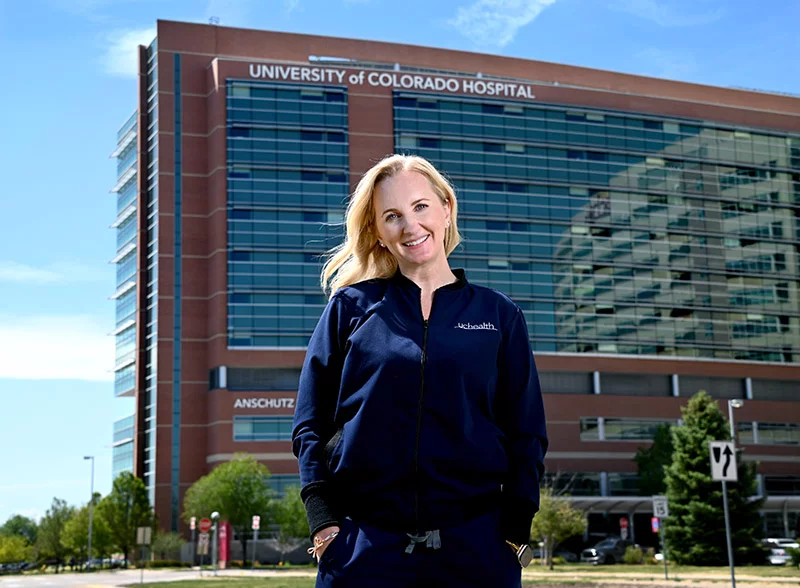
For Renee Schoenbeck, BSN, BA, RN, CEN, a former emergency department nurse and current UCHealth workplace violence prevention program director, those moments revealed an opportunity to strengthen how care teams respond to signs of escalation, and listening to care-team experience became the first step.
Schoenbeck and her workplace violence prevention team convened an eight-hour rapid-improvement event where nurses, providers and other clinical staff shared real experiences navigating behavioral escalation. What emerged was not reluctance to act, but a desire for reassurance that calling for help early is a form of care rather than an overreaction. While staff had access to support resources, hesitation often stemmed from uncertainty about activation, not unwillingness. Staff also described how unresolved incidents could affect their sense of safety and their ability to remain fully present through the remainder of a shift.
Those insights led to the development of the UCHealth two-tiered staff safety response process. The standardized approach guides teams to respond at the first indication of behavioral escalation through a clinical response known as code gray, creating space for de-escalation and connection before situations intensify. When physical violence or property destruction is imminent, staff can call a security stat, which provides immediate support to help re-establish scene safety. Extensive education and training accompanied the UCHealth-wide rollout, ensuring staff understood not only how to use the process but also how it supports their well-being and preserves patient-centered care.
“We want staff to know that their safety is the number one priority,” Schoenbeck said. “By speaking up, staff are keeping themselves safe, their colleagues safe and other patients safe.”
Early results reinforced the value of this approach. During a three-month emergency department pilot, code gray calls increased by 19% while there were 25% fewer charted assaults during escalation events. Across the system, direct physical violence rates remained relatively stable through much of fiscal year 2026 at approximately 0.42%, before trending downward to 0.34% by April 2026.
Employee engagement survey results reflected similar progress, with more staff reporting they had the training, resources and cross team support needed to keep themselves and their colleagues safe. For Schoenbeck, the data reflected growing staff confidence to speak up sooner and to access support before harm could occur.
“Calling for help earlier creates more opportunities to prevent harm before it occurs,” Schoenbeck said. “The two-tier process won’t solve everything, but it gives us a positive structure. It serves as the scaffolding for all that we’re doing now, and it’s just the beginning of what’s to come for staff, patient and visitor safety improvements.”
That mindset continues to guide enhancements to the two‑tier response process, which is in use across the entire UCHealth system. At its heart, the process is about protecting the space where caring happens. When nurses feel supported to act at the right moment, they can stay present with patients and uphold the essential role of nursing even in the most challenging moments.
Homepage: Nursing Year in Review 2026 >
The visual companion to our 2026 Nursing Year in Review showcases the print edition’s visual storytelling with connections to all of the articles.