
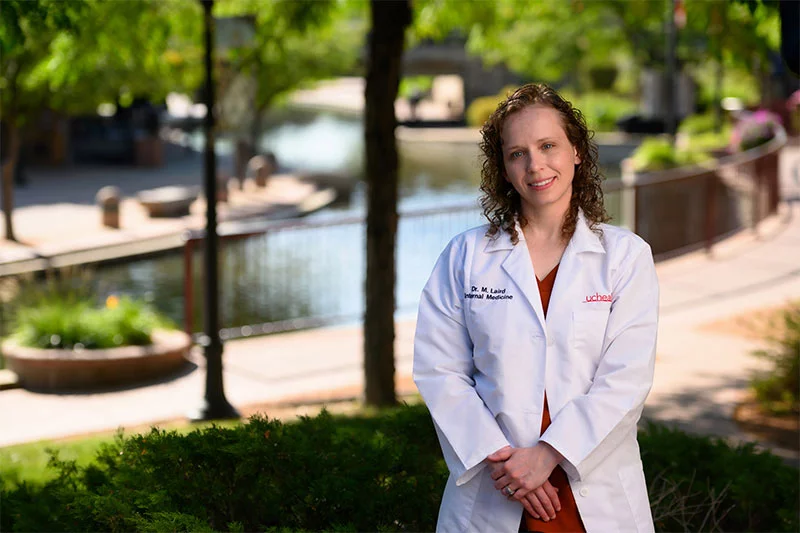
As a high school student, Dr. Michaela Laird loved science and thought she might want to work in healthcare someday. When she shadowed a doctor who was caring for a dying patient, Laird’s interest became a passion.
“Seeing that doctor’s bedside manner and the way she worked with the family, I realized that I wanted to do the same: offer both clear information and steady support when it matters most,” Laird said.
That dedication to supporting patients and families carried Laird through years of education and into the UCHealth Parkview Medical Center internal medicine residency program, where medical school graduates train and learn in Pueblo alongside doctors and hospital staff members for three years.
Laird, 31, graduated from the residency program earlier this summer. She loves the Pueblo community, her patients and her Parkview peers so much that she decided to put down roots in this southern Colorado city, a growing metropolis and industrial community with its towering steel mill and international manufacturing plants.
I knew I would have a great clinical education here. But what really drew me in was the people. It’s a great community.
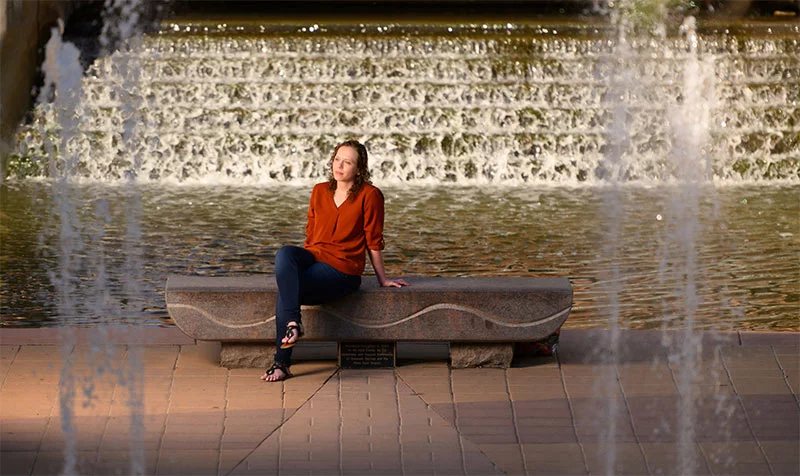
These days, Pueblo is known for its downtown Historic Arkansas Riverwalk, the annual Colorado State Fair, its famous Pueblo green chile and a rich culinary heritage shaped by generations of Mexican, Croatian, Italian and other immigrant communities. The stunning Wet Mountains and Sangre de Cristo peaks rise dramatically to the west of the city.
Pueblo also is home to a diverse and resilient community with a strong sense of history and pride. And like many areas of the country, Pueblo and the surrounding region face ongoing health challenges, including higher rates of chronic conditions such as diabetes and heart disease. These challenges are influenced by a variety of factors, including access to healthcare, socioeconomic conditions, lifestyle factors and others.
Medical providers who are committed to health equity can make a big difference in Pueblo.
Like other medical providers in Pueblo, Laird is eager to support a mission of improving the lives of all patients.
This fall, Laird will start her new job as an overnight doctor at Parkview. She loves the intimacy and relative autonomy of working nights in the hospital. Her specialty is what’s known in medical circles as being a “nocturnist.”
Laird credits the training she received in the Parkview internal medicine residency program and the connections she has made in Pueblo for much of her success so far. The program deeply influenced how she views healthcare and her dedication to serving people regardless of health status, background or income level.
“I’m so grateful I got to do my training here,” she said.
For Dr. Daniel Lee, director of the residency program, Laird personifies the Parkview residency program.
Lee and fellow leaders aim is to recruit outstanding doctors and provide them with top-notch medical training and mentorship as they take the next step in their careers, whether that’s acceptance into a sub-specialty fellowship or a position in clinical practice. Ideally, they hope a residency in Pueblo will lead more doctors to adopt Pueblo as their new hometown so they can stay and serve patients in Pueblo and surrounding southern Colorado communities.
Against the backdrop of a national doctor shortage, residency programs like the one at Parkview increasingly serve as a crucial recruiting pipeline for doctors. After all, the best doctors to recruit to Pueblo are the ones who’ve already trained there.
“We are not only training these physicians, but they are making an impact on the community,” Lee said. “When we succeed as patient advocates, our patients are so incredibly grateful and thankful that the program is here, and that we get to be part of their lives.”
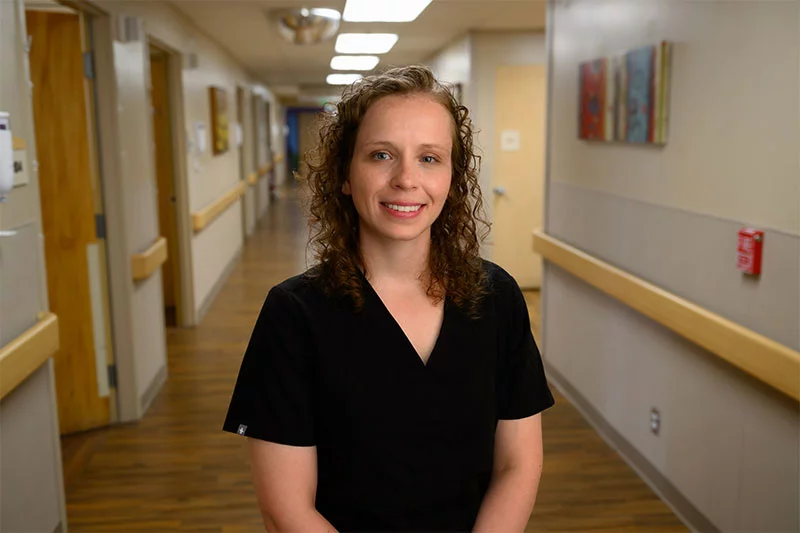
How Colorado led Michaela Laird to the Parkview internal medicine residency program
For Laird, the path to Pueblo began in Austin, where her high school offered a strong science, technology, engineering and math, or STEM, program. She enrolled in premedical studies at Abilene Christian University, where she met her future husband in a freshman biology class. She told him she wanted to be a doctor someday.
Why residents choose Pueblo
- Affordable housing
- Easy access to mountains and outdoor recreation
- Historic Riverwalk district and other Pueblo attractions
- Strong sense of community
- Top-notch training and mentorship
- Close relationships with patients
She then earned her Doctor of Osteopathic Medicine, or D.O., degree from Rocky Vista University’s Colorado campus in Parker, southeast of Denver. She was attracted to osteopathic medicine because of its holistic approach to healthcare and her own interest in pain management for patients.
During her third year of medical school, Laird participated in clinical rotations at Parkview, observing doctors and medical providers and getting to know southern Colorado. She and her husband moved to Pueblo during this time, then in her fourth year of medical school, Laird began her search for a residency program.
She loves tackling complex clinical problems and caring for a diverse patient population. She was certain that she wanted to work as a primary care doctor or a hospitalist, a doctor who coordinates and manages care of hospitalized patients.
“I like getting to know my patients one-on-one,” Laird said.
So, she looked at multiple residencies in internal medicine and family medicine, including the Parkview program and another at the Mayo Clinic. All medical school students participate in the National Resident Matching Program, which matches students and residency programs based on a variety of criteria. Laird ultimately matched with Parkview.
“I knew I would have a great clinical education here,” she said. “But what really drew me in was the people. It’s a great community.”
With strong traditions and a proud history, Pueblo also faces health and economic disparities
In moving to Pueblo, Laird and her husband (who works at Parkview in an administrative role) joined a close-knit community of 170,000 residents.
Community leaders worked hard to rebuild after a devastating flood in 1921 that destroyed downtown, then a new generation of leaders paid homage to the community’s resilience by building the scenic Riverwalk, featuring walking paths, outdoor sculptures, a waterfall, surfing waves and more in the old Arkansas River channel.
Pueblo also has one of Colorado’s richest Hispanic cultures, with influences evident throughout the city, including Fiesta Day at the Colorado State Fair late each summer and the famous “slopper,” an open-face hamburger smothered in green chile. Pueblo is home to a diverse population; nearly half of the residents are Hispanic. East of the city, the lower Arkansas River valley is one of Colorado’s most productive irrigated agricultural regions, known for a mix of specialty crops including alfalfa, corn, wheat, sorghum, Pueblo chile peppers and Rocky Ford cantaloupes and watermelon.
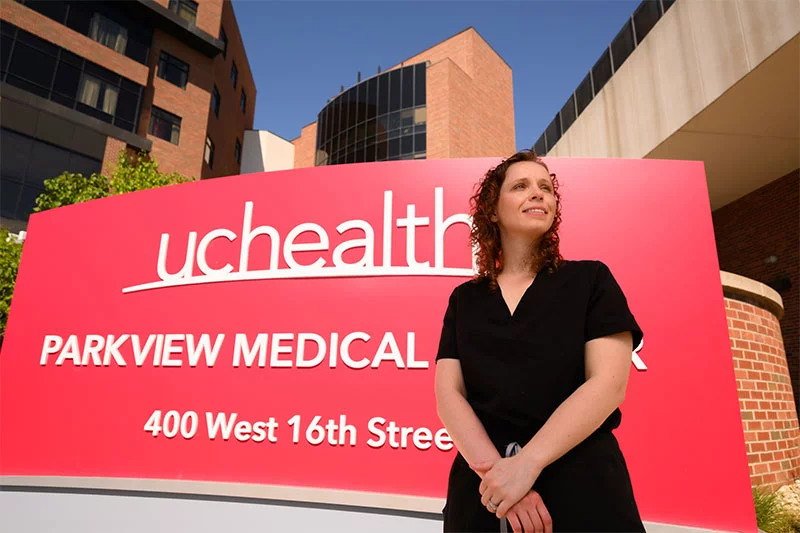
Pueblo offers affordable housing, quality education, plentiful trails and easy access to an endless variety of outdoor recreation nearby.
And it’s a tale of two cities. Younger generations are introducing new energy to the region, opening an array of restaurants, creating new community events and traditions and helping diversify the economy with new businesses. The area also remains home to older generations who were born and raised in Pueblo and now are enjoying their retirement years in southern Colorado.
Still, the city and surrounding region face sobering socioeconomic challenges and health disparities.
The median age in Pueblo County is 40 years, slightly older than the state’s median age of 38. More than one-fifth of Pueblo County residents are 65 and older.
The median household income in Pueblo County is about $62,000, or two-thirds of Colorado’s median household income of $97,000. About 16 percent of the population lives below the poverty line.
Pueblo County has higher rates of obesity than Colorado as a whole, nearly 31% versus 22%, and higher rates of diabetes, 10% versus 8%. These diseases can lead to higher risks for cardiovascular disease, stroke and some cancers. In fact, Pueblo County residents face a lower healthy life expectancy of just 66 years. That is lower than most Colorado counties.
Meanwhile, mental health and substance use top the concerns of local public health leaders. They chose those as their top community health priorities in the 2025-28 Community Health Improvement Plan.
Doctors like Lee and Laird are well aware of the challenges that southern Colorado residents face in staying healthy and accessing healthcare. Those realities make them only more committed to providing high-quality care for the community they love.
How the Parkview residency program develops future physician leaders
Lee is, himself, a product of the Parkview residency program. Though he was born in Colorado Springs, he and his family moved to Pueblo when he was a child, and he considers Pueblo his home. His parents still live in Pueblo, and he and his wife are raising their three children here.
Lee competed as a hopeful for the Olympics in figure skating, then retired after injuring his ankle. He decided to attend medical school and returned to Pueblo as a new doctor in the Parkview internal medicine residency program. Internal medicine focuses on the prevention, diagnosis and treatment of diseases in adults, and the program trains doctors to become primary care doctors or hospitalists, or to pursue additional fellowship training in sub-specialties. Lee was a member of the program’s third class.
Leaders at Parkview started the residency program in 2012 to recruit future doctors and improve the quality of care at the hospital through a rigorous residency program of teaching and mentorship. The program is a community-based residency program; other residency programs are university-based academic programs.
After completing his residency, Lee stayed at Parkview, working as a hospitalist and now directs Parkview’s residency program.
Parkview leaders accept 10 doctors each year for their residency from among more than 3,000 applicants, creating a program of 30 residents who work alongside attending doctors and other staff members at Parkview and affiliated Pueblo clinics. The Accreditation Council for Graduate Medical Education accredits the program, which also has Osteopathic Recognition, allowing for additional training in osteopathic principles and practice.
Internal medicine residency program prepares doctors for careers and fellowships
For doctors in the residency program, the experience is both demanding and transformative. Residents work as front-line doctors across multiple disciplines and learn from other program faculty members.
Now at the helm of the program that trained him to be a doctor, Lee says his role is to build on the strong foundation of his predecessors. He focuses intently on the program’s dual mission – both training and retaining doctors. Lee notes that at least a half dozen primary care doctors in Pueblo have retired in the last couple of years, leaving thousands of patients scrambling to find care.
Lee and other program leaders are making thoughtful changes to the composition of each incoming residency class, with an emphasis on achieving a balanced mix of graduates from both the U.S. and international medical schools. International medical graduates have been an essential part of internal medical residency programs nationwide, helping stem the U.S doctor shortage. Lee hopes to recruit more resident doctors who have strong ties to southern Colorado, or a desire to build their careers in the region.
Across the country, international medical graduates filled about 44% of internal medicine positions in 2025, according to the Annals of Family Medicine. In 2025, nearly 10,000 international medical graduates secured resident positions, representing more than one-quarter of all matched applicants.
In recent years, Parkview’s residency program has welcomed doctors from around the world and across the country. Recent residency classes have included graduates from medical schools in Pakistan, India, China, Jordan, Nigeria and other countries, alongside graduates of U.S. medical schools. This year’s incoming class reflects a well-balanced cohort, with five graduates of U.S. medical schools and five international ones, bringing together diverse experiences, perspectives and talents to serve the community, Lee said.
“We really want to recruit the best physicians from around the world while also strengthening our pipeline of graduates from U.S. medical schools,” he said. “Our ultimate goal is to retain these talented physicians within our health system and, most importantly, here in the Pueblo community.”
Why medical residents choose Pueblo for training and life after residency
For doctors in the residency program, Parkview offers an exceptional education and training experience in a community steeped in history, tradition and connections.
“People take a lot of pride in Pueblo,” said Dr. Dillin Rhatigan, who started his second year of the residency program this summer.
Puebloans are hardworking, honest, kind and family-oriented, he said.
“People here are from here,” he said. “They were probably born here. It’s not a transient city.”
“And there is a lot of fun stuff to do,” he said, pointing to the riverwalk, the annual Pueblo Chile & Frijoles Festival and nearby Lake Pueblo State Park.
“The residency is a community program, and you are part of the community,” he said. “I play basketball at the courts outside with fellows and residents. We interact with the majority of people in town on a day-to-day basis.
“I even see my patients at the grocery store, and I’ll give them the side-eye when they’re eating stuff they shouldn’t,” he said with a laugh.
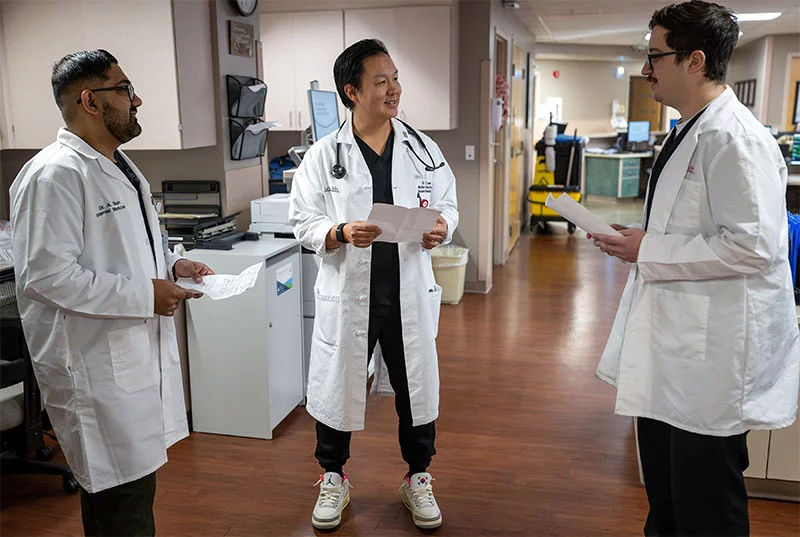
Rhatigan grew up in central Florida. He was interested in science and enjoys people, and he wanted to become a doctor. When it came time to apply to residency programs, he knew he wanted a community residency. His sister lives in Denver, and an uncle lives in Colorado Springs, so Parkview made sense.
He had completed a month-long rotation at Parkview during medical school. That experience enabled him to get to know the faculty, residents, hospital and community before the residency interview season began and played a big role in making Parkview his first choice.
“I was blown away by how kind everyone is, and the program offers a great education,” he said.
He matched into Parkview’s residency program.
“Then I packed up everything I could fit in my car with my 6-year-old dog Sasha and moved to Pueblo,” he said.
Fifty-nine stayed at Parkview as physicians or fellowship trainees.
Caring for patients in Pueblo sometimes requires creativity and paying attention to what patients are saying — or not saying, he said.
He recalled one patient who doctors suspected might have cancer due to her recent weight loss. When out of earshot from family, the patient admitted that she didn’t have enough money for food. Rhatigan connected her with a hospital caseworker.
Rhatigan can’t prescribe a medication and assume the patient will get it filled, especially if it’s expensive, or if the patient doesn’t have insurance. Instead, he works with patients to understand what medications they can afford.
“I have patients where their Social Security check is all the money they get each month,” he said.
“Guidelines are important, but they have to fit the patient’s reality,” he said. “If someone can’t afford the newest medications, then our job is to find the best evidence-based option they can actually obtain. It’s incredibly rewarding when you can tell a patient that the medication they need will only cost a couple of dollars a month.”
And there is more to life during residency than being at the hospital and clinics, Rhatigan said.
“One of the biggest strengths of the residency is how close everyone is,” Rhatigan said. “We genuinely enjoy spending time together outside of work.”
That includes hiking, playing pickup basketball and flag football, fishing, skiing and snowboarding.
“Residency is demanding, but having colleagues who become close friends makes those long days much easier,” Rhatigan said.
Rhatigan said he also enjoys going wakeboarding and wakesurfing at Lake Pueblo, as well as hiking and camping. Having outdoor activities in town and nearby makes for a great quality of life during residency, he said.
Recruiting top physicians to the Parkview internal medicine residency program
Even as this year’s new residents are learning their way around the hospital, and Pueblo, Lee and other leaders are working hard to recruit the next cohort of residents, who will start in summer 2027.
“We are trying to attract the best talent from everywhere,” he said. “We want our physicians to not just deliver care, but to care deeply about our patients.
“We really look to see that candidates want to go above and beyond for patient care and are not only willing to take criticism and feedback well but have the tenacity and work ethic to act on it. We want residents to bring determination and hard work.”
The matching process is two-way. While medical school students are pitching themselves to a particular residency program, program leaders are selling their program and the Pueblo community to potential candidates.
Lee tells candidates that they will get top-notch training and instruction at Parkview, with one-on-one attention from attending physicians and adjunct faculty. Residents see patients with a wide range of conditions and illnesses and contribute to the hospital’s focus on excellence and safety. The hospital’s leadership team is supportive of the residency and fellowship programs; in fact, Parkview’s chief medical officer also oversees the hospital’s graduate medical education programs. For doctors who want to pursue a fellowship at Parkview after their residency, spending three years at Parkview provides a possible advantage over other applicants.
Residents also help foster a culture that celebrates the joy of healthcare and the importance of teamwork, with teambuilding activities, seminars and more, Lee said.
Lee is particularly proud of the team of Parkview residents who participate in Doctor’s Dilemma, a Jeopardy-style competition of medical knowledge with residency programs from across Colorado and the country.
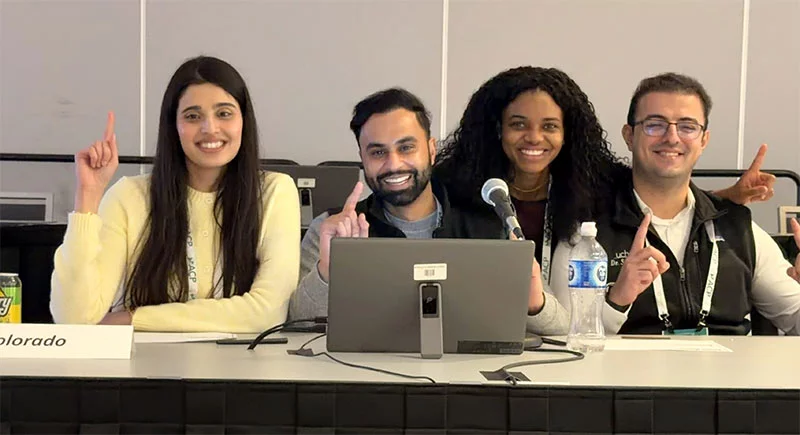
“It’s a great opportunity to showcase the depth of knowledge across our programs, and we’ve had excellent representation from our residents,” he said.
The Parkview team won the statewide competition the past two years and advanced to the American College of Physicians National Doctor’s Dilemma competition, most recently in San Francisco.
Lee knows firsthand how demanding a residency program is for new doctors and their families, so he has increased the focus on wellness, teambuilding and fun. For example, he implemented a new schedule that allows residents to enjoy downtown or make it home for dinner with their families at times during the program, he said.
“They are not only here working as physicians, but we value them as human beings, and we want them to grow as physicians and people,” Lee said.
When it comes to talking about his hometown, Lee doesn’t hold back.
“I don’t think you can find more down-to-earth, salt-of-the-earth, hardworking people,” he said. “They would give you the shirt off their backs. These are amazing people who deserve compassionate care because they’ve worked so hard for themselves, their families and their community.”
Lee believes medical students sometimes overlook the Parkview internal medicine residency program.
“We believe that we are a well-kept secret,” he said.
Residents care for patients across Pueblo and southern Colorado
For doctors interested in community medicine, hospital medicine, primary care and practicing in underserved areas, the Parkview program is ideal, Lee said.
Patients come to Parkview from all over southern Colorado and as far away as northern New Mexico, western Kansas and Oklahoma. Some patients don’t have access to healthcare where they live, so they arrive at Parkview in dire need of help.
“We get to figure out what is going on and get them back on their feet,” Lee said. “We really see the whole gamut of medicine. Our residents become very well-versed in dealing with the complexities of medicine. That makes us incredibly competent physicians.”
Rhatigan said he has patients who live an hour away and drive to Pueblo for appointments with him.
“I can’t tell them to come back tomorrow for some labs,” he said. “And I can’t just refer them to a specialist. Some specialties aren’t here, and they’re not going to drive even farther. I’m it for them. Caring for these patients is an honor. I feel like I’m making a difference.”
Lee playfully calls Rhatigan the “hype man” for the program.
“He brings so much positive energy all the time,” Lee said. “It’s hard not to have fun and enjoy working with him. People feed off of that, including our patients. They absolutely adore him.”
‘One of the most challenging and rewarding experiences of my life’
Laird is studying now for her board exams in September and enjoying all that southern Colorado has to offer before starting her new job in October. She enjoys walking in Pueblo’s City Park, camping in the mountains with her husband and checking out the dining scene in downtown Pueblo.
As a nocturnist, she will care for patients admitted to the hospital overnight.
“I will be in charge of their hospital care from the emergency room to the hospital floor until handoff in the morning,” she said.
She will work six consecutive nights at the hospital, then have nine days off. She considers herself to be a night owl and said the schedule was appealing. She’s also excited about working with a small, close-knit team overnight – many of whom will be the same doctors and providers she got to know during her residency.

Laird said one of the most rewarding moments of her residency came during an infectious disease rotation. She saw a patient who previously had sought help at other hospitals. The person had a rash and other symptoms that could have been caused by a number of conditions, including Lyme disease.
Laird stood in the hallway outside the patient’s room with the hospital’s infectious disease specialist, Dr. Jatinbhai Patel, talking through the possible diagnoses and treatment options. A common saying in medical school is that “when you hear hoofbeats, think horses, not zebras,” Laird said.
It’s an axiom that reminds doctors that horses are more common than zebras. So, in general, they should look for the most common causes for illnesses.
But it turned out that the patient was the zebra. Patel and Laird figured out that the patient had adult-onset Still’s disease, a rare systemic autoinflammatory disorder that causes high fever, joint pain and a pink rash.
“Those are the cases that stick with you because that patient may have been in and out of the hospital, trying to figure out what’s going on, and you’re the one who gets to help them,” she said. “It’s the best feeling in the world.”
Lee has high praise for Laird.
“I couldn’t be more proud of the person she is,” he said. “She really goes above and beyond. We are seeing people at their worst time. Having empathy and being able to connect with patients is a skill that’s really hard to teach. She has it in spades.”
Laird will lean hard on everything she learned in the Parkview residency program throughout her career.
“Residency has been one of the most challenging and rewarding experiences of my life,” she said. “It pushed me to grow as a physician and as a person.”