
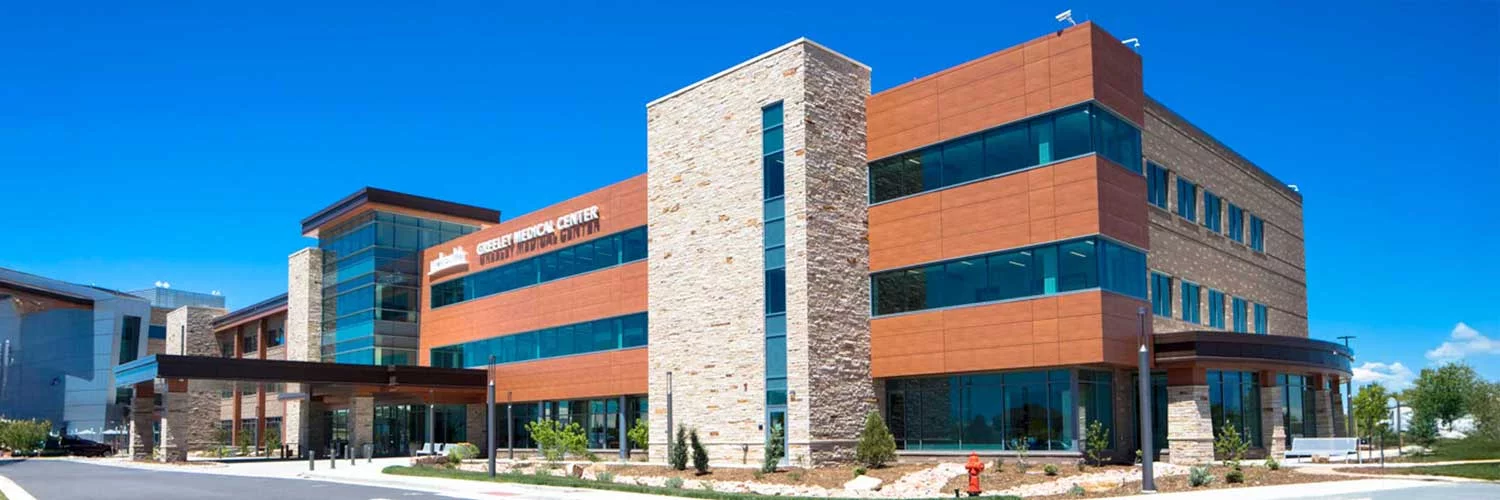
UCHealth Heart and Vascular Clinic – Greeley
6767 W. 29th Street
Greeley Medical Center, 3rd floor
Greeley, CO 80634
Phone:
(Español):
Fax: 970.297.6886
Your team
Our providers take the time to listen to your concerns and develop a plan for care with you.
-

Robert A Rayson, MD
Cardiology
-

S. Jacob Chacko, MD
Cardiology
-
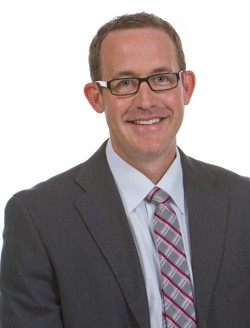
Tristan J Dow, MD
Cardiology
-

Jordan A Hess, MD
Cardiology
-

David Katz, MD
Clinical Cardiac Electrophysiology
-

Humayun Iftikhar, MD
Cardiovascular Disease
-
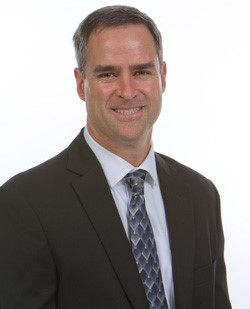
Matthew T Purvis, MD
Interventional Cardiology
-

Amy Dickinson, FNP-BC
Cardiology
-

Phil Dattilo, MD
Interventional Cardiology
Expert heart and vascular care in Greeley.
From the common to the complex, we believe no two people’s conditions are exactly alike. That’s why our team of heart and vascular specialists treats your unique situation and needs.
We have been serving the community for over 40 years since forming in Fort Collins and expanding to become the premier provider of heart and vascular care in northern Colorado, Wyoming and western Nebraska.
At UCHealth Heart and Vascular Clinic – Greeley, our team of cardiology, electrophysiology and cardiovascular surgery providers works together to provide quality, compassionate and accessible care for your specific heart and vascular needs. Through innovative care, medication and lifestyle guidance, we treat you as a person—not just a condition.
In addition to practicing at UCHealth Greeley Medical Center, we perform advanced cardiac procedures at UCHealth Greeley Hospital and UCHealth Medical Center of the Rockies.
Conditions we treat
- Coronary artery disease
- Heart failure
- Heart rhythm disorders
- High cholesterol
- Hypertension (high blood pressure)
- Lipid disorders
- Myocardial infarction (heart attack)
- Valve disease
- Vascular disease
Specialty programs
Cardiac electrophysiology
Our cardiac electrophysiology program is the largest of its type in the region. We have state-of-the-art electrophysiology ablation labs, a dedicated device/procedure lab and board-certified cardiac electrophysiologists on staff, so you can be assured that the treatment of your abnormal heart rhythms (arrhythmias) is in the best possible hands.
We specialize in treating:
- Atrial fibrillation (AFib).
- Atrial flutter (AFL).
- Bradycardia, heart block and sick-sinus syndrome.
- Cardiac arrest due to arrhythmia.
- Inherited arrhythmia syndromes.
- Premature ventricular complexes (PVCs).
- Supraventricular tachycardia (SVT).
- Ventricular fibrillation.
- Ventricular tachycardia (VT).
- Wolff-Parkinson-White (WPW) syndrome.
Treatment options range from medication to atrial and ventricular ablation to pacemaker and defibrillator implantation (ICD) and the WATCHMAN™ device.
Device clinic
Our device clinic follows over 4,000 patients with pacemakers, ICDs and loop recorders. Specialty trained nurses travel to outreach locations across three states to serve remote locations. We were one of the first in the nation to adopt remote monitoring, which has become our standard of care. Patients are given a remote monitor and cell adapter at implant at no cost to them. Specific device data populates to patients’ My Health Connection accounts.
Our nurses are available from 9 a.m. to 5 p.m. on weekdays to answer patient phone calls and My Health Connection questions.
Heart failure
Specialized care for advanced heart failure
Our specialized care team of board-certified cardiologists, nurse practitioners and nurse navigators is passionate about caring for patients who experience any type of heart failure. So that our patients get well-rounded evaluation and advice, we routinely collaborate with other specialists, including electrophysiologists who can recommend device implants, as well as other specialty clinics such as those focused on structural heart procedures. We also consult with the Advanced Heart Failure team at UCHealth University of Colorado Hospital when we have patients who might need LVAD (left ventricular assist device) or a heart transplant.
Our patients have access to the treatments and information they need, from IV diuretics at the infusion clinic to education about a heart-healthy lifestyle that includes a low-sodium diet and symptom management. We follow best practices for all types of heart failure, including getting patients on guideline-directed medical therapy and medical management of their heart failure.
Candidates for the Heart Failure Clinic
At both the UCHealth Harmony Campus and UCHealth Medical Center of the Rockies, the Heart Failure Clinic team sees patients who are having difficulty retaining fluids because of their heart failure, patients who were recently hospitalized for heart failure and patients who have been newly diagnosed with heart failure. Heart failure patients also include those who have had two or more ER visits because of heart issues within a year, people who can’t tolerate ACE inhibitors (medications that slow a particular enzyme to reduce blood pressure), people who experience difficulty breathing or fatigue while performing simple tasks like dressing or while walking a block on level ground and those who experience progressive worsening of kidney function.
Additional heart failure indicators include:
- Intolerance to beta blockers (medications used to manage abnormal heart rhythms and to prevent second or third heart attacks)
- Additional abnormal test results regarding diuretics or serum sodium
Heart Failure University
Our heart failure program offers a free four-week series of classes every other month entitled “Heart Failure University” that provides patient education with valuable information for people living with heart failure. The classes we offer as part of this series included below:
- Class 1: Recognizing symptoms of heart failure
- Class 2: Medications and exercise
- Class 3: Diet
- Class 4: Community resources
Please call 970.624.1700 to register or for more information.
Lipid clinic
Preventing heart disease
We help patients manage their lipids, which are fat-like substances in the bloodstream, to help prevent issues with their hearts and vascular systems.
The most common type of lipid is cholesterol. If a patient has high cholesterol, we will work with them to change their diet and make exercise and lifestyle modifications. In addition, we might prescribe medications to help decrease LDL, also known as “bad” cholesterol, and triglycerides, a type of fat found in the blood, and increase HDL, also known as “good” cholesterol. The medications might be single agents or prescribed in a combination.
PCSK9 (proprotein convertase subtilisin/kexin 9) inhibitors
PCSK9 inhibitors are injectable drugs that, when combined with a statin (medications that regulate cholesterol production), have shown to significantly and quickly reduce LDL levels in patients. They bind to and inactivate a specific protein in the liver, which increases the number of receptors available to clear LDL from the blood. Often, this treatment can reduce a patient’s LDL levels to their goal or better within six weeks. Although some patients experience side effects with PCSK9, they tend to be minimal and might include:
- Naspoharyngitis – swelling of the nasal passages and the back of the throat
- Muscle pain
- Injection-site reactions
Insurance coverage for PCSK9
Although very effective and typically well tolerated, PCSK9 treatments are expensive and require insurance approval or prior authorization. Unfortunately, patients are often denied initial approval, and the appeals process can take weeks or sometimes months.
Our providers and staff are equipped to help patients through the entire process, and they frequently communicate with each patient to help ensure that all patients have the opportunity for the best care possible.
Sports cardiology
Our sports cardiology clinic helps athletes stay active and participating in sports while ensuring their continued safety. The clinic sports cardiologists conduct:
Screening
Screening for asymptomatic competitive athletes, including young competitive athletes (ages 18 – 35) for hypertrophic cardiomyopathy and athletes ages 36-plus for coronary artery disease.
Evaluation
Evaluation of athletes with symptoms of possible cardiovascular disease, such as shortness of breath, chest pain, palpitations, dizziness or fainting during exercise. Evaluations are tailored to the athlete’s specific situation and may include:
- A thorough review of the patient’s medical history and symptoms.
- Review of athletic history and goals.
- Complete cardiovascular physical exam.
- Electrocardiogram.
- Exercise treadmill testing, cardiovascular imaging (echocardiography, cardiovascular CT).
- Lab testing.
- Recommendation regarding athletic competition, levels of exertion during exercise, etc.
- Consultation.
- Consultation for athletes with known cardiovascular disease on exercise, including levels of exertion during exercise and athletic competition.
We accept patients 18 years and older. Sports cardiology patients may play sports at any level, from recreational to high-level athletic competition.
When to consider evaluation in the sports cardiology clinic:
- Family history of sudden death at a young age (< 45 yrs old).
- Symptoms of shortness of breath and/or chest discomfort during exertion.
- Symptoms of palpitations, dizziness or passing out, especially during or immediately after exertion.
- Evaluation of an unexplained decline in athletic performance.
- Before beginning an exercise program (for previously sedentary individuals).
- Clearance to exercise in patients with known heart disease or prior cardiovascular surgery.
- Assessment of long-term cardiovascular risk factors.
Renal denervation
Renal denervation is now offered for hypertension and is a novel therapy that can result in durable blood pressure reductions following an outpatient procedure.
This procedure may help individuals with elevated blood pressures despite medications or with an inability to tolerate these medications. It can be at least as effective as adding an additional agent. Patients who take several medicines and whose blood pressure is still high might benefit.
Renal denervation works by disrupting specific nerves on the outside of the kidneys’ arteries. These can activate the body’s “fight or flight” response and raise blood pressure. It’s a one-time, outpatient procedure that takes about 1 hour. Renal denervation is generally safe but is not a cure. Lifestyle changes and medicines are still necessary.
Services and treatments
Diagnostic testing
We offer diagnostic testing to best suit the needs of our heart and vascular patients with state-of-the-art equipment. Some of these include:
- Cardiac and nuclear stress testing
- EKGs
- Echocardiogram
- Intravascular ultrasound
Treatments
- Preventive cardiology
- Cardiac rehabilitation
Scheduling
Please call our office to schedule your appointment.
Please provide all the following information at your scheduled appointment:
- Photo ID
- Insurance card
- Referral (if needed)
To allow enough time to complete your check-in process, please arrive 15 minutes before your scheduled appointment.
We require 24-hour advance notice if you cannot make it to your scheduled appointment.
Questions? Give us a call!