
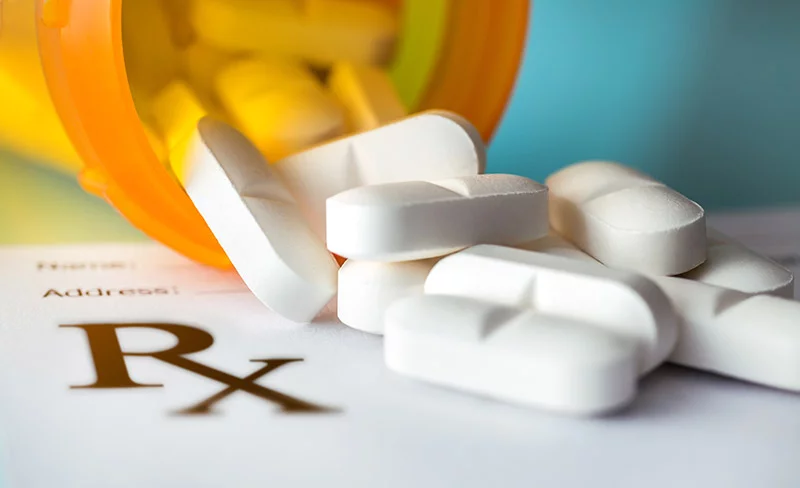
If you’re feeling lousy, and you left your medical provider’s office without a prescription for antibiotics, don’t be alarmed.
Your doctor likely consulted the newest research on how antibiotics work best and when patients truly need them. These days, medical providers are paying close attention to what’s known as “antibiotic stewardship,” meaning they prescribe antibiotics only when they’re necessary.
Overuse of antibiotics can lead to two key problems:
- First, bacteria adapt to antibiotics, become resistant to them, and then the antibiotics no longer work.
- Second, unnecessary use of antibiotics can leave patients with nasty side effects.
Antibiotics are the workhorses of health care, attacking bacteria that cause infections and ensuring that patients can safely get all sorts of medical procedures.
But, as antibiotic resistance continues to rise in the U.S. and around the world, scientists and doctors are rethinking some long-held assumptions about antibiotics, including:
- When we need antibiotics.
- How long we should take them.
- Which antibiotics work best for particular infections.
- Whether the allergic reaction you might have had to penicillin as a child still affects you as an adult.
Dr. Misha Huang is at the forefront of research on antibiotics as UCHealth’s new medical director of antimicrobial stewardship. Huang monitors research on antibiotics and closely tracks trends in antibiotic resistance, working with doctors and others in Colorado to ensure they have resources and tools to make the best choices about prescribing antibiotics.

Careful use of antibiotics can preserve them so they are available and effective for anyone who truly needs them.
“Most of us understand that antibiotics are very important for treating even simple, uncomplicated types of infections, as well as really severe infections,” said Huang, who is also an associate professor of infectious diseases at the University of Colorado School of Medicine on the Anschutz campus.
“Antibiotics also make it possible for us to do all the modern medical things we do: surgery, treating cancer with chemotherapy, doing organ transplants. None of that would be possible if we didn’t have antibiotics to prevent and treat infections.”
Antibiotic stewardship boils down to making sure patients use the right drug at the right dose for the right amount of time for the appropriate illness, she said.
To answer common questions about antibiotics, we consulted with Huang and Cameron Santiago, a UCHealth physician assistant who works at the UCHealth Urgent Care – Powers in Colorado Springs. He has done research about antibiotic stewardship and answers patients’ questions about antibiotics every day.
What are antibiotics, and what are they used for?
Alexander Fleming discovered penicillin in 1928 and since then, researchers have developed hundreds of types of antibiotics that have transformed medicine and saved countless lives worldwide. Antibiotics can treat simple infections, like urinary tract and skin infections. They also fight complicated and severe infections — in the bloodstream or a bone, for example.
Antibiotics are part of a larger class of drugs called antimicrobials that kill microorganisms, bacteria, viruses, fungi and parasites. Some people use “antibiotic” and “antimicrobial” interchangeably because antibiotics are the most common type of antimicrobial. Commonly used antibiotics include: amoxicillin, “Z packs,” or azithromycin, Keflex, or cephalexin, and doxycycline.
You can’t get antibiotics over the counter in U.S. pharmacies except for topical antibiotics including Neosporin and Polysporin which can help with minor skin infections.
Some antibiotics are broad-spectrum, meaning they work on many types of bacteria. Others are narrow-spectrum antibiotics and target specific bacteria. Whenever possible, providers prescribe antibiotics that will target the specific bacteria which are causing an infection.
When do antibiotics work best?
Antibiotics work for bacterial infections.
Do antibiotics work for viruses like colds, flu and COVID-19?
No. Antibiotics do not work to help you feel better if you have viruses like colds, flu and COVID-19.
If you get a diagnosis of a viral infection early in the course of your illness, contact your doctor’s office. Your provider may prescribe an antiviral called Tamiflu that shortens the duration of your flu illness or a similar antiviral called Paxlovid that helps some people who have COVID-19.
Do antibiotics work for ear infections and sinus infections?
Contrary to popular belief, most ear and sinus infections get better on their own, without the need for antibiotics.
Do I need an antibiotic for a UTI?
With urinary tract infections, or UTIs, doctors now want to prescribe the antibiotic that will be most effective against the specific bacteria that are causing the UTI.
Medical providers can treat younger women with typical UTI symptoms without having to see them in person. So, they can get help by calling their provider’s office, or they can schedule an online visit through UCHealth’s Virtual Urgent Care.
Santiago recommends patients visit a clinic to see a provider in person if they have atypical symptoms, recurrent UTIs or risk factors for more serious infections, such as those who have diabetes or a compromised immune system. At the clinic, patients will get a urinalysis, then Santiago sends the urine for a culture to learn which antibiotics will work best for the patient’s specific UTI.
What about ear infections? Do antibiotics help if children or adults have ear infections?
Not all ear infections require antibiotics, but for those that do, Santiago now recommends only a five-day course of medication, rather than the 7-to-10-day antibiotic prescriptions that used to be typical. Parents are usually receptive to newest guidance about antibiotics and ear infections, especially when they learn that Santiago and other UCHealth providers team up with pediatric experts at Children’s Hospital Colorado.
Sometimes Santiago encourages parents to adopt a “wait-and-see” approach. He’ll send parents home with a paper prescription but will encourage them to take a day or two to see if their child’s symptoms improve without antibiotics.
Explaining the new antibiotic research can be a little tricky with patients who may have taken an antibiotic during a previous illness and started to feel better.
“A lot of times, the normal trajectory of their illness is that it was going to get better, even though you took an antibiotic,” Santiago said. “It’s not the antibiotic that was the reason you got better.”
Strep throat is one of the most common causes of sore throats in children. Adults can get strep too. Do antibiotics help with strep throat?
Since strep throat is very common, it’s wise to check with your medical provider if your child complains of a bad sore throat.
Huang said the answer about whether antibiotics will help with strep throat is complicated. Medical providers in the U.S. usually give antibiotics to children and teens if they have a confirmed case of strep throat. That’s because an untreated case of strep throat can later cause an illness called rheumatic fever, which can be very dangerous because it can cause heart problems.
“Rheumatic fever is more common in developing countries and is pretty uncommon now in the U.S.,” Huang said.
For adults with strep throat, doctors typically do not give antibiotics because a course of the medications usually shortens the duration of the illness by only one day or so. Strep throat typically resolves on its own relatively quickly, Huang said.
“Antibiotics don’t really help people get better much faster,” she said.
“Many sore throats are caused by viral infections, especially in adults, so treatment (with antibiotics) is really not needed in adults,” she said.
What if my provider gave me antibiotics in the past but is telling me now that they won’t help me now?
Some patients may have received an antibiotic improperly in the past and might ask for antibiotics again. Providers, like Santiago, need to tell patients that antibiotics won’t work, and they don’t need them.
“It’s all about a risk-benefit analysis to me,” he said. “If I’m not seeing a definite bacterial infection, I go through all of the risks of the side effects of antibiotics and explain to patients why they may or may not need one.”
What can I do if I’m sick and antibiotics won’t help me feel better?
During flu and cold season, Santiago spends a lot of time talking with patients about antibiotics.
He educates patients about when antibiotics will help and when they don’t work.

Since antibiotics won’t help with patients with colds, the flu, and most ear infections and sinus infections, Santiago suggests these options to manage the symptoms:
- Get plenty of rest and drink lots of fluids.
- For coughs, try over-the-counter medicines such as a cough suppressant or a humidifier or a steamy shower.
- For children ages 1 to 6, a spoonful of honey is more effective than cough medicine.
- For post-nasal drip, a runny nose and stuffiness, try a nasal spray, Mucinex or an antihistamine.
- Use nasal suction on children.
- Drink warm fluids, such as tea or soup, to help an irritated throat.
And keep these medicines on hand during cold and flu season.
Do antibiotics have side effects?
Yes. Antibiotics can cause side effects including nausea and diarrhea. Some people have allergic reactions to certain antibiotics, ranging from mild rash to severe skin reactions and even anaphylaxis requiring hospitalization.
Other complications of antibiotic use can include a diarrheal infection called Clostridioides difficile, formerly known as Clostridium difficile and often called C. difficile or C. diff, which causes severe diarrhea. It is especially dangerous for patients who are older or may have weak immune systems. This infection develops when a broad-spectrum antibiotic throws off the balance of organisms and “good bacteria” that live in the human microbiome by targeting them, along with the infection it is supposed to be killing. This also can happen when patients take multiple antibiotics or take an antibiotic for too long.
Sometimes antibiotics interact with other medications, so that one or both medications do not work as well as it should.
Even if I need antibiotics, will my doctor sometimes give me fewer pills?
Yes. It’s becoming much more common for providers to prescribe antibiotics for a shorter duration.
People who grew up taking antibiotics for seven, 10 or even 14 days may be surprised when their doctor gives them a five-day dose, for example. Others might learn that they aren’t allergic to penicillin as they previously thought, and can actually take penicillin-type antibiotics.
New research shows that for many infections, a shorter course of antibiotics can work just as well as a longer course.
For example, five days of antibiotics for some skin infections is usually just as effective as a longer course, Huang said.
Using the shortest effective duration of antibiotics can limit side effects and complications. The right amount of antibiotics is the amount that will effectively treat the infection, and no more, she said.
What’s the right type of antibiotic for my infection, and how long will I take it for me to feel better?
Whenever possible, providers will give patients narrow-spectrum antibiotics to avoid side effects and to reduce antibiotic resistance, Huang said.
Broader spectrum antibiotics can cause collateral damage when they kill off “good” bacteria and cause unpleasant or harmful side effects and complications.
Researchers are looking at other consequences of antibiotics, too.
Smarter dosing also applies to the type of antibiotics your provider will prescribe.
When possible, Santiago likes to give patients the simplest medication he can. For example, if a person has a skin infection, he’ll recommend a topical antibiotic rather than an oral pill form.
Is it still true that you’re supposed to take all of your antibiotics even after you feel better?
Yes. You still should take the full course of antibiotics if you have a bacterial infection and your provider recommends antibiotics. Finishing an adequate course of antibiotics ensures that the medications will fully kill your infection. Talk with your provider if you think you have been prescribed more antibiotics than you need.
Do I need antibiotics before a dental cleaning?
Most people who get their teeth cleaned do not need antibiotics, Huang said. Doctors do give antibiotics before dental procedures to patients who are considered high risk, including those with prosthetic heart valves or graft material, artificial heart devices, previous heart valve infection, and certain types of congenital heart disease. The purpose in giving antibiotics to those patients is to prevent infections of the heart valves or cardiac devices.
Maintaining good oral hygiene is the most important preventative measure for everyone. That keeps the bacteria that live in our mouths and gums from building up, making it less likely to cause an infection elsewhere in the body, she said.
What are the newest findings about penicillin allergies?
Penicillin allergies are another focus of new antibiotic research, Huang said.
About 10% of patients say they have a penicillin allergy, Huang said. Sometimes people don’t remember what the reaction was, but they recall a doctor or family member telling them to never take it again.
“What we know now about penicillin allergies is that really less than 1% of the population has a true allergy that would prevent them from taking penicillin and related antibiotics,” Huang said.
“And we also know that many people who have had reactions as children will no longer have a reaction as an adult. So, you may no longer be allergic as an adult.”
Doctors now have relatively easy ways to determine whether a person will have a reaction to penicillin. And determining that allows a doctor to avoid using a broader-spectrum antibiotic.
“By clarifying whether someone truly has a penicillin allergy or not, we can open up more antibiotic options for them,” she said.
Remind me again. What are the basic tips should I follow to use antibiotics wisely?
- Follow your provider’s advice. When they tell you that antibiotics won’t work for you, trust that they’re helping you make the best choice.
- Use antibiotics only when you need them. Remember that viruses cause colds and the flu. Antibiotics won’t help you feel better.
- Stay healthy by staying up to date on your vaccinations, including those that prevent or reduce the severity of illnesses like the flu, COVID-19 and RSV. It’s not too late to get a flu shot.
- If you need antibiotics, ask for the shortest effective course, and use the antibiotic for the prescribed duration.
- Use the right antibiotic. A narrow-spectrum antibiotic targets your specific infection and helps prevent side effects.
- If you think you’re allergic to penicillin, ask your doctor about being tested. Many people who think they are allergic aren’t, and being able to take penicillin helps with antibiotic stewardship.
How can I avoid getting sick during cold and flu season?
Dr. Michelle Barron, senior medical director of infection prevention and control for UCHealth, advises people to take the following precautions:
- Wash your hands frequently with soap and water.
- Cover your cough.
- Stay home if you’re sick. Don’t spread illnesses to other people.
- If you can’t wash your hands with soap and water, use hand sanitizer. But remember that sanitizer doesn’t kill viruses that cause stomach bugs, like norovirus. To kill these bugs, you must use soap and water or bleach.
- Clean surfaces frequently. (Barron keeps bleach wipes handy.)
- Clean your devices. If you have washed your hands, but not your phone, and you touch your phone, then eat, you can get sick.
- If your hands aren’t clean, avoid touching your face, eyes or nose, as you can spread viruses.
What is antibiotic resistance?
Antibiotic resistance happens when bacteria adapt, and antibiotics no longer can kill them.
Drug-resistant bacteria can even pass their “resistance genes” to other strains. Antibiotic resistance has been a problem for as long as patients have been using antibiotics.
The number of bacteria that are resistant to antibiotics is growing, and increasing numbers of bacteria are resistant to multiple types of antibiotics, Huang said.
Patients who are dealing with these types of infections may have very limited antibiotic treatment options.
“We can run into situations where infections are just harder to treat,” she said. “We have fewer treatment options and then sometimes no treatment options, which is a really scary thing.”
Is antibiotic resistance common around the world or just in the U.S.?
Antibiotic resistance is a global challenge, Huang said.
Medical experts at the U.S. Centers for Disease Control and Prevention (CDC) consider antimicrobial resistance a national health priority in the U.S. and created a national action plan in 2020.
Huang emphasizes that antibiotics are a special class of medication because what one person uses affects not only themselves, but also the broader community. Everyone has a role to play in making sure they’re using antibiotics wisely so we can prevent antibiotic resistance.
Overuse of antibiotics is very common, Huang said.
That’s why she and other providers work all the time to improve education among doctors and patients about proper antibiotic use.
Why is antibiotic resistance so dangerous?
The consequences of antibiotic resistance are serious, Huang said.
When a particular bacterium becomes resistant to an antibiotic, doctors no longer can use it for that type of infection and must resort to other options.
So, they might have to prescribe a broader spectrum antibiotic than they would like to use. Broader spectrum options can kill more types of bacteria than doctors would like, including those considered “good bacteria” in the body. This can cause nasty side effects or C. diff.
In other cases, doctors may have to give patients intravenous antibiotics instead of pills. These are more expensive and difficult to give.
In the worst cases, a patient may have an infection that no antibiotic can fight. In the U.S., antibiotic-resistant organisms infect 2.8 million people yearly, and at least 35,000 die because of them, according to the U.S. Centers for Disease Control and Prevention. A 2024 study in the Lancet projects that global deaths due to antibiotic-resistant infections could reach 39 million by 2050.
How will better antibiotic stewardship help all of us?
The goal of antibiotic stewardship is to make sure that patients use antibiotics in ways that treat infections most effectively while minimizing antibiotic resistance.
“We want to preserve antibiotics so that they’re available when we really need them,” Huang said. “And we can do that by using the right antibiotics only when we need them, at the right dose, for only as long as we need them.”