
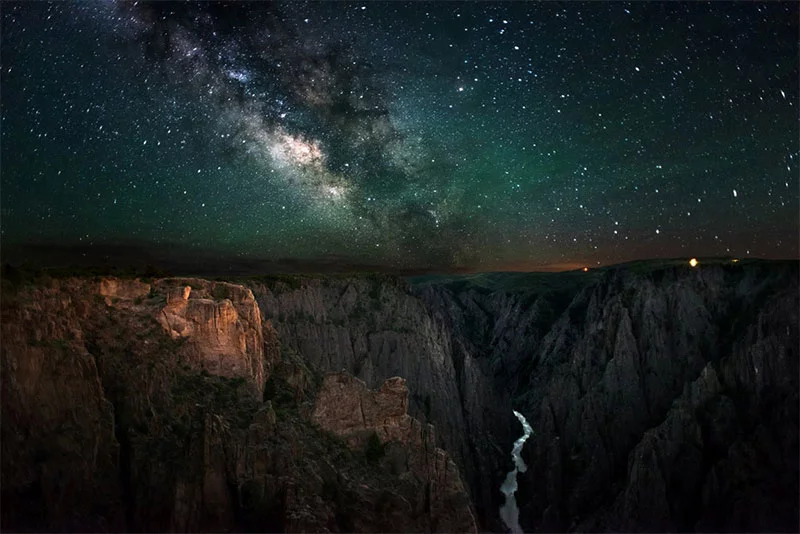
Colorado is home to many perfect places for stargazing.
The premier spots are known as certified Dark Sky Places, as designated by Dark Sky International. And Colorado has 21 certified Dark Sky Places. Among U.S. states, Colorado is second only to Utah when it comes to officially recognized Dark Sky Places.
New to stargazing? How to begin appreciating night skies.
The first step to witnessing the beauty of a deep blue or black night sky is to find a dark location away from light pollution. You can get started by looking at a light pollution map and heading out to the dark areas that show up on the map as gray or blue zones.
Next, plan to visit a dark sky location the week before or the week after a new moon. Moonlight can wash out the stars if it is too bright. The weather must also be clear. In Colorado, there is the added benefit of going higher in elevation and having dry air, aspects that can help reduce atmospheric conditions, such as humidity or fog, which degrade viewing of night skies.
In a dark sky location, stars will be visible with the naked eye. For even better viewing, use a telescope or binoculars.
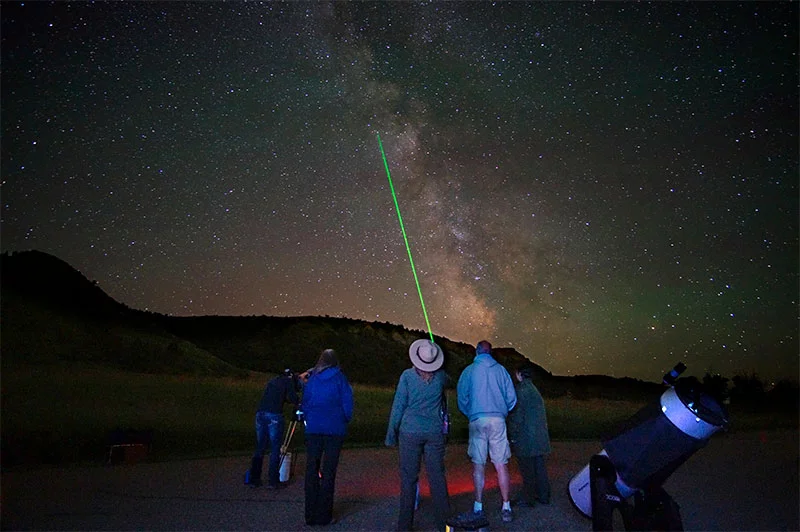
Photographing the night sky can be accomplished today with cell phones set on night mode. For those with more advanced cameras, use a tripod, a remote shutter and a fast lens that can achieve apertures of f2.8 or better.
Remember to wear sturdy shoes to prevent bumping toes in the dark and warm, layered clothes to adjust as the temperatures change. Also bring a headlamp or flashlight with a red-light setting to help see in the dark while preserving your night vision.
And then look up.
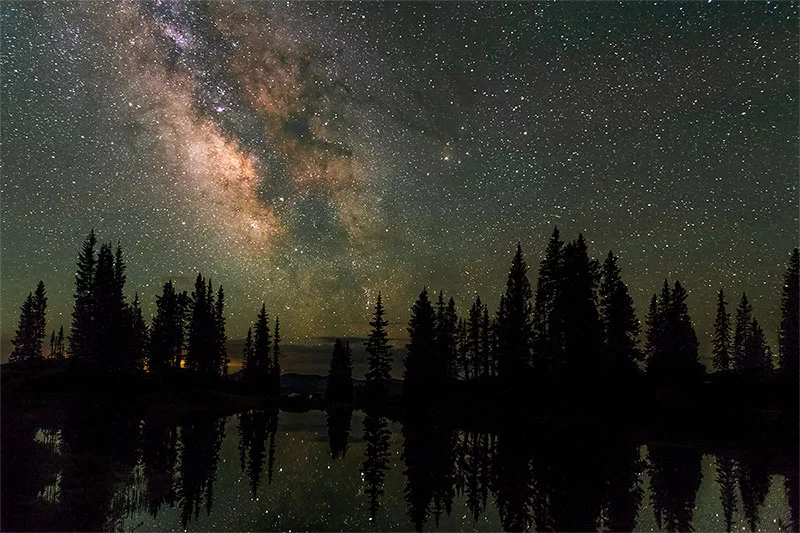
Where to see night skies in Colorado
Colorado’s official Dark Sky Places are mostly in western Colorado, with the exception of Jackson Lake State Park.
Here is the list of official Dark Sky Places in Colorado:
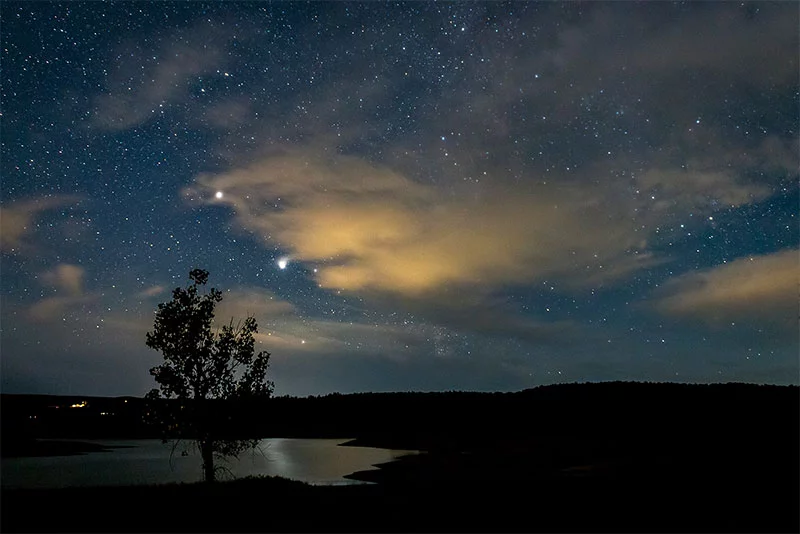
Dark sky communities
- Breckenridge
- Crestone
- Norwood
- Nucla and Naturita
- Old Snowmass
- Paonia
- Ridgway
- Westcliffe and Silver Cliff
Dark sky parks, monuments or recreation areas:
- Black Canyon of the Gunnison National Park
- Browns Canyon National Monument
- Chimney Rock National Monument
- Curecanti National Recreation Area
- Dinosaur National Monument
- Florissant Fossil Beds National Monument
- Great Sand Dunes National Park and Preserve
- Gunnison Gorge National Conservation Area
- Hovenweep National Monument
- Jackson Lake State Park
- Lake Fork Earth and Sky Center
- Mesa Verde National Park
- Top of the Pines
Although these locations have been certified as Dark Sky Places, there are many other special spots in Colorado where you can glimpse into the distant universe from Colorado.
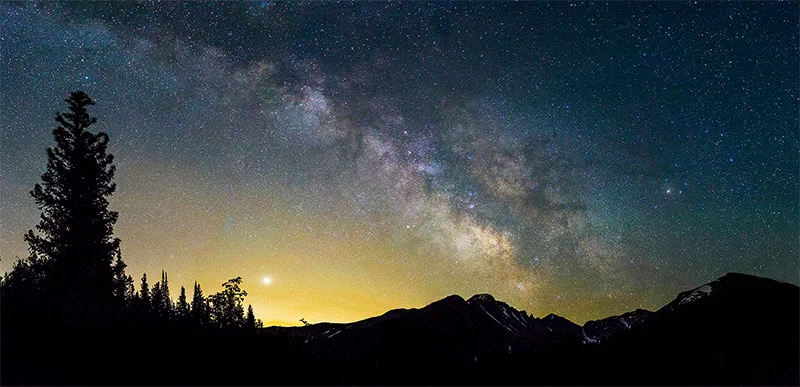
For example, Rocky Mountain National Park offers stunning views of the night sky on a dark night. Venture deeper into the west side of the park or travel along Trail Ridge Road to have a celestial experience. The park also offers night sky viewing programs – Half the Park is After Dark – on dark nights during the summer.
Mount Blue Sky, Loveland Pass and the Colorado’s rugged San Juan Mountains are also wonderful places to see the night sky away from light pollution.
Colorado also has several observatories that give regular programs and opportunities to view features in space through their telescopes.
- Estes Park Memorial Observatory in Estes Park
- Chamberlin Observatory in Denver
- Madison-Macdonald Observatory in Fort Collins
- Gunnison Valley Observatory in Gunnison
And don’t forget to explore Colorado during the various celestial events throughout the year. There are numerous meteor showers – almost one a month – but the best are the Perseids meteor shower, which peaks in mid-August, and the Geminid meteor shower, which peaks in mid-December.
For northern lights displays, opportunities are few and far between. Watch apps like Aurora, Aurora Forecast and Space Weather Live for updates and forecasts for potentially strong solar storms that may create auroras visible in Colorado.
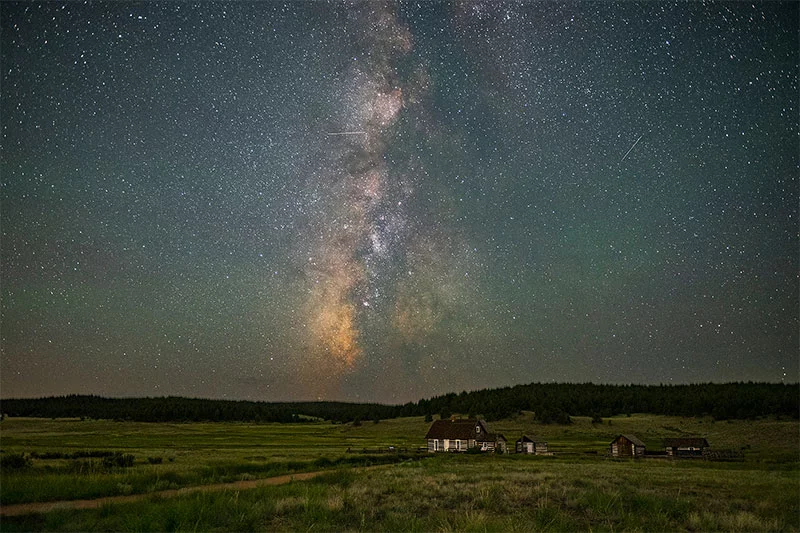
Classifying dark skies
Colorado has experienced tremendous growth in the past few decades, increasing by nearly 15% from the 2010 to 2020, according to U.S. Census data. By 2030, the state’s population is anticipated to grow another 12%.
With continued development comes more light pollution. Although individual lights may not seem to have a big impact, they all add up to reduce views of dark skies.
Experts rate darkness based on what’s known as the “Bortle Scale,” a nine-level system that measures the brightness of night skies and the impact of light pollution. The darkest skies receive a Class 1 rating; the brightest skies receive a Class 9 rating.
For example, Estes Park often records a Bortle rating of Class 4 or 5. Denver has a Bortle rating of Class 8. Crestone, a Certified Dark Sky Community, has a Bortle rating of Class 5. Great Sand Dunes National Park, a Certified Dark Sky Park, is a Class 2 on the Bortle Scale.
Dark skies matter
As countries around the world become more developed over time, views of the skies are diminishing.
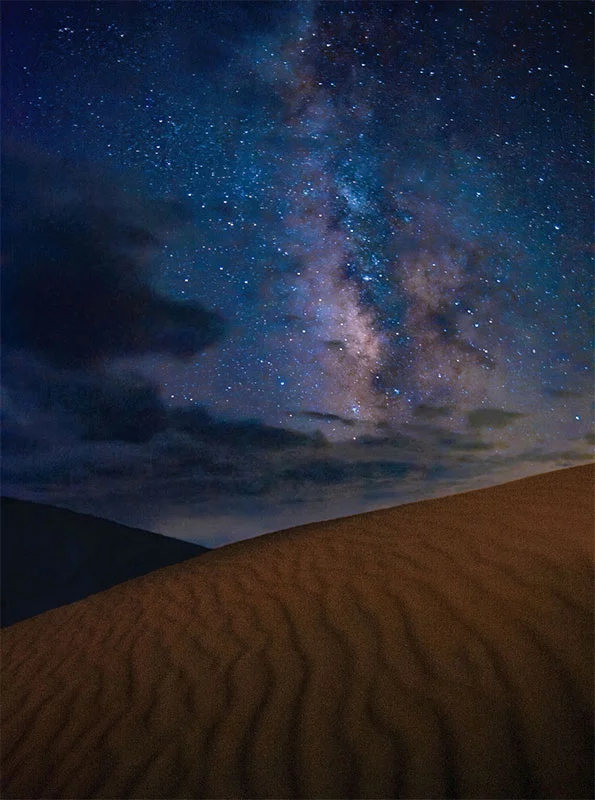
Consider this startling fact: only 20% of the world’s population can see the Milky Way.
There are adverse effects on the human body from not having proper darkness, which can lead to improper sleep patterns and disruptions of the circadian rhythms during sleep. Improper sleep cycles can lead to increased risk of chronic diseases, such as type 2 diabetes, hypertension, cardiovascular disease, obesity and some cancers. It can also lead to impaired cognitive function and increased potential for depression.
Nearly everyone in the U.S. lives in areas with light pollution
Dark Sky experts estimate that 99% of people in the U.S. live in areas with light pollution, and most people in the U.S. are losing their ability to experience the night sky as light pollution grows by as much as 10% each year.
While the loss of dark skies may not seem important to people in crowded urban areas, the ability to understand and experience the night sky, astrological cultural activities and a connection to the universe is central to the human experience.