
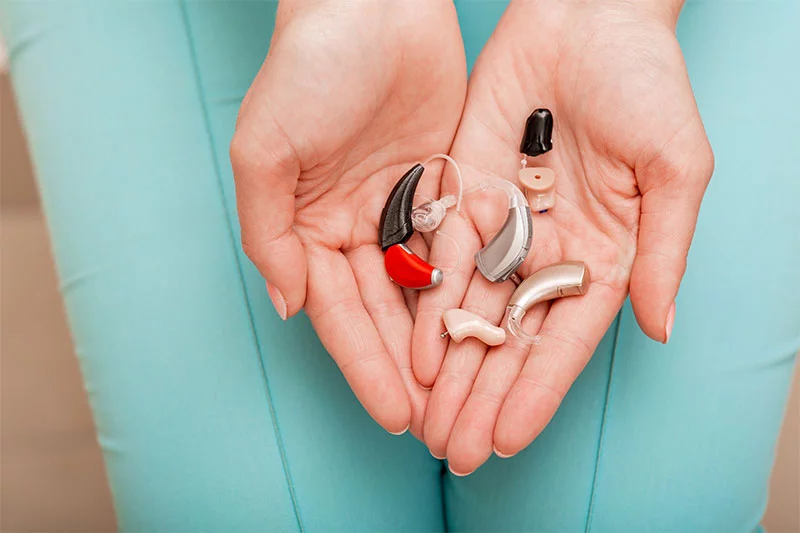
Dealing with hearing loss is always challenging.
While there are more options than ever to manage hearing loss, figuring out how to handle it can be confusing.
Vinaya Manchaiah has made cutting through the noise surrounding hearing loss and hearing aids his research specialty.
Manchaiah cares for patients at the UCHealth Ear, Nose and Throat Clinic – Anschutz Outpatient Pavilion,
Among the questions he seeks to answer: How do we deliver hearing care and various interventions? What are the gaps? And how do we help patients reduce their costs and get better outcomes?
Potential solutions for hearing loss have proliferated as the aging population grows and more people need help with hearing loss.
We spoke with Manchaiah about your top questions regarding hearing loss and new over-the-counter hearing aids. These now include Apple AirPods Pro. Samsung Galaxy Buds also soon will offer hearing-aid features. Both are better known for noise cancellation than sound amplification.
If you’re concerned about hearing loss or you want to know if you’ll someday need hearing aids, Manchaiah’s key advice is to start with a professional hearing test, which insurers typically cover. A high-quality test is a great first step for anyone who suspects their hearing isn’t what it used to be.
Article contents: Get a better understanding of hearing loss and hearing aids
- How common is hearing loss?
- What causes hearing loss?
- What are the main risk factors for hearing loss?
- How loud do sounds have to be to cause hearing loss? How do you define “high noise levels”?
- How do you measure decibel levels? How do you know if sounds are dangerously loud?
- Why are hearing aids important?
- Do Medicare or insurance cover hearing aids?
- How much less expensive are over-the-counter hearing aids than prescription hearing aids?
- What are some questions I should ask before buying a hearing aid?
- Are hearing aids getting better over time?
- Do hearing aids work? Are hearing aids effective?
- How does the brain have to adapt to hearing aids? And what other problems make people quit them?
- Do bone conduction hearing aids work better for those with hearing loss because they avoid the eardrum?
- Are cochlear implants an option for adults with hearing loss?
- Are there wearable options that don’t involve hearing aids to help those with hearing loss?
How common is hearing loss?
Hearing loss is common, and it gets more common with age. About 5% of U.S. adults ages 45 to 54 have disabling hearing loss. That figure rises to 10% for adults ages 55 to 64, 22% of those ages 65 to 74, and 55% of those 75 and older. [Return to the list of questions]
What causes hearing loss?

There are two main drivers of hearing loss, and they’re often intertwined, Manchaiah said. The most common cause of hearing loss involves damage to cells in the inner ear’s cochlea.
The second-most common cause of hearing loss — although much less common — is damage to the nerves that connect the cochlea to the brainstem. These nerves are the first stop in a complex pathway that turns vibrations in the air around us into sounds we recognize and react to. Neurological damage elsewhere along that pathway also can cause hearing loss. [Return to the list of questions]
What are the main risk factors for hearing loss?
Advancing age is the number-one risk factor for hearing loss.
“Hearing loss is progressive,” said Manchaiah, who is also a professor of otolaryngology and the director of Audiology at the University of Colorado Anschutz School of Medicine.
“We all lose hearing from the day we are born, very, very slowly, but we start to notice speech-in-noise problems in our 40s and 50s,” Manchaiah said.
Age-related hearing loss typically becomes more obvious in our 50s and 60s.
Another cause of hearing loss is extended exposure to high noise levels. Exposure to loud sounds is a much less common cause of hearing loss than aging. But people who work in noisy, industrial environments without hearing protection are at especially high risk and should protect their hearing.
Other causes of hearing loss include brain injuries, medical conditions such as diabetes, high blood pressure (hypertension), kidney disease, and certain drugs such as those used in treating cancer, Manchaiah said. [Return to the list of questions]
How loud do sounds have to be to cause hearing loss? How do you define ‘high noise levels’?
That’s a deceptively tough question. The rule of thumb, Manchaiah says, is that people experiencing 85 decibels of noise for eight hours a day over time risk hearing loss.
That’s about the sound of a blender, hair dryer, or vacuum cleaner at the distance you use them — or of a noisy restaurant.
But the nature of how we calculate sound intensity complicates things. Every 10 decibels brings a tenfold increase in noise intensity, and every three decibels a doubling of it. So, safe exposure at 88 decibels drops to four hours, and to two hours at 91 decibels. At 105 decibels, that of a loud concert or club, safe exposure time drops to about five minutes. Complicating matters further is that we don’t really detect that three-decibel difference, because perceived loudness doubles every 10 decibels.
Manchaiah says going to the occasional concert at 90 decibels likely won’t do long-term damage; standing next to a concert speaker blasting at 120 decibels, though, could. He also suggests taking short breaks away from the noise during a concert or other prolonged exposure to give your ears a rest.
Also, he encourages people to wear earplugs or other hearing protection devices at concerts and in loud work environments. And if you’re listening to music through headphones, try to limit the volume to 40% to 50% of the maximum and avoid going above 60% or 70% of the maximum, Manchaiah says.
“While we know that hearing declines over time, the course may change depending on risk factors,” he said. “The easiest and most actionable one we have is to protect from noise.” [Return to the list of questions]
How do you measure decibel levels? How do you know if sounds are dangerously loud?
Fortunately, it’s gotten much easier to measure decibel levels so you can protect your hearing. Smartphones and smartwatches have decibel-meter apps, making it a matter of downloading an app or, in the case of Apple Watch, using the built-in Noise app. [Return to the list of questions]
Why are hearing aids important?
Preventing hearing loss and getting help when hearing declines is critical because hearing loss can lead to loneliness, social isolation and cognitive decline.
“There is compelling evidence to suggest that, at a population level, people with even mild hearing loss have a significantly higher risk of developing cognitive decline,” Manchaiah said.
While the research on the connection between hearing loss and cognitive decline is ongoing, we know that hearing loss is a major risk factor for dementia. Manchaiah noted a study that hints at the hearing-cognition link. Among people ages 70 to 84 and at high risk of cognitive decline, those with hearing aids fared better on cognition than those without hearing aids over a three-year period.
Another study hints at the long-term impact of hearing loss on the brain’s ability to process sound. University of Colorado Boulder researcher Anu Sharma led the study. Her research found that, with long-term hearing loss, the sound-processing areas of the brain can be taken over by vision and other sensory systems. Fortunately, high-quality hearing aids can reverse these losses.
Still, roughly 30 million U.S. adults who could benefit from hearing aids don’t use them. And among adults aged 70 and older, only about 30% have used them.
“Hearing aids have the ability to improve our quality of life, so there are good reasons for us to care about hearing,” Manchaiah said. [Return to the list of questions]
Do Medicare or insurance cover hearing aids?
Price matters with hearing aids. Medicare doesn’t cover hearing aids, and fewer than half of U.S. insurers cover them. Insurance plans that do cover hearing aids often don’t cover the entire cost. And the total cost of hearing aids can run into the thousands of dollars.
Costs depend on the type of hearing aid.
Prescription hearing aids start at about $1,000 a pair and can cost up to about $5,000. There are six major brands, and they are available through clinics such as UCHealth’s audiology clinics, independent practitioners and retailers like Costco, Manchaiah said.
Care delivery is a differentiator here because prescription hearing aids must be properly calibrated and properly fitted. That care delivery typically comes either bundled, in which the price of the hearing aids includes add-on services for perhaps three years, or unbundled, where you pay as you go for services. That can be less expensive because you only pay for the service you need, Manchaiah said.
Over-the-counter hearing aids, which became available through pharmacies, supermarkets and consumer electronics stores in 2022, are less expensive. Keep in mind, though, that they’re meant for people with mild to moderate hearing loss. If hearing loss is severe, prescription solutions with good medical oversight are the way to go, Manchaiah said. [Return to the list of questions]
What is the cost difference between over-the-counter hearing aids and prescription hearing aids?
Over-the-counter hearing aids are much less expensive than prescription hearing aids, but their prices also vary depending on the type of over-the-counter hearing aids, which are also called direct-to-consumer hearing aids.
Over-the-counter preset hearing aids start at about $100 and can cost up to $400 or $500 per pair. These are, as the name makes clear, preset to particular sound levels and noise filters and are not customizable. You choose them as you would reading glasses with different magnifications off the shelf.
One interesting choice among preset over-the-counter hearing aids is Nuance Audio’s, which are built into eyeglasses.
Self-fitting, over-the-counter hearing aids use smartphones to run hearing tests for users. Based on the results, the hearing aids adjust to a given user’s hearing needs. These start in the $300 range and go up to about $2,500, Manchaiah said.
Most recently, Apple and Samsung have gotten into the over-the-counter hearing aid game using their familiar noise-canceling headphones and a paired smartphone. For about $250, people can use Apple AirPods Pro 2, AirPods Pro 3 and Samsung Galaxy Buds as hearing aids. The U.S. Food and Drug Administration on Aug. 11 approved Galaxy Buds to serve as an over-the-counter hearing aid, following its similar authorization of AirPods Pro in September 2024.
As with other over-the-counter hearing aids, both are intended for those with perceived mild to moderate hearing loss. Both have hearing test features that can determine the nature of hearing loss and the extent in either ear, adjusting for both.
Another direct-to-consumer category doesn’t qualify as a hearing aid because they don’t filter sound to prioritize speech, as hearing aids do. They simply amplify sound whether it’s signal or noise. These personal sound amplification systems, or PSAPs, can be had for as little as $50. These aren’t supposed to be marketed for those with hearing loss, but they commonly are, Manchaiah said.
For a deeper dive and ratings for both prescription and over-the-counter hearing aids, Manchaiah suggests checking out HearingTracker and HearAdvisor, which also provide reviews for earplugs.
Also, online or app-based hearing tests abound. They’re not to be confused with those delivered by a trained audiologist, but they can provide a baseline. Another example is the app-based hearWHO from the World Health Organization.
“So, there are a range of solutions now that didn’t exist before, and they can help start your journey with hearing care,” he said. “If they work well, that’s great, you have a few more years; and if they don’t work well, you can always go for more customized solutions.” [Return to the list of questions]
What are some questions I should ask before buying over-the-counter hearing aids?
Manchaiah encourages people who are buying hearing aids to ask the following questions:
- Do you like the look?
- Are they comfortable enough to wear for hours at a time?
- Is there smartphone integration, if that’s a priority?
- What’s the battery life? Are they rechargeable?
- What’s the return policy, the warranty, and how good is the customer support?
[Return to the list of questions]
Are hearing aids getting better?
Changes from one year to the next tend to be incremental, Manchaiah said.
“But if you compare a new hearing aid with one from three or four years ago, there’s a substantial difference,” he said.
Artificial intelligence and other technologies are better able to identify and amplify speech amid noise, for one thing. Hearing aids are also becoming more modern in terms of look and feel. And the emergence of solid over-the-counter options is pushing legacy hearing aid makers to innovate, Manchaiah said. [Return to the list of questions]
Do hearing aids work? Are hearing aids effective?
While hearing aids’ shaky reputation persists, the data don’t support that, Manchaiah says. But there are reasons that people have trouble with hearing aids, especially at first.
“I think the narrative that hearing aids don’t work well needs to be changed,” Manchaiah said.
Industry data from major surveys like MarkeTrak and independent research reports show that overall hearing aid owner satisfaction is consistently above 80%, typically ranging from 81% to 83%, for traditional prescription devices. Surveys that look at real-time satisfaction — called ecological momentary assessments, or EMAs — show that, while hearing aid users are satisfied with their hearing aids, they also have continued problems related to handling and sound quality. That highlights the need for good hearing-aid support services, Manchaiah said.
Also, expectations for hearing aids may be too high. Eyeglasses reshape incoming light and, in doing so, can truly correct vision and reverse vision problems. Hearing aids can’t reverse hearing problems.
“The damage that happens at a structural level is very different in the eyes and the ears,” Manchaiah said.
In terms of medical devices targeting typical deficiencies, “Ears are a lot more complicated to work with.” [Return to the list of questions]
How does the brain have to adapt to hearing aids? And what other problems make people stop using them?
The first eight to 12 weeks are critical in determining whether someone adapts to and benefits from hearing aids, Manchaiah said. People quit using them for a couple of main reasons.
First, the brain must get used to dealing with the processed sound of hearing aids. That takes several weeks.
Second, people must get used to — and make a habit of — putting their hearing aids in and wearing them consistently, then cleaning them, charging them, and so forth.
“If you’re using hearing aids for the first time, don’t give up. And if you’re struggling, get help from your audiologist,” Manchaiah said. [Return to the list of questions]
Do bone conduction hearing aids work better for those with hearing loss because they avoid the eardrum?
No, because bone conduction hearing aids also depend on the cochlea in the inner ear to take vibrations produced by sound and turn them into signals auditory nerves can bring to the brain stem. It’s just that bone conduction hearing aids use the skull (typically the mastoid) rather than the eardrum to do that. [Return to the list of questions]
Are cochlear implants an option for adults with hearing loss?
Yes. In the past, cochlear implants were meant for those with severe to profound hearing loss, Manchaiah said. But now the criteria have expanded to those whose ability to hear tones (audiometric hearing) is good but who have trouble picking up speech in noisy or even quiet environments.
Manchaiah says hearing aids are a first step in such cases, with cochlear implants a possibility if hearing aids don’t work for the patient. [Return to the list of questions]
Are there wearable options that don’t involve hearing aids to help those with hearing loss?
Captioning glasses represent an interesting emerging technology. They’re real-time speech-to-text engines that display words just spoken on the wearer’s eyeglasses. These $550 to $700 devices can come with prescription or even progressive lenses and, as a bonus, translate multiple languages in real time. Drawbacks, for now, include being heavier than typical eyewear and battery life that’s shorter than that of most purpose-built hearing aids. [Return to the list of questions]