
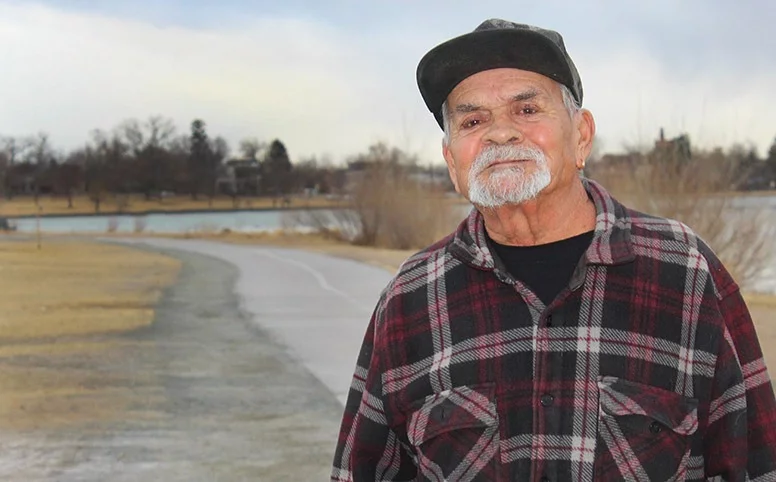
While battling advanced throat cancer at age 80, Rosalio Sanchez pleaded with his son to give up the addictive habit that had harmed both men.
“Why are you smoking? Don’t smoke, mijo,” Rosalio said to his son, Jesus Sanchez, who is now 68.
Mijo is a loving term among Hispanics — especially those with Mexican heritage. It comes from the words “mi hijo,” which means “my son.”
Thanks to great medical care, Jesus’ dad lived for several years with his cancer. He died three years ago at age 93. But his longtime wish that his son would give up cigarettes stuck with Jesus all of these years.
For most of his adult life, Jesus has wanted to quit smoking. He’s eager to improve his health and honor his dad. But nicotine is highly addictive, so it’s very tough to stop on your own.
Now, for the first time in his life, Jesus is hopeful that he’ll succeed. That’s because he’s getting free help and access to essential tools to help him stop smoking.
Free help from a counselor who calls to check in on him every week
Every Tuesday at 2:30 p.m., Jesus receives a call from Leslie Loya-Arias.
She’s a bilingual specialist in tobacco and nicotine treatment at UCHealth´s Smoking Cessation Program, a free program designed to help people quit smoking for good. The program provides culturally appropriate counseling and treatment in Spanish for Hispanic patients.
Jesus enjoys speaking to Loya-Arias as he sits on the balcony of his apartment, which overlooks Sloan’s Lake in west Denver.
Jesus tells Loya-Arias how he’s feeling, how his week is going and describes the progress he’s making as he works toward quitting smoking — a habit that has been part of his daily life for 41 years.
Jesus has been getting help for two months.
“Loya-Arias calls me every week, at the same time,” Jesus said.
He counts on hearing from her, and these calls now are part of his routine. So are daily walks around the lake that help distract him from the desire to smoke.
Expanding access to smoking cessation resources to promote healthier communities
In the U.S, Hispanics who want to quit smoking have a harder time getting help than other people, according to medical experts at the American Lung Association.
That’s why leaders at UCHealth are providing culturally appropriate smoking cessation services in both Spanish and English to support improved health in the Hispanic community.
Cigarette smoking is the No. 1 cause of preventable deaths in the U.S., according to experts at the U.S. Centers for Disease Control and Prevention.
‘‘We’re being intentional in terms of addressing content and services that appeal to our Hispanic communities and patients who want to quit smoking,’’ said Yesenia Trevizo, supervisor of UCHealth’s Tobacco and Nicotine Treatment Program.
A health wake-up moment
Back when Jesus’ father encouraged him to stop smoking, his words served as a wake-up call. Jesus’ dad had to speak to him through a device called a tracheostomy. Doctors had to cut a hole in Rosalio’s windpipe and cut out part of his larynx to make it easier for him to breathe.
Cigarette smoking increases the risk of developing throat cancer.
Jesus long has been aware of the dangers of smoking cigarettes. What he didn’t know was that there was free help for people who wanted to quit. And his chances of stopping smoking were far higher if he received support rather than trying to quit on his own.
A conscious decision to quit smoking for good
On Dec. 4 of last year, Jesus went to UCHealth University of Colorado Hospital for help with an infected tooth. To help his tooth heal, doctors said Jesus needed to stop smoking.
He thought to himself, “If I’ve already gone so many days without smoking, I might as well keep going.”
He also learned about UCHealth’s programs to help people quit smoking, and soon, Jesus was getting help from Loya-Arias.
“I met Jesus through a referral within the UCHealth system. He was identified as someone who could benefit from tobacco treatment and was referred to our program for counseling and resources,” Loya-Arias said.
Along with regular counseling, patients can also access what’s known as “nicotine replacement therapy,” which includes tools such as patches and gum that deliver small amounts of nicotine without the toxins found in cigarettes.
A life built on resilience
Jesus has nine grandchildren and eight great-grandchildren.
In November of 1997, his wife of more than 25 years was diagnosed with heart failure. She underwent surgery to implant a pacemaker — a small generator placed under the skin — with leads threaded through a vein to the heart to regulate its rhythm. Sadly, she passed away on March 30, 1999, when she was just 39. (Learn more about heart disease as the No. 1 killer of Hispanic women, and it’s largely preventable)
Jesus moved from Texas to Colorado in November 2008.
Since his wife passed away, cigarettes have been his companions and part of his daily routine, which begins at 6 a.m.
Successfully quitting smoking involves identifying triggers and changing the behaviors associated with them.
Jesus’ morning routine, centered around drinking his coffee and smoking a cigarette, is one trigger, said Loya-Arias, his smoking cessation counselor.
“The hardest part for me about trying to quit smoking is that I like to drink my coffee and have a cigarette in the mornings,” Jesus said.
That habit has been tough to break, but he is trying.
He now knows how to mitigate that trigger, something he learned in counseling sessions.
In the past, he smoked between 6 and 7 cigarettes a day. Now the craving to smoke only hits him when he’s having his coffee. He’s working to interrupt the trigger to smoke. During the rest of the day, he keeps himself busy enough that he doesn’t miss smoking cigarettes.
Now retired, Jesus has more time to focus on his health. He spent his life working on farms, in factories and at Taco Bell, where he worked for nine years.
Breaking harmful habits: Why is it so hard to quit smoking, and how can you overcome the cravings?
About 70% of smokers report that they would like to quit. But like Jesus, they struggle to quit.
That’s why it’s so helpful to have support.
“The UCHealth Smoking Cessation Program is designed to serve any patient who uses tobacco or nicotine, regardless of their readiness to quit. Patients may be actively trying to quit, considering quitting, reducing nicotine or tobacco use, or simply seeking education and support,” Trevizo said.
Jesus is building new habits for a healthier lifestyle.
He takes a 15-minute walk every day when the urge to smoke threatens to make him relapse.
“Those 15 minutes — as the doctors say — are better than nothing,” he said.
In the apartment building for older adults where he lives in the City of Edgewater, he takes the elevator down to the street level to go for his walk. As he encounters his neighbors, they greet him warmly. One of them told him she was going to bake banana bread and would bring him a slice later.
“Doing a morning walk whenever they experience that first craving in the morning is a behavioral tool. We educate patients about these techniques. These tools help them break the habit of reaching for a cigarette,” Loya-Arias said.
“In my experience, changing the routine — as Jesus did — is very important when trying to quit smoking. If they’re smoking in the morning — with coffee — it is helpful for them to change their morning routine. So, whether that’s switching from coffee to a different beverage that won’t link them to a cigarette or replacing that habit with a healthy behavior.”
Jesus’ neighbors, his community and his family are very important to him. The residents support one another. This community helps him feel supported.
Quitting smoking requires a shift in mindset
The mind is often described as incredibly powerful, and clinical studies confirm that we can choose to change our behaviors.
Jesus has found that staying busy is very helpful.
“You have to keep your mind occupied with other things if you want to quit smoking,” he said.
A shift in perspective about addictions and focusing on improving health can help people overcome addictive behaviors.
This approach moves away from a negative focus that sees addiction as insurmountable toward a mindset centered on the transformative power of the human spirit.
“People who smoke say that smoking calms your nerves, but that’s a myth,” Jesus said. “It doesn’t change anything if you smoke.”
The addictive power of nicotine simply makes people want to keep smoking cigarette after cigarette.
“Your body, your system, due to nicotine addiction, dictates that at certain times you want to smoke,” Jesus said. ‘‘With determination and support, you can overcome this.’’
Now that Jesus is giving up cigarettes, he feels better.
“Before quitting smoking, I used to feel dizzy. Maybe it was high blood pressure, I cut down on cigarettes, and I feel better,” he said.
People who smoke may feel dizzy because nicotine and carbon monoxide decrease oxygen levels and interfere with blood circulation, affecting the nervous system and the inner ear.
Jesus also can breathe better and is more fit.
“Now I can walk longer,” he said. “In the past — with cigarettes — I could only take a few steps and would feel short of breath. Now I don’t feel that anymore. I want to do more. I would like to get a bike and start cycling, which is also good exercise.”
Culturally and linguistically appropriate resources for Hispanics
Hispanics are less likely than non-Hispanic White people to receive support to stop tobacco use, to have knowledge of existing smoking cessation resources, to participate in tobacco cessation programs or to utilize pharmacotherapy to stop smoking, according to medical experts at the American Lung Association.
Loya-Arias has noticed that her Hispanic patients have less information than others.
‘‘I’ve noticed with my patients that all of them understand that smoking is harmful. But there are many educational gaps. For example, (there is less) knowledge about the chemicals found in cigarettes and resources available to quit smoking,’’ Loya-Arias said.
Jesus is very happy that he got help, and he hopes others will reach out for assistance too.
Having access to counseling in Spanish has been a big help.
“Now the programs have bilingual staff, and that’s really good,” Jesus said.

To support Hispanic patients and communities in overcoming tobacco dependency, culturally and linguistically appropriate resources are key components of the smoking cessation programs.
“Follow-up is an essential part of the program. This includes one-on-one support, goal setting, relapse prevention strategies, and coordination with clinical providers as needed,” Loya-Arias said.
The counselors also connected Jesus with another smoking cessation program called Ways to Quit (DéjeloYa), which provides him with tools such as nicotine patches at no cost. The combination of counseling and follow-up services is key.
‘‘Ongoing contact helps maintain motivation, address challenges as they arise and adjust nicotine cessation strategies over time,’’ Loya-Arias said.
UCHealth staff members also have translated educational materials into Spanish to support Hispanic patients in their efforts to quit smoking.
“Medications and nicotine replacement therapy are typically processed through insurance when available,” Trevizo said. “For patients without insurance or with cost barriers, we actively support access by identifying low-cost medication options, manufacturer savings programs, cost-plus pharmacies, and other financial assistance strategies.”
Identifying cost-effective approaches and creating personalized care plans that account for a patient’s specific conditions and resources are part of a patient-centered model.
‘‘When appropriate, we also guide patients toward external resources — specifically for medication support — while continuing to provide ongoing, individualized coaching through UCHealth,” Trevizo said.
Among Hispanics in the U.S, lack of trust in the health care system can be a barrier to accessing care.
‘‘Culturally competent care is important because it builds trust and allows patients to feel understood and supported in a way that aligns with their values, language and health goals,’’ Loya-Arias said.
Transforming lives, one day at a time
Tobacco use is one of the leading causes of preventable death in Colorado and in the U.S. Tobacco use increases the risk of cancer, heart disease, high blood pressure, lung disease and blood clots. Nicotine products like electronic devices (vaping) or oral nicotine pouches cause serious health risks as well.
Quitting tobacco and nicotine products improves health.
UCHealth offers free nicotine cessation programs. Reach out to get help.
In metro Denver:
- Call 720.553.0311 or email [email protected] for information about UCHealth University of Colorado Hospital’s Tobacco and Nicotine Treatment Program serving metro’s specialty clinics.
- Call 303.724.8468 for more information or to schedule an appointment for the Ambulatory Nicotine Cessation Program in Metro Denver.
- Call 720.848.8770 for information about UCHealth’s inpatient tobacco and nicotine cessation program at Anschutz Campus.
In southern Colorado:
- Call 719.365.6845 for information about the Tobacco and Nicotine Treatment programs at both UCHealth Memorial Hospital North and UCHealth Memorial Hospital Central.
Smoking cessation program approaches
Patients participating in the smoking cessation program are evaluated using the tobacco cessation stages of change.
Quitting smoking happens in stages: thinking about it, planning to quit, taking action, and staying smoke-free. People may slip back, but support and healthy habits help them persist.
‘‘Every time we speak to a patient, we ask them which stages of change they are in. These stages could be pre-contemplative, contemplative or actively making changes towards quitting smoking already,’’ Trevizo said.
Based on the patient´s stage, counselors create personalized plans. These plans include techniques to address their triggers, Loya-Arias said.
‘‘We help patients with coping skills, cravings, stress and relapse prevention. Most visits are offered over the phone or in person, and we’re also working to provide telehealth services. Support groups are also available,’’ Trevizo said.
The smoking cessation program provides:
- Counseling
- Medications
- Digital tools
- Group sessions
Among the techniques patients learn through counseling is how to create smoke-free spaces.
‘‘Making places smoke-free is a slow process. If the patient is an indoor smoker and smokes in the garage, I say, ‘This week, let’s work on making your garage smoke-free’. And then if all goes well, next week we can start making the car a smoke-free zone. Quitting smoking happens in stages, and progress is made gradually,” Loya-Arias said.
As part of the counseling on quitting smoking, patients also receive information about what to expect from their bodies, such as symptoms associated with quitting nicotine, including:
- Increased anxiety
- Insomnia
- Having urges or cravings to smoke
- Feeling irritated
- Lack of energy
- Weight gain
Like everything in life, having a support system is powerful
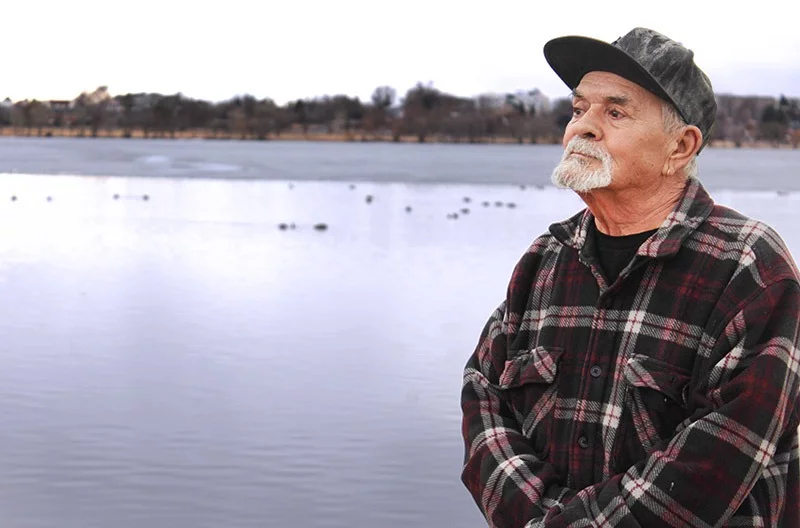
Helping patients create a supportive environment is vital to helping them succeed in quitting smoking.
‘‘The evidence shows that when you’re ready to give it a try, and you have support, and you have medications like patches, your chances of succeeding double when trying to quit smoking,’’ Trevizo said.
People with strong social support are more likely to quit, according to experts at the American Cancer Society.
“I would recommend to anyone who smokes to seek support,” Jesus said.
He also emphasized self-determination.
‘’Quitting smoking requires the desire to do so.’’
In addition to motivation, patients also benefit from support tools, like patches.
‘‘Education on how to use resources such as patches is also crucial. I have come across patients using the wrong dosage. Patches have been marketed for a very long time. We use every opportunity with patients to educate them on how to use them,’’ Trevizo said.
‘‘It’s not lifelong treatment, and at a certain point, we need to start switching to the next dose,’’ Loya-Arias said. ‘’Once they reach the lowest dose, which is the seven milligrams, it’s time to graduate from the patch.”
One of the biggest gaps in education and a common misconception is not knowing when tobacco cessation treatment is complete — and when it’s time to continue your own journey, without nicotine replacement therapy.
It’s essential to respect patients’ choices, beliefs and independence
Trevizo emphasizes that quitting is a journey, and at the start, participants may not be ready to talk about it.
‘‘The most effective approach comes from respect and motivation. Meeting patients where they are, without judgment, normalizing ambivalence and past quit attempts,’’ Trevizo said. ‘‘Emphasizing patient choices and autonomy is crucial, it supports framing quitting as a gradual process.’’
Awareness is powerful
One key challenge in quitting smoking is that some participants — particularly hospitalized patients — have limited awareness of how cigarettes affect their existing health conditions.
‘‘Educating people about how smoking is affecting the condition they’re dealing with is very important,’’ Trevizo said.
Cigarettes, cigars, and pipes can all lead to cancer, according to experts at the American Cancer Society.
‘‘Understanding the addiction component is crucial. A lot of people think it’s my own free will to quit smoking. Education shifts perspective. Patients understand that these tobacco products are designed to keep them hooked,’’ Trevizo said.
When people smoke, nicotine releases a ‘feel-good’ chemical, and many people associate that with a reward.
‘‘Every time they smoke, they experience the chemical feeling of having accomplished something,’’ she said.
It is also crucial to build awareness around the fact that quitting smoking not only improves health but also reduces the financial burden of buying cigarettes.
“In the past, I spent between $8 and $12 on a pack of cigarettes. What I used to spend on cigarettes, I now spend it on other things,” Jesus said.
Impact of secondhand and thirdhand smoke
On top of improving their own health, smokers also can help people around them who don’t smoke.
Exposure to secondhand smoke can cause serious health problems for nonsmokers.
Smoking cessation experts help patients understand how their efforts to quit also can help their loved ones.
Thirdhand smoke occurs when tobacco toxins linger on surfaces such as fabric, furniture, carpets, and in cars. Children — especially young children who crawl and touch these surfaces — can come into contact with tobacco residues that may harm their health.
Education helps raise awareness about how smoking impacts not only patients, but also their loved ones.
Jesus encourages people to quit smoking for themselves and for their families.
“I would like to tell people who want to quit smoking that it’s a good idea to do it. Your decision will do a lot of good for your family and for yourself, because if you smoke and have grandchildren or children around you who don’t smoke, it harms them too,” he said.
Jesus’ love for his family keeps him motivated to take better care of himself.
“I feel blessed by the family God has entrusted to me and by the family my wife left me. That’s why I’m taking better care of myself. It’s for my own good to quit smoking.”