
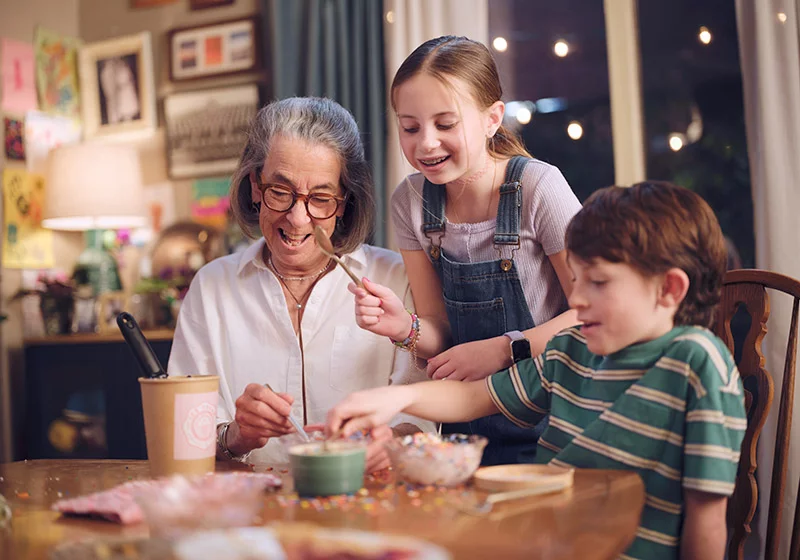
On Peggy Martin’s 50th birthday, she was enjoying a meal at a restaurant in Jackson Hole, Wyo., when an eagle landed on a nearby tree branch.
Peggy has remembered that moment over the past two decades, with images of the bird’s majesty and strength inspiring her during dark days and tough times.
“When I was really feeling low, I thought to myself that I had to be as strong as an eagle. The eagle became my spirit totem and still is.”
Peggy needed that strength to overcome many serious and deadly health battles.
Fast forward to fall 2013. Peggy was then an active, fit and healthy 57-year-old. She and her husband, Max, had just returned from a ranch vacation where Peggy enjoyed hiking and riding horses. But what she thought were just symptoms of constipation led her to the hospital ER.
Tests, colon resection surgery and a diagnosis of stage 4 colon cancer all came in quick succession. A few weeks later, the rapid sequence of events came with a stunning and grim prognosis from the doctors who gave her between six weeks and six months to live.
“I don’t even have a lot of recollection of those moments. It was a shock and very surreal,” Peggy said.
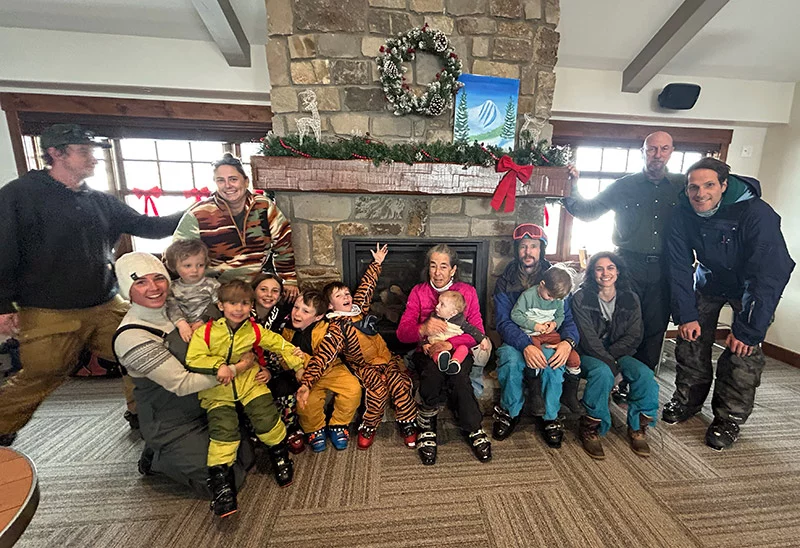
But she and her husband were not about to give in to the bleak news. A glance at their refrigerator showed why. It’s full of crayon-created art by the couple’s seven grandchildren. Five live in Colorado, and two are in Pittsburgh. Framed photos of the family of three children and seven grandchildren fill the Martins’ home, along with plants and artwork.
The cancer news was frightening and terrible.
But Peggy and Max started searching for answers and hope.
“When we got the prognosis news, we were both crying. But then we literally rolled up our sleeves and began calling around for advice, which eventually led us to UCHealth.”
A full life, then a devastating diagnosis
Originally from Pittsburgh, Peggy met Buffalo native Max at the University of Vermont. The duo graduated in 1978, married a year later and headed west to Denver. With her degree in education, Peggy completed a master’s degree in urban and regional planning at the University of Colorado Denver while Max pursued a career in civil engineering.
The couple’s growing family included two girls and a boy. Peggy owned a gardening company with a friend for 10 years before working for the Cherry Creek School District, where her children had attended school.
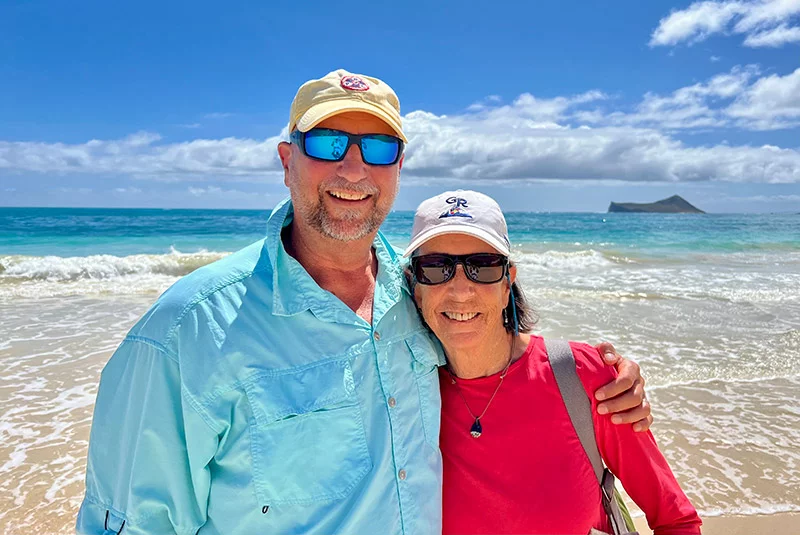
With their children grown and on their own, the couple was enjoying being empty nesters until Peggy began to feel sick after returning from vacation in the fall of 2013. She couldn’t keep any water or food down, and a trip to a Denver hospital brought on a series of tests that showed she had a tumor blocking her intestine.
She would have major surgery within a couple of days to remove the blockage, which would turn out to be stage 4 cancer.
Doctors removed the tumor along with 14 nearby lymph nodes where the cancer had spread. But they had more bad news: the cancer had metastasized to her liver. They told her it was inoperable and basically a death sentence, giving her six weeks to six months to live.
“We were stunned,” Peggy said. “We said, ‘Isn’t there some kind of a Hail Mary plan?’ Three weeks ago, I had been on vacation riding horses. There had to be something out there that could give me a chance.”
There was something out there for Peggy, and she would get a second chance that she had hoped and prayed for.

That’s when she became determined to live life to the fullest.
Seemingly simple moments have kept Peggy’s heart full and her body going during her ordeal. These special traditions have included:
- Reciting a poem with her grandchildren that her parents shared with her: “I see the moon and the moon sees me.”
- Learning different kinds of crafts with her grandchildren, such as wool felting, knitting, jewelry-making, sewing and drawing. “For years, each fall, I come up with, try out, and ultimately make handcrafted gifts for family and friends. Some years are better than others, but it’s a lot of fun.”
- Engaging with her book club of 30 years, and “the women who always show up for all that life throws us. Interestingly, four out of eight of us have gone through treatment for cancer, and all of us are still kicking around.”
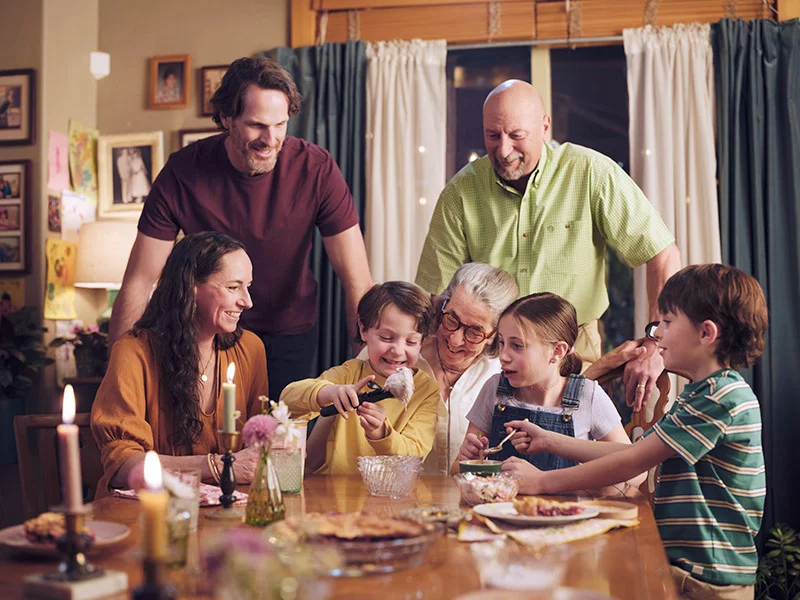
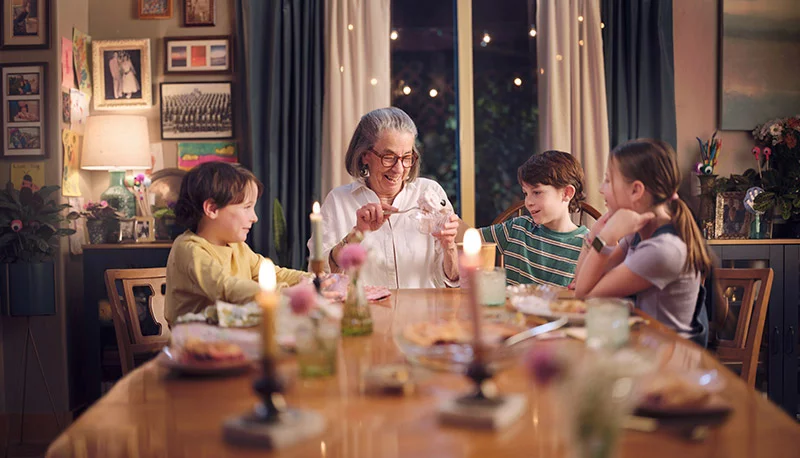
- Gathering weekly for Sunday dinners is “a long-standing family tradition that I cherish.”
- Spending any moments in little and big ways with Max, immediate and extended families, old and new neighbors and friends. “It has made such a big difference,” Peggy said.
Sobering statistics on colon cancer
Colon cancer is one of the most common types of cancer in America. There are about 150,000 new cases a year, a third of which are fatal.
According to the American Cancer Society, colorectal cancer is the second-most common cause of cancer deaths when numbers for men and women are combined, causing an estimated 53,000 deaths a year.
While fewer older people are dealing with colorectal cancer, cases among younger people are on the rise, as are fatalities for this scary disease.
In 2021, national screening guidelines were updated to recommend that people with no risk factors have their first colonoscopy at age 45 rather than 50. If there are other risk factors, such as family history, then screening should begin at an earlier age, often age 40, or 10 years earlier than the age at which their first-degree family member was diagnosed, whichever comes first.
People of all ages, even those in their 20s and 30s, need to pay attention to the potential symptoms of colorectal cancer and see their primary care physician if they experience:
- Changes in bowel habits
- Unintentional weight loss
- Blood in stool
- Nausea, vomiting, fatigue and abdominal pain
The best ways to screen for colorectal cancer
Fortunately, there are several ways to check, or “screen,” for colorectal cancer, even before any symptoms appear. The most common test, and what doctors call the “gold standard,” is a colonoscopy. A negative colonoscopy provides up to 10 years of protection.
A colonoscopy offers more than just early detection of colon cancer. It also provides the opportunity to potentially prevent colon cancer before it develops. Polyps can be removed during the procedure before they become a problem.
Other, less invasive but less reliable, tests can be completed at home. These tests use a sample of your stool to check for hidden signals of colorectal cancer in your body; they include the fecal immunochemical test, or DNA and RNA tests such as Cologuard or Colosense. If an at-home test finds something unusual, you will need a colonoscopy to check for cancer, while negative results may eliminate the need for one.
For average-risk individuals, it is recommended to repeat a colonoscopy at 10-year intervals until somewhere between the ages of 75 and 85. Patients and providers should discuss whether there is a need for subsequent screening based on individual risk in the context of overall health and life expectancy.
Peggy would later learn that she had a rare type of colon cancer. Doctors aren’t sure how it originates. As she and Max were searching for a second opinion after her prognosis, the more calls they made to major health systems around the country, the more they heard that they should turn to experts in Colorado for help.
“We were told that ‘you have two great doctors in your backyard,’ and that’s when we went to UCHealth, and it was true,” Max said.
Turning to UCHealth and a lifesaving clinical trial
It was the start of the new year – 2014 – and Peggy and Max allowed themselves to feel some hope. They had turned to UCHealth for a second opinion, a decision that would be life-altering.
Peggy’s new UCHealth care team included oncologist Dr. Wells Messersmith, and her surgeon was Dr. Richard Schulick, both of whom specialized in complex oncology cases at the University of Colorado Cancer Center on the Anschutz Campus.
“They were both very honest and super supportive. I felt like if whatever they were doing didn’t work, they would stay with me, come up with a plan and keep working with me. I trusted them,” Peggy said.
During the first few months of 2014, she underwent chemotherapy and radiation to try and shrink the tumors in her liver before a scheduled surgery later that spring. She lost her appetite and dropped weight, but continued to work her school district job through her fatigue.
“Those were some really dark times,” she said. “Looking back, I must have had faith I would get through it, but I was just so focused on taking the next step I didn’t let myself look ahead too far.”
In May, Schulick resected a third of her liver where the colon cancer had spread.
“If anyone was going to beat this, it was going to be her,” said Schulick. “I think part of her survival was her determination. She is definitely a fighter.”
Her older sister Connie said Peggy was determined to be an active participant in her healing plan. She stayed with Peggy and Max after the surgery to help. She said her sister accepted the help but didn’t want to be passive during her recovery.
“She’s always been positive and taking charge of her life in different ways,” Connie said. “Right from the get-go, she wanted to help guide her support team and tell us what she needed. It gave her a sense of control through a time when anyone would feel pretty powerless.”
Peggy continued with chemo after the surgery to combat some additional liver lesions that had appeared, but a year later, in January 2015, doctors knew they needed to take additional steps to stop the cancer from spreading.
“You try to give patients the best chance there is, and for Peggy, that’s where clinical trials came into play,” said Messersmith, also a professor of medical oncology at University of Colorado Anschutz School of Medicine.
Through his oncology peers around the country, he had heard of a new immunotherapy drug that had shown promise with the same rare type of genetic mutation cancer that Peggy had.
This type of genetic mutation, called mismatch repair deficiency, accounts for about 5% of colon cancers. In this type of colon cancer, cancer cells have difficulty repairing damaged DNA; but fortunately, that makes the tumors more responsive to immunotherapy.
Immunotherapy uses a person’s natural defenses of their immune system to fight cancer by boosting or changing how the immune system works so it can find and attack cancer cells. Immunotherapy primes the immune system to recognize cancer cells as foreign in an effort to better fight them.
Peggy began immunotherapy infusions as part of a clinical trial that had not yet been approved by the FDA, and the odds of her survival were as low as 3%.
But Peggy bucked the odds.
“We put her on this trial, and she had a lifesaving response,” Messersmith said. “The drug would not be approved until 2017, so she got a two-and-a-half-year jump. She tolerated it very well, as unlike chemo, her own body was basically producing its own response to fight the cancer cells. It’s truly revolutionary.”
But while Peggy continued to fight for her health, she would face another battle.
A brain aneurysm discovered during colon cancer treatment
Part of Peggy’s screenings to participate in the trial included a brain MRI, and in December 2014, doctors found she also had a brain aneurysm. An aneurysm is a bulge in a blood vessel in the brain.
In fall 2015, she traveled to Baltimore, where doctors treated the aneurysm through a minimally invasive technique that entails placing an expanding woven mesh device in the aneurysm to prevent its rupture. The specific device was also part of a medical trial and advantageous, as it did not require her to stay on blood thinners, which was important if she needed additional surgeries to fight the cancer. The device isolates the bulge, disrupting blood flow to it and causing it to clot on its own.
Despite her health setback, Peggy made sure to take steps to replenish her body and her spirit.
Exercise oncology program helps restore strength and confidence
Throughout her health struggles, Peggy participated twice in the BFitBWell Exercise Oncology Program at the Anschutz Cancer Center.
“It gave me the same sense of having some measure of control, and that was very important to me. I was so weak,” she said. “The BFitBWell program truly brought me back to living. It was so valuable physically and mentally.”
The three-month strength-based exercise program is open to any patient going through cancer treatment or within six months of completing treatment. There is also an alumni program for recovering cancer patients.
BFitBWell offers participants personalized assessment and individualized training with the goal of improving or maintaining their strength and fitness throughout their cancer treatment.
For those who enjoy working out, and for others who are new to it, exercise plays a key role in giving patients control over their lives when so much of their schedule is filled with chemo, radiation and infusion treatments.
After an initial assessment that includes medical history and doctor approval, participants meet weekly with a personal trainer for 12 weeks and are encouraged to come to the gym on their own as well.
“This little piece of their journey can be something they have say over and ownership of,” said program manager Nicole Gleason. “We want them to leave our facility feeling a little bit better, a little stronger and having built strength.”
Plus, research shows that exercise can help mitigate the negative side effects of chemo fatigue and nausea, as well as giving a boost to patients who are trying to continue with the “normal” parts of their life that include family, jobs and other activities. Regular exercising also staves off some of the decline or deficit many will experience going through a tough cancer regimen.
“We meet them where they’re at,” Gleason said. “We adjust the intensity of exercise depending upon how they’re feeling. Some days it might just be we walk around the track, or we go to the yoga studio and do some stretches, or if they’re feeling stronger, we do some deadlifts and leg presses.”
Gleason said working with Peggy showed how dedicated she was to her family, which was a big motivator for her.
“Whatever you asked her to do, she did. I appreciated her willingness to go with the flow and just show up – even on the days she didn’t feel great, she was here – sometimes that is the hardest part.”
Coordinated care and long-term cancer management
Peggy continued with immunotherapy treatments every 3 weeks for six years, until spring 2021. While the treatments kill the cancer cells, it does not actually make the tumors disappear, which is why she still returns for testing and scans every three to six months.
And there were more health hurdles for her to clear.
She underwent lung surgery in spring 2023 to remove some potential lesions, and doctors also found cancer cells in her abdominal lymph nodes, so she underwent additional radiation and resumed immunotherapy through fall 2024.
“They’ve always had a Plan B for everything they’ve come across,” Peggy said of her care team doctors. “They were so good about making me feel confident that they had an answer if something didn’t work out.”
Schulick said a crucial component of oncology care for Peggy and others is the close working relationship between UCHealth surgeons and oncologists.
“In many hospitals, this is not the case, but here, we are always in communication. We meet in the clinic twice a week, strategize and talk about our cases with each other to see what we can do to help our patients. That teamwork is so special, and the results speak for themselves.”
The strategic coordination of care has dramatically increased survival odds for patients with stage 4 metastasized cancer in the liver: between 50-75% of these patients are living past the five-year mark through a combination of surgery, chemo and immunotherapy.
“With colorectal cancer stage 4, we can get long-term survivors and, in many cases, we can cure people,” Schulick said.
Messersmith agreed, saying it’s a priority for him that patients trust their care team is fighting for them.
“As an oncologist, when I go into that room and tell someone they have cancer, it’s important that I do the work ahead of time and have a Plan B,” he said. “If we can’t cure them of cancer, more and more we can turn it into a chronic disease like high blood pressure that can be controlled, allowing people like Peggy to lead great lives.”
Living a full life after cancer diagnosis: skiing, traveling and spending time with grandchildren
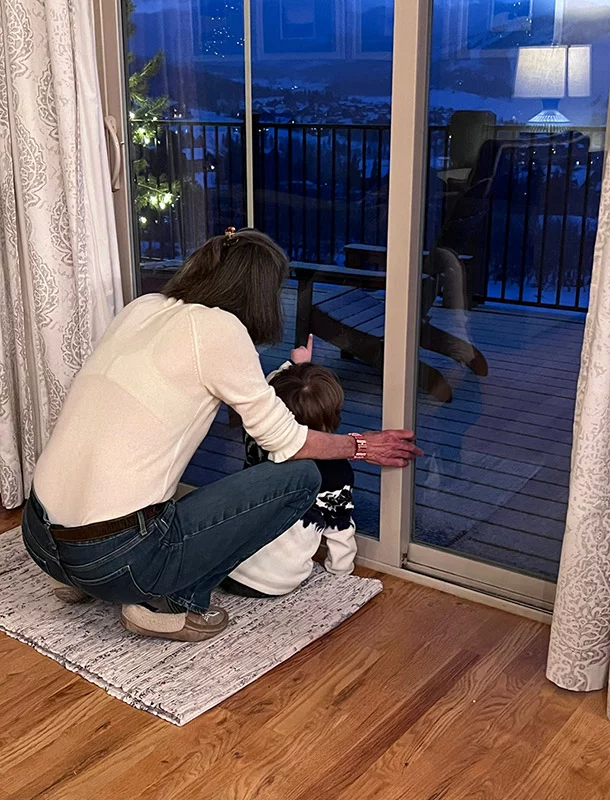
Thirteen years after Peggy was given only weeks to live, there is no evidence of any active cancer in her body. She and Max ski, golf, travel and love spending time in the mountains and gathering with family and friends. They continue to have Sunday dinners with their family.
Facing the grim prognosis all those years ago and enduring the ups, downs, hope and uncertainty that came with it, has pushed her out of her comfort level as she confronted issues of her mortality.
“I have grown so much through it,” she said. “It prepared me for living with things that were out of my control. I met so many great people through it all and have incredible gratitude for family, friends and UCHealth. There were many silver linings. Max has been wonderful, we have a great life.”
Her sister Connie agreed that Max and the rest of Peggy’s family were amazing in their support.
“They were remarkable,” Connie said. “Some say the difference between optimism and hope is that with optimism, you just believe that something good will happen. Whereas hope is the belief that you can influence that. With the help of her support system, Peggy actively chose hope.
“She always believed there were things she could do, and she did it. She embraced the trauma and challenges in her life; she faced a lot of deep questions about life and mortality, and now she is a beacon for the rest of us.”
A few years ago, Peggy’s daughter gifted her a statue of a Native American eagle dancer that sits prominently in her entryway. Occasionally, she thinks about the eagle she saw years ago – and not that she needs a reminder, but it represents the strength and spirit and many people who helped her through the toughest moments.
“People talk about being ‘cured.’ It’s just a word, and we try not to dwell on it. The cancer is gone for now, and that’s what I focus on.”