
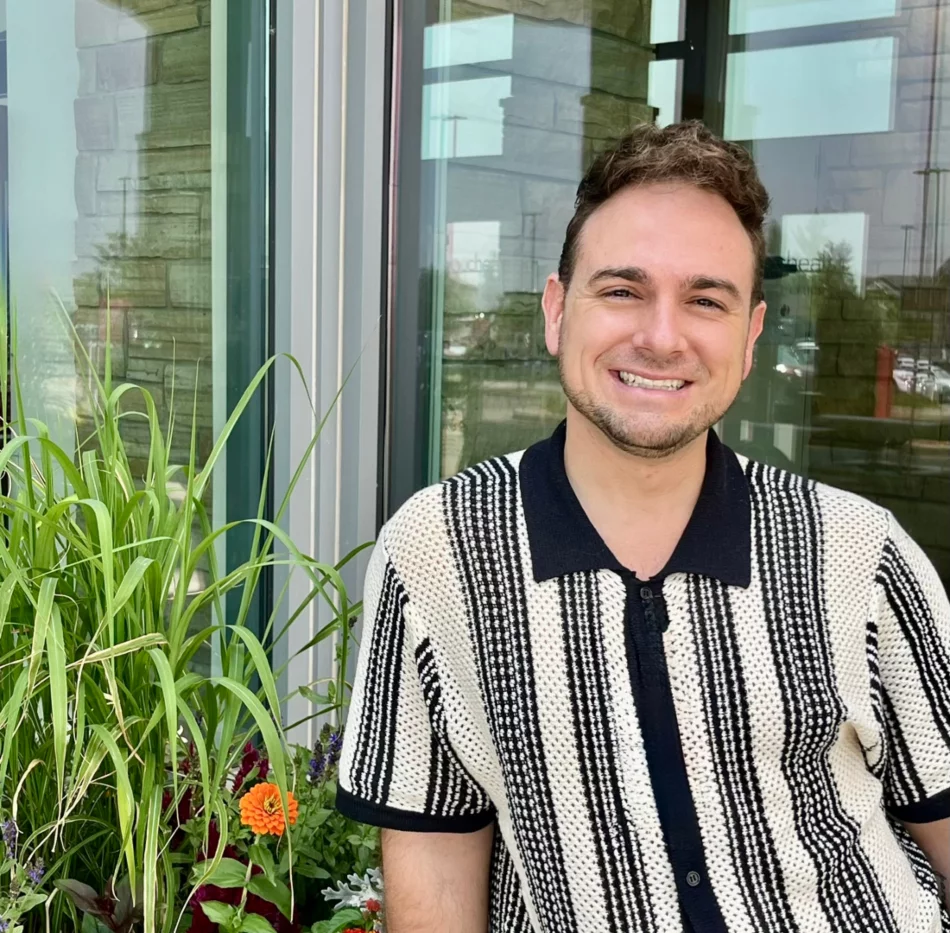
Using his voice to give patients theirs
When a patient arrived at the UCHealth Greeley Hospital Emergency Department (ED), he could not communicate directly with his care team. He spoke Spanish and was experiencing severe pain in his arms and legs. By the next day, he was intubated and unable to move.
As a Spanish medical interpreter at Greeley Hospital, Juan Pablo Casillas helps bridge conversations between patients and care teams every day. He first met the patient in the ED and continued working with him in the months that followed.
The patient reminded Casillas of his uncle, and he was determined to make sure the patient felt understood, heard and cared for in a personal way.
Over time, the patient began to communicate through subtle movements. First it was his eyebrows, then his eyes and eventually small jaw movements.
When the therapists decided to take the patient outside for fresh air, they asked Casillas to join them. They knew that a familiar face and an in-person interpreter would make the patient’s experience more comfortable.
For Casillas, stepping into the sunshine alongside the patient felt like a celebration.
They stopped near the flowerpots and he gently brought a few blossoms closer to the patient.
“I wanted him to experience something other than the hospital ceiling, bed sheets and medical equipment,” Casillas said. “I showed him the colors, textures and patterns. I wanted him to feel the velvety petals of the flowers.”
Then came the music.
After asking the patient’s wife about his favorite song, Casillas played it on his phone. As the music filled the air, he encouraged the patient to move his head to the rhythm. Then he challenged him to mouth the words, even though he still could not speak.
The patient responded.
His head moved in time to the music. His mouth followed the melody. Casillas and the therapists started dancing as family members clapped and sang along.
“It was the right day, the right time and the right patient to create an impactful moment,” Casillas said. “The opportunity showed up for me to bring additional joy and hope to the patient and family.”
That mindset guides Casillas every day.
Before each conversation, he makes eye contact, speaks softly and introduces himself with kindness. He wants patients to feel safe before any medical questions are asked.
“My job is to use my voice to give them a voice,” he said. “That gives my work purpose.”
The moment outside with the flowerpots raised the bar for how Casillas approaches every patient.
“Now I ask myself, ‘how much more can I give to this person today?’” he said. “The point is to give my best, so the patients can keep moving forward.”