
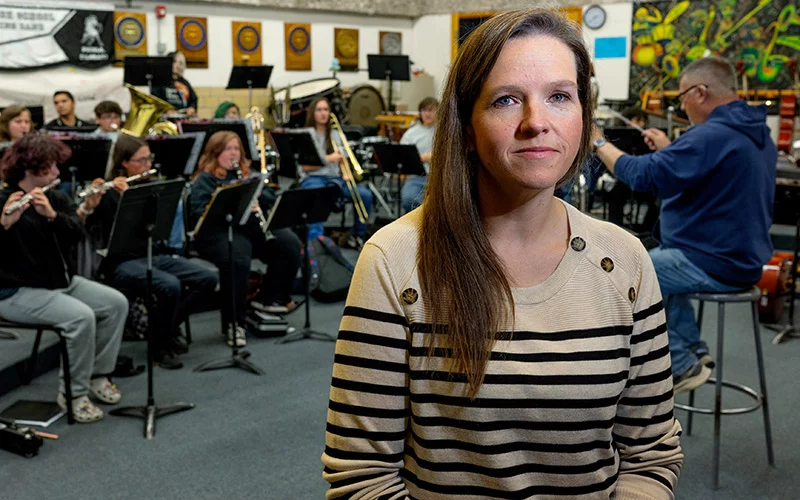
As a kid, Rachael Underwood was always overweight. After she joined the high school marching band, a seamstress added fabric to her uniform so it would fit. The track coach let her wear her own clothes for meets, as long as they matched the school colors, because the school didn’t have a track uniform big enough for Rachael.
As an adult, she tried every diet possible to lose weight: low-carb, keto, paleo and more. But the results never stuck.
“Life happens,” she said. “I’d lose weight, then gain it back.”
It wasn’t until she decided to have weight-loss surgery two years ago that Rachel was able to radically change her relationship with food. She lost nearly 140 pounds and was able to change her life, for good.
Rachael, 43, had her surgery at the Sangre de Cristo Weight Loss Institute, which is affiliated with UCHealth Parkview Medical Center in Pueblo. Rachael works for UCHealth at the center and now loves being able to help other patients achieve their weight-loss goals.
Outside of work, Rachael enjoys activities that she didn’t have the energy to pursue before she lost the weight: planning a wedding for her son and daughter-in-law, serving as president of her other son’s high school band booster club and hiking and camping. And her health? That’s much improved now, too.
“I don’t ever want to take this for granted,” she said. “I worked so hard to get to this point, and I don’t ever want to go back.”

‘Always the chubbiest kid,’ Rachael endured the ridicule of classmates
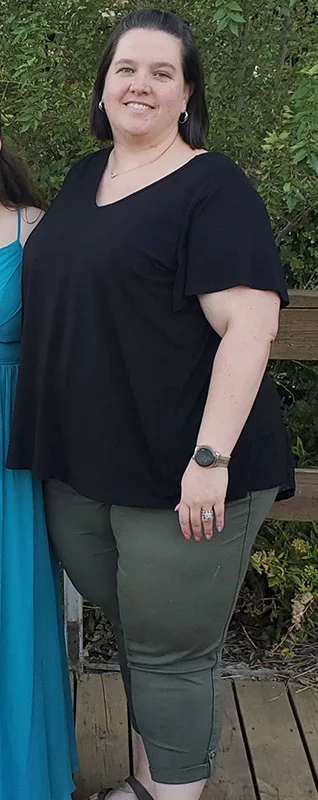
Rachael grew up in small towns all over Colorado. She was born in Salida, where her father drove a snowplow over Monarch Pass for the Colorado Department of Transportation. The family later lived in Craig, Eads, and Branson, as her father took new assignments at work. The family settled in Pueblo in December, 1996 when Rachael was in the seventh grade.
Rachael said she was “always the chubbiest kid” and the subject of classmates’ ridicule. She loved sports and stayed busy playing softball, basketball and volleyball. In those smaller towns, anyone who tried out made it onto the team, she said.
Her mother did her best to stretch a pound of ground beef to feed their family of six, but nutrition wasn’t always a priority.
After moving to Pueblo, Rachael’s interests shifted to music. At South High School, she played French horn in the marching, pep and concert bands. She also joined the track team and made the varsity shot put team. She missed a chance at the state tournament one year with a throw that was just a quarter inch too short.
Rachael also developed an interest in health care in high school. She attended the school’s health academy and became a Certified Nursing Assistant during her junior year. She graduated with her Emergency Medical Technician license in hand.
But throughout high school, her weight was a factor in virtually everything she did. Marching with the band was tough, so she made excuses to skip practice. Wearing her own clothes to track meets drew unwanted attention.
By her high school graduation in 2000, she weighed 250 pounds.
She couldn’t have known then, but her high school interests would remain constants throughout her life. Her passion for health care would blossom into the career she enjoys today. And her ties to the marching band? That would become a key part of her weight-loss journey.

Diets and an ’emotional relationship with food,’ then a turning point
After graduating from high school, Rachael got a job at Parkview Medical Center as a technician in the emergency department. She and her husband married in 2003, and she soon became a busy mom to three children. But her weight forced her to forgo some of the things she wanted to do as a parent. She had trouble getting up off the ground, so she didn’t play with her young children much. She wished she could be outdoors or go on hikes, but she often settled for watching movies instead.
She would try a diet, lose some weight, and then gain it back again.
As far back as Rachael can remember, food was about more than mealtime. Food helped her cope with stress, sadness, depression and even things worth celebrating.
“I’ve always had an emotional relationship with food,” Rachael said. “I turned to food a lot. Food was my comfort.”
A big turning point came in 2016, when her daughter’s dance teacher scheduled a trip to Branson, Missouri. Rachael decided to turn the trip into a family vacation. They spent one day at a theme park there, but Rachael was so heavy that she had to stop often to rest. The kids didn’t get to go on many of the rides or see much of the park, and Rachael said she was embarrassed and apologized to her children.
“It was a huge eye-opener to do something about my weight, or I was going to be on a downhill trajectory,” she said.
Obesity can cause a variety of health problems, including:
In 2017, weighing around 300 pounds, she lost 80 pounds over 12 months. But within a year, she had gained the weight back and was right where she had started.
“I tried it all, trying to do it on my own,” she said.
A diagnosis of Polycystic Ovary Syndrome, or PCOS, added to the challenge. PCOS causes problems with hormones and makes losing weight difficult.
“My body was fighting itself,” Rachael explained. “It was ten times harder for me to lose weight.”
She knew her health was suffering. Her weight made a nagging ankle injury worse. She took medications to reduce her high blood pressure. The number of things she couldn’t do with her kids kept adding up.
Weight-loss surgery offers a path forward
In 2019, Rachael earned a bachelor’s degree in health administration from Colorado State University Global. Two years later she became manager of clinical operations for the Sangre de Cristo Weight Loss Institute.
She said she had been considering weight-loss surgery — which is also known as bariatric surgery — for more than 20 years. But it wasn’t until 2022 that she had an insurance plan that would cover it. Then, in June 2023, a new doctor joined the weight loss practice, and the two women hit it off. Weight-loss surgery, also known as bariatric surgery, reduces the size of a patient’s stomach and changes the chemicals and hormones that regulate a person’s weight. Roux-en-Y Gastric Bypass: This procedure creates a small stomach pouch and reroutes part of the small intestine, limiting the amount of food a person can eat and cutting calorie absorption Sleeve gastrectomy: In this procedure, a surgeon removes most of a patient’s stomach, leaving a narrow “sleeve.” This reduces food intake and hunger hormones, while nutrient absorption remains the same. What is bariatric surgery?
Bariatric surgery options include:
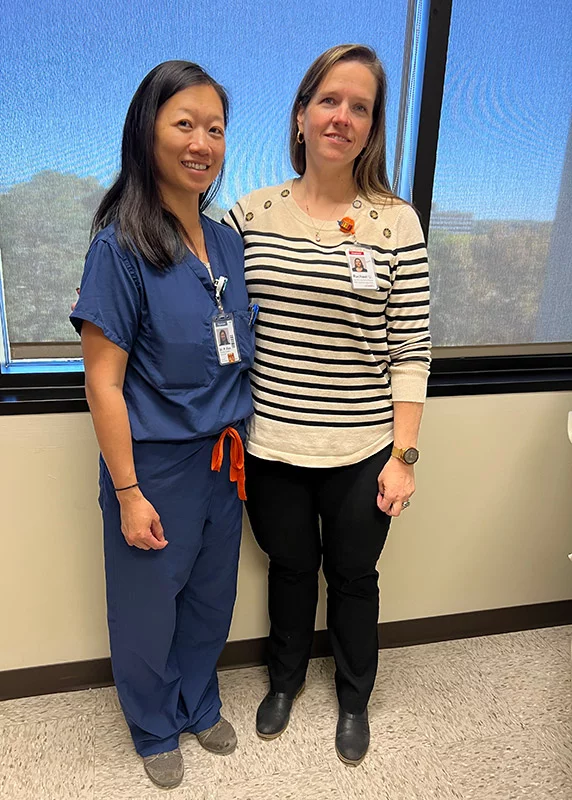
Dr. Ping (Jeanne) Pan had been a bariatric surgeon in New Mexico and was eager to move to Colorado to raise her family here. Her focus was to help the Pueblo practice gain an important national accreditation through the Metabolic and Bariatric Surgery Accreditation and Quality Improvement Program (MBSAQIP). That happened in 2025, and the practice is now the only MBSAQIP-accredited UCHealth bariatric program in southern Colorado.
“We meet rigorous standards for safety and outcomes,” Pan said. “Patients can trust they’re getting high-quality care.”
Rachael scheduled an appointment with Pan, and they talked through weight-loss surgery options. In general, the procedures reduce the size of a patient’s stomach and change how their digestive system processes and tolerates food, altering the chemicals and hormones that regulate weight.
The most common surgeries are gastric bypass, also called Roux-en-Y Gastric Bypass, and sleeve gastrectomy, commonly known as a gastric sleeve. With the bypass, a surgeon creates a small stomach pouch and reroutes part of the small intestine, limiting the amount of food a person can eat, changing hunger hormones and cutting calorie absorption. With a gastric sleeve, a surgeon removes most of a patient’s stomach, leaving a narrow “sleeve.” This also reduces food intake and changes hunger hormones, while nutrient absorption remains the same.
“The type of surgery a patient chooses is individualized, based on a person’s weight-loss goals, health history and medical diagnoses,” Pan said.To qualify for weight-loss surgery, patients must:
Pan makes sure her patients understand that surgery is not a quick fix. Some patients mistakenly think that they will instantly start losing weight. Others assume they won’t have an appetite, or they are unwilling to change their eating habits. After surgery, simple sugars, carbonated drinks and caffeine can make patients feel uncomfortable and even sick if they eat or drink them. Failing to eat the right kinds of foods after surgery will thwart any weight-loss success and a patient’s overall health, so dietary education is crucial.
“Surgery isn’t a diet,” Pan said. “It’s a lifestyle change.”
The program at Parkview Medical Center takes a multidisciplinary approach with two surgeons, Pan and Dr. Spencer Trooboff, as well as a bariatric dietitian, a nurse navigator, a nurse practitioner and a virtual patient support group. Pan and Trooboff are members of the medical staff at Parkview Medical Center.
“We make sure patients are prepared so they understand that surgery changes anatomy, but they still have to fuel their bodies correctly,” Pan said.
What about weight-loss drugs?
Pan said there is a role for weight-loss medications, but they are not the magic fix that they sometimes appear to be on social media or TV ads. Weight-loss surgery remains an important option, even with the popularity of injectable weight-loss drugs such as Wegovy, Ozempic and Zepbound.
That’s because most people must remain on weight-loss medications for the rest of their lives in order to keep the weight off. And few health insurance companies cover weight loss drugs, meaning they are prohibitively expensive for most people. Furthermore, many people who take weight loss drugs have to cope with challenging gastrointestinal side effects.
With weight-loss surgery, patients have one procedure and don’t face ongoing costs. Patients also can lose significantly more weight if they opt to have surgery. Studies have shown that people who take weight loss drugs, on the other hand, may plateau after losing about 20% of their total body weight.
Pan helped Rachael decide on a gastric bypass and scheduled her surgery for November 2023. She weighed the most she ever had – 328 pounds.
Scheduling the surgery kicks off six months of preparation
A six-month journey to surgery was just beginning. Rachael, like most patients, had to participate in six sessions with a nutritionist and meetings with a counselor.
She took an honest look at her eating habits, relationship with food and commitment to the surgery, recovery and the weight-loss process. With the dietitian, Rachael had to prepare for life after surgery and learn about the new food restrictions she would need to master.
“I was willing to do anything and everything to make sure I could be successful,” she said.
Recovery from surgery, then weight-loss milestones
Rachael’s Nov. 13, 2023, surgery went well.
She followed the recovery instructions to a T. For the first two weeks, she followed an all-liquid diet to retrain her newly modified stomach and digestive system. She could drink only 2 ounces at a time. After ingesting only liquids, she ate soft foods for two months – refried beans and lots of soup. She slowly reintroduced foods with more textures, like sticky and chewy foods.
Then her weight-loss milestones began to pile up.
By February of 2024, Rachael weighed 253 pounds. Two months later, she was down to 235 pounds. She was losing, on average, 10 pounds a month.
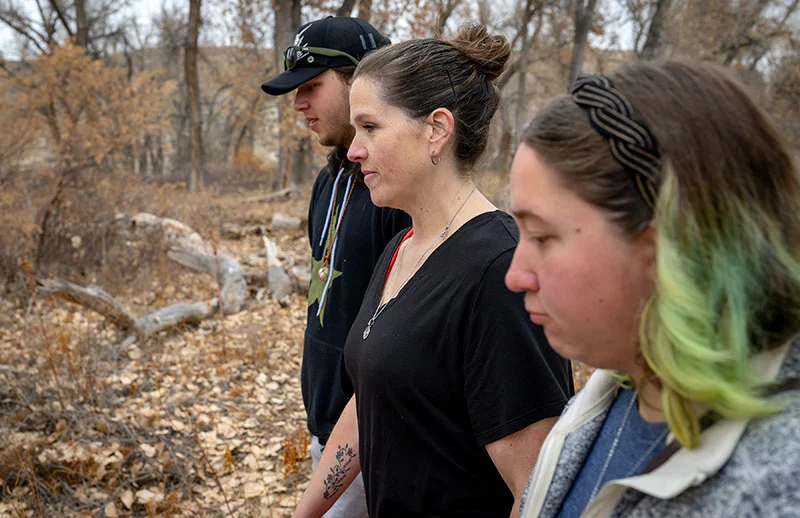
The biggest milestone came one year after surgery, when she dropped to 200 pounds. To celebrate, she and her family went camping at one of the family’s favorite spots east of Pueblo.
Today, she regularly hikes, walks and goes fishing, and she is thrilled to be down to 190 pounds.
How changing her relationship with food helped her succeed with weight-loss surgery
Rachael said the key to her success has been changing her relationship with food and quieting the “food noise” in her head.
She describes food noise this way: “I’m not hungry at all, but I want the action of eating.
“I’m an emotional eater. I will turn to food for everything: celebration, stress, depression. (My counselors) helped me recognize that, and I needed to change my relationship with food.”
Now, she takes a bath or goes for a walk when a craving hits.
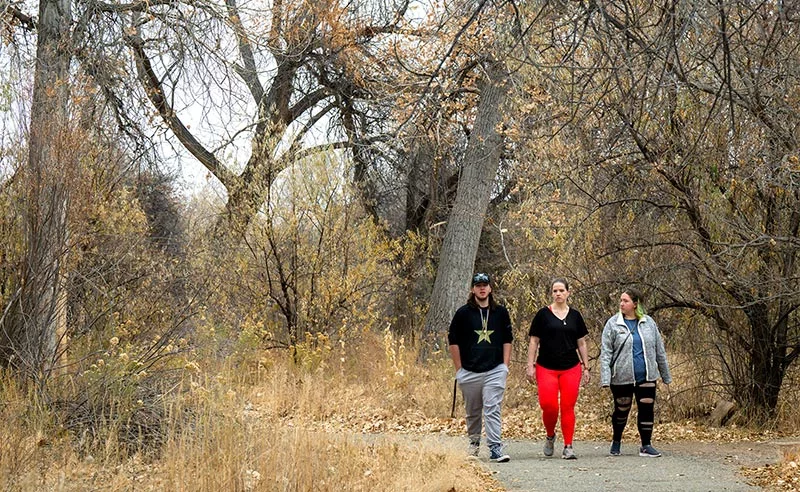
Losing so much weight has changed her life in many positive ways.
“I’m so active now,” she said. “My daughter and my daughter-in-law joke that I never stop.”
Rachael no longer takes blood pressure medication. With less weight to bear, her ankle is doing well. She has cycled through new clothing sizes frequently and had to fit adjusters onto her wedding rings, which had started to slide off her finger.
Perhaps most importantly, she’s able to do things with her family now that she couldn’t do before.
One of her sons, Reid, wanted to book a tour at Cave of the Winds, an attraction in Colorado Springs that offers underground cave tours.
“I was always so afraid to go because they tell you that if you have physical restrictions, it’s not recommended, because you’re crawling through tunnels in darkness,” she said.
She said she “bit the bullet” and bought tickets.
“I did it! And I cried afterward.”
Rachael’s daughter, Rebekah, smiles when asked what she thinks of her mother’s weight loss.
“Seeing her and how far she’s come makes me really happy,” Rebekah said. “I’m really proud of her.”
Pan, too, said Rachael’s progress has been “amazing.”
“We do the dietary teaching, and we try to give patients the tools that they need to guide them in the right direction,” Pan said. “We give them proper counseling before and after the surgery, and we make sure they’re doing well after surgery. Overall, patient success depends on the patient. Rachael is the biggest part of her actual success.”
High school band booster club brings Rachael full circle
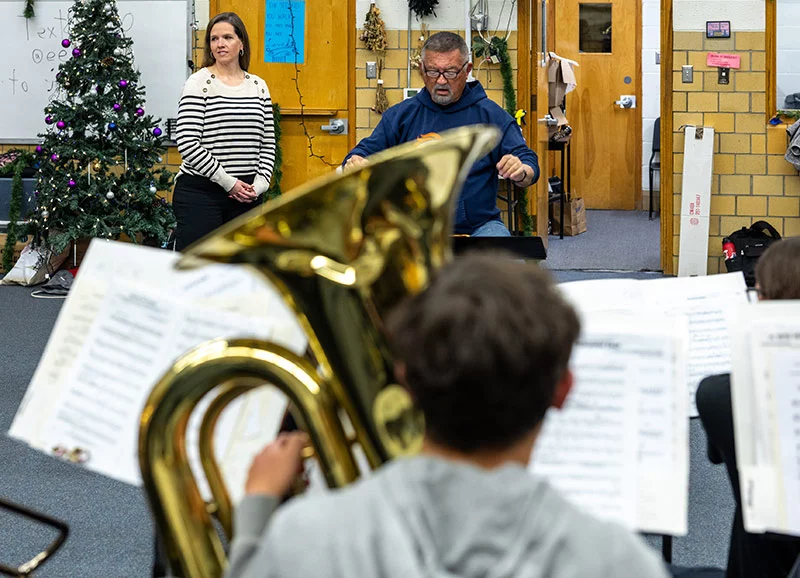
One of the more meaningful new activities Rachael can enjoy now is serving as president of the band booster club at South High School, where she was in the band more than 20 years ago and where Reid now plays baritone at half-time shows and marching band competitions.
Rachael agreed to lead the booster club at a particularly difficult time for the high school’s music program. In spring 2023, the band students were still reeling after the unexpected death of their band teacher. The booster club needed new leadership, and Rachael offered to take the helm. She was at her heaviest, 328 pounds, with her weight-loss surgery still months away.
“I don’t know how I’m going to pull this off,” she thought to herself.
Rachael shares a message for others: ‘It’s hard work, but it’s worth it’
In August 2023, the South marching band made its annual appearance in the big Colorado State Fair parade in Pueblo, where the fair happens each year. Band parents, including the booster club president, typically join the band on the parade route, carrying water bottles and spray bottles to help provide relief for students as they endure Pueblo’s summer heat. Rachael wasn’t about to miss it.
“I was bound and determined,” she said.
She walked the mile-plus route, exhausted by the end.
These days, weighing around 190 pounds, Rachael easily keeps up with the busy band students and their demanding schedule. The students perform at fall football halftime shows and marching band competitions, and they participate in a full array of parades, including the recent Pueblo holiday parade. Rachael is there with the high schoolers, every step of the way.
She helps move band instruments and equipment, organizes and assigns marching band uniforms, maintains and fills out necessary paperwork and leads the fundraising efforts that enable the band to enter competitions and travel. In October, the South marching band traveled to Grand Junction for the state competition and placed eighth, the first time the band had qualified for the state competition in more than a decade.
Rachael still marvels at the changes she’s made in her life and at what weight-loss surgery has made possible. And she has a message to others who might be considering a similar journey.
“This is a tool,” she said. “It’s not a fix-all. It is a tool that you need to use to your advantage. And if you don’t use your tool in the right way, it’s not going to help you.
“It’s hard work, but it’s worth it. It can change your life.”