
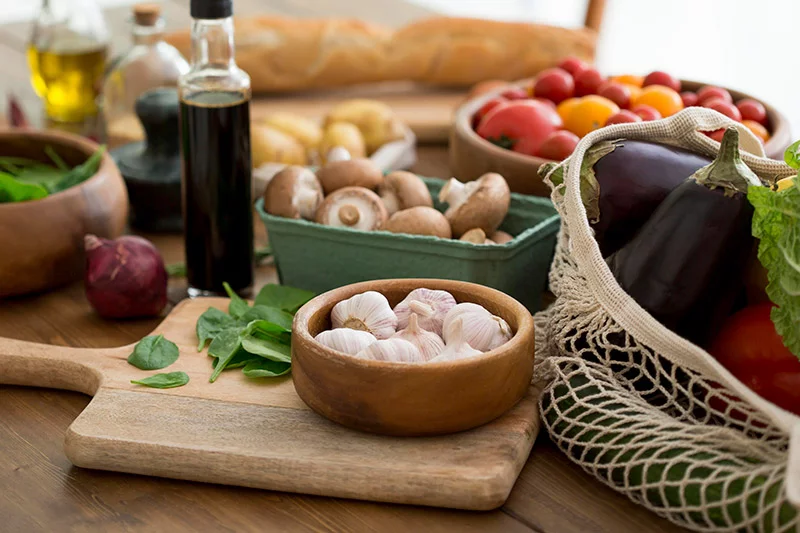
Cooking vegan is the timeliest cooking to fulfill a New Year’s resolution to “Eat more vegetables.” It fills the bill (and the belly) because eating vegan is cooking and eating purely plant-based food.
Vegan cooking is also delicious cooking, when you get the hang of it, and impresses on the home cook just how much non-plant food we can do without in our diet, all without sacrificing flavor, aroma, texture and other eating esthetics.
Vegan meal prep ideas
To cook vegan, you’ll need to reconfigure your pantry with non-dairy milk(s); vegan oils such as coconut and olive, and other fats (vegan butter, for example, or vegan mayonnaise); vegan cheeses; and vegetable broth.
You probably already have some different grains (rices, say), but you’ll need to expand the palette with additional types of beans, nuts, seeds, and pastas. The variety is important because it expands the available flavors, textures and possible preparations. Of these, dried are preferred, but many canned vegetables and beans work well, especially canned tomatoes in different forms.
Dried mushrooms of several sorts are key, not merely porcini for Italian-style cooking, nor shiitake for Asian, but an entire bookshelf of dried ‘shrooms. Again, the range is key to success in the kitchen and on the plate.
Such a range in fresh, even locally-grown, mushrooms is increasingly the case at close-to-home grocers.
A trip to an Asian grocery will help stock the pantry with helpful vegan staples such as miso paste, liquid aminos or tamari, rice vinegar, and tahini.
And there is the issue of vegan proteins. Once, a friend of mine and I went to a vegan restaurant in New York City where the menu was as long as the Manhattan phone book (remember phone books?), “shrimp” and “lobster” this and “chicken” and “steak” that. All the faux-meats were constructed of soy- or other plant-based protein such as seitan or tempeh but also were made to resemble, for example, the curled commas of pink shrimp or glistening slabs of seared steer.
The omnivore at the table (moi, at the time) found all of this very amusing, as I still do when vegan menus sport omnivore-ish names, but I suppose the appeal is nostalgic.
When I cook with vegan proteins, I don’t need to make them look like anything. I’m less interested in vegan bratwursts heavy on the wheat gluten or Thanksgiving Tofurky heavy on the furky than on the wheat gluten or tofu alone.
The point about vegan food for me isn’t the visuals; it’s the taste and texture, both of which can be some of the more alluring in all of cooking.
Cooking vegan recipes
With a laptop or smartphone handy, you can find vegan recipes of any stripe or style of cooking; there are thousands. Cuisines that are natively friendly for vegetarians — Indian, say, or Mexican — make for an easier transition to vegan. Much of Asian cooking is vegan to begin with or needs only a bit of tinkering to go vegan from vegetarian.
To my taste, the highlight of my vegan cooking is this mushroom fricassée from a cookbook by the successful group of Native Foods restaurants in Chicago. It’s a really terrific turn on mushrooms.
Wild Mushroom Fricassée on Garlic Toasted Crostini
From “Native Foods Celebration Cookbook”; 12 to 16 bites
Ingredients
1 small baguette
1/4 cup garlic oil (recipe below)
1 pound shiitake mushrooms, cleaned and steams removed
1 pound portobello mushroom, cleaned, diced 1/4 inch
1 pound maitake mushrooms (also known as “hen of the woods”)
1/2 pound king or oyster mushrooms
1/2 pound chanterelle or lobster mushrooms
2 cloves garlic, minced
2 shallots, minced
2 teaspoon sea salt
1/ teaspoon black pepper, cracked
1/4 cup vegan sour cream
Directions
Preheat oven to 350 degrees. Slice baguette into 1/2-inch slices. Brush with garlic oil. Toast for 9-11 minutes or until golden brown. Clean all mushrooms and dice into 1/2-inch pieces. Heat up sauté pan on medium-high heat. Add 2 tablespoons garlic oil. Add garlic and shallots and cook until transparent, stirring constantly. Add larger mushrooms first (lobster, portobello and king). Sauté for 3 minutes, then add all other mushrooms.
Season with salt and pepper. Add more oil if mushrooms start to dry out. Cook for another 5 minutes. Remove from the heat and allow the mushrooms to cool down until you can handle them. Rough chop the mixture and transfer it to a bowl. Add the vegan sour cream, mix well and taste. Scoop or spread the fricassée onto the crostini.
Roasted Garlic and Garlic Oil
Makes 2 cups
Place 4 cups garlic cloves in a saucepan and sprinkle with 1 teaspoon each salt and ground black pepper. Pour 2 cups each olive oil and vegetable oil over cloves and simmer over medium-high heat for 35-40 minutes. (Cloves should end up golden brown not dark brown or black.) Strain oil and cloves into separate container to cool. Store both in refrigerator.
Seitan Meatloaf
From “Native Foods Celebration Cookbook” Makes 1 loaf.
Ingredients
4 cups seitan, ground
2 teaspoon olive oil
1 sweet onion, quartered
1 carrot, roughly chopped
2 garlic cloves
1 cup breadcrumbs or crackers
1/3 cup almond or peanut butter
1/3 cup ketchup
2 tablespoons soy sauce
½ cup tomato sauce
Salt and pepper, to taste
Fresh parsley and thyme, to your liking
Directions
Dice the seitan loaf up into small enough cubes to grind up in the food processor. Grind for about 1 minute or so, or until the seitan is nice and crumbly. Place the ground seitan in a large bowl. Place the quartered onion, rough chopped carrot and garlic cloves in the food processor and grind up as well, but only for 15-20 seconds. Chunks are good here.
Preheat oven to 375 degrees and lightly grease a loaf pan with vegan butter or a little oil. Add the ground up vegetables and all other goodies to the bowl of ground seitan. Mix well. Taste the mix and adjust with seasonings if needed. Portion into the pan and bake for 40-50 minutes. Be sure to rotate the meatloaf halfway through the cooking time for more even cooking.
Ayurvedic Cleansing Green Kitchari Bowl
This recipe is adapted from Leah Vanderveldt’s fabulous cookbook, “The New Nourishing.” The fennel seeds are the sleeper spice in here and so good for digestion. Kitchari is a staple of healing Ayurvedic cooking since the rice and lentils are cooked until easily digestible and the base is layered with supportive spices and ginger. Serves 4
Ingredients
1 cup dried yellow split peas or lentils
1/2 cup long grain brown rice
3 tablespoons coconut oil
1 tablespoon grated fresh ginger
2 teaspoons ground cumin
1 teaspoon ground coriander
1 teaspoon fennel seeds
1 teaspoon ground fenugreek
1 teaspoon ground turmeric
1 teaspoon sea salt
5 cups vegetable stock or water
1 small crown broccoli or cauliflower finely chopped into an almost rice-like texture (about 2 cups total)
1 medium zucchini coarsely grated (about 1 cup)
1 cup packed baby spinach leaves, roughly chopped
1/4 cup cilantro leaves
Directions
Rinse the yellow split peas or lentils and rice in a fine mesh colander under cold water until the water runs clear. In a large, lidded saucepan over medium-high heat, heat the coconut oil. Add the ginger and cook, stirring, for 30 seconds. Add the cumin, coriander, fennel seeds, fenugreek, and turmeric. Cook for another 30 seconds, until fragrant.
Add the split peas or lentils and rice and stir to coat in the spices. Add the salt and pour in the water or vegetable stock. Bring to a boil, cover, and reduce the heat to medium-low. Simmer for 35-45 minutes, stirring occasionally, until the peas and lentils are tender but not mushy and most of the liquid has been absorbed. (You may need to add more water if the mixture becomes too dry or begins to stick to the bottom of the pan).
Stir in the broccoli or cauliflower. Cover and cook for another 4-5 minutes. Stir in the zucchini and spinach, then remove from the heat and leave to stand for 5 minutes. Serve very warm scattered with the cilantro.