
The power of knowing your patients
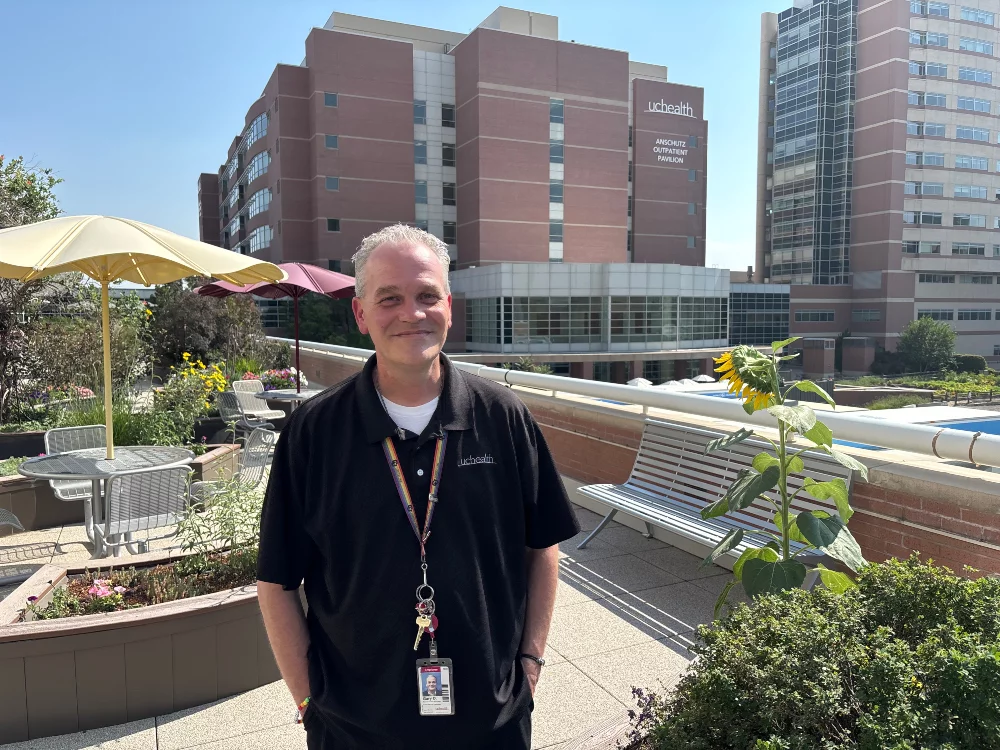
In the Cell Therapy Infusion Center at UCHealth University of Colorado Hospital, patient access specialist Gary Dufour is often a familiar voice on the phone and a familiar face in the clinic. Whether helping patients navigate appointments, connecting them with care teams, or providing support during treatment, he works to make each interaction a little easier.
Over time, those responsibilities have helped him build strong relationships with returning patients. One recent interaction reminded him that building relationships with patients can have an impact far beyond logistics.
During one of his shifts, Dufour noticed a familiar face enter the reception area. The patient arrived in good spirits, greeting Dufour as they checked in, but something changed as the day progressed.
“The patient came in fine, almost peppy,” Dufour said. “But when I saw them later, I could tell something was off.”
The patient appeared dazed, and when Dufour stopped what he was doing to check on them, they were noticeably slower to respond than earlier. Having gotten to know the patient through previous visits, he knew the change wasn’t normal.
Trusting his instincts, Dufour immediately alerted the center’s nursing team and shared his concerns. While clinical team members began assessing the patient, the patient’s condition rapidly deteriorated, and they began experiencing seizure activity.
Dufour sprang into action. He quickly cleared furniture to create space for caregivers, directed patients and visitors away from the scene and later assisted with moving the patient into a treatment area.
The Rapid Response Team arrived within minutes and provided care before arranging a transfer to the emergency department.
As multiple teams rushed to assist, Dufour shifted his attention to patients and families who had witnessed the emergency.
“It was probably the most intense situation I’ve experienced since joining the Cell Therapy Infusion Center team,” Dufour said. “The atmosphere was tense.”
According to Corrie Rayne-Monroe, the Cell Therapy Infusion Center’s supervisor of clinic office operations, Dufour’s calm demeanor helped the response unfold smoothly.
“He kept his composure and did everything right,” Rayne-Monroe said.
She also shared that the relationships patient access specialists build with patients are a hallmark of the role.
“Our patient access specialists know their patients’ favorite snacks during chemotherapy, how to cheer them up, and how to care for both patients and caregivers,” Rayne-Monroe said. “They can really turn patients’ visits around.”
Later that day, a family member returned to thank Dufour for his help. The patient also sent a handwritten note expressing gratitude for his quick response.
“Gary — thank you so much for responding so quickly and helping me when I needed it most,” the note read. “Your willingness to step in and help made a real difference, and I sincerely appreciate it.”
Dufour credits his working style to a lesson passed down by his grandmother.
“I live by a motto my grandma taught me: ‘No matter how bad your day is or how bad things are going, always keep a smile on your face because someone else’s day could be worse and your smile could make it better.'”
It’s an approach he brings to every patient interaction and one that helped him recognize when a patient needed life-saving intervention.