
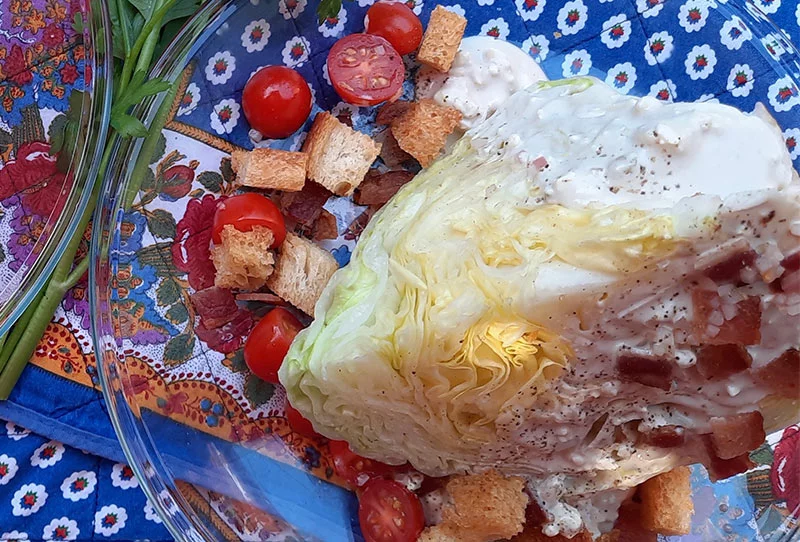
It’s odd to think of it now, but Colorado once was the iceberg lettuce capital of the United States.
From the early 1920s until the 1940s, several counties in Colorado’s mountainous areas, including Eagle and Routt, and locales such as Buena Vista and Salida, were net exporters of thousands of railroad cars of head lettuce to points East and West all around the country.
Colorado growers shipped lettuce around the country well into the autumn and early winter when lettuce exports from California had ceased.
The railcars were packed with ice from shallow ponds high in the Rockies, especially around the (now gone) town of Pando, about midway between Minturn and Leadville along Colorado Highway 24. Pando also marks the spot where the U.S. Army constructed Camp Hale in the early 1940s to train WWII troops for the army’s elite 10th Mountain Division who were sent to fight in the Italian Alps.
An April 6, 1942, issue of the Carbondale Chronicle newspaper hails Pando as an ideal site for such a camp, “for winter comes early to this area and leaves late.”
Workers hauled Pando’s ice to the Minturn icehouse, where they chopped it and filled boxcars of the Denver & Rio Grande Railroad that had been sidelined and waiting up the tracks a bit at the Avon Depot. Lettuce farmers from in and around Avon, Minturn, Beaver Creek and Bachelor Gulch brought in their head lettuce (and other crops) and filled up those boxcars.
The pattern was the same at other railway depots around Colorado, with other lettuce farmers, other ice houses and ice pond sources. During those early 20th-century years, head (sometimes called “crisp-head”) lettuce probably picked up its nickname — “iceberg” lettuce — due in large part to Pando’s ice.
Is iceberg lettuce Nutritious? Yes — and its crunch is a bonus
Iceberg is presently much out of favor among the lettuscenti who prefer other greens such as mesclun, frisée, “spring mix” or “field” greens, or baby spinach. (There’s also the tireless kale boom.) And, of course, we’re dealing with an outbreak of illnesses around the U.S. from the cyclospora parasite, which might be linked to iceberg lettuce from Mexico.
Nevertheless, iceberg lettuce remains the largest segment of U.S. lettuce production, much of it going into what some believe to be the greatest invention for the home kitchen since the dishwasher: bagged lettuce.
Despite the common assumption that iceberg is low in nutrition, it isn’t. The misconception is based on the bias that it isn’t dark green. Iceberg is strong in thiamin, the vitamins A, C, and K, and in iron, potassium, fiber, and manganese.
True, iceberg does sport less taste or flavor than many other lettuces or greens, but I’m convinced that its enduring appeal is textural. It’s a terrific lagniappe when you can hear your food as you eat it.
So, wash your iceberg well and make a classic wedge salad to cool off and enjoy a throwback to an important part of Colorado’s history when the state was “Iceberg Central.”
Buttermilk Blue Cheese Dressing recipe
By Sam Sifton, nytimes.com. Serves 4.
Ingredients
- 4 ounces blue cheese, like Roquefort, crumbled
- 1/4 cup buttermilk
- 2 tablespoons mayonnaise
- 1 tablespoon olive oil
- 1 teaspoon hot sauce
- 1 teaspoon lemon juice
- 1 dash Worcestershire sauce, to taste
Directions
Sprinkle the cheese into a medium-size bowl, and mash with a whisk. Add the buttermilk, mayonnaise, olive oil, hot sauce, lemon juice and Worcestershire sauce, then mash and whisk the dressing until it is mostly smooth. You may wish for a little more hot sauce, or lemon juice or Worcestershire sauce, to taste. Then whisk again and set aside.
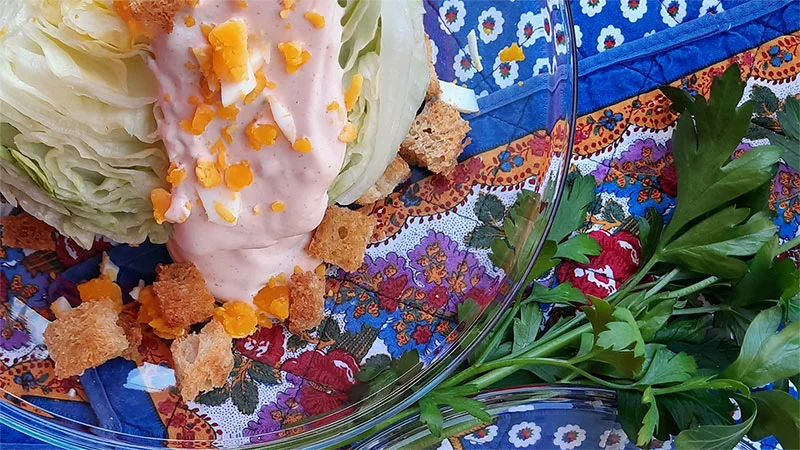
Louis 1000 Dressing recipe
This is an adaption of a Louis dressing (for crab or lobster salad) that I learned from my mother, Madeleine M. St. John, with the usual enhancements typical of a Thousand Island Dressing such as sweet pickle relish. Makes 3 cups.
Ingredients
- 1 cup mayonnaise
- 1/3 cup chile sauce (not ketchup), heat level your choice
- 2 tablespoons grated onion juice (or 1/2 teaspoon onion powder)
- 1 teaspoon freshly squeezed lemon juice
- 1/2 teaspoon sweet or hot paprika powder, your choice
- 3 tablespoons sweet pickle relish, juice included
- 1 cup heavy whipping cream
Directions
In a bowl, mix the first 6 ingredients, creaming them together. In a separate bowl, made cold if desired, whip the whipping cream into soft peaks.
Combine the contents of both bowls, folding gently but thoroughly so as not to deflate or beat down the whipping cream. Refrigerate until ready to use. Leftover sauce keeps for 4-5 days in the refrigerator and can be used as a dressing for salads, a dip or for a Reuben sandwich.
Looking for more salad ideas?
Iceberg lettuce shines in one of these delicious make-ahead summer salads, along with two other crowd-pleasing recipes for summer gatherings.
Iceberg lettuce adds crisp texture to this refreshing Salade Niçoise, a summer favorite featuring vegetables, tuna and vinaigrette.
If you love crisp salads with iceberg lettuce, you’ll also enjoy this grain-based favorite packed with vegetables, fiber and texture.
And all salad fans should check out this look at the origins of the Caesar salad, along with the recipe that made it famous.