


Mobility during your hospital stay
Stay Moving, Stay Healing: Your Guide to Hospital Mobility at UCHealth
Why moving matters for your recovery
When you are in the hospital, moving is one of the most important things you can do to help you recover. Staying active helps your body heal faster and lowers your risk for having complications, such as:
- Strength and muscle loss
- Longer hospital stays
- Blood clots
- Pneumonia
Mobility is an important part of your care plan, and you are a vital part of the team that makes it happen.
What to expect: your mobility journey in the hospital
Everyone’s mobility journey is different. The examples below show how movement may progress for many patients, but your care plan may look different depending on your recovery and what you are able to do. Each patient’s plan is made specifically for them.
Mobility in the hospital often looks different from at home, but all movement matters. At home, even when you are sick, you still get up to use the bathroom, get a drink of water or eat meals. In the hospital, we often help with daily tasks, so you may move less than usual. That is why we work with you to stay active.
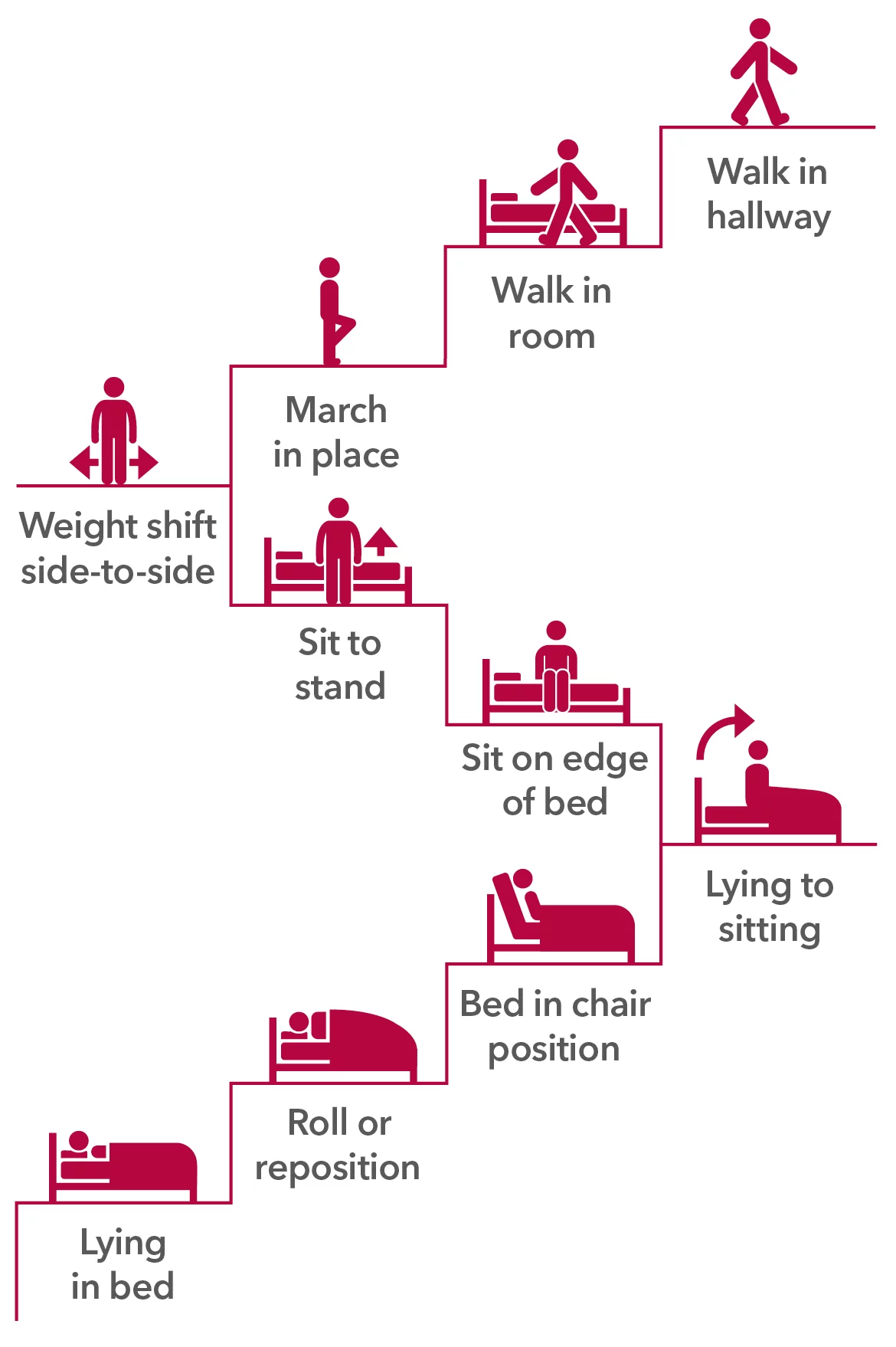
Mobility will start early and happen often during your stay. It begins with small actions, like moving in bed or sitting on the edge of the bed. As soon as it is safe, your care team will help you stand, take steps and sit in a chair.
Your daily mobility goal is based on what you can do safely and may change as you recover. Plan to move at least 3 times each day. Certain activities help you reach your goals and build strength, such as:
- Eating meals in a chair
- Walking to the bathroom
- Brushing your teeth at the sink
Your team will help you do what is safe each day. Below is an example of how your movement may change during your hospital stay.
Your care team will work with you to determine what is safe for you, which may vary from person to person.
Safety note: For your safety, a care team member will stay close by when you are up and moving, including when you use the bathroom. Their role is to support you and help prevent falls so you can focus on healing.
Mobility progression: mobility is not just walking!
Moving might not feel good
Moving in the hospital might feel uncomfortable or tiring. This is normal. You may feel pain or be weak or dizzy at first. These feelings can be part of the healing process. Your care team will help you manage your pain and keep you safe as you move. The benefits of getting up and moving are greater than the short-term discomfort. With every movement, you help your body heal, lower your risk for complications and get closer to going home. Always let us know what and how you are feeling.
Who will help you?
You will not be doing this alone. Your nurse will make sure you stay active. Other care team members may also help you move while you are in the hospital.
These include:
- Nurses
- Nursing assistants
- Technicians
- Physical therapists
- Occupational therapists
Your providers also support your mobility goals and may talk with you about how movement is part of your recovery plan.
The team members who help you may change from day to day, but all are trained to help you move safely and confidently.
Watch our video to learn how we work together to keep you safe and prevent falls during your hospital stay.
How UCHealth supports you
Mobility care at UCHealth is based on the latest medical research and supported by every member of your care team. From your first day in the hospital until you go home, you will get consistent mobility support that is backed by the latest research.
Together, we move toward recovery
Staying active during your hospital stay takes effort, but you are not doing it alone. Your care team is here to guide, motivate and celebrate every step with you.


