
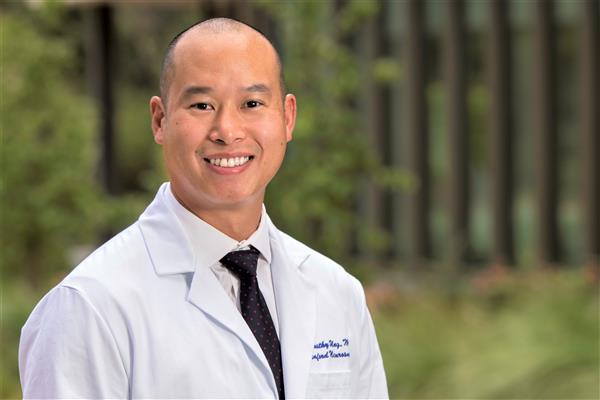
A CU Medicine provider.
Dr. Timothy Ung is a neurosurgeon with specialized expertise in the diagnosis and surgical management of pituitary tumors and complex brain tumors in neurosurgical oncology. He is recognized for his meticulous surgical technique, patient-centered approach, and commitment to advancing care for patients with tumors of the brain, spine, and skull base. He completed his neurosurgical training at the University of Colorado and advanced fellowship training at Stanford University.
Dr. Ung has extensive experience treating both benign and malignant intracranial tumors. His clinical practice emphasizes minimally invasive cranial, endoscopic approaches, and stereotactic radiosurgery when appropriate, aiming to maximize tumor control while preserving function.
In addition to his clinical work, Dr. Ung is actively involved in multidisciplinary care, collaborating closely with endocrinologists, radiation oncologists, neuro-oncologists, and otolaryngologists to develop individualized treatment plans. His academic interests include improving surgical outcomes, refining tumor management strategies, and contributing to research and education in neurosurgical oncology.
Dr. Ung is deeply committed to guiding patients and their families through complex diagnoses with clarity, compassion, and transparency, ensuring they feel informed and supported at every stage of care.
Locations
 720.848.2080
 720.848.2106
Qualifications and experience
- Specialties
- Neurosurgery
- Gender
- Male
- Languages spoken
-
English
- Education
-
Internship
University of Colorado (University Hospital) Program (2016)
Fellowship
Stanford University Program (2022)
Fellowship
Columbia University (New York-Presbyterian/Columbia University Irving Medical Center) (2015)
Medical School
University of Colorado Denver Health Sciences Center (2016)
Residency
University of Colorado (University Hospital) Program (2023)
Undergraduate
University of Colorado - Boulder (CO) (2010)
- Clinical interest for patients
-
• Acoustic Neuroma
• Acromegaly
• Anaplastic Astrocytomas
• Arachnoid Cysts
• Astrocytomas
• Brain Tumors
• Brainstem Glioma
• Cerebellar Astrocytomas
• Choroid Plexus Tumors
• Clival Tumors
• CNS Lymphoma
• Colloid Cyst
• Craniopharyngiomas
• Cushing Syndrome
• Dermoid and Epidermoid
• Ependymoma
• Esthesioneuroblastoma (ENB)
• Glioblastoma Multiforme (GBM)
• CNS Lymphoma
• Colloid Cyst
• Craniopharyngiomas
• Cushing Syndrome
• Dermoid and Epidermoid
• Ependymoma
• Esthesioneuroblastoma (ENB)
• Glioblastoma Multiforme (GBM)
• Gliomas
• Glomus Jugulare Tumors
• Hemangioblastoma
• Intraventricular Tumors
• Medulloblastoma
• Meningioma
• Metastatic Brain Tumor
• Mixed Gliomas
• Neurofibromatosis Type 1
• Neurofibromatosis Type 2
• Olfactory Groove and Sphenoid Wing Meningiomas
• Oligodendrogliomas
• Orbital Tumors
• Parasellar Tumors
• Phakomatoses
• Pineal Region Tumor
• Pituitary and Parasellar Tumors
• Pituitary Tumor
• Primitive Neuroectodermal Tumors (PNETs)
• Skull Base Tumors
• Tuberous Sclerosis
• Decompression
• separation surgery
• spinal tumors
• Degenerative spine and disc disease
• Spinal trauma
• Spinal instability
• Minimally-invasive spine surgery. - Insurance
- UCHealth strongly encourages you to consult with your health insurer to determine accurate information about your coverage and benefits for a particular health care service provided at a UCHealth facility. Read more here.