
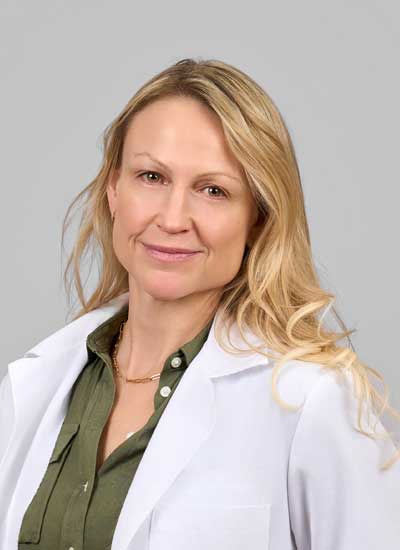
A foot injury she sustained while training for the Boston Marathon changed the trajectory of Dr. Jamie Mieras’ career. She did not start out to become a healer.
The Boulder native went to school at The University of Colorado for a degree in Biology with an emphasis on plant studies. She moved to Seattle and worked as an IT administrator for a time. That’s when she got into running, one of her big passions.
“When I found a podiatrist to help me, I was just in awe of what he could do,” Dr. Mieras remembered. “I was so impressed. I said, ‘Is this what you do all day?’ I decided right then and there that this was a good career path for me.”
Dr. Mieras went to DO school at Midwestern University in Arizona. She did clinical internship in Phoenix and San Francisco before heading to Scripps San Diego for residency. She worked in Sacramento where she treated a lot of foot and ankle trauma. Then she came back to Colorado and practiced for a year in Boulder before practicing rural health medicine in California. She has the only podiatrist in a 200-mile radius.
“Accessibility to this specialty is important,” Dr. Mieras emphasized. “Foot and ankle problems make it hard to drive and difficult to walk around and get to places.”
Following that experience, Dr. Mieras worked in Portland at one of the busiest hospital systems in the city. She saw a lot of different pathologies and performed many surgeries.
Dr. Mieras believes that a big part of being a doctor is getting patients to understand what is going on. If you understand as a patient, she said, you are most likely to do the right things for it or to understand the healing process.
The most common complaints she will be seeing as a podiatrist at EPH include plantar fasciitis, pain in the toes, foot, and ankle, sprains, fractures, ligament repairs, reconstructions, bunions, hammer toe issues, corns, and callouses.
“We see people with diabetes who need a little bit of extra care for their feet and extra monitoring,” Dr. Mieras pointed out. “The high blood sugars can make their immune system less able to respond to problems to begin with. We see a decrease in nerve sensation. The ends of the small nerves at the ends of the toes up to the bottom of the foot start to go numb. Then the body is not alerted when something is happening in that area. Things can become worse quickly. It’s very important that we monitor diabetic feet so that the patient is on the path to health. It’s one of the most rewarding things to see a diabetic foot wound heal and for that person to become more mobile.”
Dr. Mieras has some interesting hobbies, from running long distances to flying airplanes.
Locations
 970.586.2200
 970.577.4536
Qualifications and experience
- Specialties
- Podiatry
- Gender
- Female
- Languages spoken
-
English
- Insurance
- UCHealth strongly encourages you to consult with your health insurer to determine accurate information about your coverage and benefits for a particular health care service provided at a UCHealth facility. Read more here.