UCHealth launches telestroke services in Estes Park
New technology helps diagnose and treat stoke patients faster
Estes Park, Colo. – Every second counts when treating a stroke.
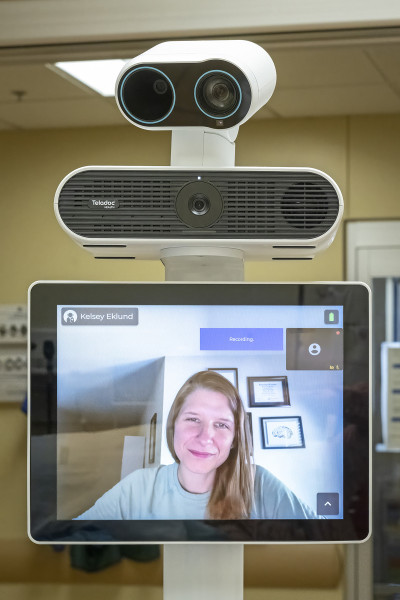
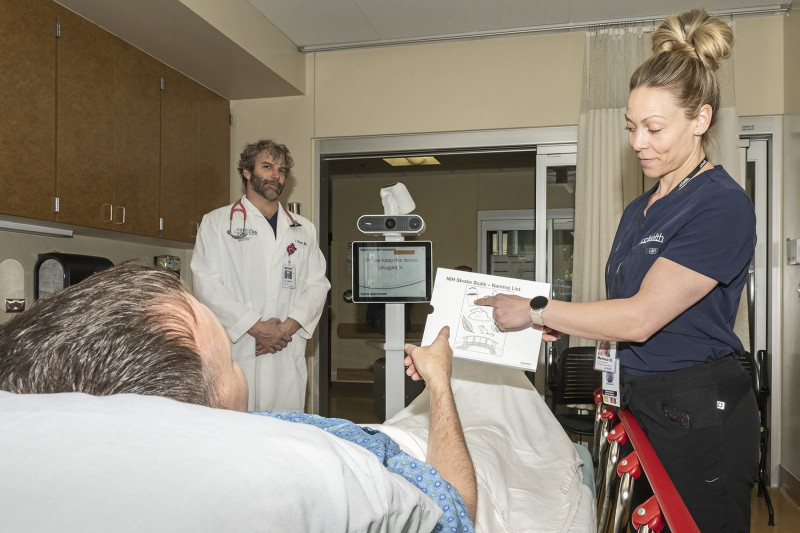
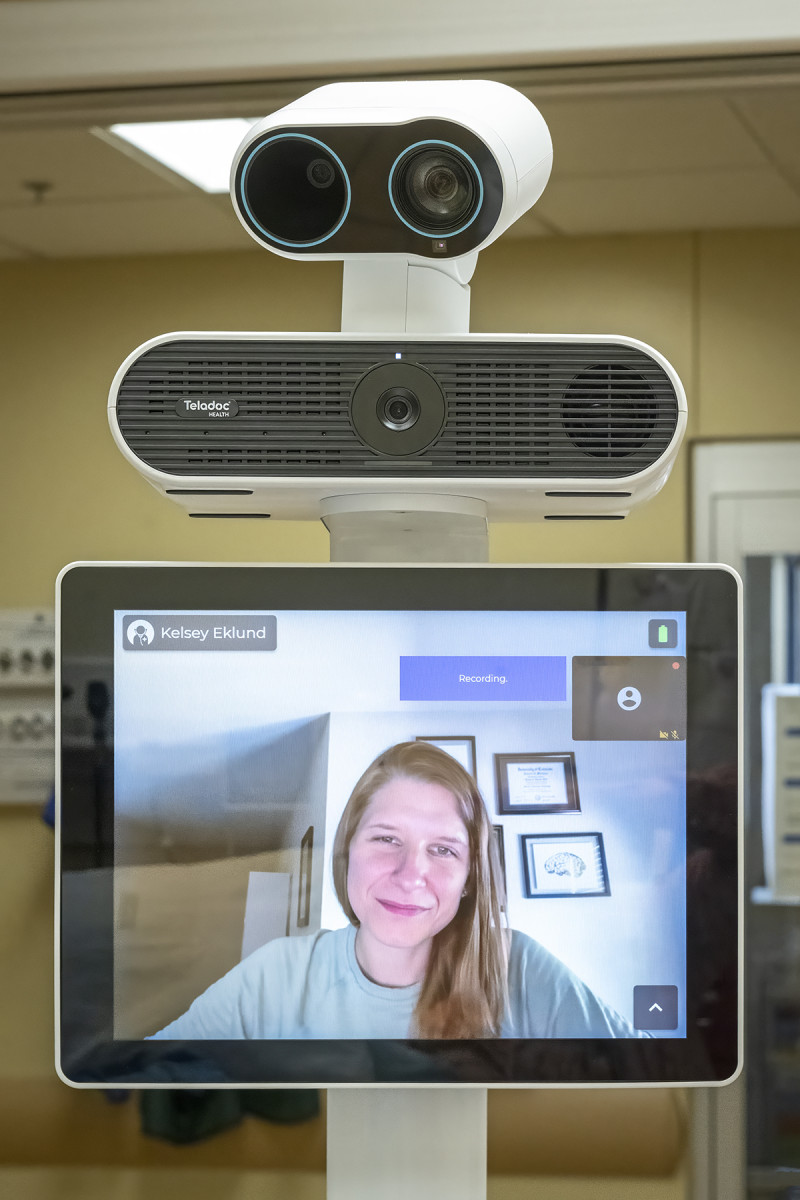
With this urgency in mind, UCHealth Estes Valley Medical Center (EVMC) has introduced telestroke services in its emergency department, transforming care for the Estes Park community. Telestroke connects the local EVMC care team with a virtual neurologist 24/7, enabling rapid diagnosis and treatment for patients.
“The telestroke service enhances collaboration between our local care team and an acute-care neurologist, allowing faster, more thorough care for patients,” said April Kendall, associate nurse manager in EVMC’s emergency department.
Strokes happen when there is a sudden interruption of blood flow to the brain, which can be caused by a blockage of a blood vessel or bleeding in the brain. Reductions in oxygen and nutrients to the brain can cause cell death.
In the U.S., more than 795,000 people have a stroke each year. According to the U.S. Centers for Disease Control and Prevention (CDC), strokes are the leading cause of long-term disability, with some of the most common outcomes being partial paralysis, slurred speech, reduced mobility and death. Although most strokes happen in patients 65 and older, the number of strokes is on the rise in younger patients.
“Every minute a stroke goes untreated can lead to permanent brain injury, and our telestroke service allows us to act quickly, even from a distance,” said Dr. Kelsey Eklund, a UCHealth neurologist with the telestroke service and assistant professor of neurology at the University of Colorado Anschutz School of Medicine. “By shortening the time to evaluation and treatment, we help ensure all patients receive high-quality care that can dramatically improve outcomes, recovery and long-term quality of life.”
With the combined expertise of emergency physicians, nurses and now a virtual neurologist, EVMC’s team can diagnose strokes and start treatment within minutes, maximizing patient recovery and minimizing lasting effects.
“The addition of telestroke services will make us more efficient, allowing us to evaluate, diagnose, treat and transfer patients to a higher level of care more quickly,” said Kendall.
In 2025, EVMC received 45 patients in the emergency department who were evaluated and transferred for higher-level neurological care. In 2026, that number is already at 13, highlighting the growing need for efficient diagnoses and treatment.
“The neat thing about telestroke services is having the neurologist right at the bedside getting firsthand information from the patient and family,” said Dr. John Meyer, an emergency physician with UCHealth Estes Valley Medical Center. “The technology of the tablet is set up so the neurologist can do a physical exam alongside the nurse and emergency physician. This also provides a faster diagnosis and treatment plan, which saves neurons in the brain.”
To help Estes Valley residents identify the signs of a stroke, EVMC is offering a free B.E. F.A.S.T. magnet at community events, or residents may pick one up at the hospital main lobby Monday through Friday from 9 a.m. to 4 p.m.
For more information about strokes, visit the UCHealth stroke page.
Downloadable photos (click on image for option to download)