Ion robotic bronchoscopy system debuts at UCHealth Parkview
The Ion robotic bronchoscopy system at UCHealth Parkview Medical Center allows physicians to reach hard-to-access lung nodules and improve diagnostic accuracy.
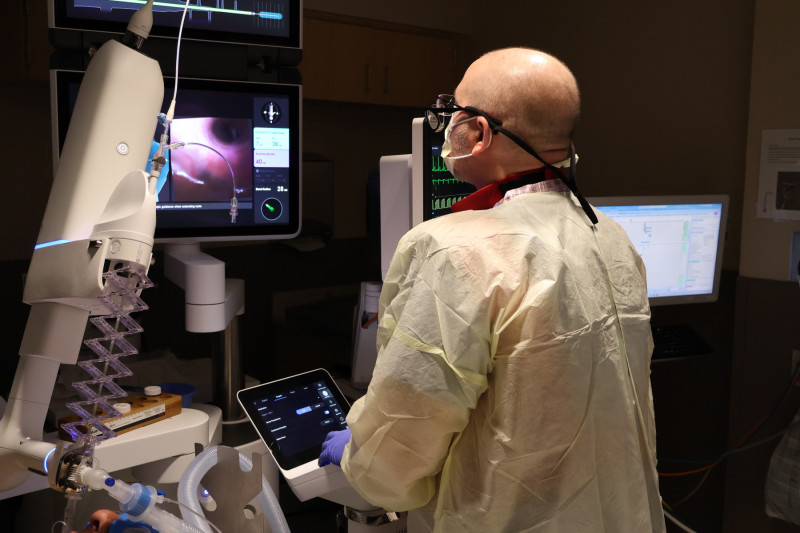
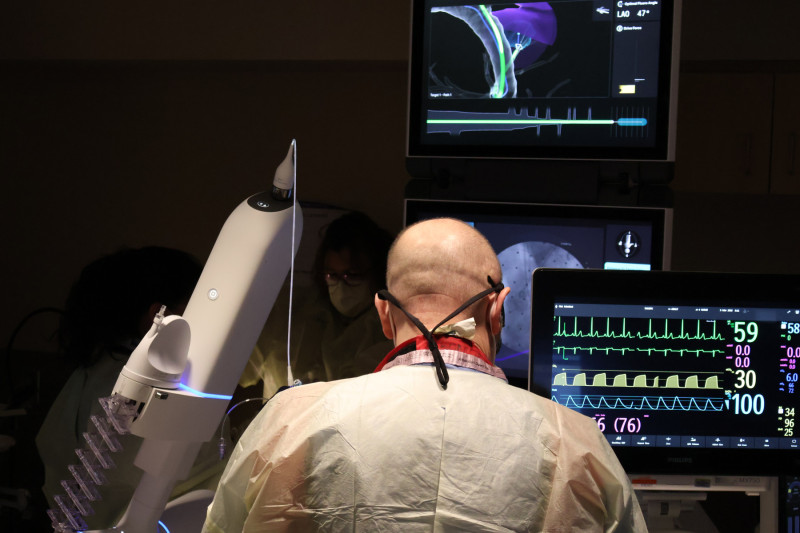
Pueblo, Colo. (March 25, 2026) UCHealth Parkview Medical Center is expanding access to advanced lung diagnostics in southern Colorado with the addition of the Ion robotic bronchoscopy system, a minimally invasive technology that allows physicians to biopsy small and hard-to-reach lung nodules with greater precision.
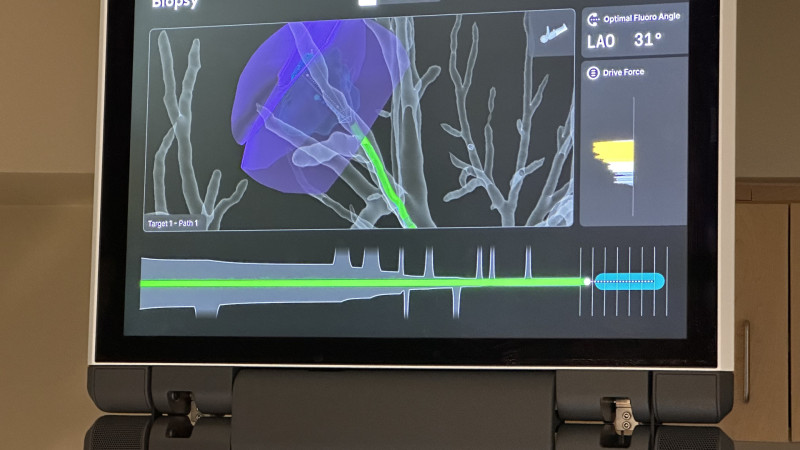
The Ion robotic-assisted platform enhances traditional bronchoscopy procedures by combining robotic navigation with three-dimensional imaging of a patient’s lungs. Using a CT scan to create a detailed 3D airway map, physicians can guide a thin robotic catheter deep into the lungs to locate and biopsy suspicious nodules.
Nodules are small masses of dense tissue, typically about an inch in size, that appear in imaging tests as white spots. Most are non-cancerous.
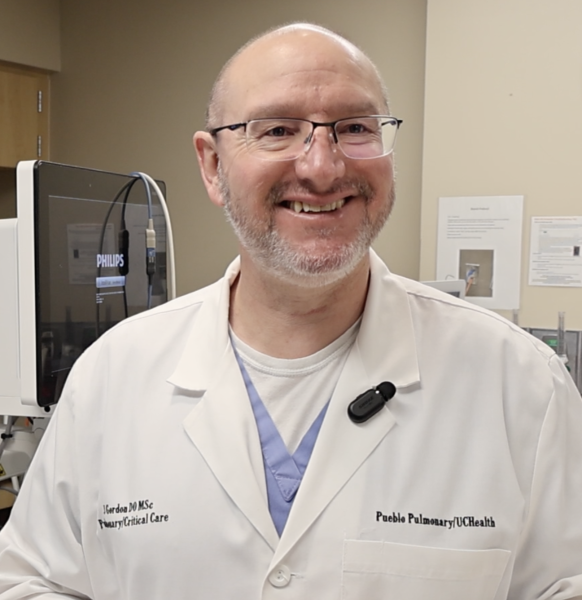
Dr. Joshiah Gordon, an interventional pulmonologist with Pueblo Pulmonary Associates, said the technology represents a significant advancement in the ability to diagnose lung disease earlier and more accurately.
“Robotic bronchoscopy allows us to reach very small nodules that were previously difficult or sometimes impossible to access,” Dr. Gordon said. “By combining detailed CT imaging with robotic precision, we can guide the bronchoscope directly to the area of concern and obtain tissue samples with a much higher level of accuracy.”
One challenge in traditional bronchoscopy procedures involves a concept known as “divergence,” where the airway map created from a CT scan may not perfectly match the patient’s anatomy during the procedure. The Ion system uses advanced shape-sensing technology that significantly reduces this difference, helping physicians maintain accurate navigation inside the lungs.
The system also uses an ultra-thin robotic catheter that can maneuver through the smallest airways of the lung. Once the catheter reaches the target area, physicians can lock it in position and obtain multiple biopsy samples without the instrument shifting.
Traditional bronchoscopy procedures diagnose lung nodules about 75 percent to 80 percent of the time. ION robotic bronchoscopy can increase that accuracy to roughly 90 percent to 95 percent, Dr. Gordon said.
“Being able to lock the catheter in place allows us to take several precise biopsies from the same area without losing our position,” Dr. Gordon said. “That stability reduces variability during the procedure and greatly improves our ability to obtain an accurate diagnosis.”
Early detection plays a critical role in improving lung cancer outcomes. Lung cancer often does not cause noticeable symptoms until the disease has advanced, making early diagnosis difficult.
“When lung cancer is detected at stage one or stage two, we can start talking about cure rather than simply treatment,” Dr. Gordon said. “Technology like this helps us identify and biopsy smaller nodules earlier, which can make a meaningful difference for patients.”
The addition of robotic bronchoscopy technology also means patients in southern Colorado can receive advanced diagnostic procedures close to home.
“These robotic bronchoscopy systems are still relatively new and not widely available,” Dr. Gordon said. “Having this capability here in Pueblo allows patients across southern Colorado to receive advanced lung diagnostics without having to travel long distances.”
The Ion system has the capacity to treat approximately 10 patients per week at UCHealth Parkview Medical Center.
If a biopsy confirms cancer, patients are referred to specialists who may include medical oncology, radiation oncology and thoracic surgery depending on the stage of disease. If a nodule is benign, patients continue follow-up care with pulmonary specialists to monitor or treat the underlying condition.
Dr. Gordon is board certified in interventional pulmonology and has been performing advanced bronchoscopic procedures since 2008. He is currently the only physician in southern Colorado with board certification in interventional pulmonology and serves as the director of pulmonary and advance bronchoscopy at UCHealth Parkview Medical Center.
For patients, Dr. Gordon said the ultimate goal is simple.
“Patients who learn they have a suspicious lung nodule should not have to wait months for answers,” he said. “With this technology, we can often reach those nodules sooner, obtain tissue safely and quickly provide patients with clear answers about what comes next.”